Kandhamal’s woman catechist shines in male-dominated world

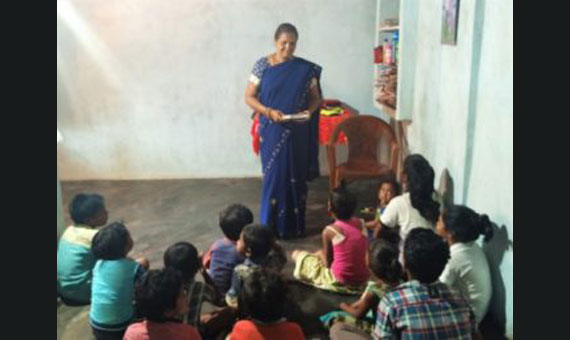
Bimola Montry wears many hats as she balances the roles of a family breadwinner and a committed catechist.

The 45-year mother of two has served the Our Lady of Charity Church of Raikia, a parish under the Archdiocese of Cuttack-Bhubaneswar arch-diocese, for the past 22 years.

“Being catechist is a call from God despite my unworthiness. This work strengthens my commitment to be an instrument of God,” Montry said while talking to Matters India over phone on May 27.

The archdiocese has 400 part-time and 42 fulltime catechists. But only two full-timers are women, including Montry. “It is true it is a male-dominated world. But my male colleagues collaborate with me well. They never discriminate me just because I am a woman,” she said.

Female catechists are a rare species in the Odisha Church.

For example, all 300 prayer conductors and 32 full-time catechists in neighbouring Rayagada diocese are men.

Berhampur, another diocese in the state, has one woman among 370 catechists and 30 touring catechists. The same is the case with Rourkela diocese that has more than 300 part-time and 43 head catechists.

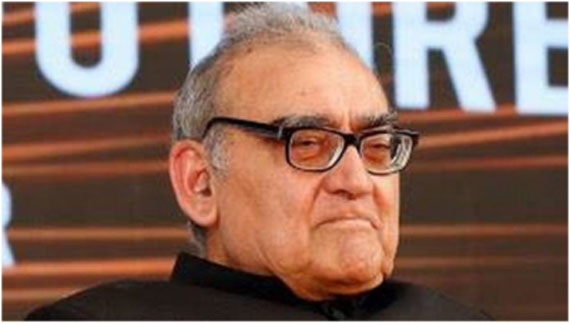
Communalism controls voting in India: Justice Katju

I read the article ‘Why the Modi government gets away with lies, and how the opposition could change that’ by columnist Shivam Vij in The Print.

With due respect to Shivam Vij, the article is superficial, and only reveals the fatuity and intellectual vacuity of the so-called Indian intelligentsia. In times of elections in India, it is completely irrelevant whether the leader of a party or a candidate is a liar.

Shivam Vij refers to Prime Minister Narendra Modi’s 20 lakh crore (200 billion) rupee economic package to say it is far from a stimulus and is instead a “grand loan mela.” He calls the Modi government’s statement of paying 85 percent of the migrants’ train fare during the lockdown a lie. He was also critical of Modi’s statements on the National Register of Citizens (NRC), demonetization, and electoral bonds.

Shivam Vij refers to the term ‘double think,’ coined by author George Orwell in his famous novel Nineteen Eighty-Four, and asks: “Why do people accept all this so willingly? Why do people, who are lied to every day, go and vote for the BJP?”

Shivam answers by referring to a paper that Christopher Paul and Miriam Mathews wrote for the RAND Corporation, dealing with the four ‘fire-hosing of falsehood’ propaganda techniques of Russian President Vladimir Putin. Vij then suggests five ways to India’s opposition to counter Modi’s lies.

Shivam Vij’s thinking is totally superficial, inane, and lacking in depth. Here’s why the BJP keeps winning elections despite Modi’s lies.

As I have explained in several articles – ‘India is still India – A Response to Aatish Taseer’ published in indicanews; ‘Is India truly a secular country?’ published in Punjab Today; ‘Dark days are ahead for India’ published in Daily Times – although the Constitution declares India to be a secular country, the ground reality is very different.

India is in fact a highly communal country. That is because secularism is a feature of industrial society, but India is still semi-feudal. In India, most Hindus are communal, as are most Muslims. This I can say from my personal knowledge. When I am sitting with my relatives and Hindu friends, and they are sure no Muslim is present, they often spout venom against Muslims. When a Muslim is lynched, most Hindus are indifferent, some are even happy…” Said Justice Katju.

First speech and hearing impaired in India pronounces religious vows

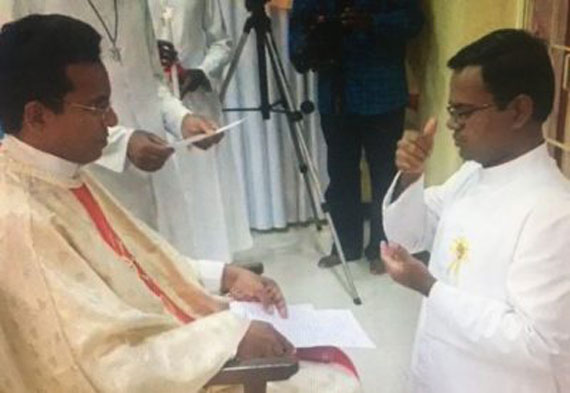
The first Indian from the deaf and dumb community on May 25 pronounced his first religious vows, in a historical and rare event.

Brother Joseph Thermadom made became a member of the Holy Cross Society as the congregation’s novitiate at Yercaud in the southern Indian state of Tamil Nadu State.

Joseph hails from the Ernakulam-Angamaly archdiocese in neighbouring Kerala State. He was born deaf to Thomas and Rosy Thermadom, who are hearing parents, says a press release from the congregation.

Sikhs sanitize India’s top mosque, set communal harmony example

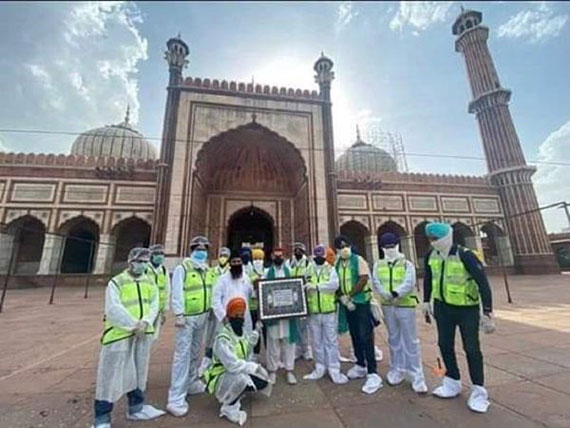
Members of the Sikh community won several hearts as they sanitized the Delhi’s Jama Masjid ahead of Eid, a Muslim that ends a month of fast and penance for Muslims.

The incident, which has set an example of communal harmony in front of the country, took place on May 23.

Jama Masjid will remain closed for congregational prayers as part of the lockdown imposed in the country to fight the coronavirus outbreak.

Ahead of Eid, several important names in the Muslim community also released video messages, asking people to follow the norms of social distancing to prevent the further spread of coronavirus.

Academics study impact of Covid-19 on Christians

Leading academics have begun a wide-ranging study into the impact of the coronavirus pandemic on UK Christians.

Professor Francis Davis of the University of Birmingham is working with Professor Leslie Francis of the University of Warwick  and Professor Andrew Village of York St John University to do a survey of UK Christian responses to the crisis and its potential impact.

It is intended to capture Christian experience and help it be understood it better.

The anonymous questionnaire asks about experience and reaction to the outbreak, as well as opinions on how the church locally and nationally has responded. Meanwhile, new research in Ireland has found that the Covid-19 pandemic has led to a surge in faith.

Queen’s University Belfast surveyed faith leaders on behalf of the Irish Council of Churches.

Dr Gladys Ganiel, from the school of social sciences, said faith leaders described an increase in religious practice that was related to online worship and services.

Researchers found “surprising” numbers of people tuning in for worship services and other events. Many people who would not normally go into a church building are accessing online services.

“Moving faith online has created new opportunities for religious practice. In some cases, lay volunteers have assisted faith leaders in moving faith online. This is an opportunity to increase and enhance lay involvement in many aspects of ministry and should be encouraged,” Dr Ganiel said.

“Religious practice will continue to feature a mixture of online and in-person elements. Faith communities should invest in training and resources for faith leaders and laity to develop blended online and offline ministries.”

Before the pandemic, 44% of faith communities did not provide online worship opportunities. Now just 13% of faith communities still fail to provide these opportunities.

Seven in ten of faith leaders agreed that they would retain aspects of their online ministries when restrictions on public gatherings are lifted.

More than seven in ten faith communities from the largest denominations – Catholic Church of Ireland, Presbyterian and Methodist – are also providing social services to the wider community.

Indian Churches to raise prayer of hope on May 31

All Christian denominations in India have decided to pray together for their nation on May 31, the feast of Pentecost.

“As we struggle through these unprecedented times, we come united as one, believing for a better tomorrow, believing for a Covid-free India,” says a press release announcing the Prayer of Hope.

“We abide by the law of the land, and we bring our voices, our prayers and ring the church bell to resonate the sound of hope to every corner of our nation, as per the directives in place,” adds the release issued by Indore-based Christian Media Forum.

40 test Covid-19 positive following German church service

A church service in Frankfurt is being blamed for the spread of coronavirus in the German city. According to the city’s health department, more than 40 people contracted Covid 19 after attending a worship service at Gospel Christians Baptist Church on May 10.

“Most of them are not seriously ill. As far as we know only one person has been admitted to hospital,” Rene Gottschalk from the health department told the DPA, a German news agency.

Kerala religious leaders seek staggered opening of worship places

Several heads of shrines in Kerala have written to the state government seeking its permission to open temples, mosques and churches in a staggered manner. All places of worship in India are closed since March 25 after the federal government imposed nationwide lockdown restrictions to contain the spread of coronavirus disease.

The leaders appeal has come amid reports of a growing cash crunch as the lockdown has forced devotees to stay away.

However, the federal government’s decision to impose the fourth round of lockdown for 14 days from May 17 has disappointed the shrine heads.

The government directive bars gatherings in all places of worship in the country, including Kerala.

Cardinal George Alencherry, Major Archbishop of the Syro-Malabar Church, wrote to Kerala Chief Minister Pinarayi Vijayan on May 17 seeking permission to open Christian religious centres to conduct daily ceremonies with the faithful in a restricted manner. The All India Imam Council has also approached the government. The Travancore Devaswom Board (TDB), which runs 2,000-odd temples in south and central Kerala, including the hill shrine Sabarimala in Pathanamthitta district, has urged the state government to at least allow devotees, who want to make significant offerings.

Bengaluru parish helps needy during lockdown

Don Bosco Church, Lingarajapuram, a Bengaluru suburb, has reached out to those affected by the nationwide lockdown in their neighborhood. Parish priest Father Aloysius Santiago, who has led the aid work, termed the impact of Covid-19 outbreak on the Indian population as alarming and shocking, forcing people to alter their lifestyle. The middle class have adjusted to the situation, but the poor and marginalized such as migrant workers, slum dwellers, single parents, widows, elderly and children, find it as nightmare, the priest told Matters India on May 19.

Salesians in South Asia add 83 new members this year

South Asia region of Salesians of Don Bosco this year has a total of 83 novices making their first profession. They were trained in five novitiates in India – Chennai, Darjeeling, Dimapur, Kerala and Shillong – and one in Colombo, Sri Lanka.

Salesian South Asia region consists of India, Bangladesh, Sri Lanka, and Nepal.

Of the new novices, 79 took their first vows on May 24 after completing one year novitiate formation that comprises prayer, discernment and learning the Salesian life.