Italy: Study shows increase in prayer, religious fervour amid pandemic

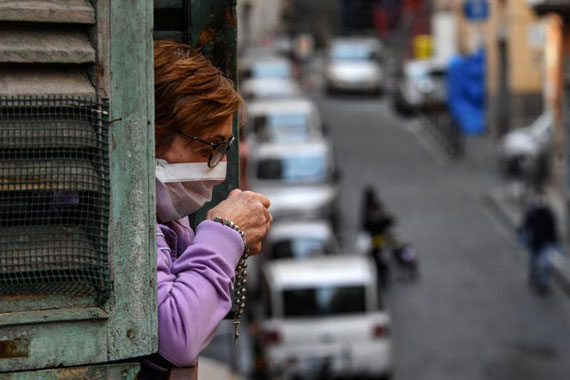
The uncertainty and restrictive measures in place due to the coronavirus pandemic caused an increase in prayers and religious fervor in Italy, a recent study said.

The study, which was released on May 22, was conducted by the State University of Milan, to “daily monitor public opinion during the COVID-19 emergency” and the impact it “has had on the religiosity of Italians.” After lockdown restrictions forced churches to close their doors, “the frequency of prayer and participation in religious services increased, although these could be attended only virtually,” the report stated.

The study was based on interviews with 4,600 people across Italy from April 20 to May 15. It showed the highest percentage increased in prayer during the pandemic was among Catholics who did not attend church at least once a week; 16 percent more of those who reported going to Mass at least once a month, but not every week, said they prayed each day during the pandemic.

The study, which asked participants about their behaviour prior to the pandemic, reported an 11 percent increase in daily prayer among what it described as “nominal Catholics,” those who said they were Catholics but seldom or never went to Mass.

However, it added, “the growth of religious practice was primarily influenced by the most acute phase of the crisis. In fact, the frequency of prayer decreases with the reduction of those infected.”

Those who had a family member infected by the coronavirus “significantly increased their participation in religious services and prayer,” it said. Participation at Mass – in person before the pandemic and online during it – was only minimally different for people over the age of 45, the study said. However, there was an increase of 17 percent in Mass participation among those under 45.

Moldova’s church blasts ‘anti-Christian’ Covid vaccine

Moldova’s powerful Orthodox Church has warned the country’s government against using a potential vaccine against Covid-19 on the population, claiming that a “global anti-Christ system” plans to take remote control of people via 5G technology.

The Church said it felt great concern about “technology allowing people to be micro-chipped through a vaccine that would insert nanoparticles that interact with 5G waves into their bodies and allow people to be remotely controlled.” It delivered the warning in a statement to parliament, President Igor Dodon and Prime Minister Ion Chicu.

The statement repeated claims made by far-right groups in Europe and groups in Russia that 5G technology may have been responsible for the Covid-19 outbreak – and that Microsoft boss Bill Gates intended to profit from it by developing a vaccine that enables Microsoft to control people. Moldovan journalist Madalin Necsutu told The Tablet that the Church was “trying to kill two birds with one stone” with its intervention. One was to strike “a general conservative tone, fighting ‘Western liberal values’ and in this regard, a vaccine,” whole the other “was about internal politics – to divert public attention from a recent leaked video showing the President allegedly taking a bribe from a fugitive oligarch.”

He added: “The Church is a close ally of President Igor Do-don and acts as his election agent in the presidential elections.”

Woman appointed as Catholic bishop’s delegate

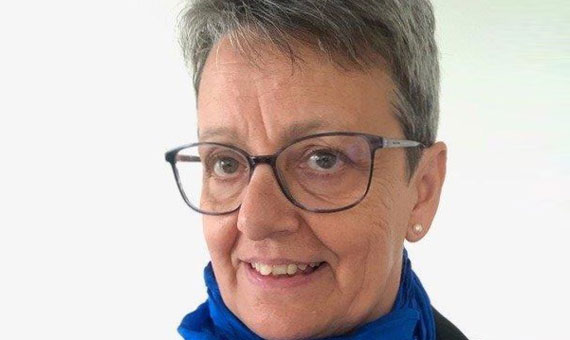
Swiss Bishop Charles More-rod of Lausanne, Geneva and Friburg has appointed a woman theologian to succeed the present episcopal vicar.

On 1 August, Marianne Pohl-Henzen will succeed the present episcopal vicar for the German part of the diocese.

Pohl-Henzen (60) studied theology and philology at university and has three children and four grandchildren. For the past eight years, she been the right hand of the present episcopal-vicar of the German-speaking vicariate (region in the diocese) of Fribourg, Fr Pascal Marquard, who is moving to Zurich.

The diocese has announced that in her new post, she will be “the person responsible in the vicariate/diocesan region in the bishop’s name.” In other words, as from 1 August, she will re-present the bishop in the vicariate and will be a member of the episcopal council.

Vatican News first called her an “episcopal vicar” but later withdrew the term. According to church law, only priests can become episcopal vicars. Church papers are now calling her an “episcopal delegate” or “episcopal adjutant.”

She herself recalled in a KNA interview, that, unlike her predecessor, she would not be able to administer confirmation, install parish priests or hold funerals for priests, “that is anything to do with Sacraments and liturgy.”

Northern Ireland to introduce ‘drive-through’ churches

Churches in Northern Ireland may soon be rolling out “drive-through” services in a bid to serve their congregations during the current coronavirus lockdown.

The innovative services, which have been popularised in the United States, were suggested as an alternative form of church gathering in a new proposal by the Northern Ireland executive outlining plans to gradually reduce lockdown restrictions.

The idea, which has been welcomed by Christian leaders across the country, may involve congregants gathering together in church car parks, windows closed, with the minister leading worship from a stage at the front.

Billy Jones, pastor of the Dunseverick Baptist Church, explained to The Telegraph: “Hopefully from May 24, I will be leading the sermon from a lorry which has a platform attached with a sound system. People can tune in to a specific radio frequency from their vehicles too if they want.”

“It will mean the local community can come together with a desire to encounter God and can enjoy the fellowship by expressing faith – even if it is from their cars.”

The Church of England has yet to comment on the potential for hosting drive-through services, while the Church of Scotland has completely ruled out engaging in the practice.

In the US, a drive-through service in Mississippi prompted intervention from the Department of Justice (DOJ) after congregants were issued fines for violating the state’s lockdown order. Attorney General William Barr was outraged after police showed up at Temple Baptist Church in Greenville and fined eight members $500 each for gathering to worship in their own cars.

Church That Defied Coronavirus Restrictions Is Burned to Ground

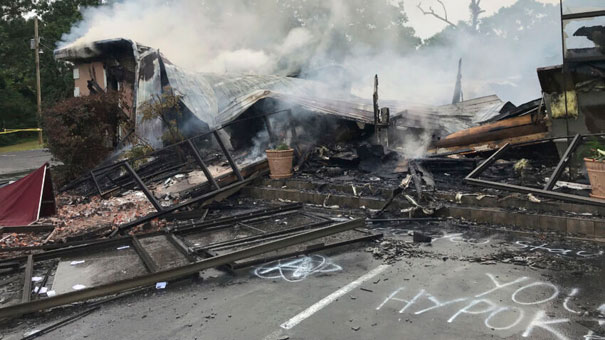
A message at the scene that said, in part, “Bet you stay home now,” has led the police in Mississippi to suspect arson. First Pentecostal Church in Holly Springs, Miss., after the fire. Credit… Kelly Mcmillen/Marshall County Sheriff’s Office, via Associated Press.

The burning of a church in northern Mississippi is being investigated as arson because of a spray-painted message at the scene that seemed to criticize the church’s defiance of coronavirus restrictions.

First Pentecostal Church had sued the city of Holly Springs, Miss., which is about an hour southeast of Memphis, arguing that its stay-at-home order had violated the church’s right to free speech and interfered with its members’ ability to worship.

After fire-fighters put out the blaze, the police found a message, “Bet you stay home now you hypokrits,” spray-painted on the ground near the church’s doors, according to Maj. Kelly McMillen of the Marshall County Sheriff’s Department. A photograph of the graffiti also appears to show an atomic symbol with an “A” in the centre, which is sometimes used as a logo for atheist groups.

Religious freedom in jeopardy as China passes new Hong Kong ‘security laws’

A Hong Kong cardinal told CNA that changes to Hong Kong’s status in China could threaten the religious freedom of Catholics and other religious believers.

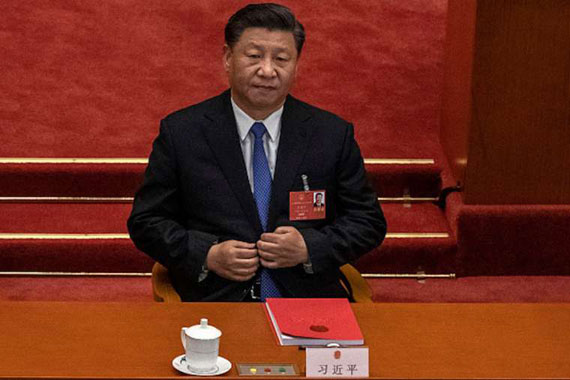
The legislature of China on May 28 approved a resolution to impose new “security laws” on its formerly autonomous region, Hong Kong— a move pro-democracy protestors and Catholics in the country fear will undermine Hong Kongers’ freedoms, including freedom of religion.

The new laws aim to criminalize anything Beijing considers “foreign interference,” secessionist activities, or subversion of state power, the Washington Post reports. The laws also could allow Chinese security forces to operate in the city.

Cardinal Joseph Zen, Bishop emeritus of Hong Kong, told CNA that he worries that the new laws will be used to subvert the freedom of religion that Hong Kongers currently enjoy.

Hong Kong has had broad protections for the freedom of worship and for evangelization, while in mainland China, there is a long history of persecution for Christians who run afoul of the government.

Most needed at the moment is prayer, Zen said. “We have nothing good to hope for. Hong Kong is simply completely under [China’s] control. We depend on China even for our food and water. But we put ourselves in the hands of God,” Cardinal Zen told CNA in a May 27 interview.

Hong Kong is a “special administrative region” of China, meaning it has its own government but remains under Chinese control. It was a British colony until 1997, when it was returned to China under a “one country, two systems” principle, which allowed for its own legislature and economic system.

Vatican exiles leader of Bose monastic community

The Vatican has disciplined another charismatic religious leader, exiling the founder of an Italian monastic community over governance problems.

Enzo Bianchi, a Catholic layman who founded the Bose Monastery in northern Italy, had enjoyed the blessing of three popes for his outreach to other Christians. He was appointed an ecumenical expert for Vatican meetings in 2008, 2012 and 2018, and Pope Francis named him as an adviser to the Vatican’s ecumenical office in 2014.

But the Vatican launched an investigation last year after what the community said were “a series of concerns from the Holy See that indicated a tense situation and problems concerning the exercise of authority by the founder, governance issues and the fraternal climate in the community.” Bianchi, 77, started the community during the 1960s and handed off its leadership in 2017, but apparently the transition didn’t go smoothly.

Record numbers leave Church in Munich archdiocese

A record number of people left the Church in the German Archdiocese of Munich and Freising last year, a local statistical office said on May 26.

The Munich statistical office told CNA Deutsch, CNA’s German-language news partner, on May 26 that 10,744 Catholics formally withdrew from the Church in 2019. It noted that this was a fifth higher than in 2018, when 8,995 people left.

Statisticians said this was the first time that annual departures had surpassed the 10,000 mark since records began. Previously, the highest figure was 9,010, set in 1992.

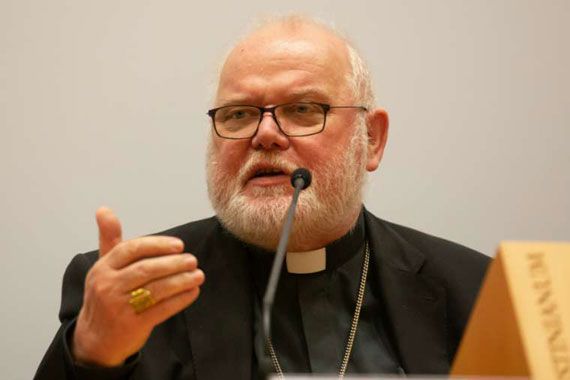
Cardinal Reinhard Marx, the 66-year-old Archbishop of Munich and Freising, announced in February that he would not stand for re-election as president of the German bishops’ conference. He cited his age and his desire to spend more time in his archdiocese, in the Catholic heartland of Bavaria, which he has led since 2008.

In March, Bayerischer Rundfunk, Bavaria’s public-service broadcaster, reported that people gave a variety of reasons for leaving, including a desire to stop paying church tax, the clerical abuse scandal and the position of women within the Church.

Jesuits mourn former superior general

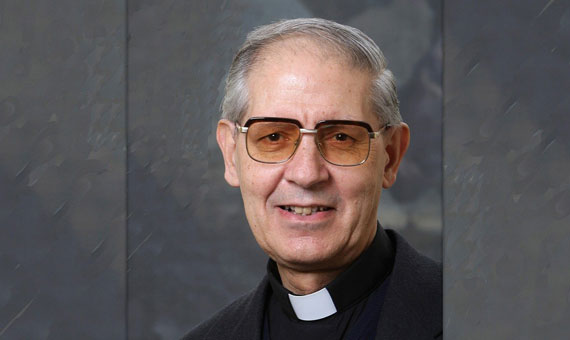
The Jesuit General Curia in Rome has announced that its former superior general, Father Adolfo Nicolás, died on May 20 in Tokyo, Japan. He was 84.

He was a member of the Jesuit community of Loyola House in Kamishakujii and had been ill for several years.

A statement said he is deeply mourned by the Jesuits of Japan and Asia-Pacific, his family and compatriots in Spain, and his many friends around the world.

“I offer my sincere condolences to the Jesuit province of Japan, to Father Nicolas’ family, to the Jesuits in Spain and the Philippines and to his many friends all around the world,” said Father Arturo Sosa, current superior general.

“Father Nicolás gave of himself throughout his life. It was a life marked by intense service, calm availability and a deep ability to inculturate in Japan, where he went as a young Jesuit. It was a culture he loved dearly and to which he committed himself.

“His time as general was marked by his sense of humour, his courage, his humility and his close relationship with Pope Francis. All of us here at the Jesuit General Curia mourn him and a special Mass will be offered here in Rome as soon as we can organize it.”

Father Sosa said all who worked with Father Nicolás in the General Curia greatly appreciated his presence.

In Hong Kong, going back to Mass could be calm before the storm

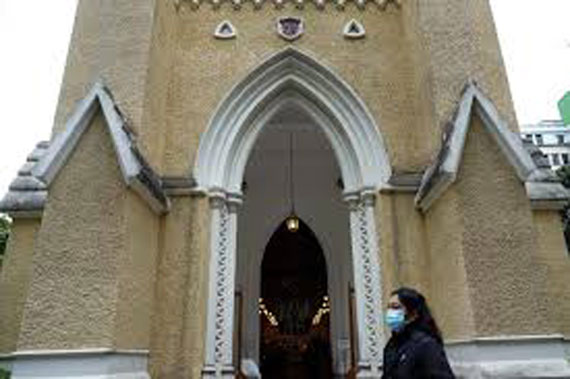
Cardinal John Tong Hon, administrator of the Hong Kong, announced that the city will return to public Masses from June 1, at the same time China’s parliament is expected to pass a new national security law that already has pro-democracy activists in Hong Kong taking to the streets.

“Thanks be to God that the situation is easing,” Tong said in a May 22 statement posted to the Diocese of Hong Kong’s web-site, speaking of the coronavirus pandemic.

Noting that public Masses have been suspended since February, he said daily Masses started up again on June 1, while public Sunday liturgies resumed on June 7, on Holy Trinity Sunday.

For those who still fear they will be infected by attending Mass, Tong said that “for the time being,” they can fulfill their Sunday obligation by attending a live streamed Mass and making an act of spiritual communion.

Since the number of people who can be admitted to churches is limited to half of the normal capacity due to social distancing requirements, Tong said that if some people wish to attend a weekday Mass in place of the Sunday Mass, that will also be allowed.

“I would like to thank everyone for being so considerate and accommodating,” he said, noting that, “The pandemic is far from being over. We must carry on with our preventive measures. When we stand by each other with hope and count on our Lord, I am sure peace will be with us.”

Yet Tong might have spoken too soon in his confidence that peace will abide, as his announcement came at the same time that China is attempting to pass a national security resolution in Hong Kong banning treason, secession, sedition, subversion, foreign interference and terrorism.