Hindu group opposes Christian president of Marathi literature festival

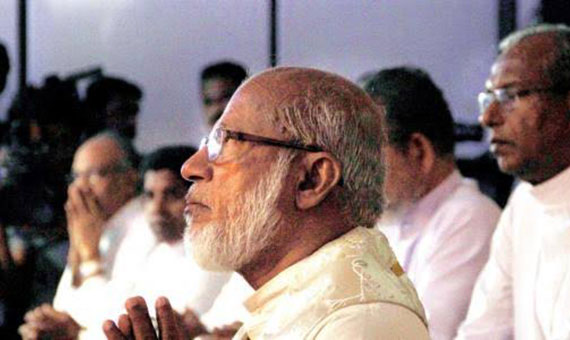
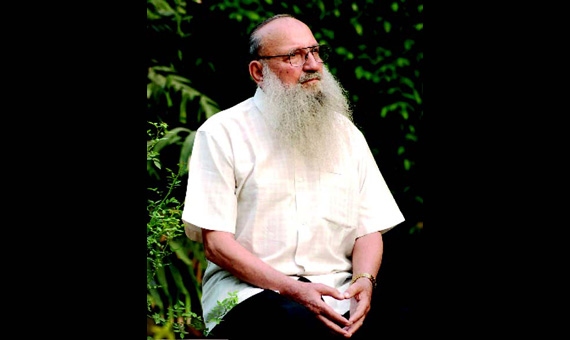
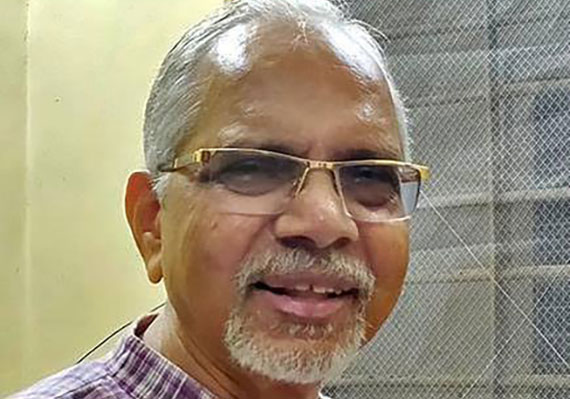
Veteran poet N.D. Mahanor on January 9 opened All India Marathi Literature Festival amid tight security in view of threats from right-wing Hindu organizations.

The groups had warned Mahanor, a Padma Shri and Sahitya Academy awardee—not to inaugurate the festival as a Christian priest, Father Francis D’Britto, presided over the festival. The priest is a Marathi writer.

The literature festival was held on January 10-12 in Osmanabad in Maharashtra, some 410 km southeast of Mumbai, the state capital. “I have been getting calls since January 1 asking me not to attend the festival as a Christian man is the president. Akhil Bharatiya Brahman Mahasabha had sent a letter asking me not to inaugurate the event, as they would be protesting at the venue. But there was no question for me not to inaugurate the festival.” Mahanor told News Click.

Anand Dave, secretary of All India Brahman Mahasabha (grand council of Brahman), said his organization did not threaten the 78-year-old litterateur. “We requested him not to inaugurate the festival that is presided by a Christian priest. We did not want him to witness our protests at the venue,” he said.

However, Mahanor’s close aides have said that repeated calls and “requests” in harsh words constitute a threat to a septuagenarian. Mahasabha and other right-wing organizations have been opposing selection of Father D’Britto as the president, even as he has been selected following a democratic process. Members of the Marathi Sahitya Parishad, which holds the festival every year, vote for contestant writers to select the president. Father D’Britto, a recipient of Sahitya Academy Award in 2014, was born and brought up in Vasai near Mumbai.

CAA: India’s Church leaders warn against dividing country

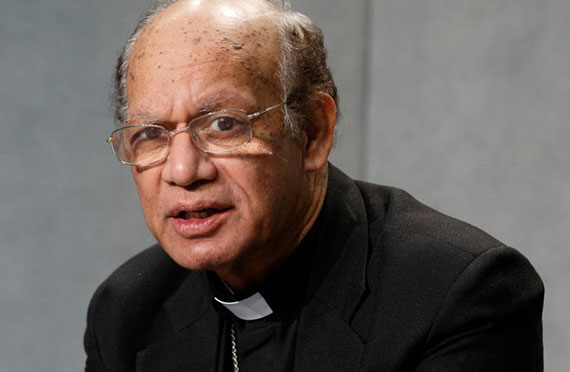
India’s leading cardinal has called the country’s controversial Citizen Amendment Act “a cause of great anxiety for all citizens.”

Cardinal Oswald Gracias, the Archbishop of Bombay and president of the Catholic Bishops’ Conference of India (CBCI), made his comments on Jan. 8 at a ceremony in Benaulim, Goa, inaugurating a new extension of the secretariat of the Conference of Catholic Bishops of India (CCBI). The CBCI is for all bishops in India – Latin and Eastern Rite – while the CCBI is for the country’s Latin Rite bishops. The Citizenship Amendment Act was passed on Dec. 12 by India’s parliament, and establishes a mechanism for undocumented migrants from Pakistan, Bangladesh and Afghanistan to gain Indian citizenship. How-ever, the law only applies to Hindu, Sikhs, Buddhists, Jains, Parsis and Christians, meaning Muslims are excluded.

Anti-citizenship law protests spread across India

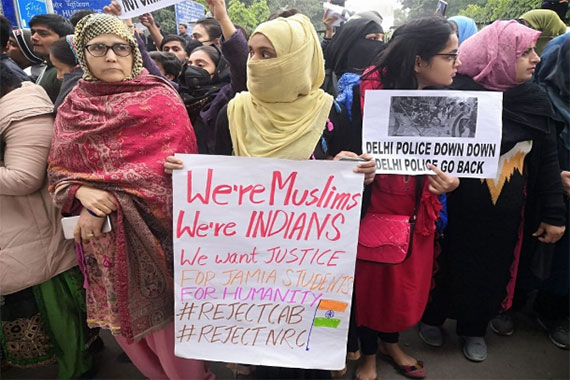
Demonstrators clashed with police for a third day in Delhi on Dec. 17 as protests against a divisive citizenship law spread to universities across the country, raising fears of widespread unrest.

Rights activists and Christian leaders say the protests began to spread after the federal government led by the pro-Hindu Bharatiya Janata Party (BJP) attempted to crush peaceful opposition to the discriminatory law.

“The protests by students in many universities indicate the great worries among the people. Students are the antenna and the conscience of the people, and future decision-makers,” said the Evangelical Fellowship of India (EFI), a Protestant Church Group, in a Dec. 16 statement.

India’s Eastern rite Church seeks clarification on controversial law

Bishops of India’s eastern rite Syro-Malabar Church have urged the federal government to clarify amendments made to the country’s citizenship law on Jan. 11, a day after the new law came into force. The prelates’ call came during their ongoing Bishops’ Synod, the Church’s top decision-making gathering, at their headquarters in Kochi city in southern Kerala State.

Of the 64 bishops, 57 are attending the Jan. 7-15 Synod.

India’s federal government led by the pro-Hindu Bharatiya Janata Party amended the Citizenship Act of 1955 on Dec. 11, 2019.

The Citizenship Amendment Act (CAA) aims to grant citizenship to illegal migrants from Afghanistan, Bangladesh, and Pakistan if they are not Muslims. The new law also relaxes the requirement of residence in India from 11 years to five years for such migrants.

Since the amendment, the country has witnessed wide-spread violent protests seeking to scrap it on the grounds that it violates the secular fabric of the country as it was biased against Muslims.

“The secular character of our constitution shall not be under any doubt,” he said, explaining the reason for bishops seeking clarification. The bishop also urged the government to grant citizenship to refugees in the country with-out any religious discrimination.

Bishops ask Alencherry to clarify stand to laity

Kochi, Jan 14, 2020: The issue of land deals has come up for discussion during the Synod session of the Syro-Malabar Church now under-way at the Church headquarters in Kochi.

Nine bishops of the Ernakulam-Angamaly Archdiocese raised the issue on January 13 when a suggestion came up that the Synod could admit to the losses incurred because of the land deals.

Cardinal George Alencherry, head of the Church who is entangled the land deal controversy, informed the members that the losses could not be recovered without selling the land.

The bishops wanted a clear declaration of the ways of restitution, instead of admission of lapses. To this, the cardinal said he had not made any monetary gains out of these deals. The bishops, however, suggested that the cardinal could explain his stand in the matter before the priests and laity and convince them.

The Synod is yet to release an official statement regarding the discussions and decisions taken in the meeting.

“There came some suggestions from the Synod regarding the ways in which the losses can be rectified but no official statement has been released by the Synod. Earlier, the Synod had accepted that severe lapses occurred from the cardinal’s part,” said a source in the Ernakulam-Angamaly Archdiocese.

A source said the coming days of the Synod meeting are crucial. “As Synod concludes on Wednesday (January 15), some major decisions will be taken,” he said. The Synod began on January 7.

China continues ‘war on the soul’ by jailing pastor

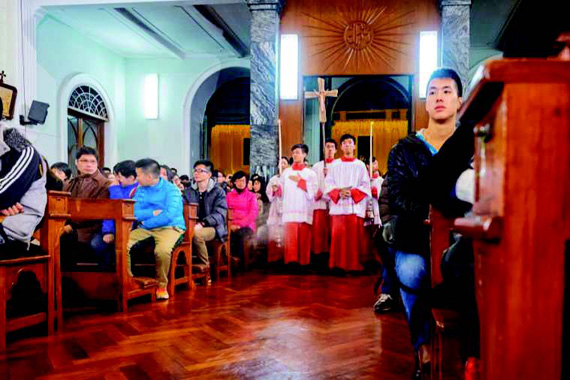
China’s ruling Communist Party has fired a warning shot to the fast-growing underground Protestant Churches in the country by jailing Wang Yi, founder of Sichuan province’s Early Rain Covenant Church, for nine years after a secret trial where he had no legal representation. The US State Department has demanded his immediate release.

The sentence for “inciting subversion of state power” and “illegal business activities” became public on Dec. 29 when the court that convicted the preacher issued its judgment. He was found guilty during a closed-doors trial on Dec. 26 on what the State Department described as “trumped-up charges.” Pastor Yi and his wife Jiang Rong were arrested with dozens of other congregants on Dec. 9, 2018, during a crackdown on Cheng-du’s largest unregistered church.

Wang has been deprived of his political rights for three years and 50,000 yuan (US$7,160) of his personal property was confiscated as part of his sentencing. Jiang’s whereabouts remain unknown, although a congregant posted on the internet that she was being held under residential surveillance.

China announces new crackdown on religious freedom

China will enforce new restrictions on religious groups, organizations, meetings, and other related events starting on February 1.

The country’s state-controlled media announced the new policy on Dec. 30, after Chinese authorities moved to further suppress Catholics in the Archdiocese of Fuzhou who are refusing to join the state-run Chinese Catholic Patriotic Association.

According to UCA News, the new “Administrative Measures for Religious Groups,” which consists of six sections and 41 articles, will control every aspect of religious activity within China, and will mandate that all religions and believers in China comply with regulations issued by the Chinese Communist Party, which must be acknowledged as the higher authority.

“Religious organizations must adhere to the leadership of the Chinese Communist Party, observe the constitution, laws, regulations, ordinances and policies, adhere to the principle of independence and self-government, adhere to the directives on religions in China, implementing the values of socialism,” says Article 5 of the new policies.

Vietnam archdiocese kicks off anniversary year

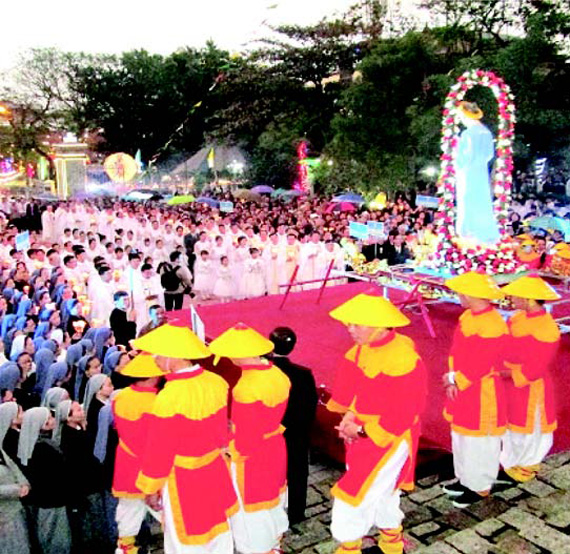
Hue Archdiocese in central Vietnam has kicked off a year of celebrations marking 170 years as a Catholic Church jurisdiction by honouring Mother Mary and thousands of people martyred in anti-Catholic purges.

An estimated 3,000 people attended the opening Mass on Jan. 1 to start the special year at Phu Cam Cathedral in Hue, the capital of Thua Thien Hue province.

Before the Mass, Archbishop Joseph Nguyen Chi Linh of Hue and Archbishop Marek Zalewski, the Vatican’s non-resident envoy to Vietnam, offered incense in front of a large statue of Our Mother of La Vang at the nearby Pastoral Centre.

Archbishop Linh, head of the Vietnamese bishops’ conference, said the special year with the theme “God is joy of youth” is “aimed at thanking God for loving us and giving us an opportunity to express our deep gratitude to our ancestors who protected and passed down the faith to us today.”

He said local Catholics would honor Mother Mary and appeal to her to continue supporting them as she protected their ancestors in La Vang from religious persecution in 1798.

Feature film honours Italian missionary to Bangladesh

A new feature film pays tribute to Father Marino Rigon, an Italian missionary lauded for his outstanding contributions to education, socioeconomic development, culture and literature as well as Bangladesh’s independence struggle during his more than six decades of service.

The Father: An Untold Story is a joint venture between Bangladesh and Italy. More than 200 actors from Italy, New Zealand, Brazil and Britain have participated in auditions for the film in various cities in Italy. Shooting is expected to start soon in Venice and Vicenza, Italy, and Khulna, Mongla and Jessore, Bangladesh, according to the Dhaka Tribune.

Bangladeshi writer Shahaduzzaman scripted the screenplay of the film, which will be helmed by Hemanta Sadeeq, a local film producer and director.

Sadeeq and Rocco Cosentino, the Italian producer of the film, have been in touch with Father Rigon’s family and received their support, executive producer Lisa Asma Akter told the Dhaka Tribune.

The film is an effort to honour the “selfless sacrifices” of Father Rigon for the people of Bangladesh, said director Sadeeq. “Father Rigon was an extraordinary man who made unconditional sacrifices for the people of Bangladesh. This film will be a tiny homage to this great soul,” Sadeeq wrote on his Face-book page.

The Church has hailed the new initiative to honour the missionary, said Bishop James Romen Boiragi of Khulna, where Father Rigon was chiefly based.

“Father Rigon made tremendous contributions in uplifting the status of poor and marginalized communities, in education, culture and literature. His life and work have brightened the image of the Church in the country and abroad. We are glad and grateful that a new film is being made to pay tribute to Father Rigon,” Bishop Boiragi, chairman of the Catholic bishops’ Social Communication Commission, told ucanews.

Supreme Court of the Philippines rejects petition to legalize same-sex marriage

The Supreme Court of the Philippines has reiterated its dismissal of a petition to redefine marriage in the country to include same-sex couples.

The court had initially dismissed the petition in September 2019, on the grounds that the applicant lacked standing because he did not have a partner, nor was he seeking a same-sex marriage.

In a Jan. 6 order, the Philippine News Agency reported, the Supreme Court said the motion for reconsideration was “denied with finality,” adding, “No further pleadings or motions will be entertained.”

The court said that “no substantial arguments were presented to warrant the reversal of the questioned decision.”

The petition had been filed in 2015 by 33-year-old lawyer and radio show host Jesus Nicardo M. Falcis III and the LGBTS Christian Church Inc. Falcis sought to challenge provisions in the country’s Family Code that defined marriage as a “permanent union between a man and a woman.” He also challenged clauses declaring homosexuality as grounds for legal separation and declaring concealment of homosexuality at the time of marriage as an act of fraud that constitutes grounds for annulment.

According to CNN, Falcis said he “decided to use the tool of litigation, because it has been successful in other countries — such as the United States — to have gay marriage legalized.”

However, the Supreme Court unanimously rejected the petition in September, saying he lacked legal standing and had failed “to raise an actual, justiciable controversy.”