Marx deplores export of fundamentalist Islam

Germany’s Catholic and Protestant leaders have mounted a coordinated new-year attack on the way some states in the Middle East are “exporting” fundamentalist Islam. Cardinal Reinhard Marx, the president of the German bishops’ conference, and Bishop Heinrich Bedford-Strohm, the chairman of the German Protestant Churches, writing in the weekly Welt am Sonntag, criticised the way certain regimes, particularly in the Gulf Region, are abusing Islam politically and promoting fundamentalist interpretations of Islam in Africa and Asia.

“The failure to modernise society, wars and rampant hopelessness, above all among the younger generation, have led to instability in many regions which fundamentalist Islam is instrumentalising for its own purposes,” Marx told Welt am Sonntag. Regimes in the Gulf were exporting “rigid interpretations of Islam with a great deal of money,” he said.

The fact that meanwhile there was a growing sensitivity for religious freedom – “especially in the USA, the EU and particularly in Germany” – made him hopeful, Marx said. The Churches, whose mandate it was to commit themselves to religious freedom for all peoples, had contributed greatly to this growing sensitivity, he claimed.

Of all the world’s religions, Islam faced the biggest challenge as far as religious freedom was concerned, Bishop Bedford-Strohm told the Welt am Sonntag. “All religions have the obligation to be forces of peace and reconciliation,” he insisted and called for new rules or legislation “which prevented converts from Islam to Christianity from being deported back to countries like Afghanistan or Iran where Christian converts are particularly endangered and cannot safely practise their Christian religion.” It must be made clear that “only the Church [in question]” could judge whether a person’s wish to be baptised was truly serious, he underlined.

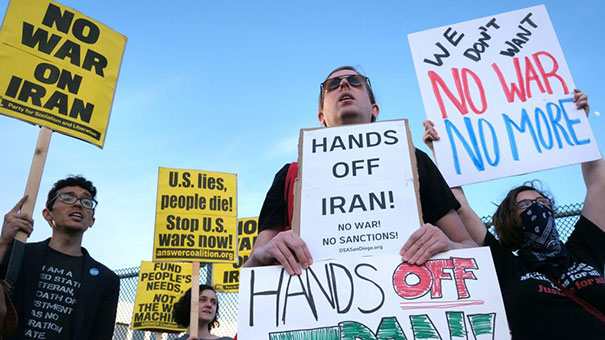
Morality of drone warfare questioned after attack on Iranian general

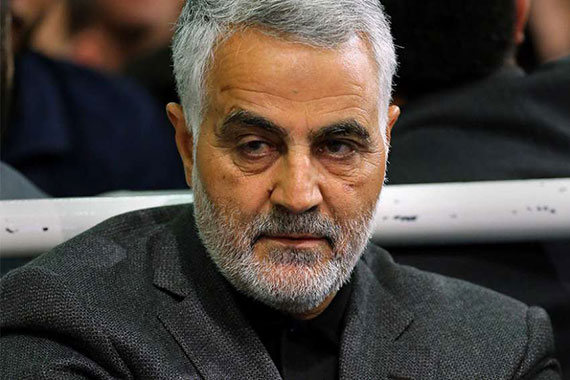
It wasn’t an unusual request from a church leader. Still, its significance stems from its context and its timing: a few hours after the overnight killing of Iran’s top military leader, Maj. Gen. Qassem Soleimani, in a U.S. drone strike in Baghdad.

“Welcome to the new year!” Bishop Stika wrote. “Congress and the President are playing with the emotions of the people of this nation. A divisive election year. North Korea is watching all this and now the assassination of the number 2 man in Iran. Prayers for the world during this time of unrest.”

Bishop Stika told Catholic News Service Jan. 6 that his tweet reflected a deep concern for uncertainty in today’s world, especially as tensions rise between the U.S. and Iran.

“It just seems it could spark something and that it could be very difficult to control the after-math,” he said.

“I think about all of the individuals I have known who have been harshly affect by being in wars. The PTSD (posttraumatic stress disorder), lost limbs, trauma,” the bishop continued. “It concerns me it could be a dangerous thing. The uncertainty of this could blossom into something that could become horrific.”

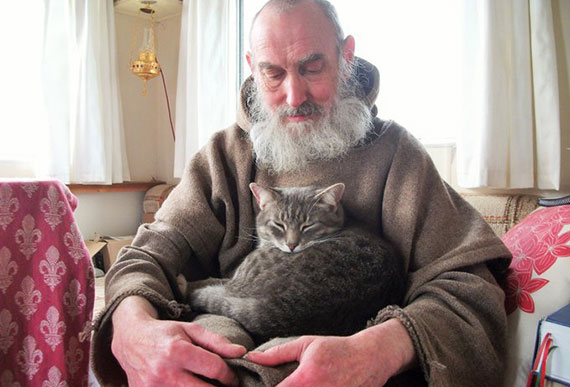
Hermits excommunicated after accusing Pope of heresy

Three hermits living on an Orkney island in Scotland have been excommunicated from the Church after accusing Pope Francis of heresy.

The Black Hermits of West-ray in Orkney – Fr Stephen de Kerdrel, Sister Colette Roberts and Brother Damon Kelly – received notice of their excommunication from the Diocese of Argyll and the Isles on Christmas Day.

The diocese’s action was in response to a declaration’ signed by the hermits in April 2019, in which the they state that Catholicism is “being transformed inexorably into [a] False Church” and that the Pope, “by his utterances, his behaviour, his teaching and his actions, has shown himself to be…a great heretic.”

The three hermits’ excommunication means they will no longer be able to receive the sacraments licitly unless they reconcile with the Church.

The diocese has clarified that, given the declaration contained a statement by the hermits that they have withdrawn “obedience from Pope Francis and sever [ed] communion with the Holy See,” the group had, canonically speaking, excommunicated them-selves.

Seasoned musician inspires people to sing, raise voices ‘in honour of God’

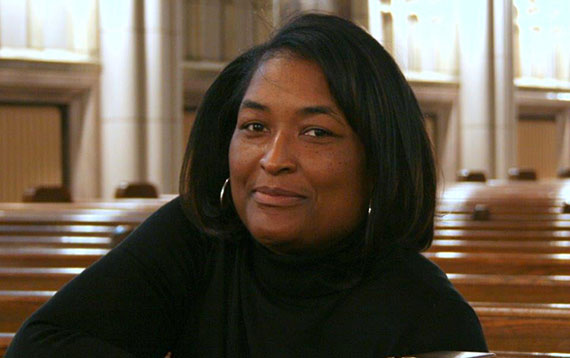
With the start of the new year, a seasoned Philadelphia musician is taking on a new challenge as director of the Philadelphia Catholic Gospel Mass Choir.

Tonya Taylor-Dorsey was appointed to the post by the Philadelphia Archdiocese’s Office for Black Catholics, effective Jan. 1.

Established for the 2014 World Meeting of Families, the ensemble features voices from the archdiocese and neighbouring dioceses. The choir has participated in parish revivals, the U.S. bishops’ listening sessions on racism and the annual “Soulful Christmas Concert” at Philadelphia’s Kimmel Centre for the Performing Arts.

In addition, the choir regularly performs at archdiocesan observances such as the St Martin de Porres Mass and the Rev. Martin Luther King Jr Day prayer service. For Taylor-Dorsey, who has more than three decades of experience in parish music, the role once seemed unlikely for someone who was raised Presbyterian — and who “didn’t sing in the church choir growing up.”

“I wanted to be a concert pianist,” she said, citing “Fanfarinette” from Jean-Philippe Rameau’s “Suite in A Minor” as her favourite piece to play.

Taylor-Dorsey’s musical ambitions led her to study at Michigan State University and the University of Texas at San Antonio. Diploma in hand, she returned to her native Philadelphia, and shortly thereafter landed a job as music director at St Peter Claver in Centre City until the parish was closed.

In 1993, she started a 13-year appointment as choir director at Our Lady of Hope parish in Philadelphia, during which time she staged annual concerts and produced a recording of the Hope Singers.

When she became the choir director at St Martin de Porres Parish in 2006, Taylor-Dorsey decided to make her lifelong commit-ment to Catholicism official, joining the church under the guidance of then-pastor Father Edward Hallinan.

“During our first meeting, he asked me, ‘Why aren’t you Catholic?’” she recalled in an interview with CatholicPhilly.com, the archdiocese’s online news outlet. “Actually, I felt like I was Catholic even before I converted.” In college, she had studied the Mass, finding beauty in the order of the liturgy. As her career developed in Catholic parishes, she realized that she felt increasingly at home.

“I thought to myself, ‘I’m playing at this church for two Masses each Sunday, but I wouldn’t be buried from here if I died,’” she said. “I want to encourage people to sing and raise their voices in honour of God.”

Update: Retired pope, Vatican cardinal write book defending priestly celibacy

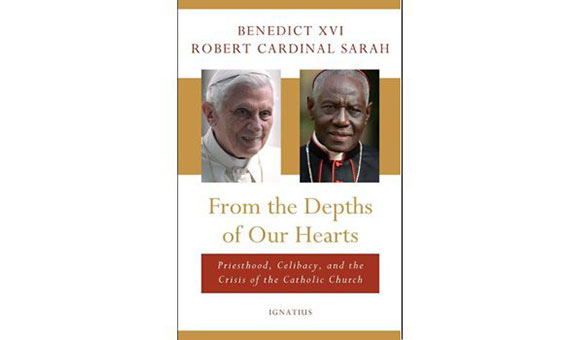
Since marriage and priesthood both demand the total devotion and self-giving of a man to his vocation, “it does not seem possible to realize both vocations simultaneously,” retired Pope Benedict XVI said in a new book.

“From the Depths of Our Hearts,” a defense of priestly celibacy, has an introduction and conclusion written jointly by the retired Pope and by Guinean Cardinal Robert Sarah, prefect of the Congregation for Divine Worship and the Sacraments, and one chapter written by each of them alone.

The book was to be published in English February 20 by Ignatius Press but the French newspaper Le Figaro released excerpts on Jan. 12 from the original French edition.

In a chapter signed by both the retired Pope and the cardinal, they said the book resulted from an exchange of “ideas and our concerns,” particularly related to the Synod of Bishops for the Amazon, which heard repeated calls for considering the ordination of married elders to serve far-flung communities and provide greater access to the Eucharist and other sacraments.

Pope Francis’ response to the requests of the Synod is expected early in the year. Observers noted how unusual it was for the retired Pope to intervene publicly on an issue the reigning Pope is considering.

Cardinal Sarah and Pope Benedict seemed to recognize how unusual the move was, but they wrote, “‘Silere non possum!’ I cannot be silent!”

The two said they offered their reflections “in a spirit of love for the unity of the church.”

In a separate interview with Le Figaro, Cardinal Sarah said, “If this book is a cry, it’s a cry of love for the church, the Pope, the priests and all Christians. We want this book to be read as widely as possible. The crisis facing the church is striking.”

According to the published excerpts, a chapter signed by Pope Benedict noted how today many peo-ple assume the gradual adoption of the discipline of priestly celibacy was a result of “contempt for corporeality and sexuality.” The error of that thinking, he said, is demonstrated by the church’s high view of the sacrament of marriage.

And, while acknowledging that celibacy has not always been a requirement for priesthood, he said that married priests were expected to abstain from sexual relations with their wives.

Renouncing marriage “to place oneself totally at the disposition of the Lord became a criterion for priestly ministry,” he said.

Pope urges US and Iran to show restraint amid growing tensions

Pope Francis has lamented the “terrible air of tension” in the world warning that war only brings “death and destruction.”

Francis remarks come days after the United States’ assassination of Qasem Soleimani, a top Iranian general, and a pledge by Tehran to take “severe revenge.” In a series of tweets overnight, President Donald Trump says his military is “targeting” 52 Iranian sites if there is an attack on Americans or US assets.

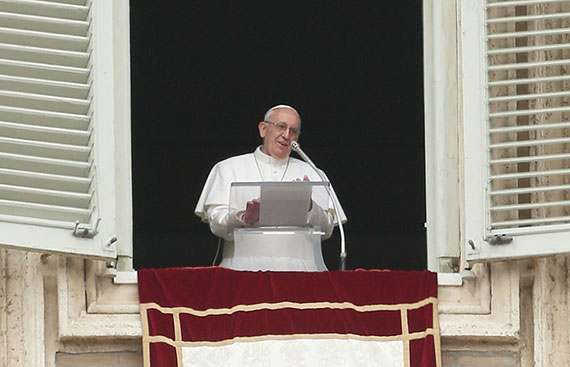
After praying the Sunday Angelus on 5 January in St Peter’s Square, the 83-year-old Roman Pontiff appealed to “all the parties to keep the flame of dialogue and self-restraint burning,” and then called on everyone to pray silently.

“In many parts of the world, there is a terrible air of tension,” Francis said. “War only brings death and destruction.”

These are the Pope’s first public remarks on the Iran-US conflict since the assassination of Soleimani on 3 January, with the papal ambassador in Tehran, Archbishop Leo Boccardi telling Vatican News that Francis has been following the situation and is praying for peace.

Archbishop Boccardi stressed that history teaches how war and weapons never resolve the world’s problems and said the international community must “believe in negotiation.”

UK prime minister calls for solidarity with persecuted Christians

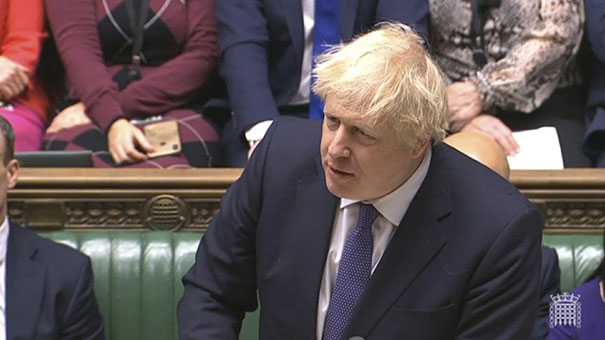
British Prime Minister Boris Johnson has made a call of solidarity with persecuted Christians around the world during a Christmas video released on December 24.

“I want us to remember those Christians around the world who are facing persecution. For them, Christmas Day will be marked in private, in secret, perhaps even in a prison cell,” Johnson said.

“As Prime Minister, that’s something I want to change. We stand with Christians every-where, in solidarity, and will defend your right to practice your faith,” he continued.

In December 2018, the UK Foreign Office called for an independent inquiry of international Christian persecution, which was released over the summer.

Johnson is the second high-ranking member of the British establishment to make an appeal for persecuted Christians in the days leading up to Christmas.

On Dec. 18, Prince Charles denounced this year’s Easter attack on churches in Sri Lanka as “an assault on religious freedom everywhere.”

The bombings by an Islamic State-affiliated group killed over 250 people, and injured over 500 others.

Iraqi cardinal: Innocents will ‘be the fuel’ for fire after drone strike

Chaldean Catholic Patriarch Louis Sako, responding to a U.S. drone attack in Baghdad that killed Iran’s top general, said “wisdom is required to avoid the ‘volcanic eruption’ we are about to face.”

Speaking during the Epiphany Mass in Baghdad on Jan. 6, he said the current crisis resulted from the “upsetting escalation, as well as the emotional and impulsive decisions taken which lacked wisdom and the sense of responsibility.”

Speaking at St Joseph Cathedral in the Iraqi capital, the cardinal addressed his words to world leaders to avoid a further escalation in violence, because, he said, “innocent people will be the fuel for such fire.”

He also invited Christians and Muslims to pray for the decision-makers to act wisely and consider the consequences of their strategies.

Nigerian diocesan spokesman: Bridal party beheaded en route to wedding

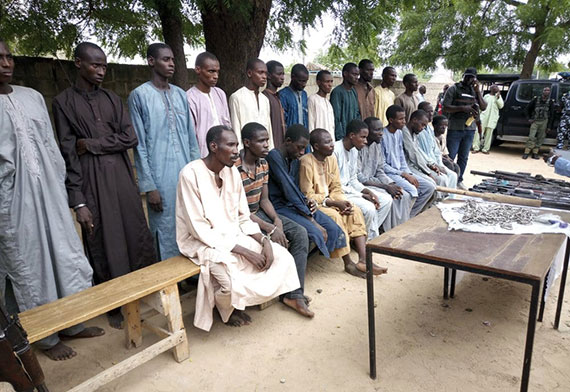
Father Francis Arinse, communications director of the Catholic Diocese of Maiduguri, confirmed that a bride-to-be, Martha Bulus, and her bridal party were beheaded on Dec. 26 at Gwoza, in northeastern Nigeria’s Borno State.

Arinse told Catholic News Service that Bulus and her companions were traveling from Maiduguri to her on Dec. 31 wedding when they were killed.

“They were beheaded by suspected Boko Haram insurgents at Gwoza on their way to her country home,” he told CNS. He added that Bulus used to be his parishioner at St Augustine Catholic Church, Maiduguri, after he was first ordained.

Arinse said there had been a series of abductions in the area recently. He said government agencies must beef up security in northeast Nigeria to prevent a recurrence. Several international media outlets reported on Dec. 26 that the Islamic State group released a video showing it had beheaded 10 Christians and shot an 11th Dec. 26. The news agencies said they were unable to confirm the contents of the video but described the victims as men. IS said the beheadings were payback for the late-October killing of its leader, Abu Bakr al-Baghadi.

Top court’s education order upsets Indian Church officials

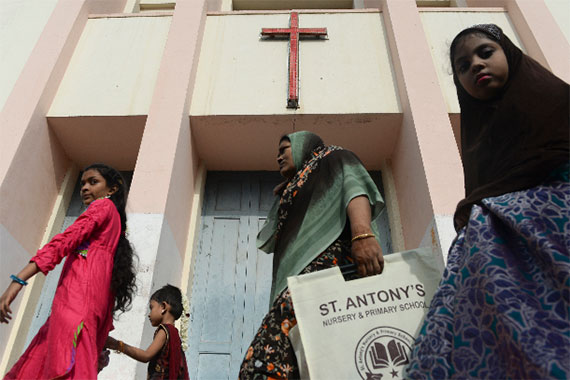
India’s Supreme Court has allowed the government to control the appointment of teachers in educational institutions run by religious minorities, a ruling Church leaders say violates their right to manage such institutions.

The country’s top court on Jan. 6 upheld a West Bengal State law that allowed a government commission to screen candidates to be appointed as teachers in government-funded madrasas, Muslim religious schools.

“The order definitely will have a bearing in the administration of Church-run education institutions too,” says Salesian Father Joseph Manipadam, secretary to the Indian Catholic bishops office for education and culture.

The verdict came while deciding on an appeal challenging a provision in the West Bengal Madrasa Service Commission Act 2008, which said the government panel could screen teachers to be appointed to state-aided Madrasas.

Madrasas were declared minority education institutions in West Bengal State, just as thousands of Christian schools in the country. The Indian Constitution allows religious and linguistic minorities to establish and manage educational institutions of their choice to help with the social advancement of their people.

The Catholic Church runs some 54,000 educational institutions in the country and at least half of them get financial aid from the state. With this order, “our right to administer our institution is curtailed. Freedom to appoint teachers is also part of the administration,” Father Manipadam told UCA News on Jan. 9, three days after the top court pronounced.

The provisions were challenged in 2013 before the West Bengal State’s Calcutta High Court on the grounds that they violated the rights of minority institutions. The single-judge bench of the High Court allowed the challenge and found the provisions to be unconstitutional.