
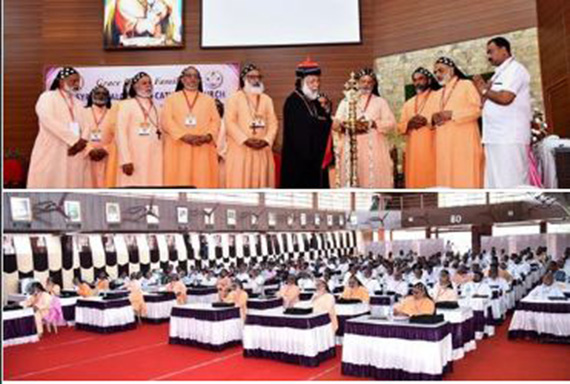
Major Archbishop of the Syro-Malankara Church Cardinal Mar Cleemis has highlighted the relevance of family values for the betterment of society. Delivering the inaugural address at the second Major Archi-episcopal Assembly of the church here on Oct. 8, he said, family values and religious belief were increasingly coming under attack. If the family lost belief in God, it would reflect on religion and society, he added.
Daily Archives: October 27, 2019

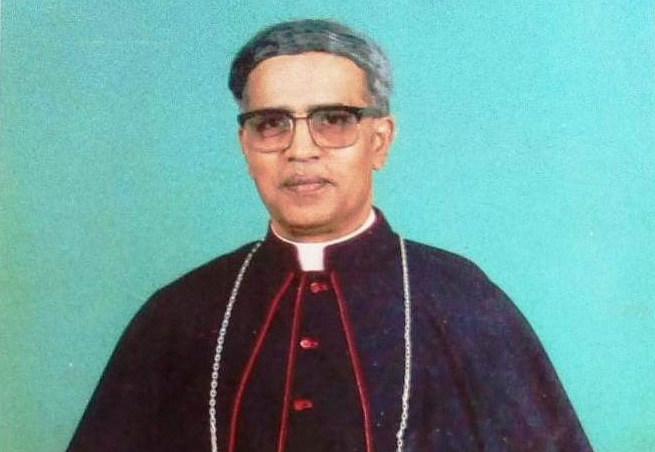
Former Chikmagalur bishop dies
Former Bp John Baptist Sequeira of Chikmagalur died on October 9 due to old age ailments. The end came at the Home of the Little Sisters of the Poor, Hosur Road, Bengaluru. He was 89. The funeral Service was held at 3 pm on October 11 at the Home for the Aged (Little Sisters of the Poor) in Bengaluru. Thereafter, the burial took place at St Patrick’s Parish Cemetery on Hosur Road.

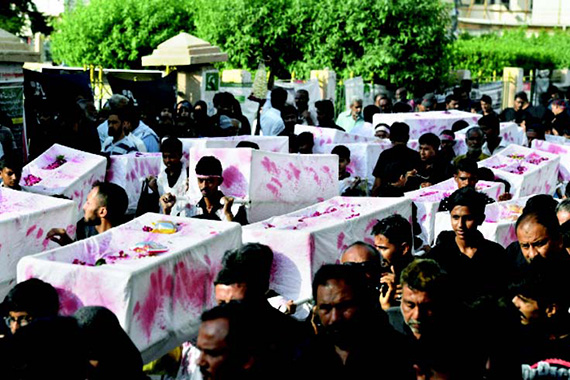
Pakistan rejects attempt to allow non-Muslim PM, president
A Christian MP in Pakistan has slammed the ruling Justice party for rejecting his bill seeking to allow non-Muslim members of parliament to become president or prime minister of the country.
Naveed Aamir Jeeva, a Christian lawmaker of the opposition Pakistan Peoples Party, tabled the bill in the National Assembly.
The bill proposed amendment to Articles 41 and 91 of the constitution that bar Christians and other non-Muslim minorities from getting elected as head of state.
“A person shall not be qualified for election as president unless he is a Muslim of not less than 45 years of age and is qualified to be elected as a member of the National Assembly,” Article 41 states.
Article 91 reads: “After the election of the speaker and the deputy speaker, the National Assembly shall, to the exclusion of any other business, proceed to elect without debate one of its Muslim members to be the prime minister.”
The lower house blocked the Christian MP’s bill with a majority vote following objections from a minister known for hardline views on Islam.
Ali Muhammad, minister of state for parliamentary affairs, said: “Pakistan is an Islamic republic where only a Muslim can be elevated to the slots of the president and prime minister. The minorities are enjoying complete freedom and security and their rights are being protected in Pakistan.”
Maulana Abdul Akbar Chitrali, a member of Islamist party Jamaat-e-Islami, welcomed the government’s stance on the proposed amendment.
“No law against Islamic values and teachings can be passed, introduced or even debated in the parliament,” he was quoted by The News as saying.
The Christian lawmaker, however, said that he would continue to exercise his democratic right to introduce legislation.
“It was disappointing that the ruling party opposed my bill. We believe every Pakistani citizen irrespective of his faith or color has the right to become prime minister or president,” Jeeva told ucanews.com.
“If Christians, Hindus are other minorities enjoy equal rights, there should be no constitutional bar on them to lead this country.

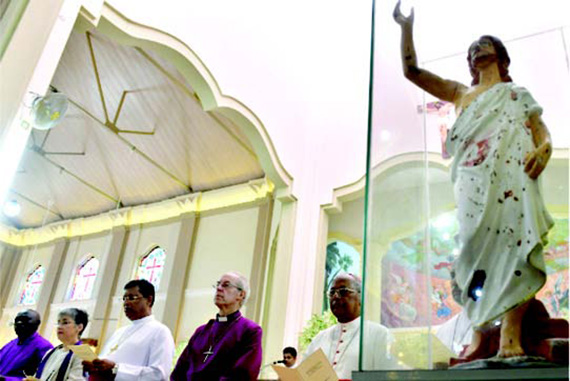
Cardinal urges extra security for Sri Lanka’s religious places
Cardinal Malcolm Ranjith has written a letter to Sri Lankan President Maithripala Sirisena appealing for extra security for Catholic institutions.
It follows concerns that churches may face more attacks after the Easter Sunday suicide bombings of three churches and three hotels that killed 259 people and injured more than 500.
A senior Catholic priest said the easing of security at religious places was not a positive move and that the local Church had received information about impending threats.
He said Cardinal Ranjith had informed the president in writing that Catholic temples, shrines and public places are in danger of being attacked.
YasithaDevaka, a Catholic teacher from Kadana, said government officials had blamed each other for the loss. It was finally revealed that intelligence agencies had provided definite warnings of the April 21 attacks but no proper action was taken to prevent them. “The cardinal has warned of another attack on Catholic churches and has asked for tight security,” said Devaka.

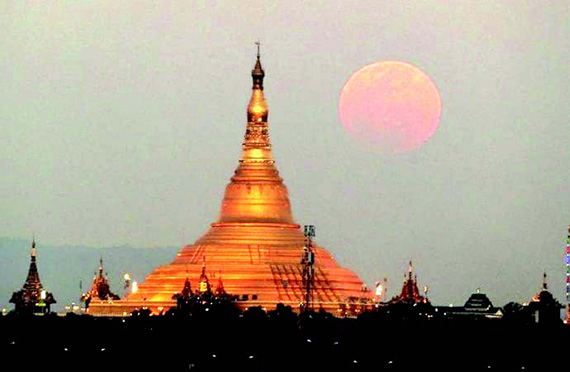
Cardinal complains of ‘criminal silence’ of Myanmar’s religious leaders
Myanmar’s cardinal has called on the military and militias to show “mercy” on the poverty-stricken populations caught in the crossfire of the country’s ongoing ethnic conflicts. Cardinal Charles Maung Bo of Yangon also called out the country’s religious leaders for their “criminal” silence about the violence in the country.
“Not a single day passes without the heart wrenching news of innocent civilians being displaced or killed or maimed by the ongoing conflict in Lashio, other Northern regions and Rakhine State,” the cardinal said in an Oct. 1 statement.
“I had served as the priest and bishop in this area for almost 20 years. Most of these people are extremely poor and innocent people,” Bo continued. “Striving for basic needs is their daily unending struggle. No group had done any economic development for these people.”
Myanmar has been transitioning from a military dictatorship since Nobel Laureate Aung San SuuKyi’s National League for Democracy won a landslide victory in the 2015 general election.
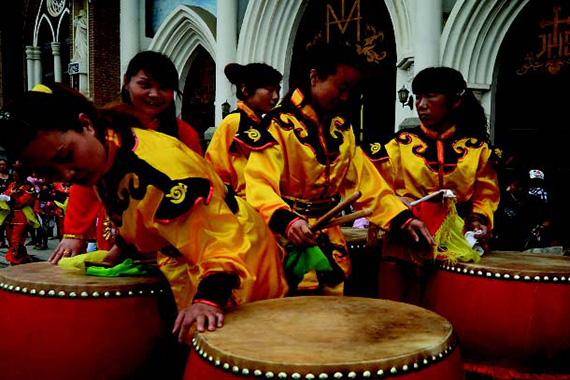
Chinese govt tightens control over religious activities
Officials in Hebei province in northern China have sent religious organizations a notice that from now on they will have to comply with new stricter regulations. The chairman of one Catholic parish council told ucanews.com he considered the demand a serious violation of people’s rights.
The “Template for a Charter on Legal People in Religious Activity Venues” was released only recently.
The document says it intends to hold venues staging religious activities to the highest standards in accordance with the “General Provisions of the Civil Law of the People’s Republic of China”, the “Regulations of Religious Affairs” and the “Notice of State Administration of Religious Affairs and Ministry of Civil Affairs on the Issue of Applying for Legal Personnel at Religious Activity Venues.”
It requires all venues to formulate charters detailing their activities and include an extra section giving examples of actual situations.
The template sent to religious groups is highly detailed in its demands.
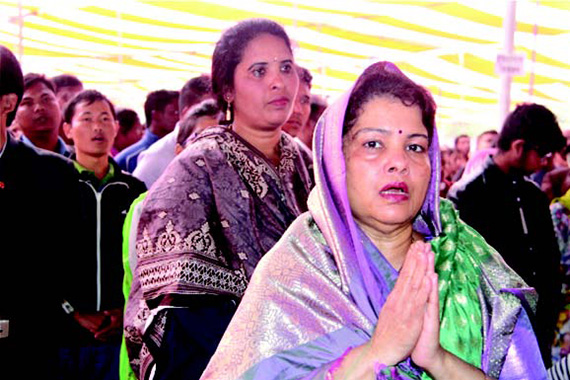
Missionaries spread the faith in Bangladesh
Catholics across Bangladesh are engaging in month-long activities undertaken by the local Church to observe and celebrate Extraordinary Missionary Month.
While observing World Mission Sunday in 2017, Pope Francis set October 2019 as the month to mark the 100th anniversary of Pope Benedict XV’s apostolic letter Maximum Illud in 1919, a document on the Church’s mission to bring to the world the salvation of Jesus Christ.
The theme for this special month is “Baptized and Sent: The Church of Christ on Mission in the World.”
The Bangladeshi Church, consisting of two archdioceses and six dioceses with about 350,000 Bengali and ethnic indigenous Catholics, has outlined a series of programs to observe the “missionary nature” of the Church targeting faithful of all ages — children, young, adults and elderly.
The missionary month holds special significance for Bangladesh, where the Church’s advent and growth are credited to the extraordinary contributions of missionaries and martyrs, said Bishop Shorot F. Gomes, auxiliary bishop of Dhaka.
Catholics need to recognize ‘ecological sins,’ synod members say
Synod members called for the Catholic Church to deepen its theology in a way that would help people recognize “ecological sins.” According to a Vatican News summary, an “ecological conversion” was necessary to ensure that Christians understand the “gravity of sin against the environment as a sin against God, against one’s neighbour and against future generations.”
“No to individualism or indifference that makes us look at reality like a spectator, like looking at a screen,” the summary said. “Yes to an ecological conversion centered on responsibility and an integral ecology that places at its center human dignity, which is too often trampled.”
At a Vatican press briefing Oct. 9, Paolo Ruffini, prefect of the Dicastery for Communication, said that a number of interventions given by bishops, observers and delegates from other Christian churches dealt with the issue of ecology and the need for a “profound ecological conversion that passes from a technocratic paradigm to a caring paradigm.”
Ruffini reported one member saying that Christianity is “a call to an ecological morality in the knowledge that ecological sins exist, which also can be described as ‘ecocide.’” Through catechesis and particularly in the sacrament of penance, the reality and impact of ecological sins can be explained.
Church body condemns Bhagwat’s Bible reference to mob lynching
The National Council of Churches in India has issued a statement condemning the reference to the Bible by Rashtriya Swayam Sevak Sangh chief Mohan Bhagwat, in order to justify the term “mob lynching.” In a statement on October 10, 2019, the NCCI said Bhagwat had misquoted the Bible. The NCCI stated: “We are shocked that such statements which have the potential to divide communities on religious lines are made in public fora.” The NCCI statement said this misrepresentation had “created suspicion among the people” and “humiliated the Christian minority”. It added, “We appeal all people not to be carried away by such misrepresentation or misinterpretation which are often done with political intentions.” At the annual Dussehra celebration at the RSS headquarters in Nagpur on Tuesday, October 8, 2019, Bhagwat had said that the concept of lynching was “alien to Bharat” and was being used to defame the “country and the entire Hindu society.”
Myanmar prelate decries religious leaders’ silence over killings
Cardinal Charles Maung Bo of Yangon says he is dismayed over the silence of religious leaders as civilians were killed and displaced as a result of ongoing fighting in conflicttorn Myanmar.
He said Oct. 1 that there were 500,000 Buddhist monks, 70,000 nuns, nearly 1,200 Christian pastors, more than 2,000 Catholic nuns and countless other religious leaders in the country.
“Some silence can be criminal. The war pursued is unjust and unholy,” Cardinal Bo said, adding that people’s prayers and rituals were being nullified by the blood and tears of innocent people. “Myanmar people are peace-loving and follow the guidelines of their religious leaders,” he said. “There is a huge potential for peace through religious leaders. Kindly raise your voice and speak out against this mutilating war. Innocent suffering will never go away. Their blood and tears will cry out from the grave.”