Pew survey looks at public’s level of confidence in nation’s leaders

A new Pew Research Centre report examines public confidence in groups of people who hold positions of power and responsi-bility in America, including religious leaders.

The other groups included in the survey were members of Congress, military leaders, police officers, principals of K-12 public schools, journalists, leaders of technology companies and local elected officials.

Respondents were asked their views about several aspects of confidence in the performance and outlook of these groups of leaders, such as whether they care about people, handle resources responsibly or provide accurate information to the public. Results were released on 19th September. “In general, U.S. adults express positive opinions about the role of religious leaders play in their communities,” said a Pew report on the survey results. “U.S. adults express the most confidence in religious leaders’ ability to fulfil the spiritual needs of their communities on a consistent basis.

“Three-quarters say religious leaders do a good job providing for the spiritual needs of their communities ‘all or most’ or ‘some of the time,’ while just 23% say religious leaders do this only a little or none of the time. Another seven in 10 U.S. adults say religious leaders care about people like them at least some of the time.”

U.S. adults “are divided over how frequently religious leaders admit their mistakes and take responsibility for them,” it said, with half saying these leaders do this at least some of the time and half saying religious leaders do this “only a little” or “none of the time.”

Pew said the opinions about religious leaders varied by religious affiliation, age and frequency of attendance at religious services.

Adults who have a religious affiliation are more likely than the religiously unaffiliated — those who identify themselves as atheist, agnostic or “nothing in particular” — to say religious leaders “perform key parts of their jobs at least some of the time.”

Among adults who identify with a religious faith, Pew said, evangelical Protestants are among the groups who hold the most positive opinions about religious leaders.

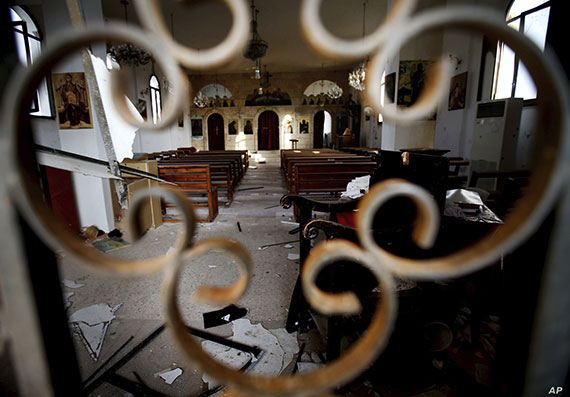
Report: Over 120 churches damaged by war in Syria since 2011

A Syrian war monitor associated with the opposition said on September 9 that over 120 Christian places of worship have been damaged or destroyed by all sides in the country’s eight-year conflict.

Some of the attacks were deliberate, such as the Islamic State group using bulldozers to destroy the ancient Saint Elian Monastery in Homs province in 2015. The majority, however, were caused by front-line combat, shelling or rockets.

Christians made up about 10% of Syria’s pre-war population of 23 million, who co-existed with the Muslim majority and enjoyed freedom of worship under President Bashar Assad’s government.

The report by the Qatar-based Syrian Network for Human Rights, which collects statistics on the war, said government forces were responsible for 60% of the 124 documented attacks since fighting erupted in March 2011. The rest were blamed on IS militants, the al-Qaida-linked group Hayat Tahrir al-Sham and other factions of the armed opposition.

Warning World of Persecution of Christians Govt Duty, Official Says

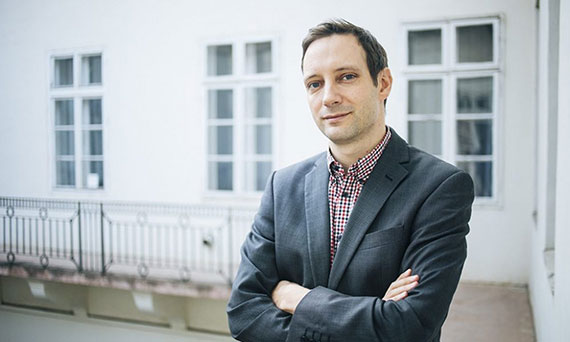
The Hungarian government and researchers have a joint responsibility to warn the global community of the ongoing persecution of Christians, “the largest and least talked-of humanitarian crisis today,” a government official told a conference in Budapest.

Tristan Azbej, state secretary at the Prime Minister’s Office for persecuted Christians, spoke at a conference organised by the state secretariat, the Konrad Adenauer Foundation and Budapest’s National Public Service University (NKE).

Christianity is said to be the most persecuted religion in the world, with 215 million people suffering discrimination or genocide-like persecution for their religion worldwide, he said. Some 4,150 Christians have been murdered in 2018, he said.

Azbej noted that the government’s Hungary Helps programme, aiming to help persecuted Christians in their homelands, was launched on the basis of data provided by the university.

This secular Franciscan lived among lepers. Could he become Zimbabwe’s first saint?

British-born John Bradburne, who died in Zimbabwe 40 years ago, could be on his way to be-coming the country’s first canonized saint.

Bradburne is a revered figure among the Catholic community in the landlocked southern African country of Zimbabwe. According to reports, Bradburne was shot in the back after he was abducted from his hut in Mutemwa in the north-east of Zimbabwe. Born in 1921 to Anglican parents in Cumbria, England, Bradburne converted to Catholicism in 1947 while living with Benedictine monks, after he had a religious experience during World War II.

He lived after his conversion as a pilgrim, shuttling between England, the Middle East and Italy, living out of one bag. He was a prolific poet. Bradburne joined the Secular Third Order Franciscan in 1956.

He later made contact with Fr John Dove, a Jesuit friend living in Zimbabwe. Bradburne asked whether there was a “cave in Africa” where he could pray. Dove encouraged him to move to Zimbabwe, where he arrived in 1962.

In Zimbabwe, he told a Franciscan priest the three desires of his life: “to serve leprosy patients, to die a martyr, and to be buried in the Franciscan habit.”

In 1969, seven years after his arrival in the country, Bradburne’s desire to care for leprosy-afflicted patients was fulfilled, when he was appointed the lead caretaker at Mutemwa Leprosy Settlement, a center that cared for leprosy patients.

Bradburne spent hours with patients. He rose at 3:00 each morning, and washed patients, bandaged them, ate with them, and talked with them. Some of them he carried to Mass. But he clashed with leaders at the centre over the conditions in which patients lived, and eventually, he was fired.

Eritrean bishops say seizure of Catholic schools is ‘hatred against the faith’

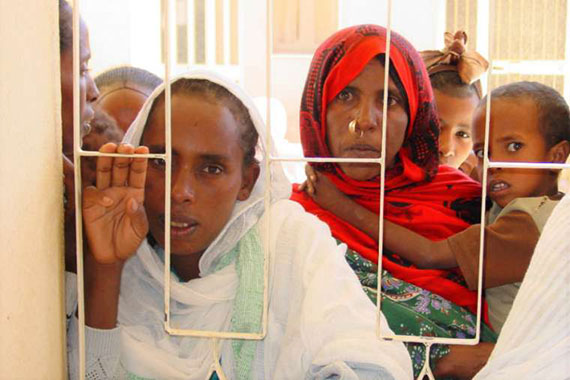
Seven religious schools in Eritrea, four of them sponsored by the Catholic Church, have been seized by the country’s government this month. Catholic bishops in the country say the move was motivated by “hatred against the faith.”

“If this is not hatred against the faith and against religion what else can it be?” Eritrea’s bishops asked in a Sept. 4 letter addressed to the Minister of Public Education, SemereRe’esom.

The seven schools seized by the government include three run Protestant and Muslim groups, according to Comboni Catholic missionaries serving in the area. The schools have been nationalized, and will reportedly now be run by the country’s education ministry.

“The actions that are being taken against our educational and health institutions are contrary to the rights and to the legitimate freedom of the Church,” the bishops wrote in their September 4th letter.

The bishops also suggested that the government raise to them any objections to the way in which Catholic schools and hospitals are administered in Eritrea.

Nagaland to become happiest state in 11 years

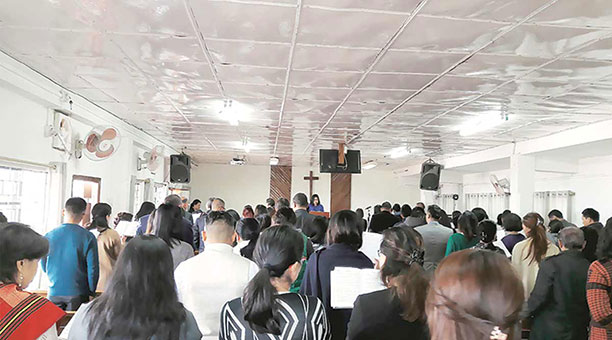
Nagaland’s Peace Channel plans to transform the Christian majority state in north eastern India into the happiest and most peaceful place in the country by 2030.

This was stated by the director of Peace Channel Father C.P. Anto in his keynote address at the 12th Peace Knit Fest 2019 celebration held at Don Bosco Youth Centre, Wokha town, 75 km north of Kohima, the state capital. The September 20 event addressed the theme “Transformed to transform.”

In order to achieve the dream, Father Anto stressed the need to move from micro identity of tribe, religion, caste, class and region to macro identity as human beings in which everyone would learn to accept and respect one another. The Catholic priest also encouraged all the participants to work collaboratively and pledge toward making Nagaland a peaceful State.

“In order to make the “Vision 2030” a reality, Peace Channel in collaboration with private college association of Nagaland and all Nagaland private school association wish to work towards achieving this dream in the days to come,” the priest stated.

Priest on bail alleges plan to kill him in jail

A Catholic priest who spent ten days in judicial custody for “conversion” alleges a plot to get him killed in the jail.

“They tried to kill me inch by inch,” Father Benoy John, who was released on bail on September 16, told the Malayala Manorama newspaper.

The 42-year-old priest was arrested on September 6 along with catechist Munna Hansada from a Catholic mission in Rajadaha village under Godda district of Jharkhand State.

Father John, who was fitted with a pacemaker two years ago, said the junior officials of the jail gave him medicines for fever when he complained of severe heart pain.

“I pleaded them with tears to take me to a hospital, which is just two minutes away, but they refused,” recalled the priest, a native of Kerala serving the diocese of Bhagalpur, for the past four years. He also said the jail’s pharmaceutical compounder treated him.

XLRI – JAMSHEDPUR HAS A NEW DIRECTOR

The Xavier School of Business Management, popularly known as XLRI  Jamshedpur, a premier Jesuit intuition has a new Director Rev. Fr P. Maria Joseph Christie, S.J. took over on 7th June, 2019 from Rev. Fr Abraham Enthesmkuzhy who handed over the reins of administration to Rev. Fr Christie, S.J. Fr Abraham was Director of XLRI for 11 years. Earlier too, he was Director for six years thus becoming one of the longest serving Director.