Latin Catholics to offer special prayers for Sri Lanka

All the Latin rite dioceses in India will organize special prayers to show solidarity with the Church and people of Sri Lanka.

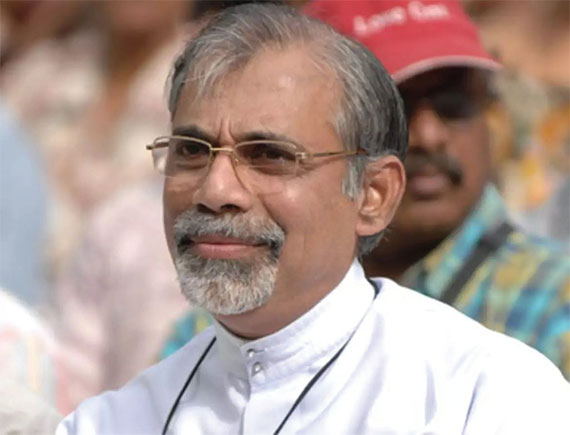
“To pledge our closeness and solidarity with the victims of the multiple bomb blasts that took place in Sri Lanka on Easter Sunday, I would like to propose that we observe coming Sunday, 28th April, 2019 – Divine Mercy Sunday — as a day of prayer and solidarity,” says an April 24 circular from the Conference of Catholic Bishops of India (CCBI) addressed to all the Latin rite prelates in the country.

CCBI president Archbishop Filipe Neri Ferrao of Goa and Daman has suggested that all parishes during the Sunday Mass to add “special prayers of the faithful for the departed souls, the injured and the affected families, who are plunged in grief and pain due to these senseless attacks.”

The prelate also urged the bishops to “spend some time in prayer before the Eucharistic Risen Lord, so that the country of Sri Lanka may experience healing and receive the gift of peace.”

Police guard New Delhi churches after Sri Lanka attacks

Security has been beefed up at churches in Indian capital, New Delhi after a series of suicide bombings killed more than 300 people in Sri Lanka on Easter Sunday.

Armed Police are guarding Sacred Heart Cathedral in the capital and asking churchgoers to pass through metal detectors. They also frisk visitors who enter the 88-year-old building.

Similar security measures have been put in place at most of the 200 churches in the city, police spokesperson Madhur Verma told media.

They have also deployed special vehicles carrying trained anti-terrorism personnel outside prominent churches, which are also under the surveillance of plainclothes police officers checking for suspicious movements, according to Verma.

The cathedral attracts thousands of people, including non-Christians, at Christmas and Easter when church officials inform police, who take care of crowd management, traffic regulations and security. “Police provided security during Holy Week and they continue it. We believe it is a precautionary measure. It is good to be cautious,” said Father Savarimuthu Sankar, spokesman for Delhi Archdiocese.

The cathedral has provided police with complete assistance and requests visitors to cooperate with police to remain safe and secure, he said. “We are here to give fool proof security to churches and people in the national capital. It’s our duty,” said a security official posted in front of the cathedral.

Indian Christians pray for Sri Lanka

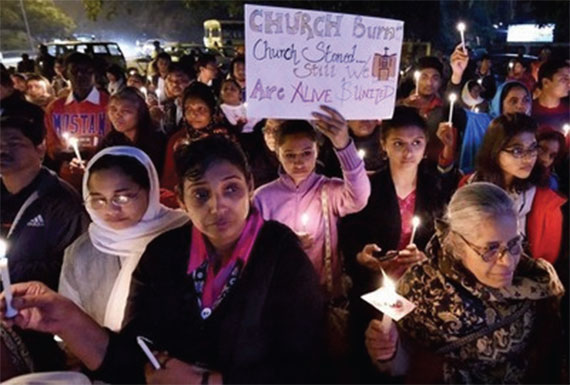
Hundreds of thousands of Catholics throughout India dedicated on April 28, the feast of Divine Mercy, to pray for neighbouring Sri Lanka that was ravaged by serial blasts.

The Conference of Catholic Bishops of India, the national body of the Latin Rite Church, had called for observing the feast with various programs to show solidarity with the victims of the blasts that killed 359 people and wounded more than 500 in Sri Lanka on Easter Sunday.

The Catholic Church observers the Sunday after Easter as the feast of Divine Mercy associated with special promises from Jesus and indulgences issued by the Church.

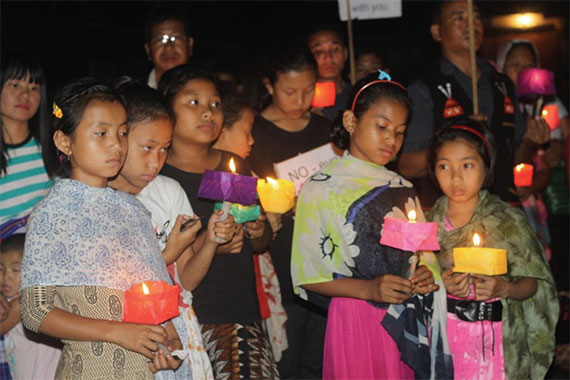
Expressing solidarity with the Sri Lankan victims, Catholics of Arunachal Pradesh conducted special prayer service and candle light rallies in various parts of India’s north-eastern most region.

About 3,000 people, mostly survivors of 2008 anti-Christian violence, joined similar programs in the Kandhamal district of Odisha State in Eastern India.

At Our Lady of Charity Parish Church, Raikia, a major parish in Kandhamal, the survivors marched with lighted candles and sang hymns for the Sri Lankan victims. Catholics in Raikia were attacked twice in the past — 2004 and in 2008 — by Hindu extremists.

“How can we the victims of anti-Christian violence of 2008 fail to show our solidarity towards the victims of terrorists in Sri Lanka?” asked Anita Pradhan, a widow.

She said, she could understand the agony of family members of Sri Lankan victims since “I had felt totally blind after the brutal massacre of my husband by the Hindu Extremist in 2008.”

Indian theologians to study “whither India”

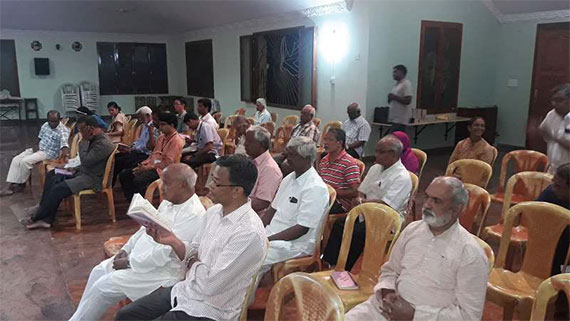
India’s Catholic theologians on April 25 assembled in Bengaluru to analyze the current situation in the country and evolve relevant responses to help the Church address modern problems.

The 42 annual meeting of the Indian Theological Association (ITA) at the National Biblical Catechetical and Liturgical Centre addressed the theme, “Whither India.”

“Upholding democratic values and the secular fabric of our Indian Constitution is paramount. The ITA seminar to create awareness for people, civil society and entire Indian polity is timely,” says Father Udayanath Bishoyi, a visiting professor at Morning Star Regional Seminary, Calcutta, and a participant.

The Cuttack-Bhubaneswar archdiocese priest is among 74 women and men theologians from various parts of India attending the April 25-28 event. The association was founded in 1976 to promote the development of an Indian Christian theology.

Jharkhnad wants federal probe into Christian foreign funding

Jharkhand State in Eastern India has sought a federal investigation into 31 Christian charity organizations to check for the mishandling of overseas donations.

The state government led by the pro-Hindu Bharatiya Janata Party (BJP), suspects organizations have diverted donated funds for unspecified expenses and violated certain rules in submitting their annual reports, media reports said on April 13. Church leaders have termed the move an attempt to slander them and church bodies in the state.

“This is nothing but an attempt to give us bad press and malign our name,” said Archbishop Felix Toppo of Ranchi.

He said they have learned from media that the government has recommended the Federal Home Ministry to use the Central Bureau of Investigation (CBI) to probe 31 Christian non-governmental organizations, most of them Catholic.

Religion and nationalism mark Indian poll

A report prepared for the United States Congress has stated that India’s unfolding national elections could give rise to a long period of dominance by the ruling Bharatiya Janata Party (BJP) of Prime Minister Narendra Modi.

“Perhaps more crucially, the election pits an unabashedly Hindu nationalist Prime Minister and ruling party against an array of more secular-minded parties, some focused on the interests of India’s large lower-caste and Muslim minorities,” said the report.

It noted that while coalition governments are sometimes faulted for instability, they could also compel leaders to negotiate and take account of a wider variety of perspectives.

However, a government with an overwhelming majority could lead to “complacency and arrogance,” according to the report produced by the Congressional Research Service, which does not necessarily reflect official U.S. policies or attitudes.

Balasore bishop dies of heart attack

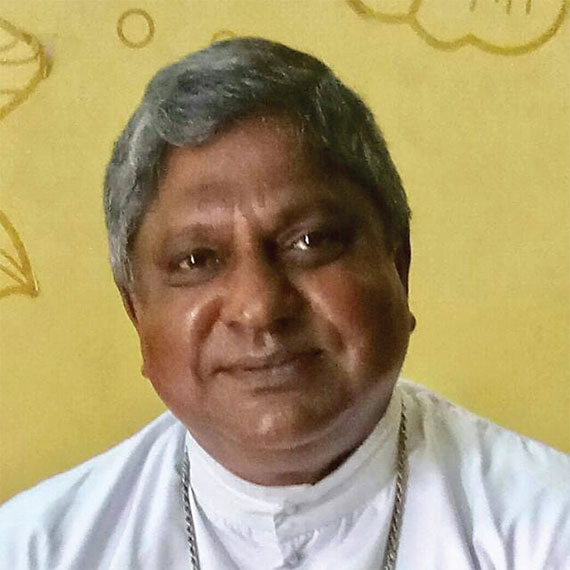
Bishop Simon Kaipuram of Balasore died early morning on April 22 due to massive heart attack. The Vincentian prelate was 65.

The funeral was scheduled at 3 pm on April 24, according to Father Prasan Singh, deputy secretary of the Odisha Catholic Bishops’ Council.

Punjab Chief Minister Sardar Usman Buzdar has greeted the Christian community on Easter.

In his message, he said that the purpose of Easter is to spend time and share pleasantries with deserving people. “The Christian community is peace loving and we respect them and share their joys,” he said. He said Easter is the time to guide the humanity to welfare of humanity and promote pious qualities. “Islam teaches us to respect all prophets and we believe in all prophets, including Hazrat Essa (AS) as this is part of our faith. Brotherhood, harmony and forgiving are teachings of Hazrat Essa (AS),” he said.

Christians, Muslims protest over cow vigilantes

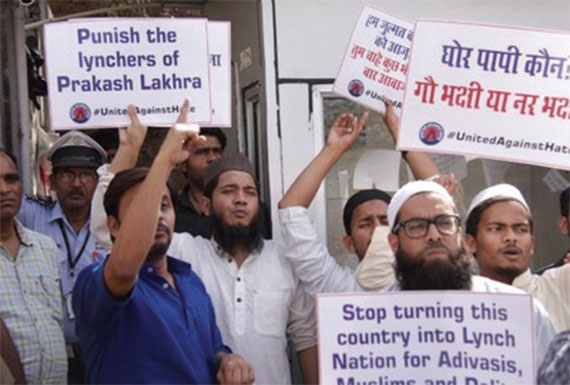
Five days after a mob of Hindus beat to death a Catholic man for suspected cow slaughter in India’s Jharkhand State, Christian and Muslim activists joined in New Delhi to protest about violence against minorities.

A mob attacked Prakash Lakra and three others on April 10 after suspecting them of slaughtering a cow in Jhurmu village in the Eastern State’s Gumla district. Lakra died from his injuries hours after the attack, church sources said. About 100 protesters gathered in front of the Jharkhand Bhawan building in New Delhi on April 15 to shout slogans against the state government run by the pro-Hindu Bharatiya Janata Party (BJP).

“Such violence is nothing but a strategy to terrorize minorities and polarize the country in the name of religion for votes,” said Christian leader A.C. Michael, a protest organizer.

Speakers said violence in the name of protecting cows, which are revered animals in Hinduism, has increased ever since the BJP came to power in New Delhi. Hindu groups stepped up violence against Christians and Muslims because they considered the BJP victory a mandate for them to push for their goal of establishing a Hindu-only nation, activists said.

“We had never heard of people killing in the name of religion in our area. We tribals here respect each other irrespective of our faith. It is very unfortunate and shocking,” said Father Cyprian Kullu, Vicar General of Gumla Diocese in Jharkhand.

He told ucanews.com that Lakra and his friends did not slaughter a cow. An aged ox slipped in a pit and died and villagers decided to take its skin to be used.

Senior police official M.L. Meena told the media on April 13 that the attackers were armed with iron bars and sticks and attacked the victims brutally. At least 139 people were also injured in these attacks. More than half of the attacks were based on rumours, it is said.

India’s Dalit Christians may come in from the cold

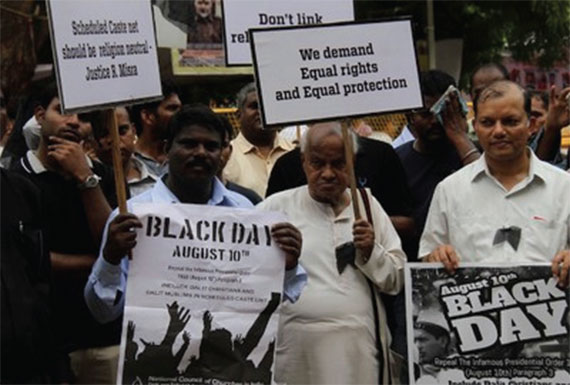
Ending the denial of social welfare benefits to Dalit Christians, who hail from a group formerly known as untouchables, is among the undertakings given during campaigning for India’s national parliamentary election.

For almost seven decades, political parties have ignored the demands of Christians of Dalit origin for welfare measures enjoyed by others, particularly Hindus. “This has been a long-pending demand of the Catholic Church and we are happy some political parties are now raising this issue and making this part of their election manifestos,” said Bishop Theodore Mascarenhas, secretary-general of the Indian Bishops’ Conference.

Catholic Church in the United States Welcomes Thousands of New Catholics at Easter Vigil Masses

Dioceses across the country welcomed thousands of people into the Catholic Church at Easter Vigil Masses on the evening of April 20th. As the culmination of the Easter Triduum, the Vigil celebrates the passion, death, and resurrection of Jesus Christ. While people can become Catholic at any time of the year, the Easter Vigil is a particularly appropriate moment for adult catechumens to be baptized and for already baptized Christians to be received into full communion with the Catholic Church. Parishes welcomed these new Catholics through the Rite of Christian Initiation of Adults (RCIA).

Many of the dioceses across the nation have reported their numbers of people who intend to become Catholic to the U.S. Conference of Catholic Bishops (USCCB). Based on these reports, more than 37,000 people are expected to be welcomed into the Church at Easter Vigil Masses. Prior to beginning the RCIA process, an individual comes to some knowledge of Jesus Christ, considers his or her relationship with Jesus Christ and is usually attracted in some way to the Catholic Church. Then during the RCIA process, which typically lasts nine months or more, a person learns the teachings of the Catholic Church in a more formal way and discerns that he or she is ready to commit to living according to these beliefs. Thousands of people have already passed through this process and are ready to take this step in parishes throughout the country.

Two distinct groups of people were initiated into the Catholic Church. Catechumens, who have never been baptized, received Baptism, Confirmation and first Communion at the Holy Saturday Easter Vigil. Candidates, who have already been baptized in another Christian tradition, entered the Church through a profession of faith and reception of Confirmation and the Eucharist.