Decades of Neglect Threatened Notre-Dame, Well Before It Burned

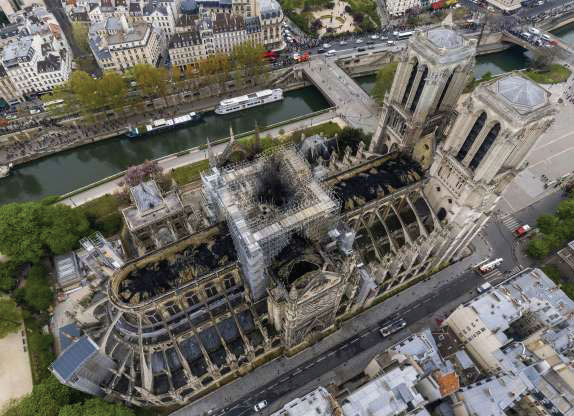
Years before flames ravaged Notre-Dame Cathedral, the landmark’s custodians realized they had a problem.

In 2013, the cathedral hired Didier Dupuy and his son to scale the building and install lightning rods at different points, including its central spire. Gaping holes and cracks they discovered in the lead roofing shocked them. Just below was a dry and dusty space of timber beams, known as “the forest,” that had supported Notre-Dame’s roof for centuries. A job that was supposed to last a couple of weeks took three months as the duo performed emergency repairs before quitting in frustration.

“We told them, you need professionals for this. We can weld, but it’s not pretty,” said Mr Dupuy, who removed 110 pounds of rust from the cross atop the spire. “The cross was in very bad shape.” Notre-Dame’s forest caught fire, incinerating the central spire and most of the cathedral’s roof in a disaster that dismayed the world.

Pope awards top job to Nobel Prize winning physicist

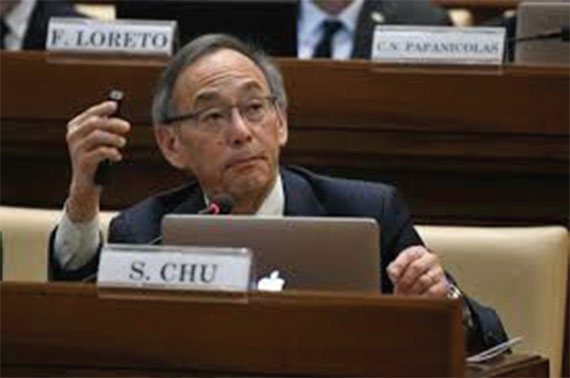
Pope Francis appointed Steven Chu, a Nobel Prize winning physicist from the United States, to the Pontifical Academy of Sciences.

Chu, who served as secretary of energy under US President Barack Obama, was appointed to the papal think tank, the Vatican announced on 20 October.

Born in St Louis, Chu is the co-recipient of the 1997 Nobel Prize in Physics “for development of methods to cool and trap atoms with laser light.”

The Nobel Prize winning professor of physics and molecular and cellular physiology taught at Stanford University in California before serving as energy secretary from 2009 to 2013; in that post, he was the first scientist to hold a cabinet position, according to the Stanford physics department website.

According to the papal academy’s website, the members are “eighty women and men from many countries who have made outstanding contributions in their fields of scientific endeavour. They are nominated by the Holy Father after being elected by the body of the academicians.”

Colombo Cardinal condemns bombs attacks in Sri Lanka

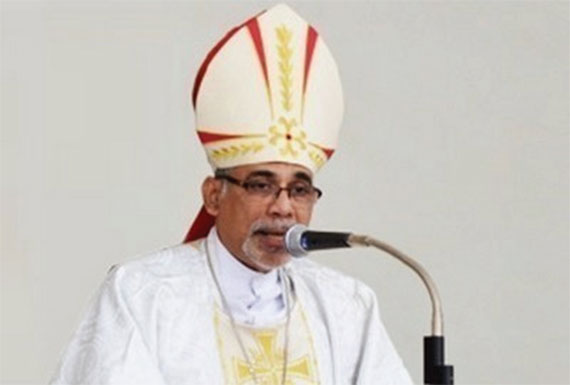
The Archbishop of Colombo, Cardinal Albert Malcolm Ranjith, condemned the deadly attacks on churches and luxury hotels on Easter Sunday (April 21) in a series of bomb blasts that claimed at least 290 lives and leaving more than 500 people injured.

The police said that it was the worst violence to hit the island since its devastating civil war ended a decade ago in 2009.

Cardinal Ranjit urged Sri Lankans not to “take the law into their own hands” after a series of explosions targeting churches and people hotels.

“I condemn, to the utmost of my capacity, this act which has caused so much death and suffering,” he told Fides.

He also urged people to donate blood to help the injured and pray for their speedy recovery. It is so sad, so tragic and shocking. The dastardly attack was mainly on Christians in churches and others in hotels.

“We are saddened for all those who loved lives in this violence. Our prayers are for each of them,” the Cardinal said. One of the explosions was at St Anthony’s Shrine, a Catholic Church in Kochcikade, Colombo, a tourist landmark.

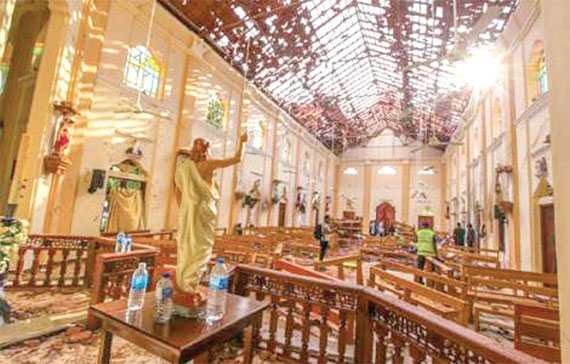
A second blast hit at St Sebastian’s Church during Easter Mass, killing dozens. Pictures from the site showed bodies on the ground, blood on the church pews and a destroyed roof. Soon after the first two church blasts, police confirmed that the Zion Church in the east coast town of Batticaloa had been hit, along with three high-end hotels in the capital the Cinnamon Grand, the Shangri-La and the Kingsbury.

Mass funeral held for Sri Lanka blasts victims

The first mass funeral was held in Sri Lanka on 23rd April as the country marks a day of mourning for the victims of the Easter Sunday bombings that killed 350 people.

The mass funeral was held at the St Sebastian’s Church in Negombo, north of Colombo, which was one of the places targeted in Sunday’s blasts, reports the BBC.

Earlier, a moment of silence was observed at 8.30 a.m., reflecting the time the first of six bombs detonated.

Flags were lowered to half-mast and people bowed their heads in silence in respect to the victims as well as the 500 people injured in the attacks, BBC said.

The funeral comes amid a state of emergency which was imposed on Monday 22nd April.

The police have so far detained 40 suspects in connection with the attacks, a spokesman said.

Easter a holiday in Bangladesh this year

In Bangladesh, where Sunday is not a holiday, Easter was celebrated as a holiday for the first time in 30 years.

This was largely the effort of Gloria Jharna Sarker, the first Catholic woman parliamentarian chosen in the last elections who fought to have the rights of the Christian Community recognized at the national level, reports.

On Easter Sunday, April 21, all schools in the country remain-ed closed. Welcoming the good news, local Christians said it was a positive sign of good relations between religions.

A Dhaka merchant explained to AsiaNews that since independence gained in 1971, Sunday was a holiday, including Easter Sunday.  However, Sunday ceased to be a holiday since the mid 1980s, when former president Hussain Muhammad Ershad introduced the Islamic tradition making Friday the weekly holiday.

“In this way, the celebration of the Resurrection of Christ was excluded from the nationally recognized festivities.”

Catholics in Asia stand together with suffering Sri Lanka

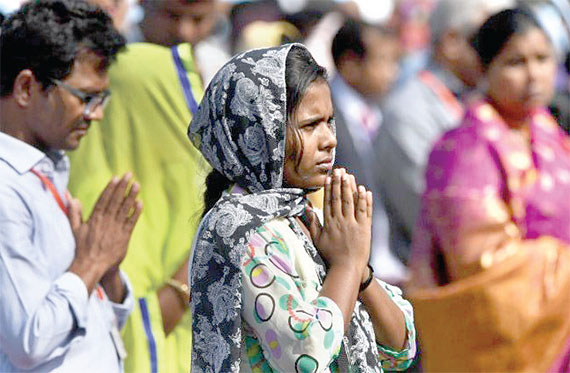
Pope Francis and religious leaders across Asia have expressed their Christian unity and condolences after the terror attacks in Sri Lanka that killed above 350 people on Easter Sunday. The Pope used his Easter Sunday address to the faithful in St Peter’s Square in Rome to speak about the bombings of churches and hotels that devastated the island nation.

“I want to express my loving closeness to the Christian community, targeted while they were gathered in prayer, and all the victims of such cruel violence,” he said.

“I entrust to the Lord all those who were tragically killed and pray for the injured and all those who are suffering as a result of this dramatic event. “I wish to express my heartfelt closeness to the Christian community [of Sri Lanka], wounded as it was gathered in prayer, and to all the victims of such cruel violence.”

In Pakistan, which has suffered many similar attacks on Christians, the Centre for Legal Aid and Assistance (CLAAS), a non-profit law firm which takes up cases of persecuted Christians, is holding a protest on April 22 against terrorism.

“Humanity died on this Sun-day. Satan is using religion in terrorism,” said CLAAS national director Joseph Francis.

“We offer every possible co-operation to the Sri Lankan government. This incident is a danger for world peace. Leaders of all nations should forget their differences and join hands in making a doable policy.” Imple-mentation Minority Rights Fo-rum, a Catholic NGO, is holding a candlelight vigil for the victims of church attacks on April 22 in front of Lahore Press Club.

In Pakistan, state schools are a harsh environment for Christians

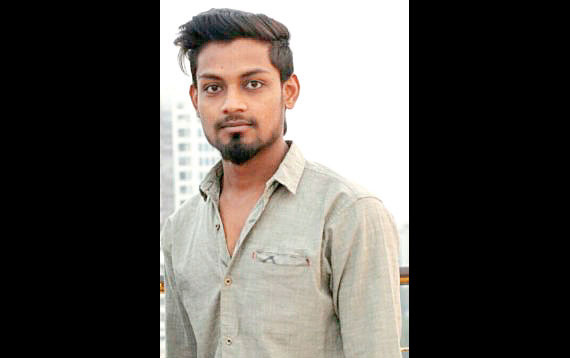
Noman is a 20 year-old Catholic living in Karachi, Pakistan. In an interview with Aid to the Church in Need he talks about the discrimination and mistreatment he experienced at school because of his Christian faith. Here is Noman’s story:

“I am a first-year student of business. My hobbies include cricket and soccer. I am a Christian. No one in my family has been kidnapped or victimized by violence, but I have faced discrimination from classmates and teachers because of my religion.

“When I reported a Muslim classmate for cheating, the teacher said: ‘He doesn’t cheat. You did it.’ The classmate called me bhangie, which means street sweeper or gutter cleaner; he made fun of me and used words that were disrespectful of my faith. But I could not respond in kind. If I had done so, I could’ve been charged with blasphemy, and my family would have suffered. So I stayed silent.”

“Both my teacher and my principal were well aware of the situation. My mother was called in to speak with my teacher, but they were not ready to listen to my version of what happened. They even refused to give me a form that the school required for exams—so one year of my studies was wasted.”

“But I am thankful to God, who has not abandoned my family. He was there when a friend of my mother’s offered to pay for my education, which my parents could not afford at the time. The happiest moment of my life was when I completed High School; I was the first person to do so in my family.”

Don’t vote for communal candidates: Goa Archbishop

In Goa a Catholic priest apologised to the poll authorities for a hate speech urging people not to vote for the BJP, Goa’s Arch-bishop Filipe Neri Ferrao urged voters not to cast their ballot for those candidates who “corrupt, communalize, exploit and divide.”

In his message on the eve of Easter Sunday, Ferrao said: “As we stand on the threshold of parliamentary elections as well as by-elections in some of our constituencies, let us pray that our electorate will vote for the forces which empower the weak, the marginalised and the exploited, rather than those that corrupt, communalise, exploit and divide.” Ferrao is the religious and spiritual leader of more than a quarter of the state’s 1.5 million population which is Catholic in religious orientation.

Two viral videos featuring Father Conceicao D’Silva, in which he referred to Bharatiya Janata Party (BJP) President Amit Shah as a “demon” and attributed the cause of late Chief Minister Manohar Parrikar’s affliction of cancer to the “wrath of God,” went viral in the media, attracting uniform condemnation.

After a complaint was filed by the Goa BJP against the priest, D’Silva apologised to the district administration, which also cautioned him against making hate speeches.

BJP leader questions Christian loyalty, Archbishop seeks apology

Archbishop Peter Machado of Bangalore on April 24 asked a Bharatiya Janata Party leader to withdraw his anti-Christian remarks and offer an unconditional apology to the community.

The uncalled for remarks of K.S. Eshwarappa are condemn-able and highly deplorable, the archbishop said in a statement.

The BJP leader’s statement has done great harm to Christians and discredited their community’s credibility. So, he should withdraw his statement and tender an unconditional apology to the Christian community, asserted the archbishop, who is president of the Karnataka Re-gion Catholic Bishops’ Council.

Eshwarappa, a former deputy chief minister of Karnataka, on April 9 told press reporters on his election campaign trail at Bagalkot that his party intentionally avoided giving tickets to Christians.

“The Christians, like the Muslims were not given party tickets because Christians are not loyal to the country and not honest too,” the BJP leader added.

Sri Lankan blasts heighten security fears in Goa

The Sri Lanka terror attacks have spurred India’s Goa State to provide security for its ancient Christian buildings, but church leaders say much more is needed.

A day after a series of explosions killed more than 300 people in churches and hotels in Sri Lanka on Easter Sunday, Goa’s chief minister said he had asked police to provide security to churches across the former Portuguese colony on India’s western coast.

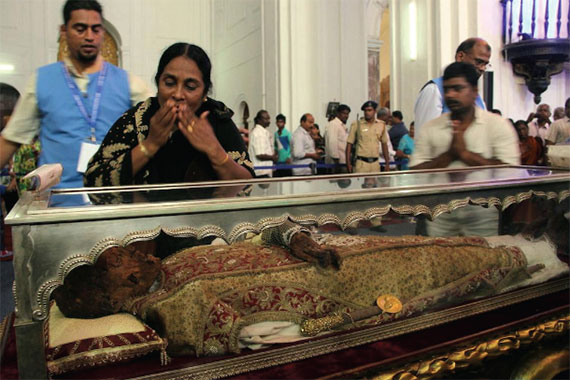
However, churchgoers and officials say only token security arrangements can be seen, particularly around historical buildings in Old Goa. They include the Basilica of Bom Jesus that houses the mortal remains of 16th century Portuguese-Jesuit missionary St Francis Xavier.