
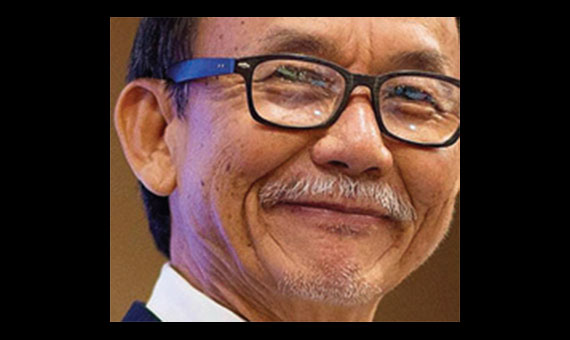
Malaysia’s human rights commission, Suhakam, has ruled that Pastor Raymond Koh and a Muslim social activist, Amri Che Mat, were the victims of state sponsored “enforced disappearances.” After a year-long inquiry, Suhakam reported on 3rd April that the two were taken by Special Branch – the police’s intelligence unit. Church leaders in Malaysia are now calling on the government to “Immediately take steps to clarify and separate the jurisdictions of the religious authorities and the Royal Malaysia Police.”
Daily Archives: April 19, 2019

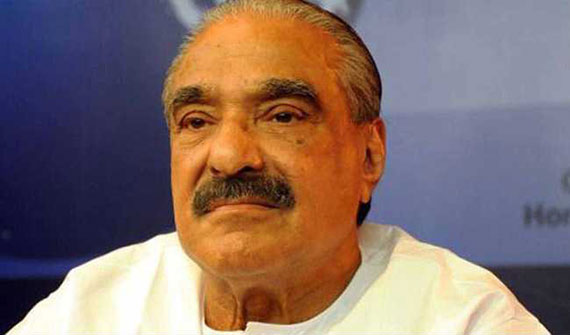
Veteran Catholic politician K.M. Mani dead
Veteran Kerala politician and Catholic K.M. Mani, who never lost any Assembly election since 1967, died on April 9 evening at a private hospital here, doctors said. The 86-year-old was undergoing treatment for a lung ailment— Chronic Obstructive Airway Disease.
He was admitted to Lakeshore Hospital in Ernakulam. The end came on April 9 evening. Mani’s party is the biggest ally of the Congress in the United Democratic Front.


Controversial Church land sale: Report submitted to Rome
Bp Jacob Manathodath, apostolic administrator of Ernakulam-Angamaly archdiocese, on April 5 submitted to Rome the enquiry report on the controversial land sale.
The administrator handed over the report to Cardinal Leonardo Sandri, the prefect of the Pontifical Congregation for Oriental Churches, in the Vatican, says a press release from Father Paul Karendan, the Ernakulam-Angamaly archdiocese’s Public Relations Officer.
Cardinal Sandri and Bp Manathodath spent two hours discussing the land sale controversy as well as court case on fake documents against Cardinal Alencherry, head of the Syro-Malabar Church, the larger of the two Oriental Catholic rites in India. The 75-year-old Argentinian cardinal said he would study the report seriously and take appropriate action. Until then, the Vatican official wants the content of the report kept confidential, the PRO’s note says quoting Bishop Manathodath.
A series of real estate transactions since 2015 reportedly resulted in financial losses for the archdiocese. On November 29, 2017, Cardinal Alencherry set up a committee to investigate. The committee submitted its report on January 4, 2018.
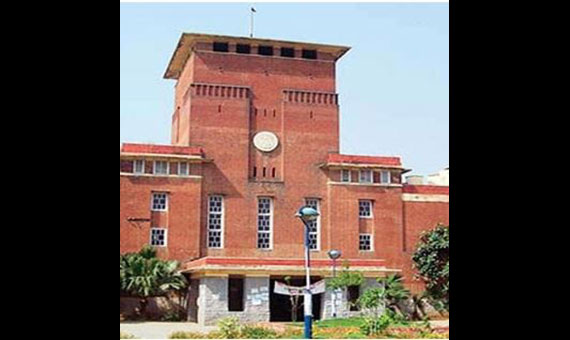
Stephens’ teachers want meet on new admission policy
The staff at St Stephen’s College, Delhi has requested the principal to hold a staff meeting to discuss the changes in the admission policy passed by the Governing Body (GB).
On March 14, the governing body decided to hold an aptitude test for undergraduate courses from this year and increase the merit differential percentage from 20% to 25% for those who come under church of North India (CNI) Church of North India-Delhi (CNI-D). The college has also decided to increase the admission fee.
The teachers claim that the decisions were taken without consulting them. The teachers association held a meeting about the same. According to one of the teacher’s, the decision for an aptitude test is purely an academic matter, but the general body took the decision without discussing it. In the past, departments had said that they couldn’t hold such tests, the teacher added.
In the year 2015, the then principal Valson Thampu introduced the aptitude test along with an interview for the admissions. While 15 marks were allotted for the interview the rest was calculated based on the class 12 marks of the candidates. Last year however, aptitude tests were not held for the Physics and Chemistry Honors program.


Arunachal Catholic body withdraws appeal to vote for Congress
The Arunachal Pradesh Catholic Association has withdrawn its prayer petition appealing to the Catholics to pray and vote for Congress candidate from Arunachal West constituency and former chief minister Nabam Tuki.
The prayer petition came after the appeal went viral in social media and caught the Election Commission’s attention, which asked the association to withdraw its appeal and issue an apology, the Times of India reported.
The prayer petition signed by the secretary general of the association, Pekhi Nabum, also caught the attention of Tuki’s opponent, Kiren Rijiju of BJP. Rijiju posted about it on Facebook.
“This is not proper. We all are children of the God who never discriminates. Democracy is system in which the government is elected by the people. I’ve always served the people with full sincerity.
Pope Benedict Breaks 6 Years Silence To Comment On Clergy Sex Abuse Scandal
Pope Emeritus Benedict XVI has broken six years of relative silence with the release of an outspoken letter on the clergy sex abuse scandal. Benedict’s analysis differs significantly from that of his successor, Pope Francis, and thus leaves the world’s Catholics with contrasting papal perspectives on the greatest crisis facing Roman Catholicism today.
In his 6,000-word essay, published on April11 in the Italian newspaper Corrieredella Sera, with an English translation by the Catholic News Agency, Benedict blames the epidemic of clergy sex abuse largely on a collapse of moral standards in the 1960s and the subsequent failure of Catholic leaders to uphold traditional church teaching.
“It could be said,” Benedict writes, “that in the 20 years from 1960 to 1980, the previously normative standards regarding sexuality collapsed entirely.” Among the changes, in Benedict’s view, was that pedophilia became seen as “allowed and appropriate,” and pornography became widespread and accepted. The priesthood, meanwhile, fell into crisis.
“Catholic moral theology,” Benedict writes, “suffered a collapse that rendered the Church defenseless against these changes in society. …[T] here could no longer be anything that constituted an absolute good, any more than anything fundamentally evil; (there could be) only relative moral judgments. There no longer was the (absolute) good, but only the relatively better, contingent on the moment and on circumstances.”
Though Benedict stops short of blaming gay priests for the epidemic of minor abuse, as some have, he claims that “homosexual cliques” were established “more or less openly” in Catholic seminaries, thus changing the seminary climate in such a way as to contribute to a breakdown in the preparation of priests for their ministry.
Benedict has espoused similar views previously, both as a cardinal and as Pope, but in the six years since stepping into “emeritus” status, he has largely kept silent and let Pope Francis speak for the church. Francis has argued that the clergy abuse crisis is rooted in a culture of clericalism, where priests and bishops became so elevated that their word and authority dominate over the experience of the people they serve, thus contributing to a lack of accountability. He has expressed a more tolerant view of homosexuality.
In his letter, Benedict says he asked Francis in advance whether he would consider publication of the letter “appropriate,” and at no time does he suggest any criticism of the Francis papacy. He says he was motivated to write his letter by the recent Rome summit on clergy abuse, convened by Francis, and that he intended his comments to be “a helpful contribution.” At the end of his letter, he thanks Francis “for everything he does to show us, again and again the light of God, which has not disappeared, even today.”
750,000 abortions performed in Russia annually, only one-fifth for medical reasons
Moscow on April 3, Interfax-Only 20% of all abortions in Russia are performed due to health problems, Russian Deputy Prime Minister Tatyana Golikova said. “I have to say that over 750,000 terminations of pregnancy are registered annually, and only a fifth of them is performed for medical reasons,” Golikova said at a parliamentary hour meeting in the State Duma. Determining the reasons that make women have abortions is “another way to help increase the birth rate,” she said. The potential for increasing the birthrate in the government is also seen in the regions of the Urals and Siberia because the proportion of women of reproductive age there is higher than in Russia in general, she said. The deputy Prime Minister earlier said the death rate had increased almost in one-third of Russia’s regions in 2018.
Indian Christians look to Supreme Court for religious freedom
Christian leaders and activists in India are pinning hopes on the Supreme Court to set aside guidelines made by a state court on individuals changing religion. India’s top court on April 5 postponed hearing a petition of Christian leaders that challenged the guidelines of Rajasthan high court, saying the directions violate religious freedom guaranteed in the constitution. The court postponed the hearing after the federal government said it needed more time to offer a response to the petition.
Christian leaders took up the case after the Rajasthan court on Dec. 14 last year passed general guidelines in restricting conversions. The court was hearing a habeas corpus petition regarding a Hindu girl who married a Muslim, presumably after changing her religion to Islam.
Tribal Christians hold election key in Indian state
Tribal leaders in India’s Jharkhand State say their people have emerged from political oblivion to become a decisive force in the upcoming parliamentary election. They plan to use their votes to respond to government policies that hurt them, said Catholic leader Prabhakar Tirkey. Tribal people, who follow both Christianity and the indigenous Sarna faith, can influence the outcome of all 14 parliamentary constituencies in the eastern state, according to Tirkey.