Pakistani bishop appeals against risk of Pakistan-India war

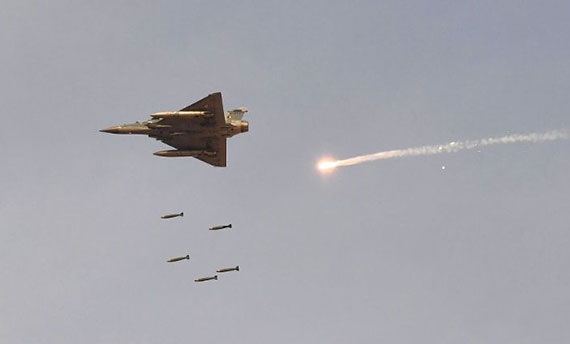
With the risk of war escalating between India and Pakistan following an Indian airstrike inside Pakistan on Feb 26, a Pakistani bishop has appealed for peace talks. The Indian government claimed it carried out air raids against an Islamist militant training camp of Jaish-e-Mohammed, killing “a very large number” of fighters, raising the risk of a war between the nuclear-armed neighbours.

Pakistan denied there had been any casualties but condemned the Indian action and vowed it would respond.

The airstrike near the town of Balakot, some 50 kilometres from the IndoPakistani border was the deepest crossborder raid launched by India since the last of its three wars with Pakistan in 1971. Tensions between the south-Asian neighbours have escalated dramatically since a suicide car bomb attack on Feb. 14 that killed at least 40 Indian paramilitary police in Kashmir.

The Pakistan-based Islamist Jaish group claimed responsibility for the attack.

“We condemn the terrorist attacks in Kashmir, but also any armed reaction: we ask God to change the hearts of men to stop any act that may lead to war,” said Pakistani Bishop Samson Shukardin of Hyderabad. “Let us pray for the victims and pray for peace between India and Pakistan,” he told the Vatican’s Fides news agency.

In December 2001, Jaish fighters, along with members of another Pakistanbased militant group, Lashkar-e-Taiba, launched an attack on India’s parliament, which almost led to a fourth war.

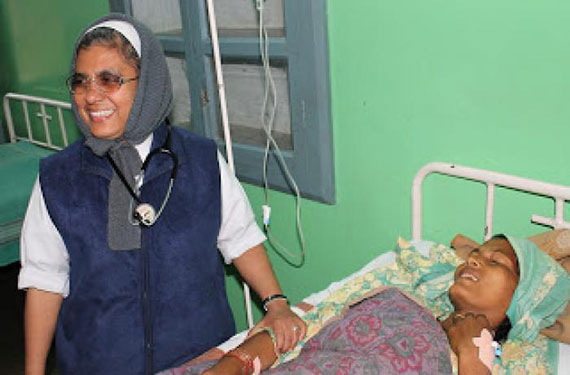
Indian nun welcomes Oscar for film on menstruation taboo

A Catholic nun, who has promoted women’s hygiene in Indian villages for years, on February 26 expressed happiness that a documentary on menstruation has won an Oscar award. “We are very happy,” Sister Liza Ignatius, gynecologist at Our Lady of Graces Hospital in Sardhana, in the northern Indian State of Uttar Pradesh.

The documentary film “Period – End of Sentence,” available on Netflix, on February 25 won the Best Documentary category at the 91st Academy Awards.

The documentary by American-Iranian director Rayka Zehtabchi tells the difficulties of seven Indian women working in a small sanitary towel factory, since their use is considered unacceptable.

According to Sister Ignatius, the award “is good news for us who serve poor women in rural areas. This will help us to improve our initiatives in favour of women’s hygiene.”

“My patients are very poor and come from rural villages. We regularly organize programs and courses on women’s issues, such as menstrual hygiene. The hospital is at the service of the poorest of the poor,” Sister Ignatius says.

Salesian nuns’ centre in Mumbai bags award

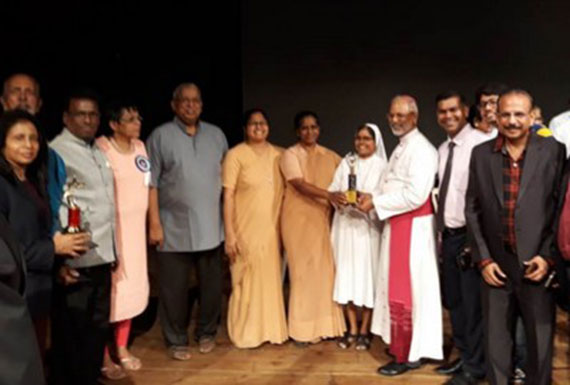
A Salesian social development agency has been awarded the first Father Edward D’souza Memorial award meant to honour services rendered to the poor and under privileged.

The Sahayini Social Development Society Vocational Training Centre was given the award on Feb. 23 at a function in Mumbai.

Sister Rosaline Pereira, in charge of Sahayini received the award from Auxiliary Bishop Savio Dominic Fernandes of Bombay archdiocese.

Sahayini has trained and placed 500 marginalized youth and contributed social advancement of the poor.

Adrian Rosario, a member of Bombay catholic Sabha and in-charge of the award selection team said the Sabha instituted the award to perpetuate the memory of Father Edward D’souza, the Sabha’s chaplain who passed away four years ago.

Sahayini Social Development was created to provide programs and services to the poorer and needy children, adolescent girls, women through the community centres established in various locations of Maharashtra, Gujarat, Karnataka and Goa.

Catholic Forum calls for Vatican III

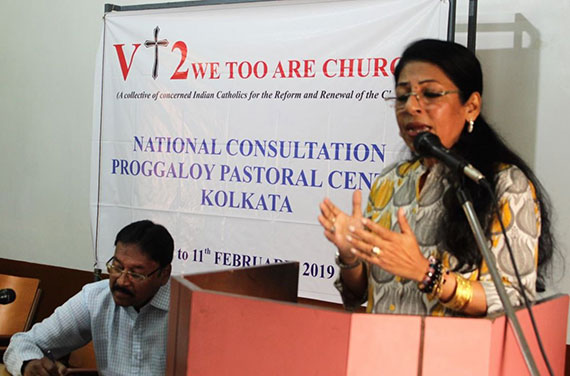
A national consultation “We Too Are Church” has appealed for the convening of Vatican III. In an era of breaking news, and shifting goal posts, it is not enough to hark back to Vatican II that concluded 54 years ago. It is now time for Vatican III to address the rapidly mutating issues faced by the church in the modern world, says a press release from the consultation.

As many as 60 delegates from 15 Indian states attended the Feb 9-11 consultation held at Proggaloy Pastoral Centre, Kolkata. The gathering of lay leaders, clergy and religious was a collective response to the various political and moral crises that the church finds itself embroiled in, without an adequate or credible response, the press release explains. It also says “Pastoral Letters” on elections issued by three archbishops and the alleged rape of a nun by a bishop have attracted a hostile press. The bishops of Kerala in a recent statement have labelled those raising their voices as “enemies of the church,” it adds.

Arunachal students raise fund for police firing victims

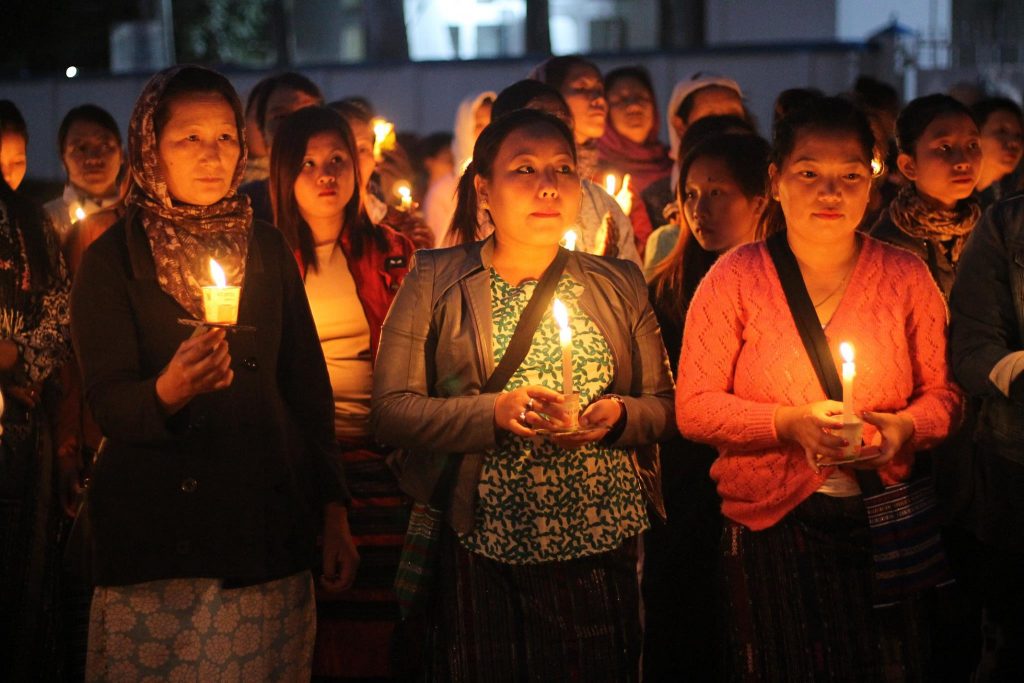
A student union in Aruna chal on Feb. 25 organized a peaceful candlelight rally and fundraising campaign to support the families of the four boys who were killed in police firing.

“Our four brave hearts have laid their lives for us and for our future generations. It is because of their supreme sacrifice, the Arunachal government has decided not to table the Permanent Citizen Bill in state assembly again,” Sengman Ronrang, president of the Tangsa Students Union’s Changlang district, told the rally at Miao.

“The lost lives will not come back again but they will live in our hearts forever. We must stand together and support the families of our brave men who sacrificed their lives today for our tomorrow,” Ronrang added.

The rally urged welfare societies to generously contribute to the fund.

Nearly 500 people took part in the rally that saw the participation of Arunachal Pradesh Women’s Welfare Society, Yobin Welfare Society, Yobin Youth Association, Galo Welfare Society, Tagin Student Union, Singpho Women Organization, Muklom Elite Society, Singpho Development Society, officers, public leaders and Church representatives.

“We are not against anyone. We are a very peace loving community. Impulsive decisions without reference to the true sentiments of the people of the state and the untimely death of the four young lives all could have been easily avoided. We have come here to condole the death of our brave boys and to express our solidarity with the bereaved families,” said Ms. Pinna Kitnal, a women leader from the district.

Religious minorities in India ‘attacked with impunity’

Religious and ethnic minorities in India continue to face violence at the hands of Hindu groups that support the federal government led by the pro-Hindu Bharatiya Janata Party (BJP), according to a new report by Human Rights Watch.

Prime Minister Narendra Modi’s government has failed to prevent or credibly investigate growing mob attacks on religious minorities and marginalized communities, said the report released in New Delhi on Feb. 19.

Some critics have even accused Modi of turning India into “a republic of hate.”

The BJP’s political leaders, since forming the federal government in May 2014, “have increasingly used communal rhetoric” that spurred violence from vigilante groups, it said. They have also vowed to protect cows, a revered animal in Hinduism.

“Mob violence by extremist Hindu groups against minority communities, especially Muslims, continued throughout the year amid rumors that they traded or killed cows for beef,” according to the report.

Between May 2015 and December 2018, at least 44 people — 36 of them Muslims — were killed across 12 Indian states. “Over that same period, around 280 people were injured in over 100 different incidents across 20 states,” the report stated.

It said there were 254 documented incidents of crimes targeting religious minorities between January 2009 and October 2018, in which at least 91 people were killed and 579 injured.

About 90 percent of these attacks were reported after the BJP came to power in May 2014, and 66 percent occurred in BJP-run states. Muslims were victims in 62%  of the cases, and Christians in 14 %. These include communal clashes, attacks on interfaith couples and violence related to protecting cows and religious conversions.

“A country’s government must understand that it should take care of the people irrespective of cast, creed or religion,” said Bishop Alex Vadakumthala of Kannur in the southern State of Kerala.

CATHOLIC RUN INSTITUTIONS IN GARO HILLS REMAIN SHUT

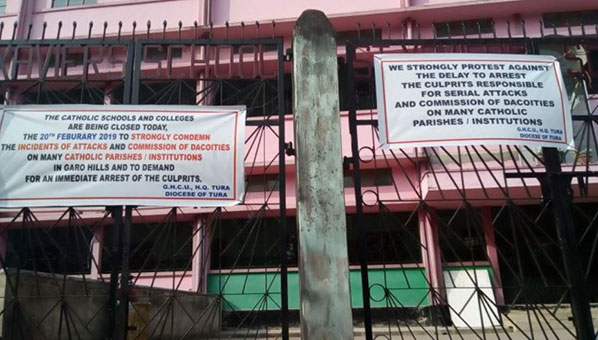
Catholic run schools and colleges from all over Garo Hills on February 20 remained closed as a mark of protest and condemnation against the frequent attacks on Catholic Parishes and institutions, by miscreants in some days ago. The shutdown protest was also aimed at demanding from concerned authorities the immediate arrests of the culprits.

As many as 100 schools and all colleges run by Catholic missionaries in Garo Hills including those under Don Bosco and the Loyola College at William Nagar remained shut on the day to show their unity in condemning the incidents.

Other schools like the Educere School in Williamnagar also closed down for the day to show solidarity. Schools along the road from Dadeng to Phulbari, Rongreng Model School and the Chidekgre Robinus T Sangma School also cooperated with the protest and remained closed.

Indian Franciscans commit to promote triple dialogue

The annual assembly of the Association of Franciscan Families of India (AFFI) ended on Feb 22 with a yearlong plan to revive the charism of their founder Saint Francis of Assisi. In the four-day event — attended by generals, provincials and other major superiors of Franciscans in India — marked the 800th anniversary of the meeting between St Francis with the Sultan of Egypt.

The Indian Franciscans plan to develop broad based dialogue — with God, with the poorest and with other religions – in the coming year.

The AFFI is a nationwide network of around 50, 000 men and women Religious who follow St Francis and St Clare. They serve society both in India and abroad as missionaries through 164 provinces from 55 religious congregations besides another network of laity under the Order of Secular Franciscans numbering 70,000. They work for the welfare of all, with special charism to be committed to the welfare of the least and the lost, through their apostolate of education, health and social uplift.

GRAHAM STAINES FILM

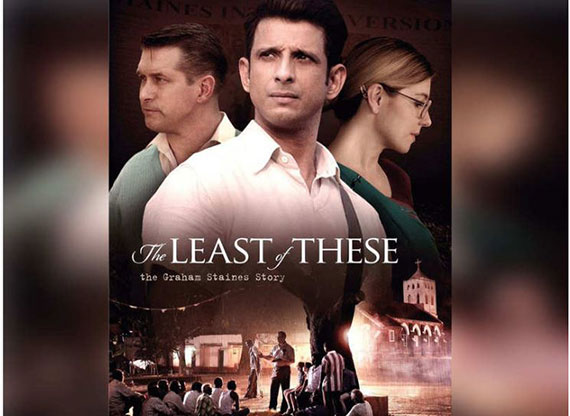
Marking 20th year of the gruesome murder of an Australian missionary and his two young sons in Odisha’s sleepy outback wilderness of Manoharpur in Keonjhar district, Skypass Entertainment released its first film on February 1 in the US.

The 112-minute film will be released in India in March and its Australian release is slated for April.

Narrating the story line, U.S. based director of the film Aneesh Daniel says, “As the social fabric of life in rural India disintegrates in the late 1990s, journalist Manav Banerjee (Bollywood’s Sharman Joshi of 3 Idiots) moves with his pregnant wife to the town of Orissa in hope of a better life and the promise of a lucrative career. When speculation mounts that local Australian missionary Graham Staines (Hollywood’s Stephen Baldwin of The  Usual Suspects) is illegally proselytizing leprosy patients, Manav agrees to investigate undercover for the newspaper. What he finds is a series of revelations that are difficult to fathom and even harder to explain, and Manav is forced to make a choice between his own ambition and the truth. In the end, his actions spark a tragic event that is felt around the world.”

The born again Christian actor Baldwin has over 100 movies to his credit. Actress Shari Rigby (October Baby) plays the role of Graham’s wife Gladys Staines. The film project took Wagh 15 years, faced much opposition and 3 attempts to complete the film which was finally released in 2017 in Hindi, English, Malayalam and Tamil. Dubbing is on for French and Portuguese language versions of the film.

Pope: No more excuses; time for ‘all-out battle’ against crime of abuse

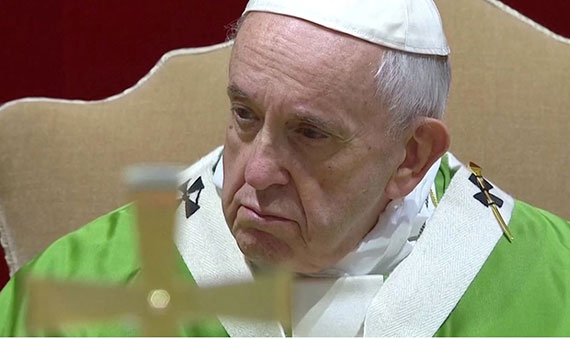
The time has come for an “all-out battle” against the abuse of minors, erasing this abominable crime from the face of the earth, Pope Francis said, closing a global four-day summit on child protection in the Catholic Church. For quite some time, the world has been aware of the “serious scandal” the abuse of minors by clergy has brought to the church and public opinion, both because of the dramatic suffering it has caused victims and because of the “unjustifiable negligence” and “cover-up” by leaders in the church, he told people gathered in St Peter’s Square.

Since the problem is present on every continent, the Pope said he called leaders of the world’s bishops and religious superiors to Rome because “I wanted us to face it together in a co-responsible and collegial way,” he said after praying the Angelus on February 24.

“We listened to the voice of victims, we prayed and asked for forgiveness from God and the people hurt, we took stock of our responsibility, and our duty to bring justice through truth and to radically reject every form” of sexual abuse and the abuse of power and conscience, he said.

“We want every activity and every place in the church to be completely safe for minors,” he said, which means taking every possible measure so that such crimes never happen again.

It will also entail working with great dedication together with people of good will everywhere in order to fight this “very grave scourge of violence” that affects hundreds of millions of minors around the world.

The Pope’s noonday summary of what he called a “very important” meeting came after he delivered his closing remarks at the end of Mass on February 24.

Surrounded by the ornate frescoed walls and ceiling of the Sala Regia, the Pope told some 190 cardinals, bishops and religious superiors from around the world, “the time has come, then, to work together to eradicate this evil from the body of our humanity by adopting every necessary measure already in force on the international level and ecclesial levels.”

However, despite the importance of knowing the sociological and psychological explanations behind this criminal act of abuse, he said, the church must recognize this is a spiritual battle against the “brazen, aggressive, destructive” power of Satan.