
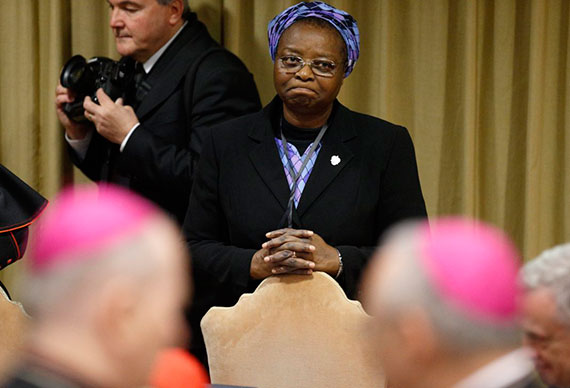
The hypocrisy of Catholic leaders who claimed to be guardians of morality yet remained silent about clerical sexual abuse has left the church’s credibility in shambles, an African woman religious told bishops at the Vatican summit on abuse. “Yes, we proclaim the Ten Commandments and ‘parade ourselves’ as being the custodians of moral standards values and good behaviour in society. Hypocrites at times? Yes! Why did we keep silent for so long?” asked Nigerian Sister Veronica Openibo, congregational leader of the Society of the Holy Child Jesus. Addressing Pope Francis and nearly 190 representatives of the world’s bishops’ conferences and religious orders on Feb. 23, Sister Openibo insisted the church needed to be transparent and open in facing the abuse crisis. In a poignant yet powerful speech, the Nigerian sister reminded the bishops of the church’s universal mission to be a light for the world and a “manifestation of the Christ we know as both human and divine.”
Daily Archives: March 11, 2019

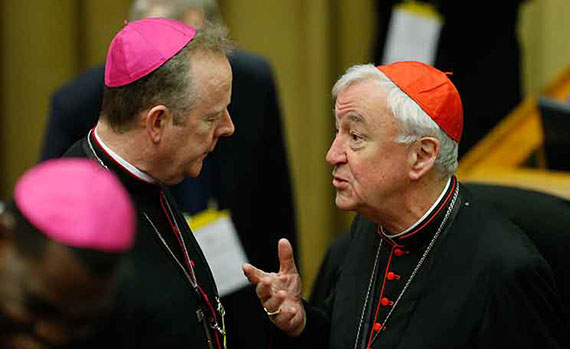
Secrecy Must ‘Go out the Window’ Irish Archbishop says
When it comes to the abuse of children by members of the clergy, using secrecy to hide problems rather than protect victims “must go out the window,” said Archbishop Eamon Martin of Armagh, Northern Ireland. “Let’s put secrecy aside,” Archbishop Martin told journalists on Feb. 23. “Secrecy has been one of the root causes of the problems that we are in today. And therefore, we need to be cautious.”
Secrecy and, more specifically, the imposition of “pontifical secrecy” in cases of clerical sex abuse were raised several times during the Vatican’s on Feb. 21-24 summit on child protection and the clerical abuse crisis.
The pontifical secret ensures cases are dealt with in strict confidentiality. Vatican experts have said it was designed to protect the dignity of everyone involved, including the victim, the accused, their families and their communities.

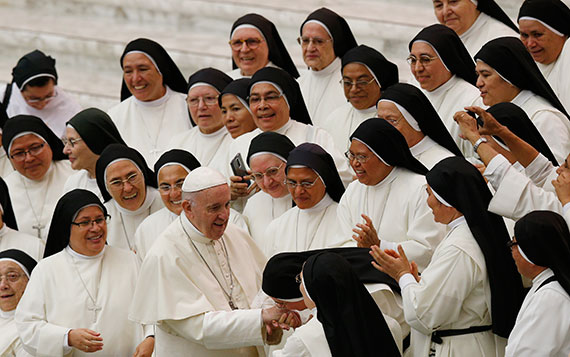
Polish nun ‘silenced’ for speaking out on abuse
A church source told The Tablet “urgent internal enquiries” were underway to establish how the interview with Mother Jolanta Olech, secretary general of the Conference of Higher Superiors of Female Religious Orders, was run by the church’s official Catholic Information Agency, KAI. The source, who asked not to be identified, added that Poland’s Catholic bishops had “reacted with outrage” to the 78-year-old Ursuline’s decision to publicise the scandal, and said the nun had been cautioned to avoid further public statements.
In her 14 February interview, Mother Olech said no comprehensive data had been collected on the abuse of nuns in Poland. However, she added that she had been notified of “very painful” cases during her years as Conference president and secretary general, none of which had been made public, and welcomed the Pope’s pledge on 5 February that the Church was now tackling the “scandal” of priests and bishops who molested nuns.


Bishops must see press as allies, not enemies, Mexican journalist says
If they are truly serious about fighting clerical sex abuse, bishops must join forces with journalists and not view them as enemies plotting against the Catholic Church, Mexican journalist Valentina Alazraki said.
Alazraki, who has covered the Vatican for over four decades, told bishops at the Vatican summit on abuse Feb. 23 that journalists can help them root out the “rotten apples and to overcome resistance in order to separate them from the healthy ones.” “But if you do not decide in a radical way to be on the side of the children, mothers, families, civil society, you are right to be afraid of us, because we journalists — who seek the common good — will be your worst enemies,” she warned.
The veteran journalist was invited to speak at the summit about the importance of transparency with journalists and media outlets.
Alazraki, who began covering the Vatican in the final years of St Paul VI’s pontificate, said church leaders too often blamed journalists’ coverage of the abuse scandal as a plot “to put an end to this institution.”
“We journalists know that there are reporters who are more thorough than others and that there are media outlets more or less dependent on political, ideological or economic interests,” she said. “But I believe that in no case can the mass media be blamed for having uncovered or reported on abuses.”

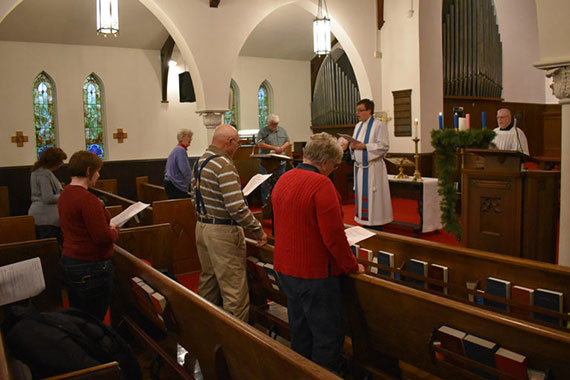
Thirty six per cent of Anglican congregations have no parishioners under 16-years-old
36 percent of Anglican congregations have no parishioners under 16-years-old, the Church of England has revealed.
Describing the situation as “shocking” Canon Mark Russell, chief executive of the Church Army, told the Church’s General Synod that only 6% of Anglican Churches have more than 25 under 16-year-olds.
The new figures came during the Synod debate on the future of youth evangelism in England, in which the Church agreed to prioritise recruiting more youth workers and being inclusive of LGBT teenagers.
Lucy Gorman, a parishioner from the Diocese of York, said diversity and inclusion is an issue within the Church’s recruitment problem, adding: “When one in 25 young people identify as lesbian, gay or bisexual we need to speak into the silence and connect with them to include them in the life of the Church.”
The debate followed a motion on tackling gambling adverts in which the Bishop of St Albans, Dr Alan Smith, said children have become “conditioned” to enjoy sport by betting on who will win.
Criticising the “toxic” gambling advertising industry that “preys on the young,” the Rt Rev Alan Smith tabled a motion calling on the Government to reduce the quantity of gambling adverts that are reaching British children.
“The times have changed since when you would simply enjoy sport by supporting a team or a particular player. Now younger generations are conditioned to enjoy sport only by betting on who is going to score the next goal or which team is going to win,” he said.
Describing Brexit as “a historic moment,” the Archbishop of Canterbury, Justin Welby, concluded the Synod with his annual State of the Nation speech.
It is understood that the Church are planning a “season of prayer” for five days at the end of March when Britain is due to depart the EU. A senior Church of England source said the event would be to help people reconnect after the divisive 2016 referendum.

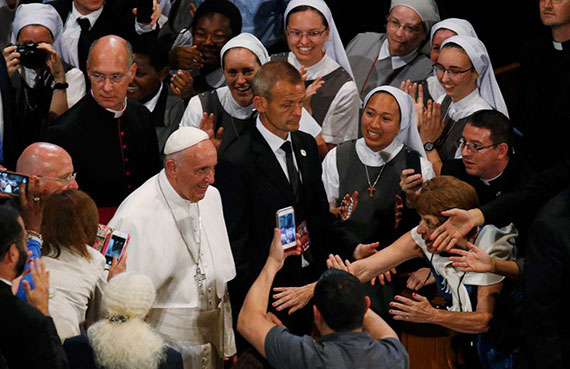
Superiors of male and female religious institutes in support of Pope Francis and the meeting on the protection of minors
Superiors of male and female religious institutes around the world have drawn up a Declaration in support of Pope Francis and the meeting on the protection of minors that will take place in the Vatican from 21 to 24 February, for presidents of episcopal conferences.
The text of the Declaration was released by the Holy See Press Office. It began by stressing the commitment of religious institutes in favour of children, against the trafficking of minors, in favour of saving child soldiers, in protecting them from abuses of all kinds. But it also expresses “shame” that the meeting at the Vatican will discuss the “abuses [that] have occurred in our Congregations and Orders and in our Church.” “Our shame – it adds – is increased by our own lack of realisation of what has been happening.”
Expressing “hope” in the value of the imminent meeting, the superiors affirm that “The leadership of the Holy Father is key… We join with him in his mission to humbly acknowledge and confess the wrongs that have been done; to reach out to survivors; to learn from them how to accompany those who have been abused and how they wish us to hear their stories.”

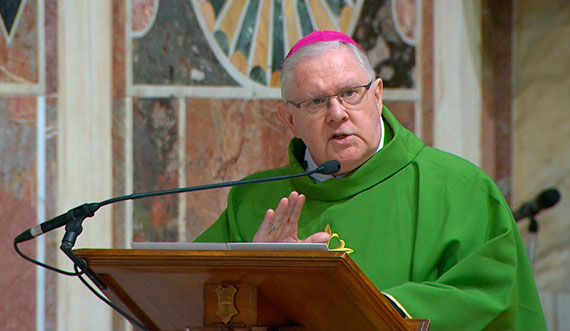
Archbishop Coleridge: ‘Copernican revolution’ needed to tackle abuse
The Catholic Church needs a true conversion that places survivors, and not the institution, as the focus of its concern as it enacts measures to combat the sexual abuse of minors and vulnerable people, said Australian Archbishop Mark Coleridge of Brisbane.
Like Nicolaus Copernicus’ discovery that the earth revolves around the sun, the church is need of a “Copernican revolution” where “those who have been abused do not revolve around the church but the church around them,” Archbishop Coleridge said in his homily on Feb. 24 during the closing Mass of the Vatican summit on child protection.
“In discovering this, we can begin to see with their eyes and to hear with their ears; and once we do that, the world and the church begin to look quite different,” he said. “This is the necessary conversion, the true revolution and the great grace which can open for the church a new season of mission.”
“Power is dangerous because it can destroy,” he said. “And in these days we have pondered how in the church, power can turn destructive when separated from service, when it is not a way of loving, when it becomes power ‘over.’”

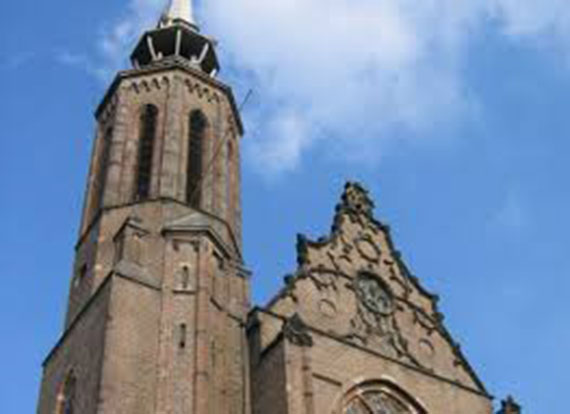
DUTCH CATHOLICS ATTEMPT TO STOP CATHEDRAL SALE
Dutch Catholics are protesting plans to close Utrecht’s historic St Catherine’s Cathedral, which is to be put up for sale by the archdiocese, citing spiralling costs and falling attendance.
“Closing this cathedral will remove Catholicism’s visibility in the inner city and prevent any community growth in future – Catholic Utrecht isn’t ready to be confined to a museum,” noted a petition against the move. “Fine new things can still be achieved here, since we still have plenty to offer: celebrations, courses, faith meetings and processions, as well as a cathedral choir and pastoral work. Let us build further from this.” The petition was circulated after a parish council announcement that the mostly Sixteenth Century gothic St Catherine’s Cathedral, whose main altar houses relics of the Dutch patron, St Willibrord (658739), could no longer be maintained. It said local Catholics still saw “growth, vitality and a future” in the cathedral, and criticised Church leaders for “focusing on contraction and a lack of perspective.”
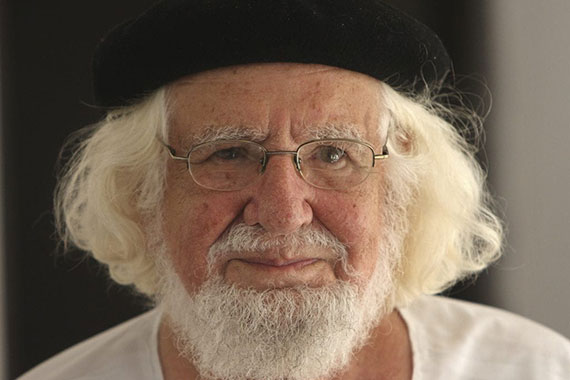
NICARAGUAN POET-PRIEST CARDENAL LEAVES HOSPITAL, THANKS POPE
Renowned Nicaraguan poet and priest Ernesto Cardenal was released from a hospital on February 20 two weeks after he entered for treatment for an infection that provoked other ailments. Luz Marina Acosta, assistant to the 94-year-old Cardenal, told The Associated Press that he is at home and off antibiotics and oxygen. “Although he is always very weak, we hope he continues to recover,” she said.
Acosta also revealed that Cardenal sent a letter to Pope Francis thanking him for lifting his 35year suspension from the priesthood. Cardenal received news of the decision on February 23on his sickbed.
In the letter, begun “My dear Pope Francis,” Cardenal said that he had just celebrated Mass – for the first time since the 1983 suspension – together with the Vatican’s ambassador to Nicaragua.
“I would also like to thank you for your blessing, which I receive with love,” Cardenal said in his missive.
Cardenal was suspended by then-Pope John Paul II for violating a prohibition on priests holding political office by serving as culture minister under the first Sandinista government of President Daniel Ortega.
When the suspension was lifted, the Vatican noted in a statement that Cardenal abstained from pastoral activities during the decades when he was under sanction and “had long ago abandoned all political commitment.”
CHRISTIAN BEHEADED IN INDIA’S ODISHA STATE
A Christian man has been found virtually beheaded in an interior village of India’s Odisha State in what family members and many others believe was an anti-Christian attack.
They dismiss a police claim that he was killed by politically motivated Maoist rebels. The body of 40-year-old Anant Ram Gand, father of four girls and a boy, was on Feb. 11 found on a road in Bhenas village of Nabarangapur district, local pastor Chandan Jani told ucanews.com.
Pastor Jani said the victim’s throat was cut and his head had been crushed by a heavy object. “He seemed to have died unmoved from the spot of attack,” said the evangelical pastor, who helped the widow to bury his body.