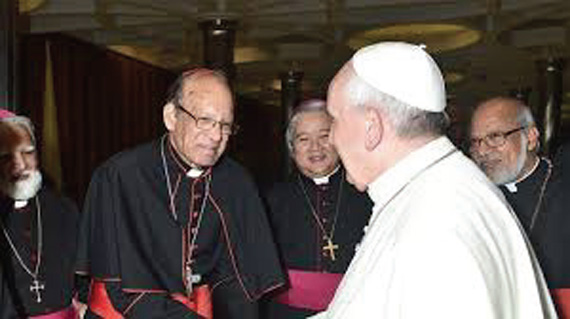
Pope following Franco Mulakkal case : Cardinal Gracias


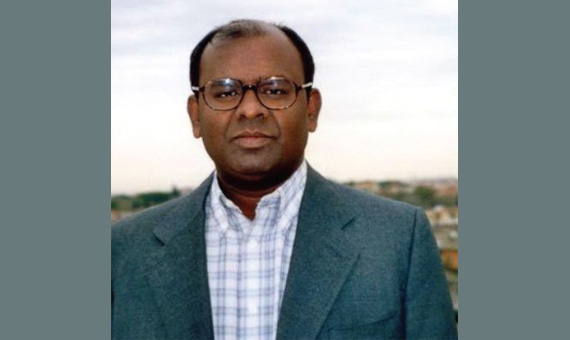
Archbishop of Bombay Oswald Cardinal Gracias has said that Pope Francis is closely following the developments in the case of Jalandhar bishop Franco Mulakkal who has been arrested for allegedly raping a nun multiple times over two years. Cardinal Gracias, who is the president of the Catholic Bishops Conference of India (CBCI) issued the statement on October 5 from Rome where he is participating in the Synod of Bishops on Youth. “The Pope is awaiting the results of the police investigation. We reiterated our confidence in the judicial system of India and trust that the full truth will emerge and justice will be done for all,” he wrote. Other Indian cardinals attending the meet include George Alencherry and Basilios Cleemis. They met with Cardinal Pietro Parolin, secretary of state, Cardinal Fernando Filoni, prefect of the Congregation for the Evangelization of Peoples, and Cardinal Leonardo Santri, prefect of the Congregation for the Oriental Churches to share their thoughts on the matter of Bishop Mulakkal.

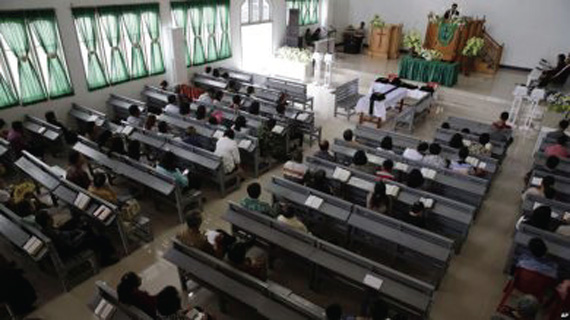
 

Indonesian Christians seek solace in Church

Indonesian Christians sought solace on October 7 in churches in the city of Palu, hard hit by an earthquake and a tsunami that roiled central Sulawesi, killing 1,649 people and seriously injuring some 2,500 people.

Indonesia is the world’s most populous Muslim country, but there are Christian communities throughout the archipelago.

During a service in front of the Santa Maria Church in Palu, a priest encouraged locals to have faith in God and stay in Palu to rebuild the city.

“If we all leave, then who will welcome those who come here to help us?” Yohanes Salaki asked his congregation, speaking from outside the church as the inside remains unsafe because of damages caused by the earthquake and tsunami.

Palu resident Etna Rorimpande told VOA’s Indonesian service that “we have to give ourselves to God, have faith on Him, and believe that God will always take care of us.”

Another Palu resident I Nyoman Sarna said that though he is sad and worried about his fate, he think he and his family will stay in the city.

“We have to rebuild our town. Who else will do that?” he said. The United Nations said in a statement that 113 people remain missing after the twin disasters. About 70,000 people have been displaced.

Catholic historians address missionaries’ contribution to nation building

The Association of Catholic Historians of India (ACHI) has chosen to deliberate on the contribution of missionaries for nation building for its forthcoming annual conference in Bangalore, next June.

“The right-wing Hindu organizations such as RSS (Rashtriya Swayamsevak Sangh) and the pro-Hindu BJP (Bharatiya Janata Party) with their hidden and malicious agenda seek to destroy the contribution of Christian missionaries in India. That is exactly the problem we are facing for longer. Many a time the work of Christian missionaries is interpreted negatively. We need to put them in the right perspective,” Divine Word Father Rayappan Jesuraj, a member of the executive council of ACHI, told Matters India.

Fr Jesuraj, professor of church history at Papal Seminary-Jnana-Deepa Vidyapeeth, Pune, is an author as well. He has decades of teaching church history in many major seminaries and institutes in India. He was also dean and principals of a few theology seminaries in the country.

“We chose the theme on the contribution of missionaries for nation building because there is a general feeling that either the missionaries did little for Indian culture and language or destroyed it entirely, which is not the fact,” he added.

The chief minister of India’s Jharkhand state, Raghubar Das, who heads the state government led by the pro-Hindu BJP, recently accused Christian missionaries of working to keep the tribal stronghold poor. Christian leaders and historians deny the charge saying he was trying to cover up his government’s lapses ahead of state elections.


An Indian anti-Christian hotspot

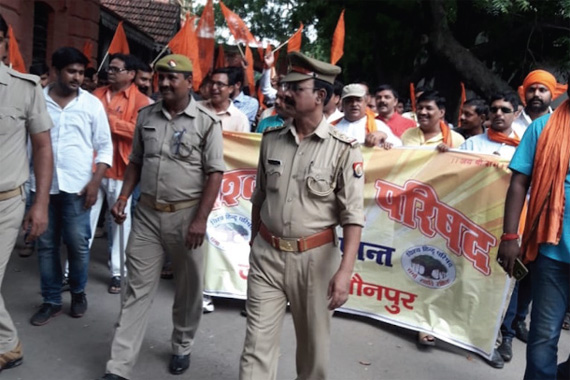
Christians in a tiny northern Indian district suffered at least 12 attacks in September that community leaders say were instigated by false accusations against missionaries over the conversion of Hindus.

Pastors were beaten up, faithful arrested and on Sept. 30 services disrupted in continuing violence allegedly carried out by Hindu groups in Jaunpur district of Uttar Pradesh.

The rights group Alliance Defending Freedom (ADF) cited “false propaganda” carried in some media outlets about claimed miracles and allurements being used by pastors to win converts.

ADF official A.C. Michael told ucanews.com on Sept. 28 that pastors were arrested like terrorists at midnight, church goers had been threatened and arbitrary restraints were imposed on Christian activities.

He said this was generating “terrific fear” in the Jaunpur district, which is about 230 kilometres southeast of the state capital, Lucknow.

The rights’ group listed 12 incidents that occurred from Sept. 5-25, including attempts to inti-midate pastors into not conduct-ing church services.

Pastor Benjamin said such incidents had increased since the pro-Hindu Bharatiya Janata Party (BJP) came to power with a Hindu monk-turned-politician, Yogi Adityanath, becoming state Chief Minister in March 2017.

Nearly 80 percentage of Uttar Pradesh, India’s most populous state with 200 million people, are Hindus. Christians constitute only 0.18 percentage of the state’s population while Muslims number more than 19%.


Do not judge church by acts of individuals, synod observer says


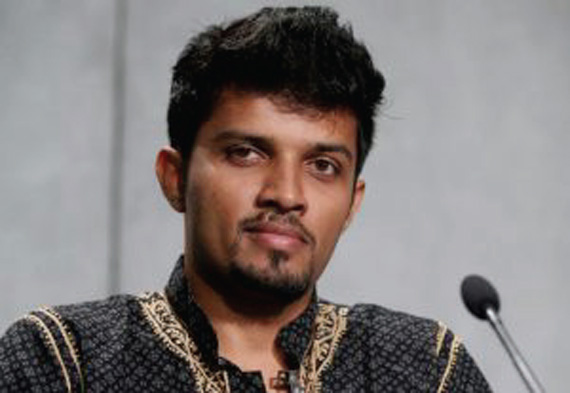
The faults of one person cannot be blamed on the entire Catholic Church, Percival Holt, a 25-year-old observer at the Synod of Bishops, told reporters.

“It is wrong to judge the church for the acts of certain people within the church,” he said Oct. 11 during the Vatican’s daily briefing on what is happening inside the synod on young people, the faith and vocational discernment.

Holt, president of the Indian Catholic Youth Movement and member of the National Youth Commission of India’s bishops’ conference, said he wanted to make it clear that the church has “immense love and concern” for young people.

“The church cares for you,” he said. When asked specifically about the clerical abuse scandal, Holt told Catholic News Service, the abuse was not caused by the structure of the church, but by its members.

His message to young people is that “if we want the church to be different, we have to hold onto our values and principles.”

As his generation steps into more leadership positions within the church, he said, they will have the opportunity to make a positive change if they are led by their principles. But if their values are compromised now, the cycle of poor behavior among church leaders will only continue.

China: Christian schoolchildren forced to tick ‘no religion’ box

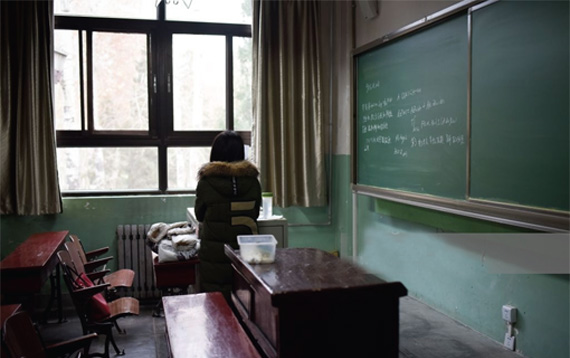
More than 300 Christian children in two high schools in Zhejiang province, which has been referred to as the “Jerusa-lem of the East” for its strong Christian presence, have been asked to fill out a form stating that they did not follow a religion, World Watch Monitor has been told by a trusted local source.

While “it is normal for a school to ask parents to fill out a form which includes questions of faith when a child is first enrolled in school, for many years this hasn’t been an issue,” our source, who wished to remain anonymous, explained.

Schools in China are government-controlled and financed and therefore communist in ideology, and Christian children have sometimes faced “shaming” incidents, “but the extent of such shaming was to prevent them from joining the Communist Youth League, thereby denying them any of the perks that come with a progression to Communist Party Member later in life,” World Watch Monitor was told.

“In this case, however, the children were handed a question-naire in class about faith, which is not normal. It seems this is part of the new push to identify Christians and give them pressure of one sort or another.

“Children in this part of China would write ‘Christian’ because of their innocence and they come from families of fervent believers who do not compromise their faith.”

In the first school, which has around 200 Christian students, the teacher demanded they rewrite the questionnaire, stating that they had “No religion.” But when filling out the next questionnaire, half of the children maintained that they were Christians. According to our source, following further warnings, in the end all but one child complied.

In the other school, which has around 100 children, it was the class prefect who forced the Christians to resubmit their papers, stating that they had “no religion.”

Coptic Christians nominated for Nobel Peace Prize

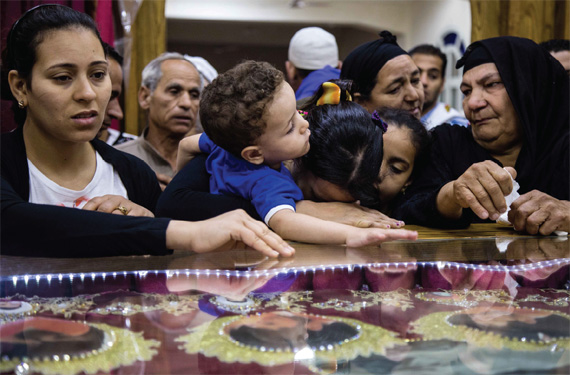
Coptic Christians have been nominated for the 2018 Nobel Peace Prize for their refusal to retaliate against deadly and on-going persecution from governments and terrorist groups in Egypt and elsewhere.

The Copts, the indigenous people of Egypt, are one of 331 nominees for the prestigious prize, won previously by organisations such as the Red Cross and Médecins sans Frontières, and individuals such as MalalaYousafzai, the youngest person ever to win it. Last year’s winner was the International Campaign to Abolish Nuclear Weapons. The European Union won the prize ion 2012, Barack Obama in 2009, Jimmy Carter in 2002 and Archbishop Desmond Tutu in 1984.

There are believed to be around 20 million Copts worldwide. In Egypt they make up about 10 per cent of the population. If they win, they would be the first ethno-religious group to do so. They are also believed to be the first such group to be nominated. Although the Nobel committee itself does not release the list of nominees, the nomination was confirmed by Coptic Orphans, the US-based Christian development charity.

The recipient of the Peace Prize will be announced on October 5. The prize is awarded in December in Stockholm.

According to the 2018 Open Doors report on persecution of Christians around the world, Christians in Egypt face “unprecedented levels of persecution”. Last year, 128 Egyptian Christians were killed for their faith and more than 200 were driven out of their homes.

Islamic State pledged to extreminate the Copts. In 2015 the terror group beheaded 21 Coptic Christians in Libya. The account of one Coptic woman who lost two brothers in the beheading is told here.

Four Children, Grandmother among 17 Christians Slain in Attack by Muslim Herdsmen in Nigeria


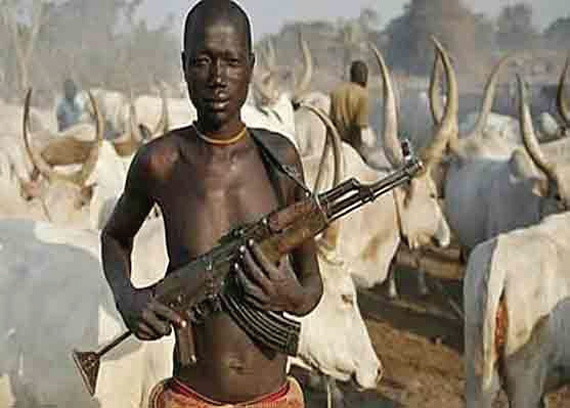
Armed Fulani herdsmen accompanied by militants in Nigerian army uniforms killed 17 Christians in their homes in the heart of Jos, north-central Nigeria, on  Sept. 27, including four children, area sources said.

At about 7:30 p.m. in an area known as Rukuba Road, the assailants broke into one home shooting randomly and killed 14 members of one family, including 15-year-old IshayaKogi, 17-year-old Jonathan Kogi, Cynthia Kogi, 22, and Lucky Kogi, 25, their uncle told Morning Star News.

Two of Lucky Kogi’s children, 3-year-old Majesty Lucky and Blessing Lucky, 14, were also killed in the assault, he said.

“When the Fulani herdsmen came, they shot into the house randomly, breaking and forcing their way into rooms shooting defenceless women and children and anyone in sight,” the mournful RoguAudu, who lost his mother and two of his own children in the attack, told Morning Star News.

The attack took place close to the Nigerian army military cantonment, Rukuba Barracks, in Jos. Surviving family members told Morning Star News that the Fulani herdsmen, armed with both firearms and machetes, were accompanied by Nigerian army soldiers.

Poll: Pope’s favourability numbers down, and worse for handling of abuse

With Pope Francis midway into the sixth year of his pontificate, the percentage of U.S. Catholics who view him favourably, while still strong, is noticeably down.

And, compared to a January poll by the Pew Research Centre that showed Catholics being evenly split on how well Pope Francis has handled the issue of clergy sex abuse, numbers in the new poll, released on Oct. 2, show that twice as many Catholics feel he is doing only a fair or poor job on the issue than say he is doing a good or excellent job.

The overall favourability number for the Pope is 72%, split between 42% of Catholics who see him “mostly favourable” and 30% who view him “very favourable.” The latter number down a third from the last Pew poll last January, when Pope Francis had been at 84% favourability. The 72% figure is lower than Pew’s favourability findings for Pope Benedict XVI except for its first poll asking the question shortly after Pope Benedict assumed the papacy in 2005.

Synod English groups: Abuse crisis undermines church ‘in practically every way’


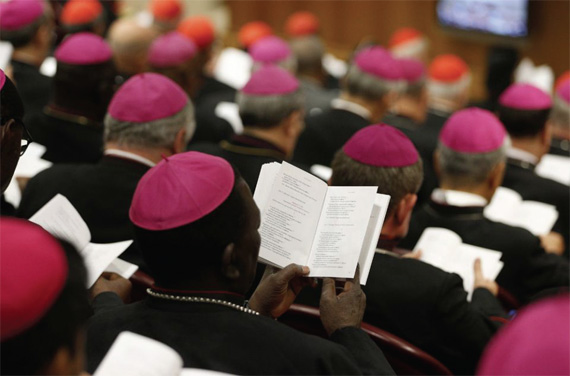
Two of the four working groups for English-speaking prelates at the worldwide meeting of Catholic bishops on young people have spent time considering the impact of clergy abuse scandals on the global church’s credibility. In the first of three reports expected from the working groups during the Oct. 3-28 Synod of Bishops, one of the English groups said bluntly that in the gathering’s expected final document clergy abuse “cannot be skimmed over tangen-tially in a few short sentences.”

Naming some of the effects of abuse – “shattered trust, the trauma and lifelong suffering of survivors; the catastrophic failures in case management; the continued silence and denial” the group added: “these issues cry out to be named openly by the Synod.”

“If priests themselves are afraid to minister among the youth, then how can our Synod get out the message that young people, their faith and their vocational discernment are important to us?” asked that group, which is being led by Indian Cardinal Oswald Gracias.

“As one member of our Group reminded us: ‘Trust arrives slowly, on foot, but Trust leaves on horseback!’” the report said. “‘Trust must be rebuilt, one person at a time.’”

The 267 prelates and the 72 auditors taking part in the Synod of Bishops have been meeting in 14 groups divided by working language for the past few days to reflect on the first part of the gathering’s three-part working document, known as the Instrumentum Laboris.