POLICE IN INDIA LAY CHARGES AGAINST 270 CHRISTIAN ‘LIARS’

Police in India’s Uttar Pradesh State have charged more than 270 Christians with “spreading lies about Hinduism and drugging people to try and convert them to Christianity.”

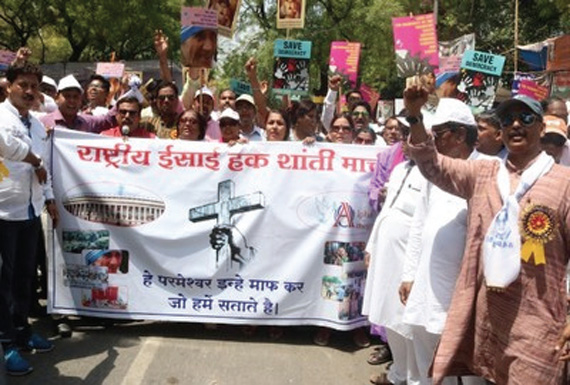
Christians in Jaunpur district said on Sept. 10 that the move showed religious bias and was an attempt to terrorize Christians.

Police in the district filed the charges against 271 Christians of a Pentecostal Church after being directed to do so by a local court.

The court directive followed a complaint lodged by activist group Hindu Jagran Manch that Christians were propagating misinformation about the Hindu religion and attempting to convert people during Sunday services.

Pastors Durga Prasad Yadav, Kirit Rai and Jitendra Ram were named on the charge sheet while the others were not identified.

The Hindu group said it went to court after the Christians refused to stop conducting Sunday prayer services despite repeated warnings.

POPE TO MEET WITH BISHOPS TO DISCUSS PROTECTION OF MINORS

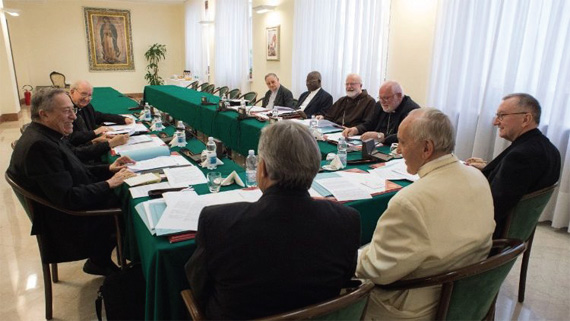
Pope Francis has convened the Presidents of all the Episcopal Conferences of the whole world for a meeting in Rome to discuss the prevention of abuse of minors and vulnerable adults. The announcement was made by the Vice-director of the Holy See Press Office, Paloma García Ovejero, at a press briefing on the meeting of the Council of Cardinal Advisers, which concluded on September 12 morning.

A communiqué by from the Council of Cardinals gave further details. The meeting with the Pope will take place in the Vatican from 21-24 February 2019. The Cardinals’ statement noted that reunion, the Council had “reflected fully together with the Holy Father on the issue of abuse.”

On Wednesday 12th press briefing was dedicated to a review of meeting of the Council of Cardinal Advisors. Ovejero noted that all the members of the Council were present, with the exception of Cardinal George Pell, Cardinal Francisco Javier Errázuriz, and Cardinal Laurent Monsengwo Pasinya. Pope Francis participated fully in the work of the Cardinals, although he was absent at certain points on account of other official duties.

According to the Vicedirector, “A large part of the work of the Council was dedicated to the final adjustments to the draft of the new Apostolic Constitution on the Roman Curia, which has for a provisional title Praedicate evangelium.” A copy of the provisional text has been delivered to the Holy Father, with the expectation that the document will be reviewed in terms of canon law, and subject to further revision.

During the meetings of the Council, Cardinal Seán Patrick O’Malley, O.F.M. Cap., updated those present on the work of the Pontifical Commission for the Protection of Minors.

INDIA AMONG NATIONS THAT INFRINGE RELIGIOUS FREEDOM: US BODY

India is among countries where religious freedom is infringed and governments tolerate violence, says the US International Commission on Religious Freedom (USCIRF), a global report into reli- gious freedom.

On September 4, USCIRF released its report (2018) into the religious freedom that identified high levels of religious repression in 28 countries.

India comes under Tier 2 countries — nations where the violations engaged in or tolerated by the government during 2017 are serious and characterized by at least one of the elements of the ‘systematic, ongoing and egregious’ CPC [country of particular concern] standard.”

Other countries in this category are: Afghanistan, Azerbaijan, Bahrain, Cuba, Egypt, Indonesia, Iraq, Kazakhstan, Laos, Malaysia and Turkey.

These countries, USCIRF says, “represent the most pressing religious freedom concerns worldwide and the most promising
avenues for addressing
them through US foreign
policy.” The US body has
listed 16 countries as Tier
1 – the harshest level of
repression. They are Myanmar, Central African Republic,
China, Eritrea, Iran, Nigeria,
North Korea, Pakistan, Russia, Saudi Arabia, Sudan, Syria, Tajikistan, Turkmenistan, Uzbekistan, and Vietnam.

Myanmar, China, Iran and Sudan have been designated as countries of particular concern in every USCIRF report since its first report in 1999. The annual report, issued on August 29, focused on three themes: advocacy for the release of specific prisoners, the use of blasphemy laws in place in at least 69 countries and which “should be repealed,” the report said, and women and religious freedom.
It also focused on seven “religious prisoners of conscience” in hopes of reducing the number world- wide of such prisoners and to highlight the conditions in each country that led to their imprisonment. One of the seven was the Rev. Andrew Brunson, who is still under house arrest in Turkey after having been jailed for nearly two years, and which has led to US economic sanctions against Turkey in retaliation for its refusal to free him.

BOMBAY ARCHDIOCESE WANTS BISHOP MULAKKAL TO STEP DOWN

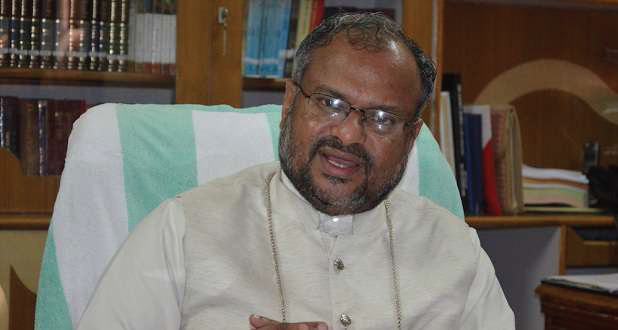
Mumbai: The office of the Archbishop of Bombay has asked Bishop Franco Mulakkal of Jalandhar to step down to help unfold an inquiry against him.

It says the reputation of the Church, not just in Kerala but all over the country, is at stake and stepping down would be the right thing to do at this juncture. If the bishop isn’t guilty, he can get back to his position, says Father Niget Barrett, spokesperson for the office of Archbishop of Mumbai.

The priest told a press conference on September 12 that it is only the Vatican which can initiate an inquiry.

“It would be best recommended that the Bishop of Jalandhar steps down and an impartial enquiry, I hope a judicial enquiry, would be done so that it can’t be intimidated using the church mechanisms and enquire into the authenticity claims of both parties and if the Bishop of Jalandhar is guilty, then since it’s a criminal act, the court should take cognizance and act accordingly,” said Father Nigel.

Cardinal Oswald Gracias of Bombay, who is also the head of the Indian Catholic Church, is one of the nine cardinal advisers appointed by the Pope and so is currently in Vatican. The Vatican is currently pondering over the accusations made by Archbishop Carlo Maria Vigano, the former chief Vatican diplomat in the United States who has accused the Pope of covering up sexual abuse and giving comfort to a “homosexual current” in the Vatican.

Father Nigel says that before leaving India, he had met Archbishop Oswald but he had not indicated that discussing the current allegation in India was on the card. “Cardinal Oswald has apparently indicated that he would communicate this matter to the authorities concerned and ensure that the processes are in place so that justice is given,” said Father Nigel.

HENAN, JIANGXI, ZHEJIANG, SINICIZATION ADVANCES: CROSSES BURNT, PARTY FLAGS AND SLOGANS ON CHURCHES

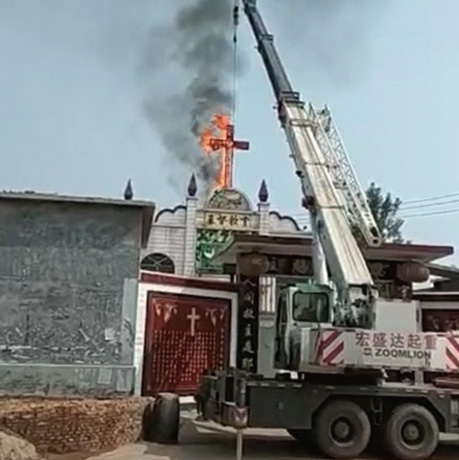
In the name of the sinicization, to create a Christianity with “Chinese characteristics,” the government authorities are burning crosses on the bell towers, replacing them with the red flags of China; slogans praising the Party and the values of socialism are exposed on religious buildings, erasing sacred images, that are considered too Western.

In recent days in Henan, the cross of a Protestant Church was burned in Anyang, Shuiyi County; another was demolished in Hebei; another one in Luoyang has been replaced with the red flag. Even a Catholic centre in Anyang had to display the flag.

In a church in the province, the authorities demanded the removal of the cross, paintings with calligraphy of verses from the Bible and a painting of the Last Supper.

Similar events also take place in Jiangxi. Testimonies gathered by Chinaaid in Xinyu County say that churches are forced to wave the national flag, to display a picture of President Xi Jinping and slogans praising socialism. Many crosses have been destroyed, including that of the evangelical church of Jieken.

At least 40 churches in Shangrao have been forced to display banners that prohibit the preaching of non-Chinese people and prohibit entry to young people under the age of 18.

In Zhejiang, in Leqin, the authorities have forced the churches to exalt the Chinese Communist Party, by singing patriotic anthems at a flag-raising ceremony and pushing for con- certs with nationalist programs. In the Pudong region of Shanghai, the Xuanqiao’s Church of Jesus Christ had to display the slogan on the “basic values of socialism.”

INDIAN BISHOP SEEKS FEDERAL HELP FOR FRAUGHT CHRISTIANS

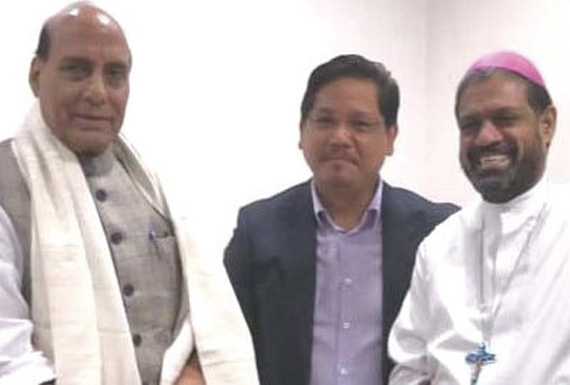
Indian Bishop Theodore Mascarenhas has personally asked federal Home Affairs Minister Rajnath Singh to intervene over the mistreatment of Christians and their organizations in eastern Jharkhand State. Bishop Mascarenhas, secretary general of the Indian Bishops’ Conference, met Singh at his New Delhi office on September 3.

The minister was briefed about difficulties being faced by the Christian minority.

Also present at the meeting was Conard K.Sangma, the Catholic chief minister of Me- ghalaya, a Christian majority state in north-eastern India.

Many Jharkhand Christians believe they are being unfairly targeted by a state government investigation of 88 Christian agencies over foreign donations.

The probes centre on India’s Foreign Contribution Regulation Act requiring that donations be received through a designated bank and spent only for specific social service undertakings.

THE CHRISTIAN FEDERATION OF MALAYSIA: IT IS URGENT TO ERADICATE CORRUPTION AND POVERTY


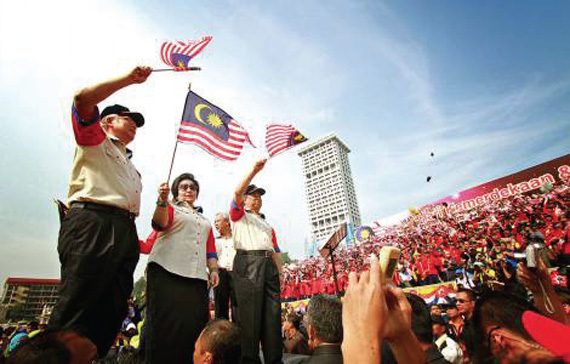
The Government of Malaysia must commit itself to formulating laws and implementing policies to eradicate corruption and poverty from society: this is what is asked, in an appeal sent to Fides, in preparation for the “Malaysia Day” of September 16, which commemorates the birth of the nation, the Christian Federation of Malaysia (CFM) that, in harmony with Christian values, works to make the country “a nation of harmony, peace, equal opportunity, equality and prosperity for all.”

“Malaysian citizens strive to build a united nation as imagined by the founding fathers. There is a palpable expectation that Malaysia is truly a nation where people can live together and prosper,” says the Federation in a note sent to Fides, reaffirming its message of coexistence, harmony, peace, equality.

The CFM is an ecumenical body that in Malaysia includes the Council of Churches of Malaysia, the Christian Evangelical Fellowship and the Catholic Episcopal Conference of Malaysia. Currently the president of the Federation is Catholic Archbishop Julian Leow, at the head of the Catholic diocese of Kuala Lumpur.

POPE FRANCIS TO VISIT JAPAN NEXT YEAR

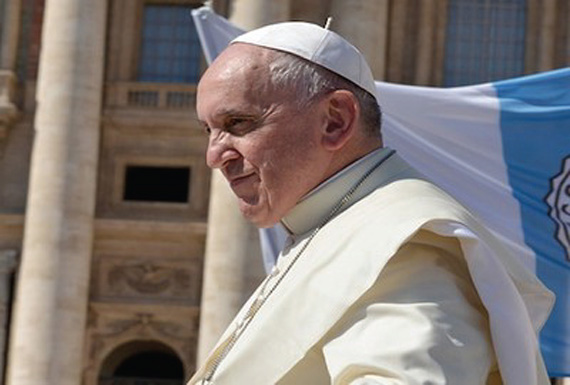
In a meeting in Rome with a visiting Japanese delegation on Sept. 12, Pope Francis announced plans to visit Japan next year.

“Since you are here, I would like to announce my intention to visit Japan next year. I hope I am able to fulfil this wish,” Pope Francis told members of the Tensho Kenoh Shisetsu Kenshoukai Association.

“Thanks again for your visit,”

the Pope said, telling the visitors to “take back to your wonderful people and your great country the friendship of the Pope of Rome and the esteem of the whole Catholic Church.”

Members of the association were there with Fathers Renzo De Luca and Shinzo Kawamura. Father De Luca is the Argentine- an-born Jesuit provincial of Japan and was a novice when Pope Francis was his novice master in his native Argentina.

It is well known that Pope Francis had hoped to be a missionary in Japan after joining the Society of Jesus and becoming a priest. But his superiors believed he did not have the required good health to do so.

BANGLADESH CHURCH SETS PRIORITIES FOR THE NEXT DECADE

The Catholic Church in Bangladesh plans to treat the welfare of families and poverty, as well as environmental protection and migrant welfare, as pastoral priorities in the next decade. New guidelines state that such an approach would “give witness” to the Church in the low-lying nation.

A 12-point ‘mission statement’ was issued at the end of a national pastoral workshop of the Catholic Church held on August 28-31 at the Catholic Bishops’ Conference of Bangladesh secretariat in the capital, Dhaka. It was themed ‘Communion: Witness of the Church in Bangladesh.’ Pastoral priorities are to include spirituality of communion in individual, family and social life as well as the formation of faith, evangelization and pastoral services. Also cited was educational opportunities and values formation together with family life and pastoral services to marginalized communities and the poor. Further, priority would be afforded to socio-economic development and self-reliance, inter-religious harmony and Christian unity as well as enhancing religious vocations and services.

BURMA CARDINAL: THE ‘WAR’ ON THE KACHIN IS BEING OVERLOOKED

Cardinal Charles Bo, Burma’s most senior churchman, has said the military are continuing to persecute ethnic Kachin, a predominantly Christian group in a conflict- torn part of the country.

Speaking on September 1 at a peace forum in South Korea, Cardinal Bo said the suffering the Rohingya have endured has captured the world’s attention. He described their plight as an “appalling scar on the conscience of my country,” ucanews.com reported.

Yet, he continued, other targeted groups are being overlooked as ethnic fighting rages on in northern Burma, with thousands of ethnic minorities having been injured, killed and displaced.

“Villages bombed and burned, women raped, churches destroyed, villagers used as human minesweepers and human shields,” Cardinal Bo told peace experts at the Catholic University of Korea in Seoul.
The cardinal elaborated on military air strikes in Kachin in February and a major offensive in April that led to more than 7,000 people being displaced.

He said a series of “wars” were being waged in Burma against those who espouse religious freedom by forces preaching religious intolerance and hatred.

Cardinal Bo also lamented a several violent conflicts stemming from land ownership disputes and other concerns including human trafficking, environmental degradation, drug abuse by young people, poverty and a lack of protection of basic rights.

“These ‘wars’ continue even though Burma has moved over the past eight years through reforms and made a fragile transition from a military dictatorship to a fragile democracy,” he said.

Sporadic fighting has occurred in the Christian stronghold of Kachin State since the country then known as Burma broke free of its colonial shackles in 1948 by gaining independence from British rule. The situation deteriorated in 2011 when some 100,000 people were displaced. Most of the state’s 1.7 million Kachins are Christians, including 116,000 Catholics.