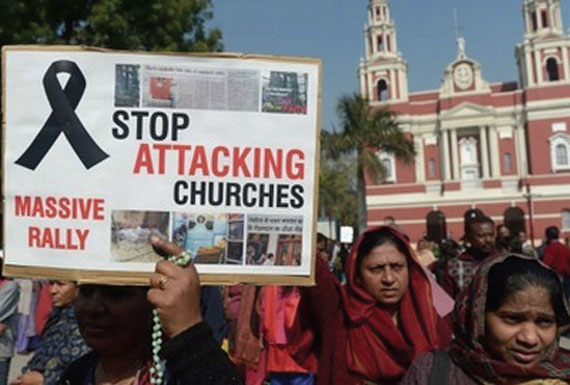
Why missionaries are targeted in India’s northeast

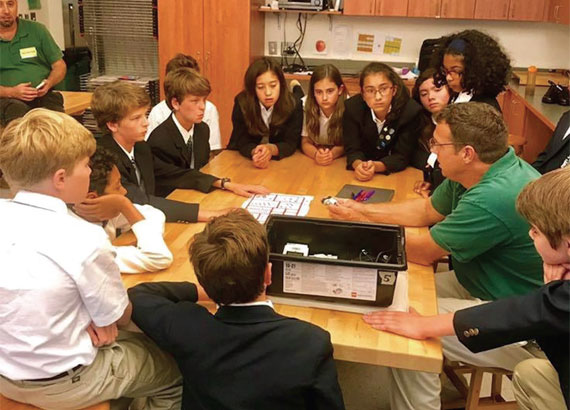
Over 25 years ago a gang of four men took me at gunpoint from a basket-ball court to my school office. They introduced themselves as members of a proscribed organization and made me sit on a chair while they kicked my face.

That was the first attack I encountered on June 14, 1991, in my three decades of working as a Salesian missionary in the north-eastern Indian State of Manipur.

Since then I have been held at gunpoint several times, which is a story quite a few of my confreres working in the field of education can also tell.

Many escape because of sheer luck. At least five have been shot dead in the last 30 years in this this insurgent-infested region where peace seems ever elusive. During the first attack, my abductors wanted me to pay them 400,000 rupees (equivalent to about US$ 11,500 at the time) and give them a video camera and a gun.

As the priest-manager of Don Bosco School, in the State capital of Imphal, I was unable to meet their demands because I had none of those things. And this is something I made very clear to them.

Their reaction was swift and brutal. With a gun in hand, one of them hit me hard on my left cheek. The pain was severe. Later, medical examinations established that the strike had broken my eardrum. The four men then locked me up and made off with the 10,000 rupees (US$280) they found in my office. However, there are about 20 insurgent groups operating in the state and they appear to view Catholic schools as an easy target whenever they want to raise funds to support whatever they are fighting for, which could be for a separate statehood or the goal of establishing ethnic supremacy over other groups. They would spend their time blaming the Catholic schools for a range of imaginary crimes.

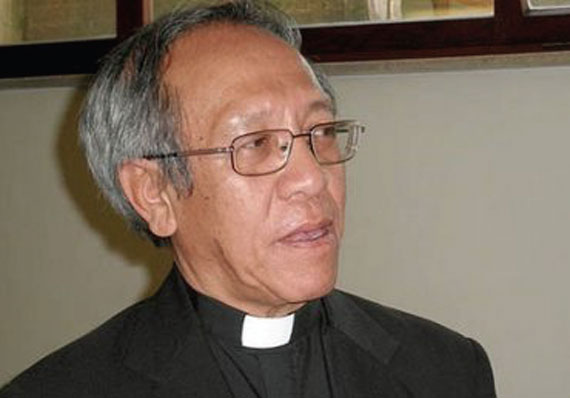
Shillong violence: Christian leaders deny communal angle

The leaders of various Churches in north-eastern India have expressed deep pain and anguish at the recent violent incidents that shattered peace in Shillong, capital of Meghalaya State.

Heads of the United Christian Forum and the North East Christian Council met on June 6 in Guwahati to review the situation and seek ways to restore peace and harmony in the city, known as the Scotland of the East.

They met amid attempts by certain section of the media and groups to project the incidents as clashes between Christians and Sikhs in Shillong.

Meghalaya is one of the three Christian-majority states in northeastern India.

The leaders are “concerned at the continued tension that prevails due to fear, mistrust and circulation of fake news,” says a press release issued by Allen Brooks, spokesperson of the Northeast unit of the United Christian Forum.

The Church leaders have requested their people to pray and work for peace. They also appealed to all concerned people to shun violence and “seek the path of dialogue” to find a lasting and peaceful solution to an age-old problem that triggered the latest violence.

The Church leaders also resolved to cooperate and support all efforts at peace building, Brooks told Matters India.

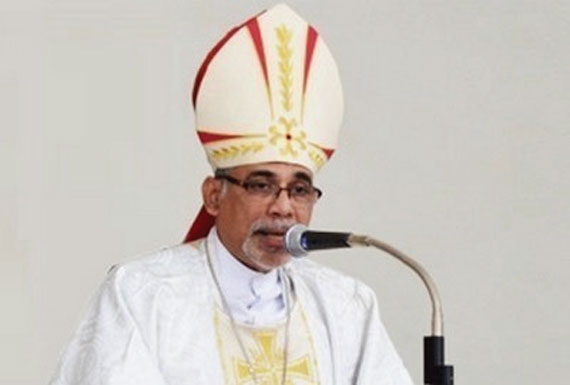
Meanwhile Archbishop Dominic Jala of Shillong too denied that the incidents had any communal color.

“The present disturbed situation in Shillong arose out of an incident that was initially resolved,” the Salesian prelate told Matters India on June 6.

Constitution in danger, human rights trampled: Goa Archbishop

The Indian Constitution is in danger, Goa’s Archbishop Filipe Neri Ferrao has said, adding that a “new trend” of mono-culturalism, which demands uniformity in what and how one eats, dresses, lives and even worships, is putting human rights at risk. In the latest annual pastoral letter to Catholics in Goa, Ferrao also exhorted agencies of the Church in Goa to actively participate in social movements and urged lay Catholics to play an active part in politics.

“At the time of elections, the candidates confuse the minds of many people by making false promises. And the people, on their part, often sell their precious vote for selfish, petty gain. “Today, our Constitution is in danger, (it is a) reason why most of the people live in insecurity,” Ferrao said in his pastoral letter for 2018-19 which was formally released but circulated later. “In this context, particularly as the general elections are fast approaching, we must strive to know our Constitution better and work harder to protect it.”

In the letter, which comes two weeks after Delhi Archbishop Anil Couto warned about an emerging threat to India’s “democratic and secular fabric” Ferrao also alleged that human rights were being trampled in the name of development and mono-culturalism.

“In recent times, we see a new trend emerging in our country, which demands uniformity in what and how we hear, dress, live and even worship: a kind of mono-culturalism. Human rights are under attack and democracy appears to be in peril.

“The various minorities fear for their safety. In short, respect for law is frankly on the decline in this country,” said Ferrao, who is the spiritual and religious leader of Catholics in Goa who account for 26 per cent of the state’s population of 1.5 million.

“People are being uprooted from their land and homes in the name of development. Pope Francis says that ‘the first victim of development is the poor person.’ It is easier to trample upon the rights of the poor, because those who will raise their voice for them are very few.”

Despite criticism, major superiors of India working for the country

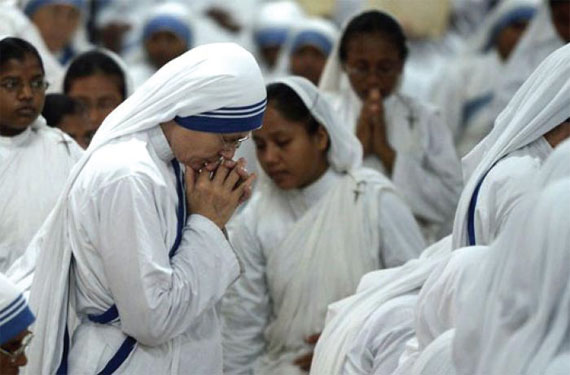
The Conference of Religious India held a meeting in Chennai (Tamil Nadu) from 27 to 30 May. Participants agreed that, despite criticism of Christians, they will continue to work together for the good of the country.

Speaking at the event, Msgr Theodore Mascarenhas, secretary general of the Catholic Bishops’ Conference of India (CBCI), reiterated the importance of Church unity, stressing the need for everyone – bishops, Caritas, religious and laity – to work together.

Speaking to AsiaNews, Fr Rayarala Vijay Kumar, regional superior of the Pontifical Institute for Foreign Missions (PIME), said that the meeting provided an opportunity to talk about the country’s political situation, ahead of next year’s general elections.

The venue also gave participants a chance to reiterate “the commitment of the Catholic Church to the needy people of India,” Fr Kumar said, “not only their material needs,” he added, “but spiritual ones as well.” The general assembly of superiors of religious – male and female – congregations is held every three years. About 550 superiors and representatives of Church hierarchies were present at this year’s meeting, including Msgr Giambattista Diquattro, apostolic nuncio to India and Nepal.

“One thing we greatly appreciated was the fact that the nuncio stayed for all four days,” Fr Kumar said. “He spoke to at least with 250 men and women religious. This shows the Vatican’s interest in India.”

Taking a cue from a topic dear to Pope Francis, the Assembly discussed “the Church going forth,” i.e. “the Church going out to the edges (or peripheries) of society,” Fr Kumar explained. “It means finding the Lord in those who thirst for him, the marginalised, and lend a helping hand to those in need.”

With the term edge (or periphery), “we mean being on the margins – the needy, the poor, the sick – but also spiritual, that is, those who live in the misery of the spirit, whether rich or poor.”

Fr V.M. Thomas, a former CRI president, was one of the first to speak. He highlighted the challenges the Indian Church has to face at a very delicate moment in the country’s political life.

Pope Francis appoints two new bishops for India

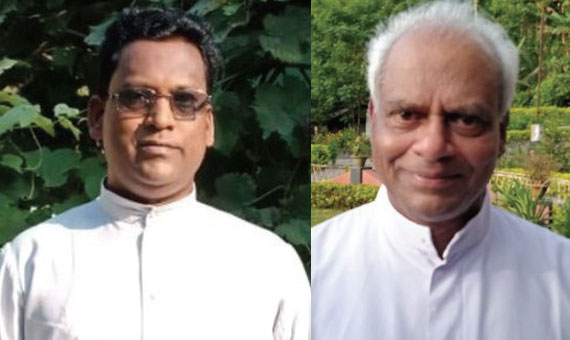
The pontiff appointed Father Fulgence Aloysius Tigga as the new bishop of Raiganj in West Bengal state and Salesian Fr Dennis Panipitchai as the auxiliary of Miao in Arunachal Pradesh, according to a press release from the Catholic Bishops’ Conference of India headquarters in New Delhi.

Father Tigga, a priest of Bettiah diocese in Bihar, is currently its vicar general.

Father Panipitchai is currently the parish priest of Mary Immaculate Parish, Chingmeirong, in Imphal archdiocese in Manipur diocese. He is also a consulter of the Salesians’ Dimapur province.

Schonborn at odds with CDF statement on women priests

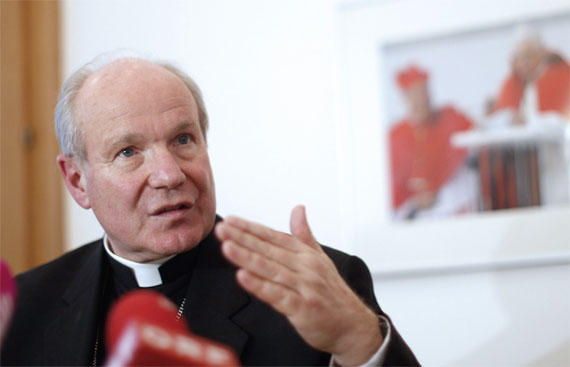
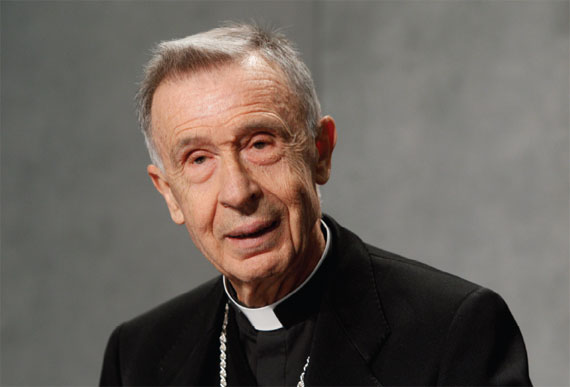
After CDF Prefect Luis Ladaria Ferrer SJ reaffirmed the impossibility of ordaining women in the Catholic Church, it has become clear that cardinal-elect Ladaria’s statements run counter to a position recently enunciated by Cardinal Christoph Schönborn.

In an article in L’Osservatore Romano on 30 May, the Prefect of the Congregation for the Doctrine of the Faith stated that expressing doubt about the impossibility of ordaining women to the priesthood “creates serious confusion among the faithful.”

Interviewed on the subject in his Easter interview for the Salzburger Nachrichten of 1 April 2018, Vienna archbishop Cardinal Schönborn referred specifically to the possibility of change via a Council. He stated that the question of women’s ordination was a question that “can certainly only be clarified at an [Ecumenical] Council. It cannot be solved by a Pope alone. It is far too important a question for it to be solved from the desk of a Pope.”

Asked whether he was only talking about ordination of women to the priesthood, he said he meant the ordination to the diaconate, the priesthood and the episcopate. He was then asked whether it was possible for Pope Francis alone to give the go-ahead for a women’s diaconate.

Catholic schools doing better at teaching self-control to students

The study examined two surveys of the behaviour of thousands of elementary school students enrolled in public, Catholic, and non-Catholic pri-vate schools. According to the teachers in the surveys, students at Catholic schools engaged in fewer “externalizing behavi-ours,” meaning they did not fight, get angry, act impulsively, or disturb on-going activities as frequently as students at other schools.

What’s more, Catholic school students are “more likely to control their temper, respect others’ property, accept their fellow students ideas, and to handle peer pressure.” This is true across demographic lines. According to its website, the Fordham Institute promotes educational excellence for every child in America via quality research, analysis, and commentary. It is often described as a conservative think-tank.

While the study is encouraging, CATO Institute expert Corey A. DeAngelis warns that it is not causal, (as there was no real way to create a control group), and there could be other factors for a child’s good behaviour than the type of school he or she attends.

Still, DeAngelis says there are reasons to believe that Catholic schools in particular could provide an environment to develop a sense of self-discipline.

“Religious schools may have a competitive advantage at shaping character skills because students are not just held accountable to teachers, they are also held accountable to God,” DeAnglis told CNA.

DeAngelis also speculates that the close-knit nature of many Catholic schools could foster an environment which would further benefit its students.

“Children are more likely to feel engaged and interested in a school with a strong school culture,” he explained. Cristo Rey Network CEO Elizabeth Goettl credits the high standards set by Catholic educators for this result.

Pope stalls German plans on Communion for Protestants

Pope Francis has stalled the German bishops’ plan to loosen restrictions on giving communion to Protestants telling them their document on the topic is “not ready” for publication.

A two-thirds majority of the German hierarchy had voted in favour of a “pastoral hand-out” that would have made it easier for non-Catholic Christians married to Catholics to receive the sacraments. But seven bishops including a cardinal protested against the move and appealed to Rome. In a letter addressed to Cardinal Reinhard Marx, President of the German Episcopal Conference, Archbishop Luis Ladaria, the Prefect of the Congregation for the Doctrine of the Faith, says the Pope has ruled against publishing the document on the grounds of preserving the integrity of Catholic doctrine and Church unity. “The question of admission to communion for evangelical Christians in inter-confessional marriages is an issue that touches on the faith of the Church and has significance for the universal Church,” Archbishop Ladaria writes in his letter which is also copied to the bishops.

Parents abandon infant at church, father held

A man was arrested June 2 for abandoning his newborn baby in a church in Kerala.

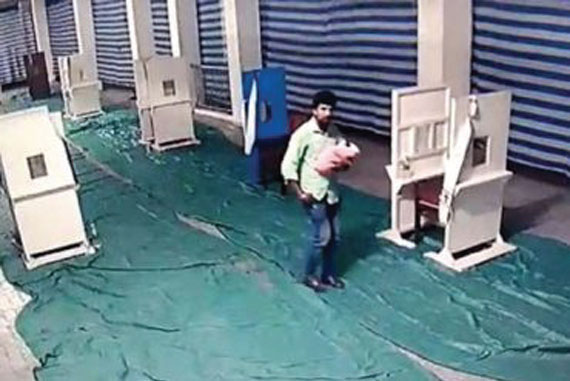
Police said they traced the parents of the two-day old baby based on CCTV footage that went viral on social media platforms.

The baby’s father will be charged under various sections of IPC and Juvenile Justice Act, police said. CCTV footage aired by television channels and circulated on social media showed a couple leaving the child at one of the temporary erected confessionals in the premises of St George Forane Church in Edapally, a suburb of Kochi, Kerala’s commercial capital.

The church’s security staff noticed the child at around 8:30 pm on June 1 and immediately alerted the police.

The recently renovated church draws thousands of visitors and devotees daily.

Police traced the child’s parents to Wadakancherry in Trichur district, some 90 km north of Edapally.

In the CCTV footage, the couple along with another child of around 3 years old, was seen walking into the church premises around 8:15 pm with the baby wrapped in an orange sheet. The father kissed the baby on its forehead before carefully placing the infant on the ground.

Pope accepts resignation of three Chilean bishops

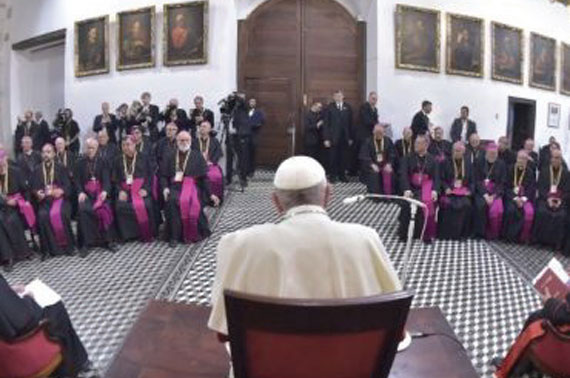
Pope Francis on June 11, accepted the resignation of three Chilean bishops including the controversial Juan Barros following a child sex abuse scandal in Chile which has come to haunt his papacy.

The entire Chilean delegation of bishops tendered its resignation to the Pope after a series of meetings at the Vatican.

The mass resignation of an entire delegation of bishops is almost unheard of, having last happened two centuries ago.

Several members of the Chilean Church hierarchy are accused by victims of ignoring and covering up child abuse by Chilean paedophile priest Fernando Karadima during the 1980s and 1990s.

The scandal is the latest to rock the Roman Catholic Church, and Argentina-born Francis has said it must not happen again on his watch.

But the pontiff himself became mired in the scandal when, during a trip to Chile in January, he defended Bishop Barros who was accused of covering up Bishop Karadima’s wrongdoing.

Bp Karadima was suspended for life by the Vatican over the allegations of child molestation.