SINGING PRIEST’S TV PERFORMANCE RECEIVES STANDING OVATION FROM JUDGES

A Catholic priest brought Britain’s Got Talent judges to tears, following his audition on the national TV talent show.

Fr Ray Kelly, a parish priest from Ireland, went through to the next round of the competition after receiving the coveted four ‘yeses’ from the judging panel, after singing a rendition of REM’s Everybody Hurts. The judges praised his performance at the auditions, including judge Simon Cowell, who described it as one of his ‘favourite auditions ever.’

The 65-year-old priest of almost 30 years has been a parish priest in Oldcastle and Moylagh, Co Meath since 2006, and has already become a hit online with his musical performances.

MYANMAR CHURCHES SHELTER FLEEING CIVILIANS IN KACHIN

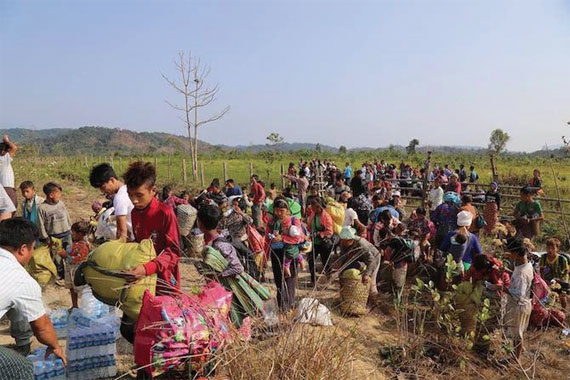
Hundreds of civilians have fled their homes and are seeking refuge in churches in Myanmar’s conflict-torn Kachin State amid the military’s offensive against Kachin rebels.

More than 900 civilians from Kasung and Zup Mai villages are taking refuge in two Catholic Churches and a Baptist Church in Namti town after church groups rescued them on April 22. Father Peter Hka Awng Tu, parish priest of St Columban’s Cathedral, said people from Zup Mai had to walk for three days after fleeing their homes on April 20.

The priest said clothes donated by parishioners and food were given to the displaced people on April 23.

He said they rescued fleeing civilians, including women, children and the elderly, after he had a meeting with the military’s northern commander, who gave the green light. “At present people can’t go back to their villages as it is not safe for them because more fighting could erupt. Church groups will continue providing humanitarian assistance,” Father Awng Tu told.

On April 20, Myanmar’s military launched an offensive against the Kachin Independence Army (KIA) by using airstrikes near Kasung village that led to hundreds of people fleeing their homes.

More than 1,000 civilians from Kasung, which is about 25 kilometers from Namti town, fled their homes in August 2017 following clashes between the military and the KIA.

More than 2,000 people remain trapped in a jungle since heavy fighting between Myanmar’s military and the KIA erupted near Awng Lawt and nearby villages on April 11.

About 200 Catholics remain stranded after attending a jubilee celebration on April 8-9 in Tanai, a gold and amber mining region, and cannot return to their village, according to Father Awng Tu.

MISSIONARY OF MERCY: I AM AN INSTRUMENT OF GOD IN BANGLADESH

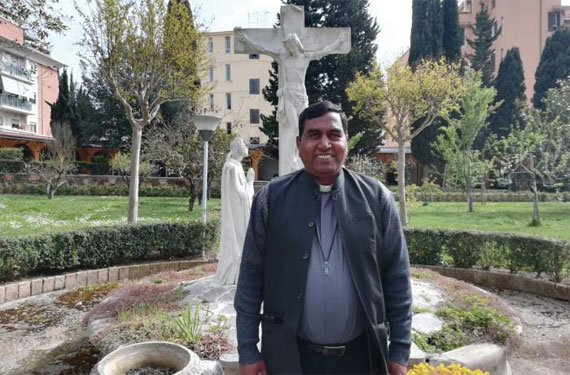
“I am nothing but an instrument in God’s hands, a channel to show the world His mercy,” Fr Jyoti Francis Costa, tells Asia News. We met the assistant to the general secretary of the Bengali Episcopal Conference (Cbcb) in Rome, where he participated in the meeting convoked by Pope Francis with the Missionaries of Mercy. The Pope created this body of priests during the Extraordinary Jubilee of 2016 to “absolve even the most serious sins.” Fr Costa is one of the two missionaries chosen for Bangladesh.

Reflecting on his delicate assignment he states: “I am superior to none. I am there to listen, console the anxieties, welcome the faithful who want to be reconciled with God. I have no merit, it is the love of God that converts hearts.”

The priest is incardinated in the archdiocese of Dhaka, but thanks to the assignment he has been able to visit “parishes, dioceses and pilgrimage centres. Here the local Churches have organized masses, meetings, seminars and retreats.” In particular, he recounts, “I went on several occasions to the dioceses of Barisal [in the south of the country,] and Sylhet [to the east]. Some meetings have been dedicated to religious and consecrated persons, others to all the local faithful and neighboring parishes.”

With the papal mandate, since 2016 he has been able “to preach to thousands of people the teachings of the Gospel and the mercy of the Lord. Moreover, thanks to the special faculties granted us by the Pope, I have been able to confess to many faithful and absolve the sins reserved for the Apostolic See. I have listened to many personal stories and experiences.”

THE AUSTRALIAN NUN WHO MAKES DUTERTE’S BLOOD BOIL

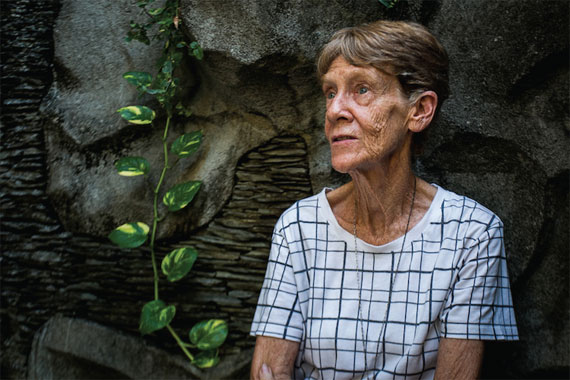
She has been described as frail, old, skinny and weak, but she made the tough-talking leader of the Philippines seethe in public. “Who are you?” fumed President Rodrigo Duterte. “You do not have the right to criticize us…. Just because you are a nun? The president even admitted that he personally ordered an investigation into the activities of Sister Patricia Anne Fox. Who indeed is this 71-year-old Australian nun whose detention hogged the headlines in Manila?

Sister Pat, as her friends call her, and her Congregation of Religious Sisters of Our Lady of Sion have been working in the Philippines since 1990. Marie Theodor Ratisbonne and his brother Marie-Alphonse Ratisbonne established the missionary congregation in France in 1843. In 1890, the congregation established its presence in Australia with a mission “to improve Catholic- Jewish relations and to witness God’s faithful love for the Jewish people.”

“I fell in love with the Filipino people. I was inspired by their resilience and sense of humour, even in the middle of a crisis,” she told.

She said her congregation needed “to see the world through the eyes of the poor” and they saw the widespread poverty in Asia.

PAKISTAN’S TOP JUDGE TO HEAR ASIA BIBI’S DEATH SENTENCE APPEAL

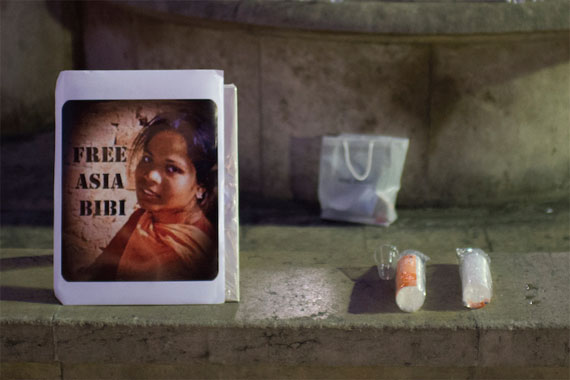
Pakistan’s top judge has announced he will take up the appeal of a Catholic mother of five children who has been on death row since 2010 for blasphemy.

Chief Justice Saqib Nisar told lawyer Saif ul Malook — the chief counsel for Asia Bibi — to prepare for her appeal. “Be ready, Saif ul Malook. I am going to fix your case soon and I myself will preside over the bench,” Nisar told Malook on April 21.

The judge made his comments as the lawyer appeared before the Supreme Court seeking police protection for taking on Bibi’s case after it had been withdrawn by the Punjab police. Nisar ordered the Punjab police to again provide Malook with protection.

Malook said that he had high hopes of Bibi’s conviction being struck down by the Supreme Court.

“Bibi’s family and everyone else who understands her ordeal, are ecstatic at the news that her appeal will be heard soon,” Malook said. Bibi was arrested in 2009 for allegedly insulting the Prophet Muhammad during an argument with Muslim women at an orchard in a small town in Punjab province.

PAKISTAN: FIRST CHRISTIAN CHAPEL OPENS IN AN ISLAMIC UNIVERSITY

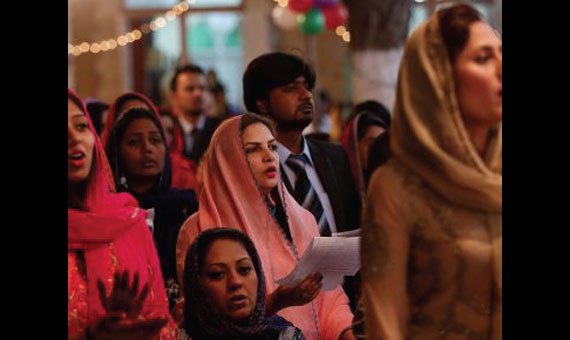
For the first time in the history of Pakistan, a Christian chapel has been opened in an Islamic university. This is the church of St Mary, housed in the atrium of the Agriculture University of Faisalabad. It was inaugurated, on April 15th by Joseph Arshad, archbishop of Islamabad-Rawalpindi and president of the Pakistani Episcopal Conference, formerly titular of the diocese of Faisalabad. During the ceremony, he said: “The presence of a church inside the university enclosure will offer a message of love and harmony throughout the country. Christians will come here to pray for the progress and prosperity of the institute and of the country.”

The new chapel is a novelty for the majority Muslim country. Up until now, more than 177 universities and colleges have been allowed to build only Islamic mosques. Christian places of worship were only allowed in Christian institutions. At the same time, there are no Hindu or gurdwara temples for Sikhs.

SOUTH KOREAN CHURCH FRETS AS BAPTISMS DECLINE, FLOCKS GREY

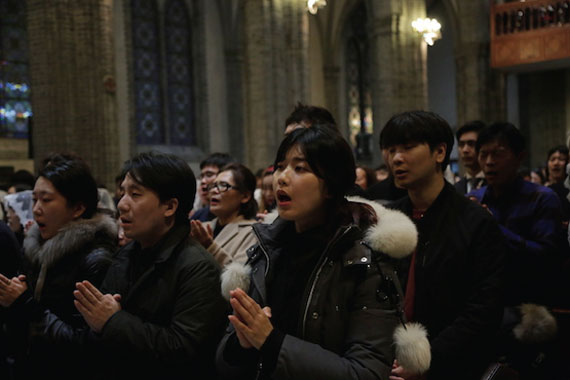
The Catholic Church in South Korea had 5.813 million worshippers accounting for 11% of the country’s population as of Dec. 31, 2017, up 1.3% from one year earlier, according to newly released statistics. But the figures released on April 13 by the Catholic Bishops’ Conference of Korea (CBCK) also represent the slowest rate of growth in the last decade, leaving church authorities concerned about a continued wind-down. Last year, a total of 96,794 young Catholics were baptized in the country but this also represents a slowdown as the figure dropped 12.9% from 2016.

WORLD ASSEMBLY OF RELIGIOUS CONCLUDES IN BENGALURU

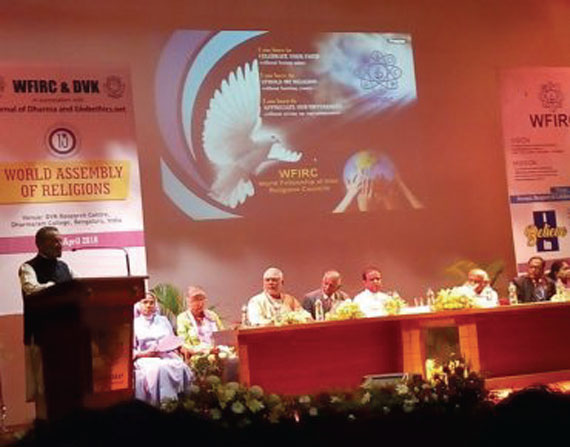
The 13th World Fellowship of World Religious Councils (WIFRC) concluded on April 21 with delegates from various religions celebrating the diversity of faiths and religious traditions.

Around 200 people from all over India representing Bahai, Buddhisht, Christian, Hindu, Jain, Muslim, Sikh, faiths conducted a series of symposiums and panel discussions on the theme “Accept, respect and celebrate diversity” during the three-day assembly at Dharmaram Vidya Kshetram in Bengaluru, southern India.

The assembly ended with a resolution to start Harmony Clubs in various schools to give peace education to children and to promote celebration of diversities.

WFIRC president Swami Sadashivananda from Coimbatore, in his presidential address, said that the delegates believed in the element of innate goodness existing in all human beings. “It flourishes when people of all religions, castes and creeds come together to celebrate each other’s faith and festivals,” he added.

WFIRC general secretary, Carmelite Father Roby Kannanchira welcomed the delegates saying the assembly’s focus was to take a personal and collective resolution to celebrate the faith of the other without losing one’s won, uphold one’s religion without hurting others and appreciate the differences without giving one’s uniqueness. Dr K.P.Fabian, who was former ambassador in various countries, narrated from his experience of living with people of diverse religious backgrounds.

INDIAN NUNS HELP INDIGENOUS WOMEN BREAK FREE OF SHACKLES

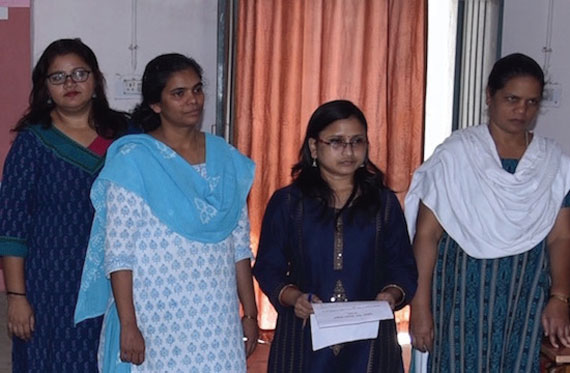
Sister Lizy Thomas from the Uday (Dawn) Social Development Society is pictured with her co-workers as they attend a media conference organized by indigenous women in Jhabua district of India’s Madhya Pradesh State – hoping to enlist the media’s help in their crusade against alcoholism.

For Shanti Devada, the mud walls of her home in Badi Damini village of Jhabua district in the central Indian State of Madhya Pradesh were more like a prison than a shelter or a place of refuge.

She lived a closeted life, not daring to speak to men outside of her family or step outside her village without a chaperon. In fact, the traditions and customs of the indigenous group to which she belongs are so strict, she even had to cover her face with a sari when speaking to male relatives.

However that all changed about eight years ago when Devada, who is now 50, began to defy these conservatives, even archaic customs and became a self-style “crusader” fighting for the greater empo- werment of women.

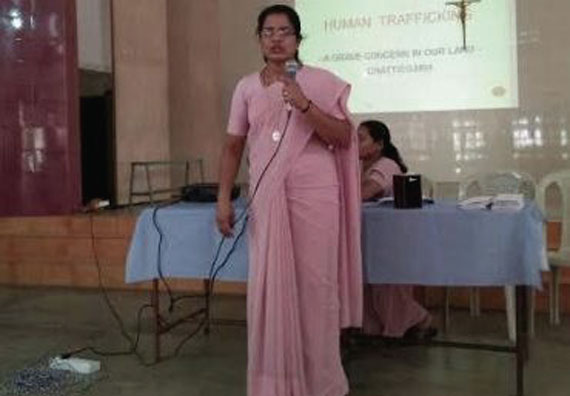
ANTI-HUMAN TRAFFICKING LIFE-THREATEN- ING CHALLENGE: FRANCISCAN NUN

Working against human trafficking is a huge challenge, says a member of the Franciscan Missionaries of Mary (FMM) congregation working in Chhattisgarh State, central India. “Working against the human trafficking in India is the most challenging task. It is a road less-travelled. It is a life-threatening apostolate, yet for the love of those women, we have to rescue, save and rehabilitate those victims of slave industry,” Sr Anne Jesus Mary, director of Jeevan Jharna Vikas Sansthan (JJVS, institute

for the development of life stream), Jashpur, told Matters India. On April 22, Sr Anne addressed on human trafficking conditions in the State of Chhattisgarh to a group of 50 priests and nuns who held a day- long CRI (Conference of Reli- gious India) regional meeting in Jashpur.

She spoke about the South Asian network of sisters working against trafficking, AMRAT, that comprises trained social workers, counselors, lawyers and many other professionals committed to confronting modern slavery. AMRAT members in India number about 600. Sr Anne is one of them.