BAVARIA TO DISPLAY CROSSES IN ALL GOVERNMENT BUILDINGS

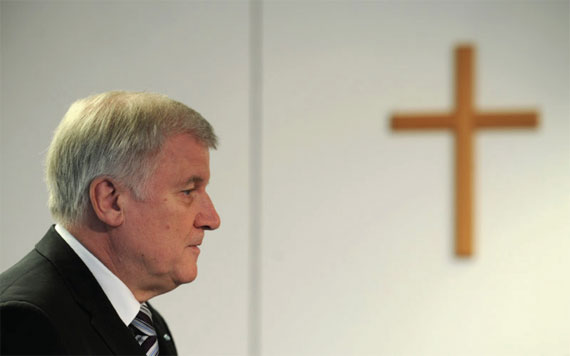
Bavaria’s regional government has ordered crosses to be placed at the entrances of all state administrative buildings. The state’s conservative administration said that the crosses should reflect Bavaria’s “cultural identity and Christian-Western influence.” The decree was passed on April 24th and won’t apply to federal government buildings in Bavaria.

The predominantly Catholic state’s public schools and courtrooms are already obliged to display crosses at entrances. Bavaria is governed by the Christian Social Union, the Bavarian partners of Chancellor Angela Merkel’s Christian Democrats who tend to be more conservative on social issues. The decision comes after last September’s federal election, which saw a rise in support for the anti-immigration and populist Alternative für Deutschland.

Horst Seehofer, former CSU premier of Bavaria and now Germany’s interior minister, has pressed Merkel’s government for tighter immigration controls. Following the re- election of Viktor Orban in Hungary earlier this month, Seehofer warned that the European Union had displayed “arrogance and paternalism” to states like Hungary.

POPE, COUNCIL OF CARDINALS DISCUSS NEW DOCUMENT ON ROMAN CURIA

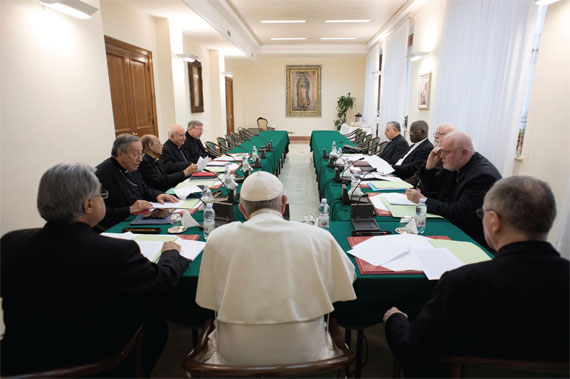
Pope Francis and his interna- tional Council of Cardinals have reviewed a complete draft of the apostolic constitution that would govern the Roman Curia, the Vatican spokesman said.

The cardinals still need some time to finalise the draft, approve it and present it formally to the Pope for “further consultation and final approval,” said Greg Burke, director of the Vatican press office. Even the title of the document has not been finalised, he said on April 25th, although the entire project revolves around the idea of a “church that goes out.” Much of the Council of Cardinals’ work 23-25 April was dedicated to “re-reading the draft of the new apostolic constitution on

the Roman Curia,” Burke said. The draft document emphasises four points, he said: the Roman Curia is at the service of the Pope and the local churches throughout the world; the work of the Curia must have a pastoral character; particulars on the role and functioning of the new section in the Vatican Secretariat of State to oversee the training, assigning and ministry of Vatican nuncios and diplomats around the world; and the proclamation of the Gospel and a missionary spirit must characterize the activity of the Curia.

60,000 CATHOLIC MIGRANTS, REFUGEES LIVE IN ISRAEL

On April 4, 2018, Archbishop Pierbattista Pizzaballa, Apostolic Administrator of the Latin Patriarchate of Jerusalem, announced in a statement the forthcoming creation of a personal parish for migrants and refugees in Israel. Father Rafic Nahra, the current coordinator for the pastoral among migrants, explains in an interview with the Media Office the reasons for this creation. He said “it is about 60,000 faithful, half of whom are from the Philippines. The other communities are Indians, Sri Lankans and Eritreans. Other communities are also present but in smaller numbers: French-speaking Africans, Romanians and Poles. Migrants are people who, for the most part, have fled difficult economic situations in their home country and have come for work in Israel. Asylum seekers have fled war or dictatorship and currently have no confidence in their future in Israel.” A personnel parish is being established on May 20.

EVANGELIZING BY TRAIN IN GERMANY

In an effort to reach out to local people, a German Catholic priest from the Diocese of Limburg has adopted the habit of taking a weekly train journey during which he makes himself available to chat to other passengers. Father Olaf Linden-berg has experienced enormous success with his simple idea of setting out to meet people while he travels on local trains.

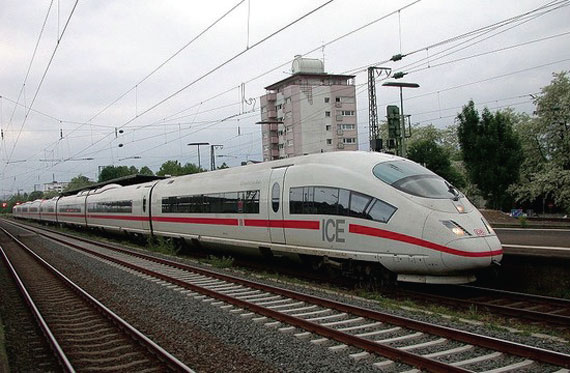
Nearly every Tuesday he boards the 6.55 a.m. train between Limburg and Frankfurt-am-Main.

ARE MORE BABIES BORN INSIDE OR OUTSIDE MARRIAGE?

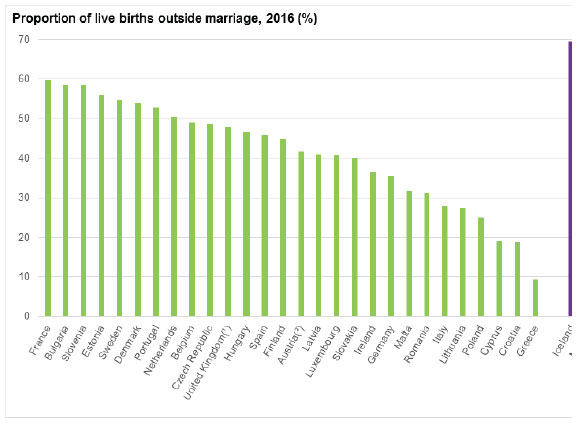
Over 5.1 million babies were born in the European Union (EU) in 2016. In eight of the 28 Member States, the majority of babies were born outside marriage, while in eight other member States two-thirds of babies were born to married parents.

With six in every ten babies born to unmarried parents, France had the largest proportion (59.7%) of live births outside marriage in the EU in 2016. France was closely followed by Bulgaria and Slovenia (both 58.6%). More than half of births also occurred outside marriage in Estonia (56.1%), Sweden (54.9%), Denmark (54.0%), Portugal (52.8%) and the Netherlands (50.4%).

In contrast, fewer than 1 in 10 babies were born to unmarried parents in Greece (9.4%). Births outside marriage also accounted for a quarter or fewer of all babies born in Croatia (18.9%), Cyprus (19.1%) and Poland (25.0%), and for under a third of babies born in Lithuania (27.4%), Italy (28.0%), Romania (31.3%) and Malta (31.8%).

Compared with the situation in 2000, the proportion of live births outside marriage rose in all Member States, albeit to different extents.

On the one hand, the propor- tion of babies born out of wedlock has grown significantly in Mediterranean Member States. It has increased eightfold in Cyprus (from 2.3% in 2000 to 19.1% in 2016). It has tripled in Malta (from 10.6% to 31.8%) and Italy (from 9.7% to 28.0%), while it is now about 2.5 times higher in Spain (from 17.7% to 45.9%), Greece (from 4.0% to 9.4%) and in another southern Member State: Portugal (from 22.2% to 52.8%).

CDF, POPE REJECT INTERCOMMUNION HANDOUT OF GERMAN BISHOPS’ CONFERENCE, MARX MEETS POPE

As the Austrian Catholic news website Kath.net reports, the Congregation for the Doctrine of the Faith – with explicit approval of Pope Francis – rejected the 22 February 2018 pastoral handout concerning the admittance, in individual cases, of Protestant spouses of Catholics to Holy Communion as it had been approved by the German Bishops’ Conference under the leadership of Cardinal Reinhard Marx. We have confirmed their report with our own sources close to the Vatican.

Kath.net relies for its story on “well- informed Vatican sources,” according to which this handout “has been sent back to the sender.” Only last time, there had come out reports about a letter written by seven German bishops and addressed to the Vatican, in which they ask for clarification in this matter. One of these seven bishops, Bishop Stefan Oster, had subsequently explained in detail what the objections of these bishops were.

As Oster explained in an article published in his own diocesan newspaper, “We wish to receive a clarification as to whether this expansion of the interpretation of grave emergency situations is correct.” It does not seem a “simple” thing to “share the full Catholic understanding of the Eucharist,” while at the same time remaining in another denomination; and “thus to preserve for oneself, at the same time, that confession’s own understanding, let’s say of the Last Supper.” Oster does not see how this inner contradiction could – or should – be preserved of holding two different, incommensurate understandings of Holy Communion at the same time. While Cardinal Reinhard Marx meets Pope Francis to discuss a proposal by the German bishops to loosen restrictions on giving communion to Protestants married to Catholics.

The bishops’ conference revealed the forthcoming meeting at the Vatican in a statement where they described reports that the Vatican – on the Pope’s instruction – had rejected the German plan as “false.”

While a convincing majority of the bishops voted to agree a “pastoral hand-out” on how more spouses in inter-church marriages might receive the Eucharist, seven prelates have written to the Vatican asking for clarification on the matter.

FAITH CAN HELP CLEANSE SOCIETAL WATERS OF RACISM, SAYS CARDINAL WUERL

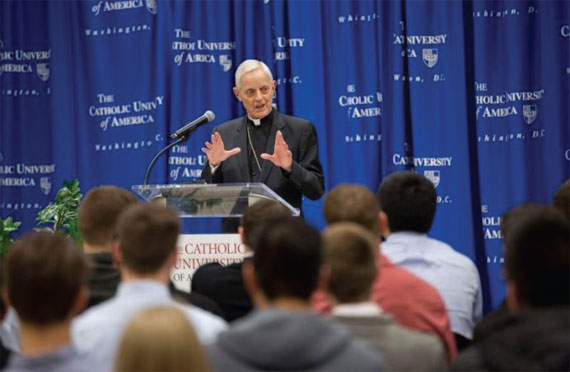
With faith, people can confront and help to overcome the evil of racism, Washington Cardinal Donald W. Wuerl said in an April 17 talk at The Catholic University of America.

“The elimination of racism may seem too a great task for any one of us or even for the whole church,” he said. “Yet we place our confidence in the Lord, because in Christ, we are brothers and sisters, one to the other. With Christ, we stand in the spirit of justice, peace and love.”

Wuerl, who as the archbishop of Washington is Catholic University’s chancellor, was invited by its president, John Garvey, to speak on his recent pastoral letter, “The Challenge of Racism Today.”

Speaking at the university’s Pryzbyla Centre to an audience consisting mostly of seminarians and other students, the cardinal compared racism to a residue that has contaminated streams that flow into the societal well from which people drink. He warned that the unhealthy contaminants causing racism in our culture can be subtle and ubiquitous. “We have the possibility to be that fresh stream of water flowing into the societal well,” he said. Noting that the U.S. bishops in their 1979 pastoral letter “Brothers and Sisters to Us,” identified racism as a sin, the cardinal said that evil has spanned continents and centuries and continues in today’s world.

FILIPINO POLL CANDIDATE RAPPED FOR ‘JESUS CHRIST’ NICKNAME

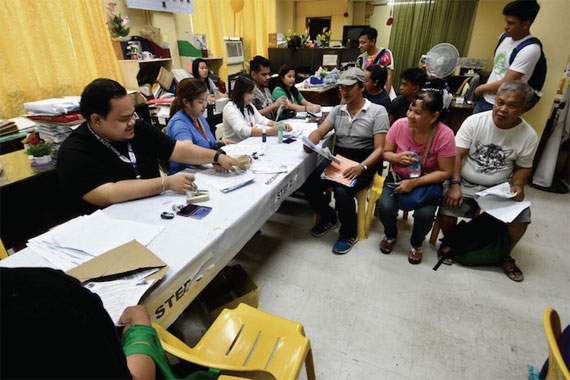
A man standing for election to a village council in the southern Philippines has been criticized by a church leader for using the nickname “Jesus Christ” on his certificate of candidacy.

The Commission on Elections upheld the use of the name by 40- year-old Charlie Bucao Talledo.

But Father Bobby Puracan, chancellor of Surigao Diocese in Mindanao, cautioned against using the name for political purposes.

“The term ‘Christ’ is a title that means ‘Messiah’ or ‘the anointed one’ from the Greek ‘Christos’,” he said. “He is the central figure of Christianity, so we must be careful in using it.”

Father Puracan said he knows Talledo, who always attracts the attention of people every time he attends Mass.

“During the singing of the Lord’s Prayer, he would go to the middle of the church and raise his arms, getting unnecessary attention,” said the priest. There were also incidents when Talledo walked around the city dressed like Jesus while carrying a crucifix attached to a baton.

NIGERIA: 2 CATHOLIC PRIESTS, WORSHIPPERS KILLED BY HERDSMEN

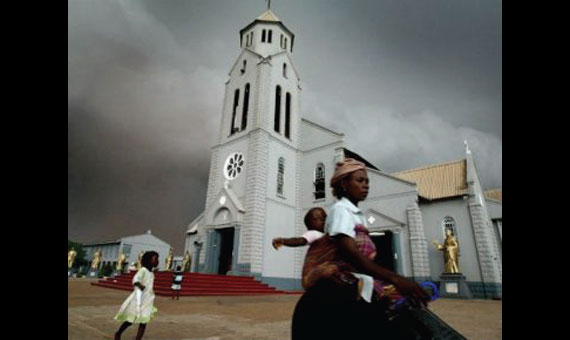
Two Catholic Priests and at least 17 worshippers have been killed in an attack by herdsmen on St Ignatius Catholic Church in Ukpor -Mbalom community in Gwer East Local Government of Benue State in Nigeria.

Stressing that the country will not bow to the machinations of evildoers, President Buhari vowed that the assailants would be hunted down and made to pay for the sacrilege committed. The Catholic Diocese of Makurdi confirmed the killing of two of its priests, Fathers Joseph Gor and Felix Tyolaha, in an early hour attack on St Ignatius Quasi Parish.

A statement by its Director of Communications, Rev Fr Moses Iorapuu, said that the attacks were perpetrated by herdsmen who stormed the Mbalom community and killed the two priests during the morning mass at the church.

The Diocese expressed regret at the nonchalant attitude of the security agencies in containing the killings. It said the herdsmen, who stormed the community, burnt down houses, destroyed crops and killed people. The church, there- fore, urged the relevant authorities to stop the killings in the Benue valley.

PRIEST SHOT HEARING CONFESSIONS IN MEXICO; SECOND CLERIC MURDERED IN COUNTRY IN 3 DAYS

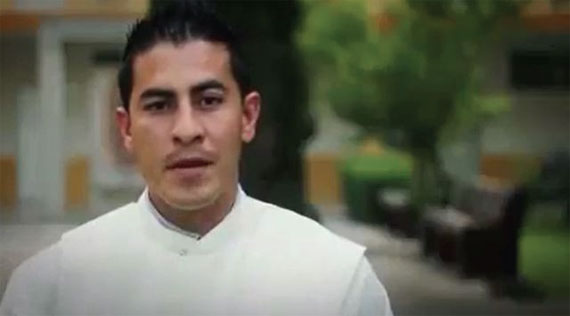
Then-Deacon Juan Miguel Contreras Garcia in vocations video. The priest was murdered outside Guadalajara.

A priest on the outskirts of Guadalajara has been murdered, the second priest in a week killed in Mexico. Father Juan Miguel Contreras Garcia, 33, was shot dead late on April 20 in Tlajomulco de Zuniga by unidentified attackers in his parish office, reportedly while hearing a confession. “We make an urgent call to build a culture of peace and reconciliation. These lamentable events call all of us to a much deeper and sincere conversion. It is time to look honestly at our culture and society, and to ask ourselves why we have lost respect for life and for the sacred,” said Cardinal José Francisco Robles Ortega, the Archbishop of Guadalajara.

The cardinal asked the Catholic faithful to accompany their priests with prayer and in the pastoral service to the communities entrusted to them.