Priests and nuns have right to ancestral property: Kerala HC

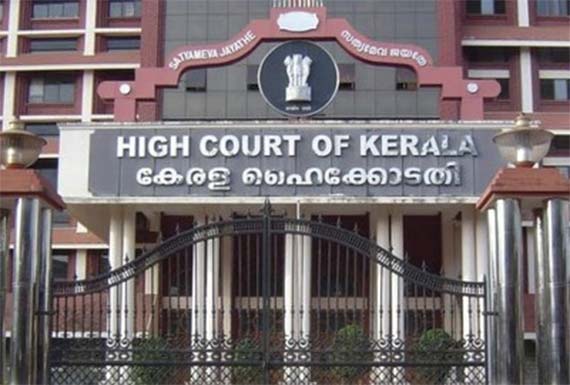
In a landmark ruling, the Kerala High Court has held that Christian priests and nuns have right to ancestral property and that their vow of poverty does not deprive their rights.

The ruling was given by a division bench after considering an appeal (AS No. 460/2000) challenging a lower court’s ruling that a priest does not have right to ancestral property as he takes a vow of poverty as part of attaining priesthood.

In the judgment, the court said, “To hold that one would suffer a ‘civil death’ and be deprived of his property on entering into the Holy Order would be a naked infringement of Article 300-A of the Constitution of India (right to property). Of course it is the volition of a Hindu ascetic or a Christian priest to relinquish his right over his personal property in favour of a Mutt or Monastery in a manner known to law.

But there cannot be any automatic deprivation of property acquired by way of intestate or testamentary succession by the mere fact that one has entered into the religious order and renounced his worldly pleasures.”

There is absolutely no statutory prohibition for a Christian priest or nun in the matter of intestate or testamentary succession of property in his or her personal capacity, the judgment delivered on June 7 stated.

Ban on cattle slaughter insult to Christians, Muslims: Manipur Congress

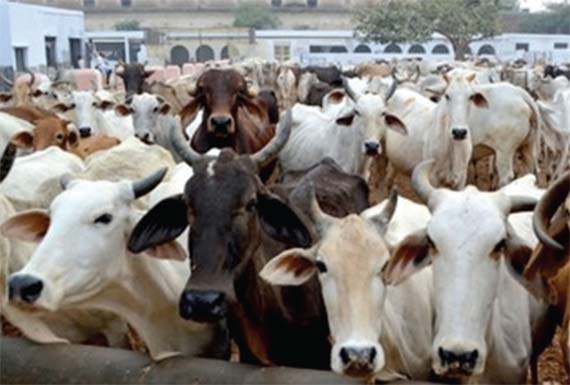
Manipur Congress on May 28 said Centre’s ban on sale of cattle for slaughtering was a direct attack on Christians and Muslims. The ban of cattle slaughter was against Muslims and Christians and a challenge to the two communities by the BJP-led NDA government at the Centre, said Congress spokesperson and sitting MLA Md Fajur Rehman.

Addressing a news conference at Imphal Congress Bhavan, the spokesperson alleged that the recent move of the Central government has insulted secularism of the country.

He said that India as a secular country has now been put at stake by a “dictator government.”

“Congress will fight tooth and nail the challenge in the fore of the minority Muslims and Chri-stians,” the Muslim leader said. Alleging that BJP as a commu-nal minded party is infusing communal venom among the different communities, particu-larly among the minority co-mmunities, the Congress spokesperson called upon the people to join hands with the Congress in rooting out such party from the soil of the state.

Former deputy mayor of Imphal Municipal Corporation (IMC) Meibon Phaomei who also attended the news conference alleged that the latest move of the Central government once again showed anti-Christian activities which the BJP has been indulging across the country.

Northeast Christians won’t accept beef ban: Meghalaya BJP leader

A rebel-turned-politician from Meghalaya said the BJP would reduce the price of beef if voted to power in the state while insisting that the Centre should take the public’s view before putting any restriction on the sale or consumption of beef. Bernard Marak, who is BJP’s Tura unit president, said the beef ban should not apply to states with a Christian-majority.

“Meghalaya has a huge demand for beef but the prices are not regulated. Neither is there any slaughter house nor is the meat certified by doctors. As such, sometimes old meat is mixed with fresh meat. If BJP is voted to power, it will look into the issues and regulate the prices so that people don’t have to buy meat at a high price,” Marak told the New Indian Express.

“The Centre wants to ban beef consumption but it should not apply to the Christian-majority states where most people consume meat including beef. Any ban has to be on public consensus.

Meghalaya being a tribal State, we want the sentiments of the people to be respected,” he said. Marak, who co-founded insurgent group Achik National Volunteer Council, said any restriction on beef consumption in Meghalaya would create a big impact. Rival political parties are criticising the BJP by calling it a “Hindu party,” he said.

Bengal church vandalized, looted 

Unidentified mis-creants vandalized a church in West Bengal in the early hours of June 6.

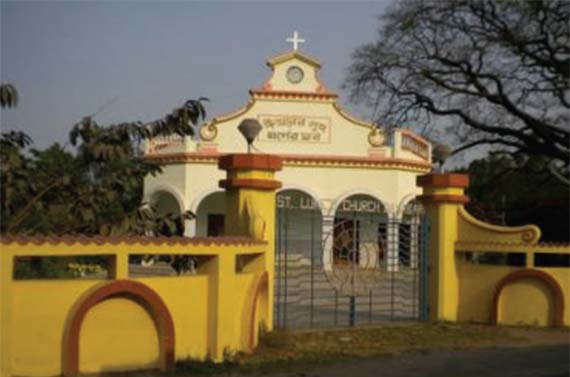
Police said they have launched search to find the culprits who attacked the 127-year-old St Luke’s Church at Dayabari Mission Gate in Ranaghat in the Nadia district. The miscreants stole old religious items and 3,000 rupees, the church authorities said.

“The Holy Sacrament was torn to pieces by miscreants. The other religious items, like the chalice and bronze candle stands were damaged and a few were taken away along the cash. They took the cash after breaking open a cupboard,” pastor Kishor Mondal told reporters.

“The stolen and damaged articles are very old. It is a blow for us,” he added.

Christian leader blasts Chhattisgarh’s tribal sterilization rules

A Christian leader in Chhattisgarh alleges that the eastern Indian government’s move to protect primitive tribes infringes personal freedom.

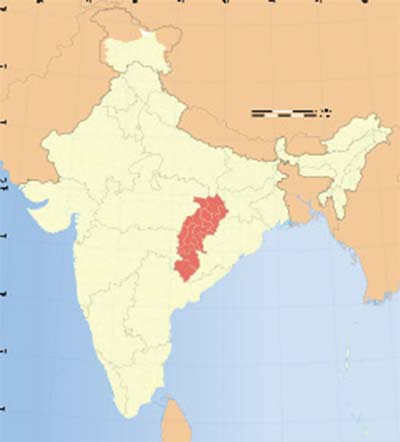
On May 26, the Chhattis-garh government passed an order amending the 1979 rule passed by then undivided Madhya Pradesh to protect primarily vulnerable tribal groups.

The amendment “is an attack on the free thought of an individual,” Arun Pannalal, president of the Chhattisgarh Christian Forum, told Matters India June 6.

The new rule stipulates tribals who want sterilization should apply for permission from their subdivisional magistrate.

While making the law in 1979, the government officials said the order was necessary to protect primitive tribes that had extremely low health indicators. The tribes also showed a negative rate of growth and there was fear of them dying out.

The state has seven primitive tribes that are on the verge of extinction.

The Chhattisgarh govern-ment officials say the amend-ment is a “step forward,” but Pannalal and other activists denounce it continu-ation of an inhuman practice of denying the tribes “autonomy over their own bodies.”

“It is up to the individual or the family to decide whether they want to procreate or not. There should not be any interference from anybody from outside,” the Christian leader asserts.

If the government is serious about primitive tribes’ welfare, it should provide them better health care and educate them to improve their living conditions to enhance their population, Pannalal says.

Gujarat textbook calls Jesus demon, Christians submit memorandum

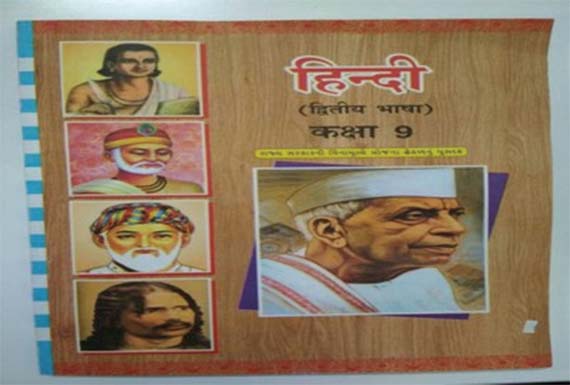
Christians in Gujarat have demanded withdrawal of a school textbook that refers to Jesus Christ as a demon whose stories would be remembered forever.

The lesson appeared in the Hindi textbook for ninth grade under the Gujarat State Board.

The education minister and the chairperson of the textbook board have said that the error will be rectified soon. Officials said that the mistake was caused by a misprint.

The reference to Jesus Christ as a demon is made in chapter 16 of the book titled “Bharatiya Sanskriti Mein Guru-Shishya Sambandh” (the teacher-disciple relationship in the Indian culture).

On page 70, the line referring to Jesus Christ reads – “Iss sambandh mein haivan Isa ka ek kathan sadaa smaraniya hain.” Translated, it means that in this context, an incident of demon Jesus will always be remembered. The underlined sentence translates to “an incident of demon Jesus will always be remembered.”

Subramaniam Iyer, a lawyer who noticed the mistake, says that the error attracts section 295 (a) of the Indian Penal Code, which pertains to deliberate and malicious acts intended to outrage religious feelings of any class. Speaking to News18, Iyer said, “Jesus is being portrayed as a demon to students. Quite clearly, this is a case that attracts section 295(a) of the IPC that pertains to hurting the religious sentiments of any class.”

Iyer said that the error may be unintentional, but it can create a rift between communities and cause a law and order problem. “This simply is unacceptable and should be removed immediately,” he added.

The news channel contacted Education Minister Bhupendrasinh Chudasama who said he was aware of the error and added that it will be corrected.

Nitin Pethani, chairperson of the Gujarat State Board of School Textbooks, said that it was a typographical error. “The word “haiva,” a disciple of Jesus Christ, got misprinted as “haivan,” meaning a demon,” he said, adding that “Aadam Isa” and “Haiva Isa” were the two disciples of Christ and an “n” inadvertently got printed in the book.

Christians from across the city and district submitted a memorandum to the district collector over the class IX Hindi Textbook published by Gujarat State School Textbook Board (GSSTB) that had printed adjective ‘hevaan’ or demon for Jesus Christ.

Christians from Syrian Church, Pentecost, Brethren Mission, Protestant, Roman Catholic and other denominations have expressed shock over the Textbook referring Jesus Christ as a demon.

Christians took out a rally and submitted a memorandum to district collector Mahendra Patel here on June 12.

African Catholics and the problem of integration in India

Thousands of young people from Africa, many of them Catholics, migrate each year to major Indian cities, mainly to study, creating a new challenge for the Indian church. “The challenges are pastoral,” said Fr Martin Puthussery, secretary of the Commission of Migrants in Bangalore Archdiocese. He said Indian society is prejudiced against Africans, seeing them as wanton drug peddlers.

“It is difficult for them to rent accommodation because of the negative attitudes towards them and those who do find accommo-dation are almost always over-charged,” the Jesuit priest said.
Bangalore, where Father Puthussery is based, has at least 3,000 African students and a third of them are Catholic, he said.

Even though there are no official statistics on the number of Africans in the country, a rough estimate suggests that there are 50,000 Nigerians in India mostly in New Delhi, Bangalore and Chennai.

The prejudice against Africans in Indian society cannot be helped but Africans are encouraged to join in with parish activities, Father Puthussery said. “We deliberately try to integrate them and help remove social preju-dice,” he said.

Win over minorities, Amit Shah tells Kerala BJP

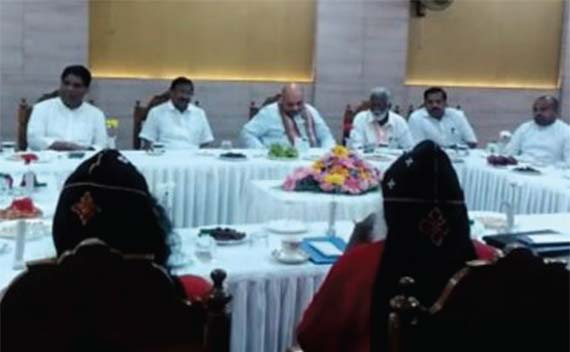
Bharatiya Janata Party (BJP) president Amit Shah, winding up a three-day visit to Kerala, gave a clear message to the state unit of the party—win the support of all non-Muslim minorities, especially Christians, and backward caste Hindus, in order to win more seats in the 2019 general election, according to people privy to the discussions.

State BJP leaders, who attended key meetings with Shah, said that he asked to focus on the reality behind getting only one seat rather than boasting about the increase in vote share for the party in the 2016 assembly election.

Kerala is crucial for BJP in its efforts to become a truly national party. The saffron juggernaut, which is on a roll in most Indian states, has not yet been able to make an electoral footprint in Kerala—one of the few states where the BJP has never won a parliamentary seat. However, the party was able to carve some success recently, arguably with the rise of Shah and Prime Minister Narendra Modi within the BJP. In the assembly election in May last year, BJP doubled its vote share to 16% and won its first seat.

“He has learned Kerala politics better than any state leader. Now he knows how to tackle it,” said BJP state president and national executive member Sreedharan Pillai, NDTV report-ed.

Kerala has a strong presence of Muslims and Christians, who together make up close to half of the state’s population, as per the 2011 census. “The Muslim Lea-gue has more or less consolidated the bulk of Muslim votes, and it may be a tough nut to crack. But he (Shah) believes the Christian votes, along with the backward caste Hindu votes, may swing in favour of the BJP,” said another state BJP leader, who did not wish to be named.

On June 3rd, Shah visited top Christian priests, including Kerala Catholic Bishops Council (KCBC) major archbishop M.Soosa Pakiam and Syro-Malabar Church major archbishop.

Catholic nun detained in Madhya Pradesh 

A Catholic nun and four girls accompanying her were on June 13 forced out of a train in the central Indian State of Madhya Pradesh.

Government Railway Police detained them at Satna station in the state after rightwing Hindu groups accused Sister Bina Joseph of indulging in illegal religious conversion.
The group was traveling on Shipra Express to Bhopal, Madhya Pradesh capital, from the eastern Indian State of Jharkhand.

“As our train reached the station, police personnel forced us out and then detained saying the girls were being taken for religious conversion,” Sister Joseph told Matters India over phone from police station.

The nun and the girls were held up in the police station at the time of filing this report at 11:40 pm on June 13 almost 12-hours after their detention. The police personnel also recorded their statements before a Sub-Divisional Magistrate (SDM) who reportedly ordered their release.

Confirming their detention, Satna GRP Police station in-charge S.R.Bagri told media persons, “The police personnel carried out a search in the Shipra Express in which they were travelling following complaint from Bajrang Dal activists.”

Appreciates Shah’s bid to reach out to Christians, but can’t: KCBC

The Bishops of Kerala’s Catholic Church said on Jun 8 that it views with “openness” BJP chief Amit Shah’s recent bid to reach out to the Christians in the state, but made it clear that it could not agree with the “basic ideology” of the saffron party.

Expressing anguish over the Centre’s ban on sale of cattle for slaughter in animal markets, the Kerala Catholic Bishops Council (KCBC) said the church will not accept a government that dictates what people should eat.

He said the bishops discussed with Shah the minority rights.

“We did not discuss politics. We had a friendly discussion on minorities and their rights. He said the government is 100 per cent committed to protecting the constitutional rights of minorities,” Pakiam said.

“But, we will never accept a dictum on what we should eat or a government that dictates it. They (the BJP government) may try to impose their dictum as they are mighty. But we are not going to accept such decrees. For us, the Constitution is big,” he said.

Talking to reporters after the monsoon session of the KCBC here, the official, however, alleged rights of minorities were being violated in north India. He also said he had never expected Shah to meet the bishops.

Pakiam further said the bishops welcome those who visit their homes. “We are dealing with openness,” he said.