Pope gives priests 30 days to accept bishop or face suspension

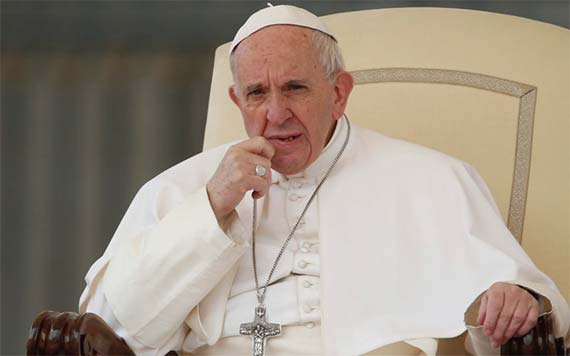
Pope Francis has given priests in the Nigerian Diocese of Ahiara 30 days to write a letter promising obedience to him and accepting the bishop appointed for their diocese. Priests who do not write the letter will be suspended, according to Fides, the news agency of the Congregation for the Evangelisation of Peoples.

The papal text in English was posted on the blog of Archbishop Ignatius Kaigama of Jos, president of the Nigerian bishops’ confe-rence, and Fides posted it in Italian.

The Vatican press office could not immediately confirm its authenticity, although Cardinal John Onaiyekan of Abuja, who also was present, told the Catholic News Service that they were the remarks of the Pope.

A day earlier, Nigerian Church leaders met Pope Francis to discuss the situation of Bishop Peter Ebere Okpaleke, who was appointed Bishop of Ahiara by then-Pope Benedict XVI in 2012, but who has been unable to take control of the diocese because of protests, apparently by the majority of priests.

The Vatican issued only a short communiqué on the meeting with the Pope, describing the situation in the diocese as “unacceptable.” The protests were motivated by the fact that Bishop Okpaleke is not a local priest.

“The Holy Father, after a careful evaluation, spoke of the unacceptable situation in Ahiara and reserved the right to take appropriate measures,” the Vatican said. According to the Pope’s remarks posted by Archbishop Kaigama, Pope Francis said, “I think that, in this case, we are not dealing with tribalism, but with an attempted taking of the vineyard of the Lord.” The Pope also referred to “the parable of the murderous tenants” in Matthew 21:33-44.

Francis said he had even considered “suppressing the diocese, but then I thought that the Church is a mother and cannot abandon her many children.”

According to the Vatican, the diocese has close to 423,000 Catholics and 110 diocesan priests.

Tanzania: Where parishioners walk 15K to get to Mass

Thousands of Christians in Tanzania are walking up to 15 kilometres to get to Church – in temperatures that can rise higher than 90° Fahrenheit. Speaking to Catholic charity Aid to the Church in Need Bishop Bernardine Mfumbusa of Kondoa last week, said: “Despite a high temperature range of 20-34°C , some Catholics walk 10-15 kilometres (nine miles) to Holy Mass – this is especially true for a large number of Catholics in the rural dioceses.”

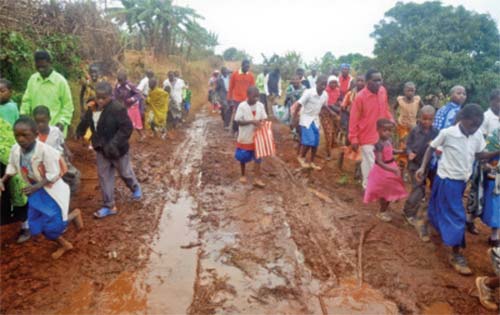
The bishop described the hardships endured by the faithful as they travel to celebrate their Catholic Faith in Tanzania. He said: “The roads permit the use of bicycle but the roads become almost impassable in the rain season – from November to April – without a 4×4 vehicle.”

But despite these obstacles the Church is thriving, the bishop said: “The Church is flourishing and growing… 800 people are attending Holy Mass, the four Masses are full on Sunday.” Christians are travelling to gather together to pray despite the fractured history of religious harmony in Tanzania. Speaking about interfaith dialogue in Tanzania, the bishop said: “Muslims and Christians have live peacefully for many years, now there are elements of tension.”

Cameroon bishop’s death seen as likely murder, not suicide

The death of a Catholic bishop in Cameroon, originally viewed by police as a likely suicide, is now being investigated as a probable murder.

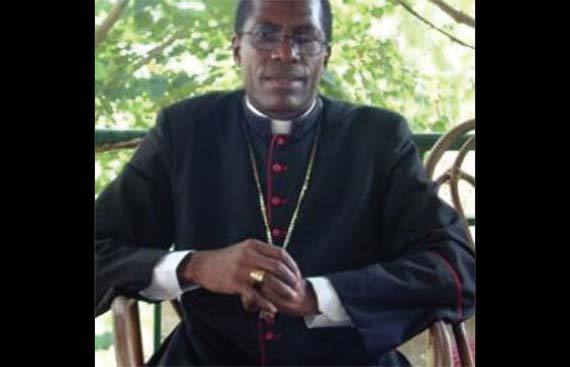
The body of Bishop Jean- Marie Benoit Balla of Bafia was discovered in a river near Yaounde, Cameroon, on June 2. He had been missing for several days.

The bishop’s body was discovered not far from a bridge where his car had been found, with a note saying, “I am in the water.” Police initially believed that this was a suicide note, but as the investigation unfolded, began questioning whether the bishop himself had written the note.

An autopsy showed clear signs of a violent death, and no evidence of death by drowning, according to local media reports.

The 58-year-old bishop was appointed to Bafia by St John Paul II in 2003. The Catholic communities have been attacked more frequently by terrorist organization Boko Haram, which allied itself with the Islamic State in March 2015. The group is notorious for kidnapping and murdering priests and nuns.

Putin attends consecration of church dedicated to martyrs of Communism

Patriarch Kirill of Moscow has consecrated a new church in Moscow dedicated to Christ’s resurrection and the martyrs slain under Soviet Communist rule. The church, dedicated during the centenary year of the Bolshevik Revolution, is located on the grounds of Sretensky Monastery in Moscow. Joseph Stalin’s regime destroyed most of the churches on the grounds of the 14th-century monastery.

Russian President Vladimir Putin attended the consecration, as did bishops of the Russian Orthodox Church Outside Russia (ROCOR). The New York-based church separated from the Moscow Patriarchate in 1927 after the latter pledged its loyalty to the Communist regime; ecclesial communion between the patriarchate and ROCOR was restored in 2007.

Cardinal Kasper calls for an ‘evangelical Catholicism and Catholic Protestantism’

The ecumenical Monastery of Bose recently hosted a conference on “justification, the Gospel of grace,” and L’Osservatore Romano has published excerpts of three of the talks.

André Birmelé, a Lutheran scholar and pastor in Alsace-Lorraine, spoke about “the logic of God,” and Sarah Coakley, an Anglican theologian who teaches at Cambridge, discussed “mercy and clemency.” Cardinal Walter Kasper, the president emeritus of the Pontifical Council for Promoting Christian Unity, spoke about the “ecumenical Luther.”

In the beginning, Luther did not set out to form a separate church, but to launch “an evangelical conversion of the universal Church, which we would call today a new evangelization of the Church always in need of reformation,” the prelate said.

What is needed today, said Cardinal Kasper, is an “evangelical Catholicism and Catholic Protestantism” in which, building on shared unity grounded in baptism, Catholics and Lutherans jointly focus on evangelization.

Death of Card. Lubomyr Husar, bishop of Kiev

On 31 May, Cardinal Lubomyr Husar, MSU, Major Archbishop Emeritus of Kyjv-Haliè (Ukraine), spiritual leader of the Ukrainian Greek-Catholic Church, from 1996 to 2011, died on May 31st. One of the longest and most important bishops of the “united” Catholic Church of Lviv and Kiev, in the delicate period of post-communism and the modernization of modern Ukraine.

In his telegram of condolence to Husar’s successor, Archbishop Sviatoslav Shevchuk Pope Francis emphasized “his tenacious faithfulness to Christ, despite the hardships and persecutions against the Church, as well as his fruitful apostolic activity to promote the organization of Greek Catholic faithful, descendants of families forced to leave western Ukraine, and his efforts to find new ways for dialogue and collaboration with the Orthodox churches.”