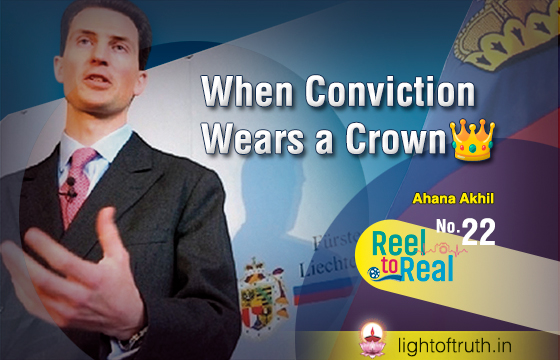
VADUZ, Liechtenstein🇱🇮: In a move drawing global attention🌐, Hereditary Prince Alois of Liechtenstein has declared that he would veto any law that significantly expands access to abortion, even if it is approved by Parliament🏛️. His stand reflects a strong conviction that protecting human life is a moral responsibility that cannot be set aside by majority opinion📜✨.
Nestled between Switzerland🇨🇭 and Austria🇦🇹, Liechtenstein is one of Europe’s smallest nations🏔️. Unlike most European monarchies,
its Prince holds direct constitutional powers, including the authority to reject legislation passed by Parliament⚖️. Prince Alois has made it clear that he would use this power if lawmakers approve a proposal allowing abortion on request during the first 12 weeks of pregnancy🗓️.
Speaking about the issue, the Prince emphasized that abortion is not merely a political or legal debate, but a question of safeguarding the gift of human life👶🤍. He argued that protecting unborn children is a fundamental social and ethical duty, expressing deep concern that the proposed amendment does not adequately uphold that principle🙏.
At present, Liechtenstein has some of Europe’s strictest abortion laws🔒. Abortion is permitted only in exceptional circumstances, such as when the mother’s life or health is at serious risk🩺, or when the pregnancy results from sexual assault. The proposed legislation seeks to broaden those provisions📄.
As the bill awaits parliamentary debate 💬, Prince Alois’s unwavering position has sparked international discussion🌍. For many, especially within the Catholic community✝️, his decision is seen as a bold witness to faith and the dignity of every human life—reminding the world that moral convictions can still shape public leadership👑🛡️.
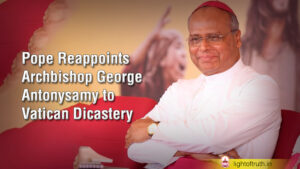
Pope Reappoints Archbishop George Antonysamy to Vatican Dicastery
Pope Leo XIV has reappointed Archbishop George Antonysamy of Madras-Mylapore as a member of the Dicastery for Evangelization, one of the Vatican’s most important departments