Defeat of California’s attempt to break seal of confession a victory for religious liberty

Defeat of California’s attempt to break seal of confession a victory for religious liberty.

Kathleen Domingo is Senior Director for the Office of Life, Justice and Peace and Director of Government Relations for the Archdiocese of Los Angeles. She helped to organize the opposition to a California bill that would have required priests to break the sacramental seal of confession in certain cases.

“SB 360, authored by Senator Jerry Hill, sought to strengthen reporting requirements for child abuse, a goal we share. However, to achieve that goal, it removed the privacy protection for the sacrament of confession in instances of child abuse. Even after the bill was amended, priests and lay people, like me, who work at the same location as priests, would be denied the privacy protection in the sacrament” said  Kathleen Domingo

“I want to practice my religion the way that I want to, and I want you to be able to do the same.”

After months of legislative meetings and grassroots organizing of Catholics throughout California, we prepared a show of force for the Assembly Public Safety Committee hearing, that would have been held on July 9. We delivered 140,000 signed letters to Assembly members and sent close to 17,000 emails from parishioners in the Archdiocese of Los Angeles alone.”

Curia reform: Changing attitudes, not just structures

Pope Francis’ plan for the reform of the Roman Curia will change the names of several offices and merge a few of them, but the biggest change it hopes to spark is one of attitude.

The last major reorganization of the Curia came with St John Paul II’s apostolic constitution, “Pastor Bonus” (The Good Shepherd) in 1988, which — in its very first sentence — spoke of Jesus entrusting the apostles with “the mission of making disciples in all nations and of preaching the Gospel to every creature.”

To facilitate that mission in the modern world, St John Paul had said, the church needs a structure to promote “communion,” which “glues the whole church together.”

Pope Francis’ successor document to “Pastor Bonus” is tentatively called “Praedicate Evangelium” (Preach the Gospel), and drafts of it were sent to bishops and a variety of experts for comment in the spring.

Of course, promoting the communion of the church and preaching the Gospel are essential tasks for the Popes. For Catholics they are inextricably bound together, and one makes little sense without the other. But when one is emphasized more than the other, priorities change. The energy of the Curia can be directed to promoting unity, offering direction and gathering suggestions and ideas, a some what inward gaze that could increase the perceived authority of curial officials. The risk is a tendency toward uniformity and thinking that the closer one is to the centre, the more authority he has.

‘Spiral of silence’ is at the heart of ongoing clerical sex abuse

Cardinal Christoph Schönborn, the third most senior active cardinal in the worldwide Church, has called on bishops and other Catholic officials to better engage in listening to victims of clergy sex abuse.

At a lecture last month in the Austrian capital of Vienna, where he has been archbishop since 1995, Schönborn said listening to victims was essential to breaking the “spiral of silence” that has allowed such abuse to continue for so long.

“The victims have to overcome an enormously high threshold even to begin talking,” the 74-year-old cardinal said at a conference on “Sex & Crime” at the Religiosity in Psychiatry and Psychotherapy Institute at Vienna University.

He shared his own experience of what he described as the Austrian Church’s “25-year-long painful learning process” of clerical sexual abuse.

Schönborn, a Dominican theologian who became an auxiliary bishop of Vienna Archdiocese in 1991, recalled how it was not until he had actually met with and listened to victims that he was able to overcome his initial defensive reflexes, correct his wrong assumptions and completely change his awareness of clerical sexual abuse. But he said it was extremely difficult to get victims to talk about the abuse they had experienced. The cardinal said a number of victims had told him, “if only I hadn’t begun (talking about the abuse),” telling him they believed suppressing the memory of the painful trauma might spare them even greater suffering.

Church land probe sparks anger in India

Christians in India’s Jharkhand State have claimed that a government plan to probe church land holdings amounts to persecution.

The state government is controlled by the pro-Hindu Bharatiya Janata Party (BJP), which also rules nationally and has been accused of having an anti-Christian agenda.

“This is surely a vindictive action,” Kuldeep Tirkey, leader of the ecumenical Christian Youth Association, told ucanews. com. “It is the latest in a series of such probes and actions taken deliberately to target minority Christians.”

Tirkey said that since early July state chief Minister Raghubar Das has been talking publicly about the need for a probe to determine whether or not church groups legally own all the land they are occupying.

At issue is the implications of two state laws called the Chhotanagpur Tenancy Act of 1908 and the Santhal Pargana Tenancy Act of 1949 that prohibit outsiders buying traditional tribal land.

Most of the state’s 1.5 million Christians are tribal people and many Christian institutions and parish churches stand on land said to have been donated by them.

If an investigation showed that some church-occupied lands were actually sold by tribal people to non-tribal missionaries, the state could initiate legally proceeding, church sources said.

Father Anand David Xalxo, spokesman for the archdiocese covering state capital Ranchi, said the Church had not received any official communications from the government about the investigation. “We have been hearing about such a probe from media,” the priest said.

If and when there is an official notification of the government’s intentions, church officials would respond, he added.

Christian leaders see the threat as part of what they regard as a vendetta.

Priest apologises for autism remarks

Indian Catholic priest  Fr Dominic Valanmanal, who preached that an increased incidence of autism and hyperactivity in children is due to their parents’ lifestyle has apologised for his remarks.

“I have a deep affection towards autistic children. I tell their parents that I am part of their family. I am deeply saddened to hear that my words have hurt them. They are the children of  the good God and I continue to pray for them,” Fr Valanmanal says in the video.

In a previous video the priest had stirred controversy by saying that autistic children behave like animals. He also said that young men and  women who are addicted to alcohol, cigarette, beedi, narcotics, paan, adultery, masturbation, homosexuality and porn  are likely to bear these type of children when they get married  because the anointing (sanctity) is lost.

Following this Ireland and Canada cancelled their invite for Fr Valanmanal to conduct retreats in their dioceses. They stated that the priest’s statements did not reflect the pastoral care and concern that the Church has towards children and adults living with autism and their families.

Unemployment Rate Among Christian Men Highest in India

Indian Christians are among the last in terms of human develo-pment in Indian society. The rate of unemployment among Christian men in rural as well as urban areas is higher than those from other religions across the country, Fides News Agency reported July 2, 2019.

Minority affairs minister Mukhtar Abbas Naqvi presented the data in the Lok Sabha in reply to a question posed by Trinamool Congress member Prasun Banerjee. Banerjee asked the government whether it has any updated data on the unemployment rate prevailing minority communities.

Naqvi cited the data from the Periodic Labour Force Survey (PLFS) of 2017-18. The PLFS was launched by the National Sample Survey Office (NSSO) in 2017 as a nationwide Labour Force Survey. According to the report, the unemployment rate among Christian men is at 6.9% in rural areas and 8.8% in urban areas, higher than men of other religious communities. Among women, Sikh females accounted for the highest number of unemployed in urban areas and Muslim women in rural areas. The minister said that in rural areas the rate of unemployment among Hindu men was 5.7%, among Muslim men 6.7% and among Sikh men, it was 6.4%. On the other hand, in urban areas, 6.9% of Hindu men remained unemployed, 7.5% was the rate among Muslim men and 7.2% among Sikh men.

Protests in US cities call for ending lynching in India

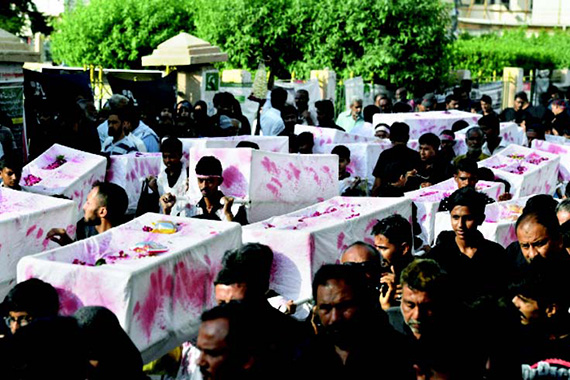
A group of more than 50 people from all walks of life from the Greater Boston area assembled in Harvard Square in Cambridge, MA, to protest against the unabated pace of mob lynching and the growing threat to human rights of citizens in India, especially those of Muslims, Dalits, and other minorities.

The protestors demanded justice for the victims and their families, as well as urged for immediate public action to bring an end to hate crimes against minorities. The attendees of the event included individuals of Indian, South Asian, and American origin as well as representatives from various organizations.

Concerned citizens also protested in Chicago to demand immediate action against the perpetrators of lynchings as well as the politicians encouraging them. They said, “We, the concerned citizens of India and of Indian Origin living in US condemn such lackadaisical attitude of the government towards mobocracy and therefore, encouraging Law of Jungle and demand that the country be saved from falling into a dark era where mobocracy takes over.”

People of all ages and faith held posters and banners that expressed, outrage, grief and a demand for justice. One poster read “Punish criminal political patronage to lynching,” while other one had a the names – “Akhlaq, Pehulu, Afrazul, Junaid… Tabrez. Stop before it is you.”

“It is a matter of grave concern for all people to raise their voices against this attack on Right To Be of a section of people and individuals. It is an attack on all people and is a form of state terrorism carried out by the ruling elite to attack, divert and divide people, who are struggling hard to find solutions to basic problems such as food, water, shelter, safety and security which are caused by the rule and plunder of a handful few. We must not let this pass” said Jaspal Singh who lives in Cambridge, Massachusetts.

Cannot negate political link behind religious bias: AmartyaSen

Expressing concern over religious discrimination, Nobel laureate economist Amartya Sen on July 5 said one cannot negate the political link behind it.

“As per the position of the people of various religions in the Indian Constitution, there should not be any discrimination,” Sen said during an educational event here. The octogenarian felt that the current perception is highly driven by caste discrimination and differentiation on religious grounds.

According to him, if the society reaches a position where a person is being forced to utter something and being beaten up for not abiding, everyone needs to think over the urgent needs of the hour and change the perceptions accordingly.

“We cannot say that these incidents are not politically motivated,” Sen said.

Last month a man in West Bengal’s Coochbehar district was beaten up for not uttering ‘Jai Shri Ram.’ The incident of Tufanganj surfaced after a video clip was circulated on social media.

In the video, a man was being made to do sit-ups holding his ears and forced to say ‘Jai Shri Ram.’ The man followed help-lessly.

Also, several cases of scuffle between Trinamool Congress and Bharatiya Janata Party workers over chanting of ‘Jai Shri Ram’ have been reported in the state.

Sen said the ‘Jai Shri Ram’ slogan has no historic connect with the Bengali culture, unlike ‘Ma Durga’ who has a big presence in Bengali psyche.

Christians face more persecution in Modi’s India

With Prime Minister Narendra Modi starting his second term after leading his pro-Hindu Bharatiya Janata Party (BJP) to victory in India’s recent election, complaints of violence are growing from the country’s persecuted Christians.

Christians face a new wave of threats from Hindu groups after the BJP retained its grip on power in May.

“A second term for the BJP has for sure boosted the morale of Hindu groups, who keep threatening and intimidating minorities for being non-Hindus in India, which they think belongs to Hindus only,” Christian leader A.C. Michael, an official of the Indian chapter of the Alliance Defending Freedom, told ucanews.com.

The BJP won 303 seats in the 545-seat parliament in a landslide victory in the April-May national election following the completion of Modi’s first term that began in May 2014.

Later Modi took office on May 30, violence against Christians was reported in states including Karnataka, Jharkhand, Haryana, Mahara-shtra, Tamil Nadu, Pondicherry and Uttar Pradesh, Michael said.

On May 30, as Modi was taking his oath as Prime Minister, police in the northern state of Uttar Pradesh detained Pastor Roopsen Paswan of the Assemblies of Believers Church in Rai Bareli district.

He was arrested on charges of continuing an assembly after it was commanded to disperse. Church officials said he was released on bail the same day but was warned of dire consequences if he continued to hold church services in the district.

On June 2, Hindu groups ordered pastors in Jagannath Nagar in Maharashtra not to hold any Sunday prayer services. The pastors were threatened with violence if they refused. The arrest of a Missionaries of Charity nun on allegations of selling babies and the ongoing investigations against her congregation to find out if they used funds for religious conversion are examples of such harassment, he said.

Brooks said even Christian hospitals and schools are not spared allegations of violating the anti-conversion laws that exist in seven Indian states.

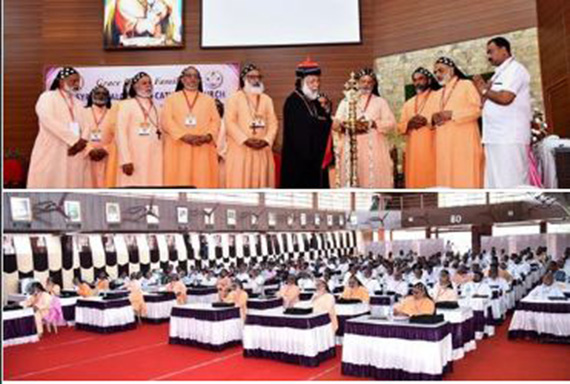
Cardinal Alencherry calls for peace, composure

Cardinal George Alenche-rry, head of the Syro-Malabar Church, has called for peace and composure among priests and faithful as the rift between him and a section of priests in Ernakulam-Angamaly archdiocese widened.

“All members of the Church are united with the power of the Holy Spirit and must, through their actions and words, contribute to strengthening the unity of the Church,” said the cardinal on July 3 speaking on the occasion of the Syro Malabar Church Day, the feast of Saint Thomas the Apostle.

Cardinal Alencherry also wants the priests and the faith-ful to strive to strengthen “the Church in a spirit of love, brotherhood and unity, prayerfully and with the strength imbibed from the Holy Spirit.”

Official Website

Exit mobile version