
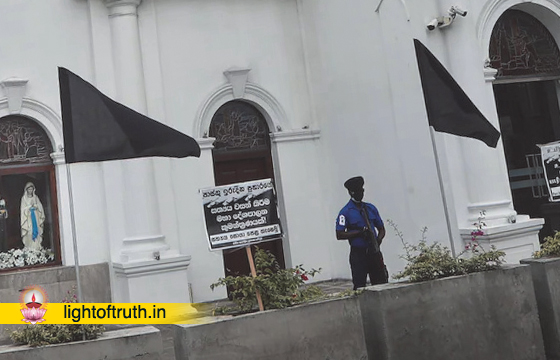
Sri Lanka’s Christian community hoisted black flags at churches and homes on August 21 to express anger over the government’s investigation into the 2019 Easter Sunday bomb attacks, which killed 269 people.
Twenty-five people were charged last week in connection with the bombings. But the country’s Catholic Church says these could be “smaller fish,” and accuses the government of still not taking steps to identify the true conspirators. The head of the archdiocese of Colombo, Cardinal Malcolm Ranjith, has raised questions over allegations that state intelligence personnel knew and met with the attackers. Two local Muslim groups that had pledged allegiance to the Islamic State group were blamed for the six near-simultaneous suicide bomb attacks, which hit three churches and three luxury hotels on April 21, 2019. It is not known if the groups had actual links to the Islamic State.
Under cloudy skies, a row of large black flags billowed in the wind Saturday in front of St Anthony’s Church, which was targeted in the 2019 attacks. Behind a concrete barrier, religious statues overlooked armed police and signs that read: “Hiding the truth is a grand political conspiracy.”
In some areas, Muslim residents hoisted black flags in a show of solidarity. Church bells tolled at 8:45 a.m., the time the first blast occurred. Prayer services were held inside St. Anthony’s, but with empty pews because of a 10-day coronavirus lockdown that began late Friday.
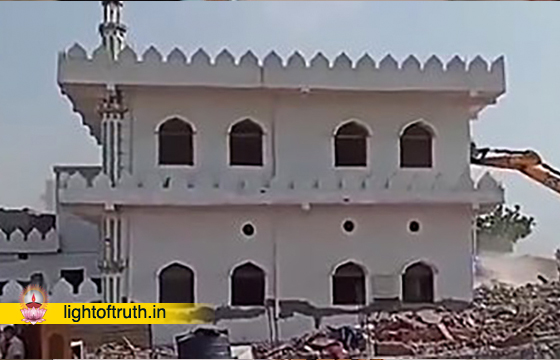
Pakistan province demolishes Catholic church, despite protests
A Catholic church serving more than 300 Christian families in Pakistan’s commercial capital of Karachi was demolished Aug. 24 despite resistance from a civil society group and warnings from U.N. human rights experts.
The Save Karachi Movement, a group of lawyers, human rights defenders, journalists and minority activists, confirmed the demolition of St. Joseph Church on its Twitter account. It was part of a larger demolition plan to prevent flooding, government officials said.
It is reported that Save Karachi Movement said the anti-encroachment squad of the Sindh provincial government tore down the building, despite protests from the Christian community.
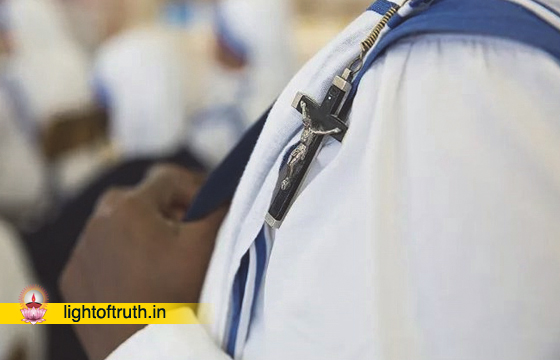
Missionaries of Charity and 14 disabled children from Kabul arrive at Rome airport
Religious sisters from the Missionaries of Charity and 14 disabled children from an orphanage in Afghanistan arrived safely on Aug. 25 at Rome’s international airport.
A Catholic priest and five sisters from the order founded by Mother Teresa arrived on one of two evacuation flights from Kabul that landed in Rome on Aug. 25 carrying a total of 277 people.
Fr Giovanni Scalese, the ecclesiastical superior of the Catholic mission in Afghanistan, also arrived on the flight. He spent eight years in Kabul, offering daily Mass for foreign residents in the city at the only Catholic church in Afghanistan, located inside of the Italian embassy.
“I would never have returned to Italy without these children,” Fr. Scalese told the Italian newspaper La Repubblica. We could not leave them there.”
The children, aged between six to 20 years old, were residents of an orphanage founded in 2006 by the Missionaries of Charity in Kabul, which has now been forced to close due to the Taliban’s takeover of the city.
Sr Bhatti Shahnaz, another Catholic religious sister who arrived in Rome on the evacuation flight, also worked with disabled children in Afghanistan with her community, the Sisters of Charity of St. Jeanne Antide.
“The 50 intellectually disabled children we looked after are still there,” she said with tears in her eyes.
Fr Matteo Sanavio, the president of the NGO For the Children of Kabul, was at the airport to welcome the Catholic arrivals from Afghanistan.
“The first moments we shared were smiles under our masks,” Sanavio told Vatican News.
“We were able to embrace, and the first words we said to each other were: ‘We praise the Lord because He has done great things.’”
Italy has welcomed 2,659 evacuated Afghans, about a third of them children, according to the Italian Defense Minister Lorenzo Guerini.
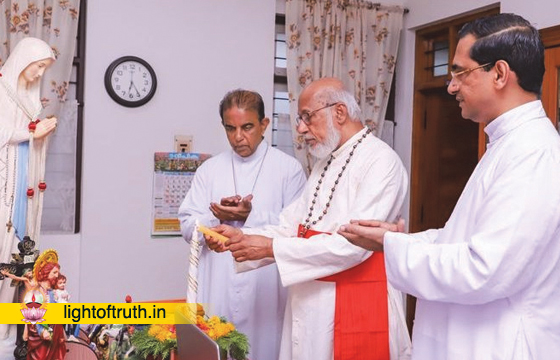
Syro-Malabar synod alters order of Mass
Priests, who lead the Mass, will face the congregation for the introductory session and delivering the sermon, but for the rest the of worship, will face the tabernacle, beginning November 28, it was decided at the 29th Synod of the Syro-Malabar Church that was held online and concluded on Aug. 27 evening.
This change in the order of worship must be implemented in all parishes, latest by April 17 next, Easter Sunday, the Synod said.
The Bishops, who constitute the Synod, expressed concern at what they termed as attempts being made to overlook the contributions that Christians had done for nation building. While stressing the need to uphold freedom of expression, they condemned repeated attempts by persons in the socio-cultural spheres and the film sector to portray Christianity in bad light. Social issues affecting Christians had been taken up with members of the ruling front and that of the Opposition, they said.
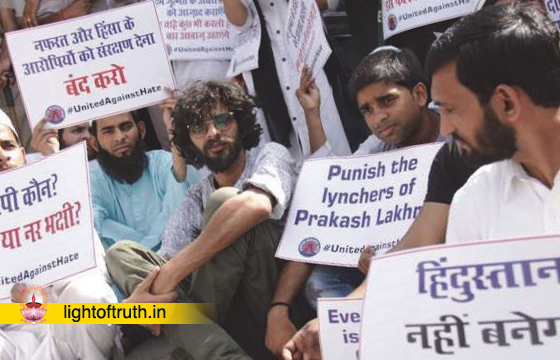
Activists seek prevention of hate speech in India
Social activists in India have filed a plea before the Supreme Court seeking the prevention of hate speech in public places.
The move comes in the wake of reported hate speeches made against Muslims by Hindu Rakshak Dal (Save Hindu Forum) at a rally in capital Delhi on Aug.8.
Syeda Hameed, a former member of the Planning Commission of India, and Professor Alok Rai, a former faculty member of Delhi University, filed the public interest litigation on Aug. 16, urging the apex court to recognize that public authorities have a “duty of care” to prevent such speeches.
he petitioners asked the court to define the contours of liability when authorities willfully allow hate speech in contravention of constitutional and statutory laws.
Pointing out that it was the fifth such rally to be held in three months across the national capital region and neighboring Haryana state, the petition underlined how “speeches calling for direct action against Muslims were made.”
Video footage of the Aug. 8 rally circulating on television and social media showed mobs openly calling for the killing of Muslims. Delhi police later made some arrests after failing to take preventive action, which was against the guidelines issued by the Supreme Court, the petitioners pointed out.
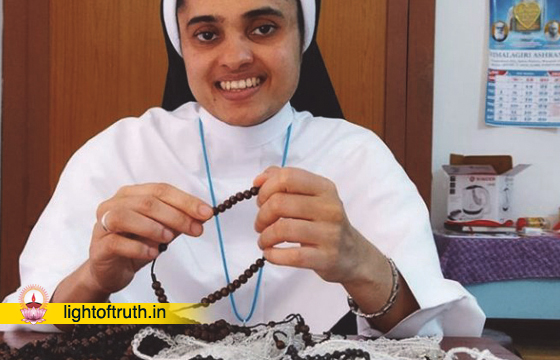
Nun braves debilitating disease to manage “rosary bank”
Sister Rini Rose was diagnosed with multiple sclerosis when she was 26. As a result, she has become physically weak, which limits and slows down her movements.
Rose made her first profession at the age of 20 as a member of the Sisters of the Adoration of the Blessed Sacrament, a congregation based in the southern Indian state of Kerala. The debilitating disease hit her as she was completing a three-year nursing course in Andhra Pradesh, another southern Indian state.
Now, after 15 years, Rose spends most of her time inside a convent in Ambalavayal, a village in Wayanad, a district in northern Kerala. She prays for others and receives prayer requests from people both known and unknown to her. She also makes rosaries and deposits them into the rosary bank she created until she gives them to people who need them.
“ I was diagnosed with multiple sclerosis in 2005, just before I could start working as a nurse. Since then, I have been on medication.
I was sad and distressed when I was told I was suffering from MS. But my strong faith in God helped me overcome my sorrows and lead a fulfilling life.
According to my doctors, MS affects the central nervous system, especially the brain, spinal cord and optic nerves. This can lead to a wide range of symptoms in the body.
After my diagnosis, I began to feel my health deteriorating. I also began to experience more limited physical movements. Now, I need double the time and effort to do my daily regular activities. I also need to use extra energy to move around that causes physical strain and tiredness. Even to move around within the convent, I need help from others. My sisters always lend me a hand.” “Praying for others and surrendering my suffering to the Lord gives me great joy.”
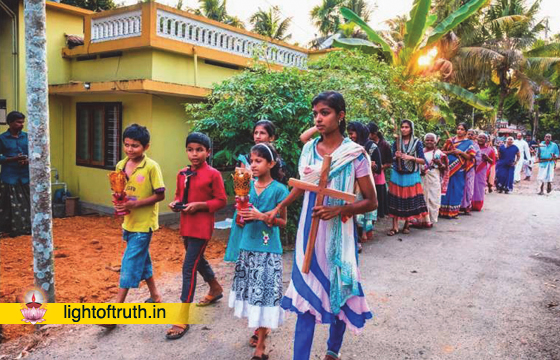
Extinction rebellion: Indian Catholics urged to have bigger families
Catholic bishops want Christian families in Kerala to have more children after the national census recorded a drastic decline in the community’s population in the southern Indian state.
The Christian population in the state declined from 24.06% in the 1950s to 18.33% in 2011, according to the census report.
“Fifty years ago Christians in the state accounted for one-fourth of the total population but now we are on a drastic decline,” Father Jacob G. Palackappilly, deputy secretary-general of Kerala Catholic Bishops’ Council (KCBC), told.
“If this trend continues, the day is not far off when the Christian community will face a threat of extinction in the state.”
The KCBC at an online meeting last week emphasized the need for promoting large Catholic families and asserted the pro-life stand of the Church.
However, they agreed with the government’s policy to control the population in the country.
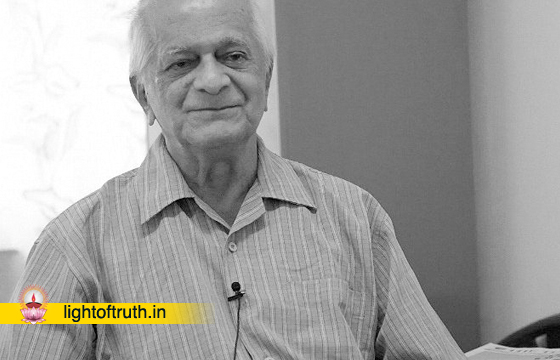
Catholic press body mourns death of last surviving founder
The Indian Catholic Press Association (ICPA) on August 26 mourned the death of its last survivor earlier in the day.
Monsignor Benedict Aguiar had led the organisation as its president from 1969 to 1978.
“In his death the ICPA has lost a father-figure. His long and illustrious life and legacy as priest, communicator, historian, author and organizer will continue to inspire us and the posterity for sure. The zeal and consistency he maintained in his convictions and actions make him an all-time role-model for everyone.”
India’s Eastern Church moves for uniform liturgy ignoring opposition
Synod of the Eastern rite Syro-Malabar Church has decided to implement a uniform mode of celebrating mass in all its 35 dioceses from Nov. 28, ignoring the opposition from a section of priests and laity. All dioceses will celebrate the liturgy in a uniform way by next April 17, Easter Sunday of 2022, said the synod in an Aug. 27 statement, issued at the end of its week-long online gathering.
The synod decision follows Pope Francis’ letter on July 6, which asked the Church to implement a standardized form of liturgy, as agreed by the synod of Bishops in 1999. The Church has been divided over the liturgical celebration for more than four decades with some priests celebrating the Mass facing the congregation, while some faced the altar against the congregation.
The synod two decades ago agreed that all its priests will face the congregation during the Mass until the Eucharistic prayer, and then again from Communion to the end of the Mass. During the Eucharistic prayer, they will face the altar against the congregation.
However, a section of priests and laity opposed it and sought papal intervention. They did not want priests to stand facing the altar, against the congregation during the Mass.
The latest papal letter asked to implement the 1999 synod decision as “an important step towards increasing stability and ecclesial communion” in the Church, based in southern Indian Kerala state.
The synod “unanimously welcomed” the papal letter and thanked “his intervention for the unity and growth” of the Church, the synod statement said.
As a first step of implementing the decision, all cathedral churches, pilgrim centres, religious houses and minor seminaries will implement the decision on Novem. 18, the beginning of the Church’s liturgical year.
Some bishops, who expressed difficulties in implementing the decision in their whole diocese, can introduce the uniform mode of celebration starting with all possible parishes on Nov. 18.
“By effective catechesis, the uniform mode shall be gradually introduced in the whole eparchy as early as possible, not later than Easter 2022,” the statement said.
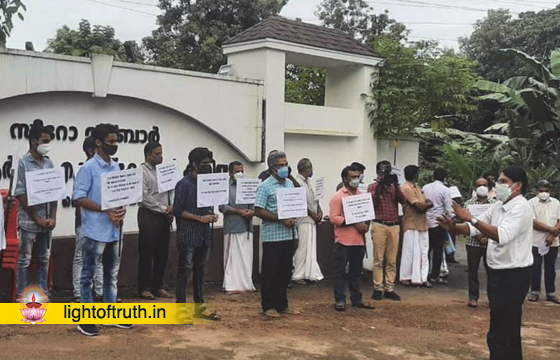
However, soon after the decision was announced, a group of people under the banner of the Archdiocesan Movement for Transparency (AMT) protested in front of Mount St Thomas, the headquarters of the Church in Kerala’s Ernakulum district.
India seeks to curtail privileges of minority schools
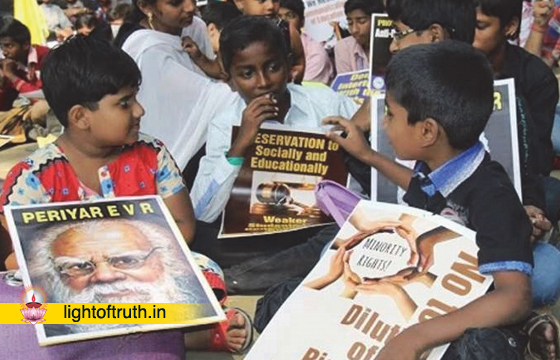
A Catholic official in India has criticized as “politically motivated” a federal commission’s recommendations to curtail the rights of schools run by religious minorities such as Christians.
The National Commission for Protection of Child Rights (NCPCR), in a study released last week, sought to bring minority schools, most of them run by Christian institutions, under its right to education and universal elementary education policies.
The federal government makes it mandatory to include underprivileged children in schools under its Right to Education (RTE) Act and provides elementary education to all children aged 6-14 under a universal education scheme.
However, the Supreme Court of India declared the RTE Act inapplicable to schools with minority status while upholding their right to establish and administer institutions of their choice.
“This study, which targets Christians and Muslims, may be politically motivated,” Fr Maria Charles, secretary of the Indian Catholic bishops’ commission for education and culture, told.
He said minority-run institutions share the responsibility of offering good education to the poor and marginalized while reminding the government of its responsibility to provide good education to children who are deprived of it.