- Jo Paul Kiriyanthan
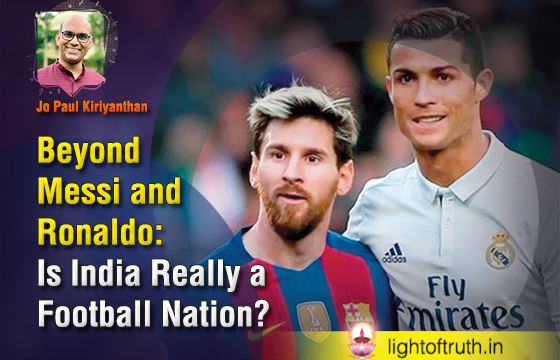
India’s streets turn into miniature stadiums whenever Lionel Messi or Cristiano Ronaldo plays. Jerseys flood the markets, caffes overflow during World Cup nights, and social media erupts with passionate debates. Yet a difficult question remains: Do Indians truly love football, or are they in love with football’s superstars?
The numbers reveal an interesting paradox. Football is India’s second most-watched sport after cricket, with an estimated 300 million viewers, and its audience has grown significantly over the past decade. Yet India’s men’s national team remains around the 138th position in the FIFA rankings, far from the world’s elite.
Psychology offers an explanation. Human beings naturally form parasocial relationships—one-sided emotional bonds with celebrities they have never met. Horton and Wohl (1956) first described this phenomenon, explaining how media audiences develop relationships with public figures as though they personally know them. Fans begin to identify with players like Lionel Messi, Cristiano Ronaldo, Kylian Mbappé, or Neymar, celebrating their victories as personal achievements and defending them with remarkable intensity. Tajfel and Turner’s ‘Social Identity Theory’ (1979) further explains that people derive part of their identity and self-worth from the groups they belong to. Identifying as a ‘Messi fan’ or a ‘Manchester United supporter’ creates an immediate sense of belonging and shared identity with millions of others.
But does this admiration genuinely improve a person’s self-esteem? According to Cialdini et al. (1976), fans often engage in Basking in Reflected Glory, where they experience increased self-esteem by associating themselves with successful teams or athletes, proudly saying ‘we won’ after a victory. Such identification can temporarily enhance confidence, positive emotions, and social connectedness. However, research by Wann and Branscombe (1993) suggests that while moderate team identification promotes social support and psychological well-being, excessive identification can make self-esteem vulnerable to the athlete’s or team’s failures. When a favourite player loses, retires, or is criticised, highly identified fans may experience disappointment, frustration, or even a diminished sense of self-worth because their identity has become intertwined with someone else’s achievements.
Real love for a sport is different. It inspires participation rather than mere admiration. Deci and Ryan’s ‘Self-Determination Theory’ (2000) argues that lasting psychological well-being comes from satisfying the needs for competence, autonomy, and relatedness through one’s own experiences and achievements—not merely through observing others succeed. A genuine football culture therefore encourages people to play, coach, volunteer, support local clubs, and invest in grassroots development. Admiring superstars can spark inspiration, but sustainable self-esteem and a meaningful sporting identity are built by active participation in the game rather than passive consumption of celebrity success. Real love for a sport, however, extends beyond its stars. A football culture grows when children dream not only of watching the World Cup but of representing their own nation.
India’s football enthusiasm often remains spectator-centred rather than participant-centred. Millions stay awake to watch European leagues, yet comparatively few attend local matches or actively support youth football. This is not merely a sporting issue but a psychological one. Celebrity culture satisfies our need for inspiration, whereas building a sporting ecosystem demands patience, investment, and collective responsibility.