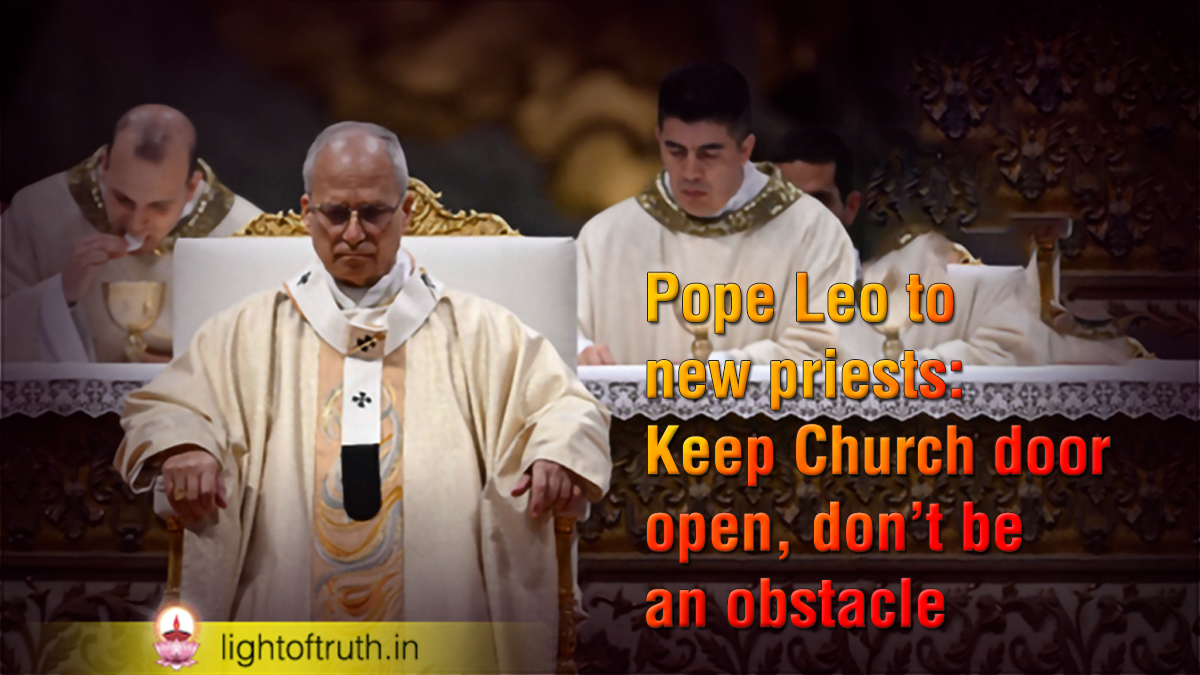
Pope Leo XIV’s ordination of ten priests at St. Peter’s Basilica serves as a profound meditation on the mission of the modern clergy to remain radically open to a “suffering humanity.” During the homily, the Pope urged the ordained to keep the Church a welcoming space, not acting as obstacles to entry. This call is urgent today as statistics suggest a divide between the institutional Church and the populace. Leo’s directive is clear: priests must function as channels of grace rather than filters that restrict access based on human judgment. This mission requires reflecting the “patience and tenderness” of Christ, guiding individuals toward the threshold of faith with humility and a move away from excessive rhetoric.
The diverse group of ordinees, representing regions from Italy and Cameroon to Colombia and Mexico, underscores the universal nature of the Church’s mission. Eight were destined for Rome, including those from the Redemptoris Mater Seminary, while others, like Fr. Armando Roa Nuñez and Fr. Selwyn Pinto Loyce, were ordained for distant dioceses like Miao, India. Pope Leo reminded them that their vocation is an entry into a deeper, “radical belonging” to all of humanity. By binding their hearts to Christ’s love, they are expected to serve as honest citizens and builders of peace. This priesthood emphasizes that spiritual life must bear fruit in the social sphere, fostering reconciliation. He stressed their identity is tied to the common good.
Addressing pervasive anxieties, the Pope warned against the human tendency to seek security through aggression or by isolating communities. He noted that false safety often leads to the creation of enemies and the search for scapegoats. Instead, the true security of a priest must be rooted in the Paschal Mystery, the life, death, and resurrection of Jesus, rather than in status. This spiritual grounding allows priests to face reality without fear, ensuring that their denunciation of injustice does not lead to a renunciation of mission. Furthermore, Leo highlighted that the Church must always be a space of freedom. Unlike suffocating groups, the community of disciples is characterized by a “gate” that allows for both shelter and outward movement.
The final charge to the new priests was one of exploration. They are invited to venture beyond the walls of the parish to engage with culture and life in its complexity. By doing so, they are called to marvel at the divine growth that occurs independently of human effort. This perspective fosters a ministry of hope and curiosity, where the priest seeks out pasture alongside the people. Affirming that the Church’s purpose is not to cut individuals off from life, but to deepen their participation in salvation, the priesthood remains a dynamic sign of God’s abundant, accessible and transformative grace in a world tempted by closure and exclusionary practices, calling all souls.