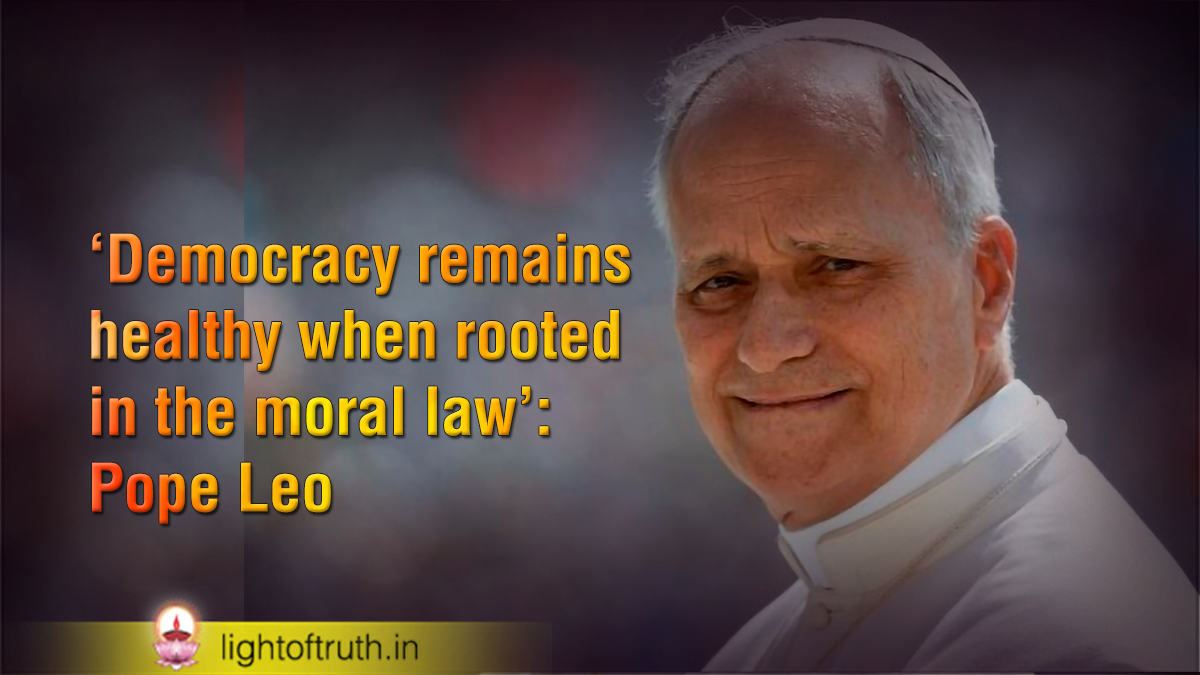
Pope Leo XIV, in a profound message addressed to the Pontifical Academy of Social Sciences, emphasizes that the health of a democracy is inextricably linked to its roots in moral law and a proper vision of human dignity. He warns that when these foundations are absent, democratic structures are vulnerable to becoming either a tyranny of the majority or a thin veil for the dominance of a few technological and economic elites. This concern is underscored by the current global climate, where the concentration of military, economic, and technological power in limited hands threatens to undermine both individual participation and international concord. The Pope clarifies that Catholic social teaching views power not as a goal to be pursued for its own sake, but as a vital instrument ordered toward the realization of the common good. Consequently, the legitimacy of any ruling authority is not found in the accumulation of material strength, but in the wisdom and virtue with which that power is exercised.
Wisdom is presented as the essential faculty for discerning true goodness over the illusions of vainglory, and it is described as being inseparable from the moral virtues that drive the desire to serve others. Among these virtues, justice and fortitude are highlighted as indispensable for the effective implementation of sound decisions, while temperance is identified as a crucial guardrail against the inordinate self-exaltation that leads to the abuse of power. Authentic democracy, in this light, is far more than a mere administrative procedure; it is a system that recognizes the inherent dignity of every person and calls for responsible civic participation. Drawing on the legacy of Pope Saint John Paul II, the message reaffirms that democracy provides the necessary mechanisms for electing, holding accountable, and peacefully replacing governing bodies. In times of global instability, where earthly powers may threaten the tranquility of order, the Pope points toward the Kingdom of God as a source of eschatological hope. He reminds the faithful that divine power is defined by mercy and restoration rather than domination, providing a spiritual template for an international order that truly serves the human family. Ultimately, he expresses hope that the session’s reflections will yield insights for clarifying the legitimate uses of power and the criteria of an authentic democracy that builds lasting peace.