Hundreds of Muslims convert to Christianity in Austria

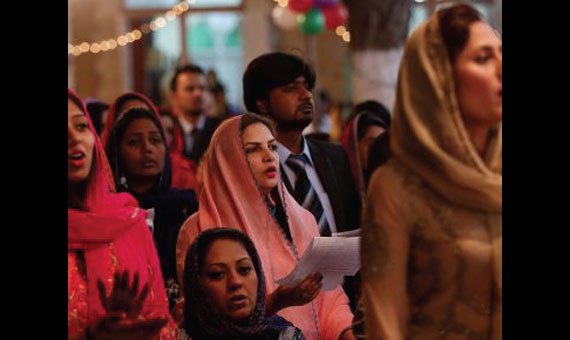
The on-going refugee crisis has indirectly led to Austria recording a significant number of Muslims who converted to Christianity.

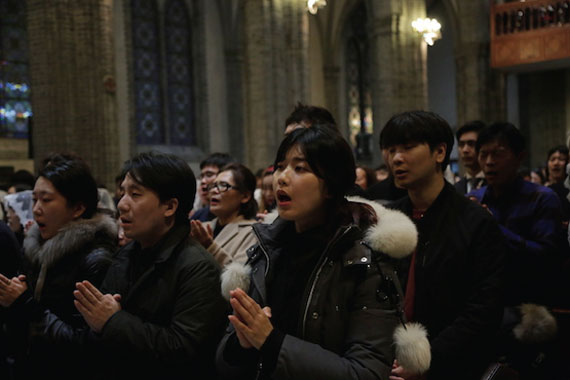
Three quarters of the 750 baptized adults in 2017 are immigrants from Muslim countries, citing the official spokesman for the Archdiocese of Vienna. Only in the Austrian capital, 260 people representing 15 different nations have been baptized.

Fredericke Dostal, who is responsible for the baptism of adults in the archdiocese, says the claim that migrants change their religion in order to increase the chances of getting an asylum are groundless.

Russia can have twice as many churches in 30 years – Metropolitan Hilarion

If the Russian Orthodox Church continues to develop with the current rates, the number of its churches can reach 80,000 in 25-30 years thus reaching pre-revolutionary number.

“Now the number of churches is reaching 40,000. At such speed in 30 years we will have 70,000 or 80,000. The number of monasteries exceeds 900, there were 1,500 of them before revolution, so we have overcome the middle line,” the Church and the World program on Rossiya-24 television channel.

The hierarch stressed that churches and monasteries are built “not to demonstrate the figures, not to create impressive statistics, but because people need it.” “For not full 30 years, we have built 30,000 churches, it means that during this period we have been building or restoring from ruins 1,000 churches a year or three churches a day. This statistics refers to the whole Russian Orthodox Church in Russia, Ukraine, Byelorussia, Moldavia, Kazakhstan, other republics of the Middle Asia, the Baltic states and far abroad,” the Metropolitan Hilarion said.

According to him, the Moscow Patriarchate, including the Russian Orthodox Church Outside of Russia has about 900 churches in 60 countries.

Communist ideology similar to Christianity – Putin

Communists did not create their own ideology but adapted Orthodox Christianity to their needs, Russian President Vladi-mir Putin said.

“Lenin [‘s body] was placed inside the Mausoleum. How is that different from any relics of the saints for Orthodox Christians or Christians in general? I am told: “No, there is no such tra-dition in the Christian world.” How come? What about Athos? Go there and see. There are relics of the saints there. And here, too, there are the holy relics of [Saint] Sergius and [Saint] Herman. In other words, the then authorities dreamed up nothing new. They just adapted what the mankind had invented a long time ago to their ideology,” Putin said in the documentary film Valaam, from which excerpts were published on the Rossiya 1 (VGTRK) television channel’s website.

The Communist ideology is akin to Christianity since the notions of liberty, fraternity, equality, and equity are rooted in the Holy Bible, he added. “And what about the [Moral] Code of the Builders of Communism? It’s sublimation, a primitive excerpt from the Bible. They didn’t invent a thing,” Putin said.

Portuguese diocese endorses Communion for remarried

The Archdiocese of Braga in Portugal has released the most in depth response yet to Pope Francis’s Amoris Laetitia.

The Braga document says that divorced and remarried Catholics may receive Communion after a process of discernment of around six months.Under the Church teaching reaffirmed by John Paul II and Benedict XVI, Communion is only possible if an individual resolves to live “in complete continence.” The new guidelines appear to say that this is not necessary.

They recommend a lengthy discernment, in which each person reflects on their past actions and how they have affected their spouse, children and community. They will also meet regularly with a priest. The Archdiocese of Braga is not the first diocese to question the Church’s traditional teaching. In 1993, three German bishops publicly suggested that there could be exceptions.

Hindu radicals attack a Catholic college attempt Arathi

Hundreds of police deployment was done at the St. Mary’s Post Graduate College in Vidisha, Sagar Diocese in Madhya Pradesh, central India as Hindu right-wing groups threaten to perform Hindu rituals in the premises.

“Calm has returned to the place now as only policemen on watch have remained in the area. We thank once again the Union Home Minister Rajnath Singhji and the Madhya Pradesh police force. And a big thank you for your prayers. The Fathers and Sisters and other personnel are in a state of shock. Do continue to pray for them,” said Bishop Theodore Mascarenhas, secretary general of Catholic Bishops’ Conference of India (CBCI), who is following the issue, told Fides news.

On January 4, more than 900 Akhil Bharatiya Vidyarthi Parishad (Abvp), one of the Hindu right wing student groups threatened to gather and forcibly perform “Aarti of Bharat Mata” (incense to national personification of India as “Mother Goddess”, represented by the goddess Durga dressed in an orange sari and accompanied by a lion) and other Hindu goddesses in the college.

“The Madhya Pradesh police assured church authorities full police protection. The priests who manage the College, however feel that the situation is potentially very dangerous as over 900 activists were expected to gather in violation of police orders. There was already an aggression earlier on 30 December despite the presence of 20 policemen. We need to pray more. We are in touch with the Federal Home Ministry,” said Mascarenhas.

Hundreds of right-wing Hindu students clashed with police in central India Jan. 4 after they tried to storm a Catholic-run college to conduct a Hindu religious rite, church sources said.

Police were forced to charge about 800 students from the group Akhil Bharatiya Vidyarthi Parisahd (ABVP) when they tried to gain access to St. Mary’s College in Vidisha, in Madhya Pradesh state to conduct the Aarati, a Hindu ritual prayer hailing Bharat Mata (Mother India).

“They did seek prior permission, but it was refused,” college director Father Shaju Devassy said. Police foiled their attempt.

Syro Malabar church inaugurates biggest diocese in India

The Syro-Malabar Catholic Church on Sunday marked a historic moment with the inauguration of the Shamshabad Diocese here with pan-India jurisdiction, excluding the existing 30 dioceses, which the Latin Church had taken over in 1886.

The diocese has jurisdiction over all the Syro-Malabar Christians in 23 states and two Union territories, excluding those in Kerala, Tamil Nadu and in the jurisdictions of the Kalyan and Faridabad dioceses, making it the largest in the country, the officials of the new diocese said.

Major Archbishop Cardinal George Alencherry, the head of the Syro-Malabar Catholic Church, formally dedicated the diocese to the Vatican with the installation of Raphael Thattil as its first bishop.

The Diocese of Shamshabad in Hyderabad is the 31st for the Kerala-based church and also the largest in the country with administrative control across 24 states, including the entire Eastern and Northeastern regions, Andhra Pradesh, Odisha, Rajasthan, four Union Territories and all those areas which are not governed by the 14 dioceses outside Kerala.

The new bishop Thattil will serve 1,30,000 faithful spread across 100 cities in the country and has 11 functional churches and seven under construction with around 90 priests and a few hundred nuns.

Hopes fade for 650 fishermen missing after Ockhi cyclone

With about 650 fishermen still missing a month after the Ockhi cyclone hit the southern Indian coast, hundreds of families spent Christmas and New Year in lingering hope of their return, but optimism is fading fast.

The federal government has put the number of missing fishermen at 661. Federal Minister of Defence Nirmala Sitharaman told parliament on Dec. 27 that 261 from Kerala and 400 from Tamil Nadu are missing. No one has been rescued since the announcement.

Official government records show 76 people died in the Nov. 29-Dec. 5 tragedy in the southern tip of India covered by the states of Kerala and Tamil Nadu.

“It indeed was a very sad Christmas and New Year for us. With children waiting for their fathers, and wives for their hus-bands, how will families cele-brate?” asked Robert Panippillai, leader of a volunteer group that works in the coastal areas near Thiruvananthapuram (formerly Trivandrum), Kerala’s capital.

No beef sale in Goa , traders protest against vigilantism

Harassed by vigilante groups, Goa’s only beef traders associa-tion on January 4 said they will go on an indefinite strike from Saturday, until the government cracks down on vigilante groups who hamper bringing in beef from neighbouring states.

The association said the strike would go on till the government eases procedures to bring beef into the coastal state.

Speaking to IANS, Manna Bepari, President of the Qureshi Meat Traders Association of Goa said no beef would be available for sale in Goa, until the government steps in and resolves the issue.

“We are tired of these raids. They are not allowing our business to function. Every other day these groups target the beef consignments which we order from the open market in Karnataka and government officials also keep harassing us,” Bepari said.

“No beef shop will be open until the government helps us and stops these vigilant groups from taking law in their hands,” Bepari said.

He also said that more than five raids were conducted in the last few weeks, especially during the Christmas and New Year period, when sale of beef is at its peak in Goa.

Eight including nun injured in protest march against removal of cross

Eight activists including one nun has been injured after a protest march taken out by the Kerala Latin Catholic Women’s Association to the official residence of Forest Minister K. Raju turned unruly.

The demonstration was organised in protest against the destruction of a wooden cross that had been found to be damag-ed a month ago at Kurisumala in Bonacaud. The forum, a feeder organisation of the Kerala Regional Latin Catholic Church, took out the march in protest against the alleged delay in apprehending those responsible for the incident. Nuns and children were among those who took part in the procession.

Police blocked them when they tried to break the police barricade to move towards the residence. Police said they blocked the march when agitators tried to break the barricade and move further towards the minister’s residence.

Opposition leader Ramesh Chennithala alleged that police used force on the women protesters, a charge denied by police. Chennithala wanted a probe and action against the police personnel responsible for it.

The police however ruled out any kind of lathi charge. “When they tried to forcibly enter the minister’s residence the police blocked them. We didn’t resort to lathi charge,” said a senior police official.

Syro-Malabar synod to conclude with silver jubilee celebrations

The Syro Malabar Church synod held a valedictory function of the silver jubilee celebration of the church attaining the archieprachy status at its headquarters at St Thomas Mount on Saturday, January 13. Louis Raphaël Sako Head of the Chaldean Catholic Church inaugurated a public meeting to be held on the occasion. Apostolic Nuncio to India and Nepal, Archbishop Giambattista Diquattro chaired the meeting.

Head of the Syro-Malabar Catholic Church – Archbishop Cardinal George Alencherry, President of the Catholic Bishops’ Council of India (CBCI) and major archbishop of the Syro-Malankara Church – Baselios Cleemis and Secretary of the Congregation for the Oriental Churches Archbishop – Cyril Vasi> spoke on the occasion. Other speakers included Bishop Dr Francis Kallarakkal, Bishop Antony Kariyil, Supreme Court Judge Kurian Joseph , Dr Sibi – Superior General of CMC (Congregation of the Mother of Carmel ) congregation .

Pope John Paul II had on December 16, 1992 signed the decree raising the church as a major archiepiscopal church giving it autonomy in the selection of bishops and of the major archbishop who is the head of the church.

The church currently has 34 dioceses – of which 31 are in India. It serves 5 million followers spread across the globe. Chicago in the United States, Melbourne in Australia and Preston in the United Kingdom are its dioceses outside India.

A total of 59 bishops are participating in the synod, which will end on January 13.

Official Website

Exit mobile version