SIBLING SURVIVORS OF ORISSA PROGROM CHOOSE CONSECRATED LIFE

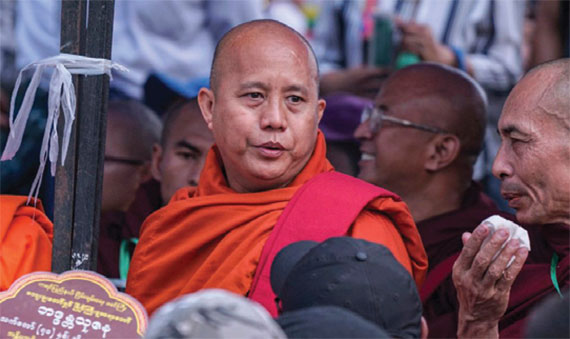
Ten years ago, Hindu nationalists persecuted and destroyed their home during the pogroms in the district of Kandhamal, in Orissa. They both decided to serve the Church in consecrated life.

They are Fr Anand Pradhan and Sr Anjali Pradhan, brother and sister, who survived the violence against Christians unleashed by Hindu radicals in 2008. At that time they had to escape from their village of origin to save themselves. And it is precisely here, where Hindu families have always prevented them from rebuilding their house, that they have returned for a ceremony of reconciliation and thanksgiving. This time though, the whole village has been celebrating.

SYRO-MALABAR CHURCH TO SET UP INTERNAL COMMITTEES

Hit by controversies, including sexual abuse involving priests, the Kerala-based Syro-Malabar Catholic Church has decided to set up internal committees at the diocesan level to create a “safe environment” for all, including children and vulnerable adults.

The decision to implement the “Safe Environment Policy” was taken at the Synod of the Syro-Malabar Archiespicoal Church being held here.

This policy is being  implemented to ensure safety and security for all, especially children and vulnerable adults, a Church official said.

Claiming that the safety and security for all have already been ensured in parishes, diocese, religious congregations and institutions of the Syro-Malabar Church, the official said that the implementation of new “Safe Environment Policy” would further strengthen it.

ANDHRA PRADESH TO HIKE AID FOR JERUSALEM PILGRIMAGE

Chief Minister N Chandrababu Naidu has announced that the State government would increase the financial aid to the Christians for the Jerusalem pilgrimage from Rs 40,000 to Rs 75,000. He also announced Rs 1.5 crore financial aid to the CSI St Pauls Basilica Church known as CSI Church located near the State Guest House. Stating that the church is very beautiful, he announced that the government would extend support for completion of works.

Chandrababu Naidu joyfully participated in the Christmas celebrations at the CSI Church. He recited some verses and took part in the cake cutting function.

He announced that the State government would increase the financial assistance from Rs 40,000 to Rs 75,000 to the Christians proceeding to Jerusalem pilgrimage. He said a large number of Christians go to Jerusalem to see the birth place of Jesus Christ.

He praised the services of Christian missionaries in the fields of education and health. He said many popular persons in Krishna and Guntur districts have studied in the educational institutions run by missionaries. He recalled that TDP founder N T Rama Rao studied in Andhra Christian College in Guntur.

DALIT CHRISTIAN BODY CONDEMNS RESERVATION FOR FORWARD CASTES

The National Dalit Christian Watch (NDCW) on January 9 expressed shock and anguish over the Indian government’s determination to extend reservation benefits to the economically weaker section of the dominant castes of the country.

“NDCW opposes this move which is against the spirit of the Constitution of India as the ‘Concept of Reservation’ was introduced under the principle of ‘Social Justice,’ to uplift the status of the communities who are socially and educationally backward due to cumulative oppression and discrimination for centuries in the name of Caste,” a press statement for the body said.

Earlier in the day, the Rajya Sabha, the upper house of parliament, passed the proposed law to provide 10% quota in jobs and education for people from general category, who also belong to the economically weaker sections.

The Lok Sabha, the lower house, passed the bill a day earlier. The bill will now require the President’s nod to become a law. Most parties have called the government’s move a political stunt ahead of the national elections. Prime Minister Narendra Modi, who called the law a “victory for social justice,” pointed out that elections are held in the country every few months.

BRITISH REPORT SCOLDS INDIA GOVT OVER RELIGION-BASED VIOLENCE

A British parliamentary report has criticized the Indian government for failing to protect religious minorities from violent Hindu hardliners.

A report by the British AllParty Parliamentary Group for International Freedom of Religion or Belief said the rise of nationalist “Hindutva” ideology — which defines ‘Indian’ as exclusively Hindu — has led to an increase in religious oppression in the country.

The Dec. 31 report titled ‘Commentary on the Current State of Freedom of Religion or Belief’ said anti-conversion laws in seven of India’s states are also used to threaten Muslims and Christians.

In its India chapter, the report said that Prime Minister Narendra Modi has finally, condemned mob violence against minorities, but his government has remained largely inactive in proactively tackling spiraling religiously motivated violence.”

The report said a “particularly worrying” situation emerges from media reports that some members of the pro-Hindu Bharatiya Janata Party (BJP) have close affiliations with the Hindu hard-line group Rashtriya Swayam Sevak Sangh (RSS).

Founded in 1925, the RSS draws on its vision from a mix of Hindu legends and ancient Indian history. It claims that India is a Hindu land and religious minorities should accept Hindu supremacy if they want to live in the country. Rights activists have agreed with the concerns expressed in the report.

JESUIT FATHER RAYAN DIES; PIONEERED THEOLOGY WITH AN ASIAN PERSPECTIVE

Jesuit Father Samuel Rayan, a pioneer of theology with an Asian perspective that colleagues and church leaders considered a “radical interpretation of the Bible,” died at age 98. Before his Jan. 2 death, Rayan had been living in retirement and dealing with dementia. Jesuit Father M.K. George, provincial of the order’s Kerala province, told that Rayan had been under medical care for age-related illness for several years.

“Father Rayan was a pioneer who theologized from an Asian or third world perspective,” George said. The elderly priest became a professor at the Jesuit theology seminary at Vidya Jyoti College in New Delhi in 1972. He also served as its principal from 1972 to 1976. After more than three decades of teaching there, he returned to Kerala in 2010.

“Until Father Rayan’s rise as a theologian, the concerns of the people of India were not found in the theology that originated from Western Europe,” said P.T. Mathew, a fellow theologian who worked with the Jesuit.

Bishop Paul Mullassery of Quilon, India, said the Church in India always will “remember him for his radical interpretation of the Bible and as a man concerned for the poor and marginalized.”

Mullassery said Rayan’s interpretation of the Bible could broadly be labeled as part of liberation theology, which has been called controversial for its perceived links to Marxism.

“But his was not the militant version of liberation theology. His theology came from his deep meditations of the Gospel,” Mullassery said.

Rayan defended the poor, spoke for the environment and his theology was deeply rooted in Gospel values, the bishop said.

GERMAN CARDINAL URGES CHANGE IN TRADITION AHEAD OF CELIBACY DISCUSSION

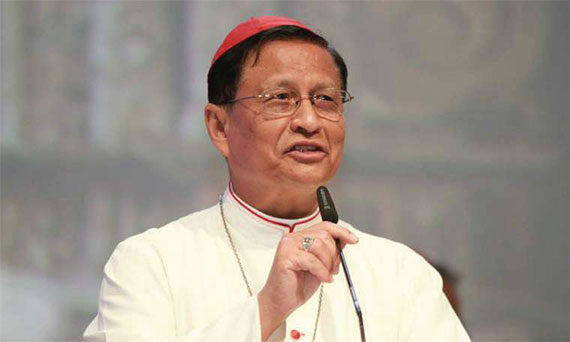
German Cardinal Reinhard Marx of Munich and Freising called for change in long-standing church tradition as the German bishops’ conference prepares for a workshop debate to “review” the issue of celibacy for priests.

In his homily at New Year’s Mass at the Cathedral of Our Lady in Munich, Cardinal Marx said the church must, “in light of the failure” surrounding the clergy sex abuse crisis, modify tradition in response to changing modern times.

“I believe the hour has come to deeply commit ourselves to open the way of the church to renewal and reform,” Cardinal Marx said, according to an audio of the homily posted on the archdiocesan website. “Evolution in society and historical demands have made tasks and urgent need for renewal clear to see.”

The cardinal, who is president of the German bishops’ conference, said that current measures to address sex abuse are not enough without adapting church teachings. “Yes, matters are about development and improvement and prevention and independent reviews — but more is also demanded,” he said.

“I am certain that the great renewal impulse of the Second Vatican Council is not being truly led forward and understood in its depth. We must further work on that,” he said. “Further adaptations of church teachings are required.”

Despite the Vatican’s call for the US Conference of Catholic bishops not to vote in November on several proposals for responding to the sexual abuse crisis because of a lack of time given the Vatican to study the proposals and potential conflicts with church law, the German bishops plan to host numerous ecclesiastical and secular professionals from various disciplines to analyse celibacy.” Truth is not final. We can recognise it deeper in the shared path of the church,” Cardinal Marx said in his homily. He said he will take new stances on issues because it is his “duty as a priest and a bishop” to do so.

He added that Catholics must “leave behind categories like left and right, liberal and conservative and concentrate on the path of the Gospel in a concrete point in time.”

“Turn yourselves to a new thinking. To risk this thinking is important at the end of year and the beginning of a new year — not a flight into the rhetoric of the past,” he said.

“Naturally we stand in a great tradition — but this is not a complete tradition. It is a path into the future.”

BISHOP JEROME TO BE MADE SERVANT OF GOD

Bishop Jerome, the first native bishop of the Kollam diocese of the Catholic Church, will be elevated as Servant of God on February 24 at a function at Infant Jesus Cathedral, Thangassery. This will be the first step towards beatification and canonisation of the late priest.

Bishop Jerome had helmed the Kollam diocese, the first Catholic diocese in India, from 1937 to 1978. “An embodiment of Christian spirituality and a true visionary, he played an integral role in the overall development and progress of Kollam city. He also made key interventions in social and educational sectors, establishing a chain of institutions for the uplift of backward classes,” said Fr Julian.

GERMAN BISHOP SAYS CHURCH MUST EXAMINE EPISCOPAL POWER

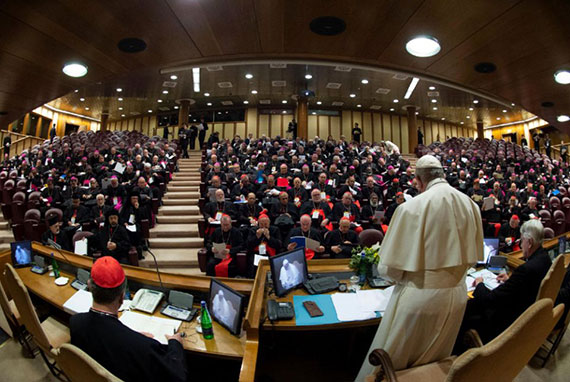
One of Germany’s youngest and more recently appointed bishops has called for a thorough examination of how Church leaders exercise their authority, saying too often it does not conform with the model St Paul demanded of early Christian leaders.

“We urgently need to have a new look at the question of episcopal power and responsibility,” said Bishop Peter Kohlgraf of Mainz in an article that appeared on Dec. 31 in the German daily Kölner Stadt Anzeiger.

“And we must, on no account, allow the importance of this question to be played down, since it already preoccupied early Christian communities.”

The 51-year-old Kohlgraf, who succeeded the late Cardinal Karl Lehmann as bishop of Mainz in August 2017, said power is a considerable temptation for bishops.

Bishop Kohlgraf also admitted that the issue of sexual violence in the Church had put his faith to the test in recent months.

“I have never experienced the human and dark side of the Church so closely as in the 16 months since I became a bishop,” he said.

“A few days ago, I came across the following reflection by Cardinal Christoph Schönborn: ‘Perhaps we are too much Church and too little Christ!’

“I have given his words a great deal of thought ever since. Christ and His Church have not seldom been equated. I can still hear the following words in a sermon when I was young: ‘The Church is Christ who lives on’.” But he said if the Church is identical with Christ, then it becomes unassailable, its traditions unshakeable and its ministers — “as they represent Christ Himself” — discharged from all liability.

ANGOLA: 2,000 UNREGISTERED CHURCHES FORCED TO CLO

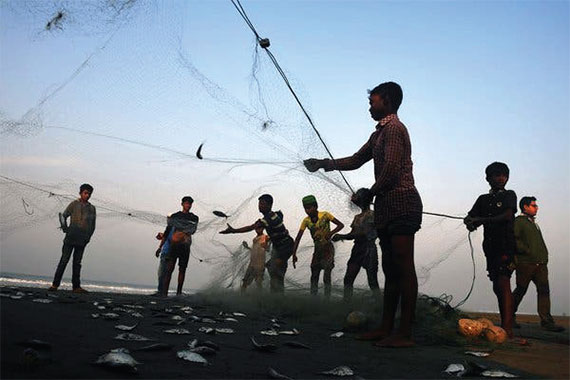
More than 2,000 churches have been closed and over 1,000 more face closure after Angola’s cabinet approved a new law requiring them to register with the government, including presenting at least 100,000 signatures of followers, as reported by Nairobi-based news site The East African.

A local pastor told World Watch Monitor that it was impossible to collect the required 100,000 signatures from at least 12 provinces, given they had only received a month’s notice.

By introducing the new regulations, the southern African country has followed Rwanda and Cameroon, who earlier this year announced new religious directives that have caused thousands of churches to close.

“The number of illegal churches in the country has reached 4,000,” Francisco de Castro Maria, a government director for religious matters, told the state-owned Jornal de Angola newspaper, as quoted by The East African.

Official Website

Exit mobile version