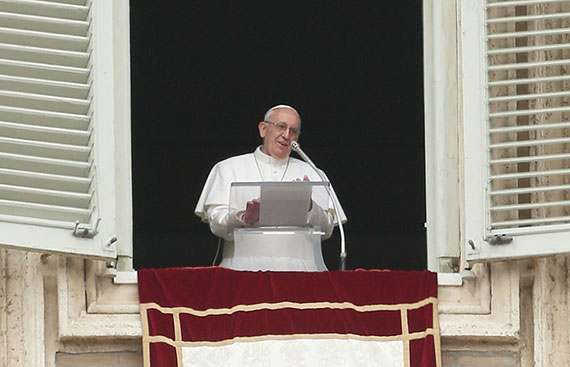
Prince of Wales pays personal tribute to Newman the reconciler

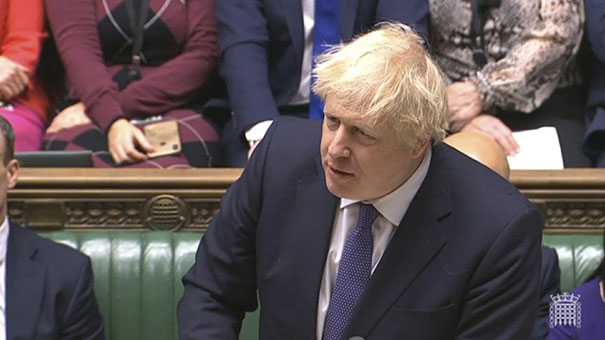
The Prince of Wales has commended Cardinal John Henry Newman as a saint for our times, suggesting in an article that his example as a harmoniser of differences, of inclusivity and respect, “is needed more than ever.” Writing ahead of his visit to Rome, where he will attend Newman’s canonisation as the head of the British delegation, Prince Charles says Newman stood “for the life of the spirit” and against forces that debase human dignity and destiny.

“In the age in which he attains sainthood, his example is needed more than ever – for the manner in which, at his best, he could advocate without accusation, could disagree without disrespect and, perhaps most of all, could see differences as places of encounter rather than exclusion,” says the Prince. The article, which appears also today in Italian in L’Osservatore Romano, reveals a deep familiarity with and respect for Newman, who tomorrow will become the first English saint of modern times. It will be published in full in the print edition of The Tablet next week.

Recalling the climax of Newman’s famous spiritual poem The Dream of Gerontius, when the soul glimpses the harmony of the divine vision, Prince Charles writes: “Harmony requires difference. The concept rests at the very heart of Christian theology in the concept of the Trinity.” This revelation of the Trinity, the Prince says, shows that “difference is not to be feared.”

He goes on to write: “In the image of divine harmony which Newman expressed so eloquently, we can see how, ultimately, as we follow with sincerity and courage the different paths to which conscience calls us, all our divisions can lead to a greater understanding and all our ways can find a common home.”

Describing Newman as “a great Briton,” Prince Charles notes in particular his significance for “those who seek the divine in what can seem like an increasingly hostile intellectual environment find in him a powerful ally who championed the individual conscience against an overwhelming relativism.” Elsewhere in the article Prince Charles pays tribute to the contribution of the Catholic community to British society, something he describes as being “immeasurably valuable.”

Christians in India are “living in fear,” says Catholic bishop

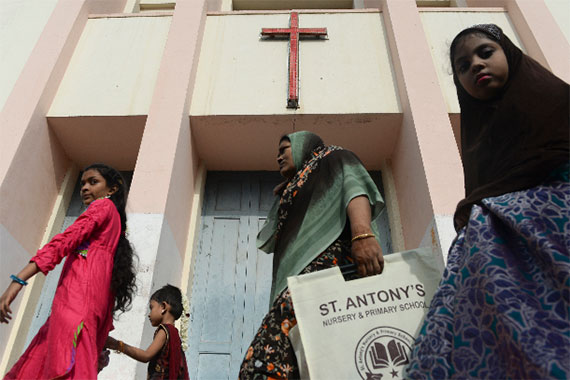
Christians across India are “living in fear” because of acts of state-led violence and oppression, says the bishop of a region still recovering from one of the country’s worst outbreaks of persecution. Speaking to leading Catholic charity Aid to the Church in Need, Bishop Kishore Kumar Kujur of Rourkela described how the government in India is “causing problems” – with support from “right-wing” groups hostile to Christians and other minorities.

He said: “Christians are living mostly in fear at present – much more in the north, where they are a minority.”

Underlining the severity of the threat, the bishop said his safety would be put at risk if he released key details about the oppression and persecution suffered by Christians and other minorities.

Bishop Kujur’s diocese covers part of Odisha state (formerly Orissa), where an anti-Christian pogrom in 2008 left 100 or more dead, 50,000 homeless, with attacks on 4,500 houses and 250 churches.

Future priests, nuns need to follow Pope Francis: Franciscans

Future priests and nuns in India need to have the mind and heart of Pope Francis to work for and with the poor, says an association of Franciscans in India.

“Today’s youth who are joining us for Religious formation in various stages throughout the country must understand and effectively disseminate the vision and mission of Pope Francis in the Indian context with special focus on those at the periphery, with other religions and cultures and with the whole creation,” says a press note issued at the end of a five-day national seminar in Vailankanni.

It was organized by the Asso-ciation of Franciscan Families in India (AFFI) along with the Bengaluru-based National Biblical Catechetical Liturgical Centre (NBCLC), Sept 25- 29.

“We shall guide our candidates who wish to be future priests and nuns to be in solidarity with those in periphery and the discriminated ones under top priority through interactions in slums and rural areas,” the press statement added.

Mother Teresa author gets Albanian Nation’s Ambassador Award

A Mother Teresa of Calcutta research scholar in the United Kingdom was honoured with a prestigious award from Albanian government in London on 2nd October 2019.

The Ambassador of Albania to the UK, His Excellency Qirjako Qirko, handed over the Albanian Nation’s Ambassador Award, bestowed by the Prime Minister of Albania Edi Rama and the Minister of State for Diaspora Pandeli Majko, to Mother Teresa author Dr Gëzim Alpion of the University of Birmingham.

Mother Teresa was born as Gonxhe Agnes Bojaxhiu to ethnic Albanian parents in Skopje, Macedonia, on August 26, 1910. At 18, she left home and joined the Sisters of Loreto in Ireland and arrived in India on 6 January 1929.

Ambassador Qirko told that the reasons for conferring the award include: “Professor Alpi-on’s 20 years of scholarly dedication to Mother Teresa’s life, work and legacy; his lobbying for the canonization of Mother Teresa from 2014 to 2016; and his ongoing lobbying for the construction of the Arbëri High-way, which will shorten considerably the distance between Skopje, Mother Teresa’s birthplace, and Tirana, and will benefit Albania, as well as Macedonia, Kosova and Bulgaria. Professor Alpion’s contribution in this respect is valued by the Government of Albania.”

Separate religion and government: Priest

Religion and government are now identified with each other in India, a situation that prevailed in Europe before the separation of Church and State, Father George Pattery, head of Jesuits in South Asia, said.

He stressed the need for a “mature, secular society” that would help India “separate religion from politics and religion from government”.

“The secular idea helps religion not to have control over society. Remember, in Europe we had Church and State identified with each other — we are moving towards that kind of a situation in India. Religion and government here are now getting identified,” Reverend Pattery told.

The Telegraph after delivering the keynote address at the inauguration of a two-day conference of Jesuit-run institutions in India, Sri Lanka, Nepal and Bangladesh.

The conference is being held at the Jesuit-run St Xavier’s College, Calcutta.

Father Pattery said Indians “seem to be going backward” by failing to separate religion from the government, adding that the trend had to be stopped.

“Religion’s hold on politics should be diversified. The secular idea is preciously that —to separate religion from the government. But we seem to be going backward. Therefore, that has to be stopped.”

Christian federation opposes government siding with any religion

No government of the country can identify itself in favour of any religion, said Prabhakar Tirkey, president of the Rashtriya Isai Mahasangh (National Christian Federation) in Ranchi.

“India is a secular state, and the country has no religion,” he said.

He was speaking at the end of the two-day national executive meeting with leaders’ conference.

Explaining Article 15 and 25 in the Constitution, Tirkey said that no government can deprive any citizen within the country of one’s fundamental right based on religion, caste and race.

All religions are equal and the right to religious freedom and the right to propagate it freely for one’s religion have been provided under the Constitution, he stressed.

Despite the Constitutional guarantee, religious minorities in India such as Muslims and Christians are being tortured only for political selfishness.

The National Christian Federation believes that the promotion of religion is a constitutional right. It is illegal to stop the Christian community from preaching and registering cases against them in the name of conversion, Tirkey said.

“The Constitution of India is the code of conduct of every citizen of this country. Following this code of conduct is the ultimate duty of every citizen of the country irrespective of any distinction,” he added.

In the Constitution of India, provisions have been made for the protection of every person living inside the country and their tradition and religious beliefs. All citizens are equal in terms of the constitution, Tirkey reiterated.

The focus of the conference was to create awareness on the rights of Scheduled Tribes provided by the Constitution and the Government of India.

Catholic Church in India vows to fight for rights of minority Christians

Circumstances are difficult for the Christians in our diocese—we often come up against restrictions in the practice of our faith,” said Bishop Stephen Antony Pillai.

The 67-year-old prelate heads the Diocese of Tuticorin in southern India. He and 53 other Indian bishops recently met with Pope Francis during an ad limina visit to Rome. Bishop Pillai spoke about the situation of Christians in India.

The bishop explained that the Indian government is working to transform the primarily Hindu country into a homogenous nations, with one language and one set of policies favoring Hinduism. Comprised of 29 federal states, India is, after China, the second most populous country in the world with 1.37 billion inhabitants.

There are 28 million Christians in India, 20 million of whom are Catholic; the Muslim population numbers more than 200 million. In recent years, both Christians and Muslims have increasingly been targeted with violence and harassment by radical Hindu nationalists.

The situation has worsen-ed after this year’s parliamentary elections, which the nationalist governing party BJP of Prime Minister Narendra Modi won with a significant majority.

“Our situation at the moment isn’t very encouraging. The government makes a lot of rash decisions, which makes things unpredictable. Politics only benefits the wealthy part of the population. The poor are left with nothing,” Bishop Pillai said.

Some 450,000 Catholics live in the Diocese of Tuticorin, which is equivalent to about 17 percent of the population. Besides the attacks targeting the faithful and groups of pilgrims, the bishop reported that the circumstances overall were becoming more difficult in his diocese, with authorities interfering with the administration of Catholic hospitals and schools.

Prime minister, political, religious leaders mourn Abp Jala’s death

Prime Minister Narendra Modi led political and religious leaders to mourn the death of Archbishop Dominic Jala of Shillong in a car accident in California. The Salesian arch-bishop “will be remembered for his impeccable service to society and passion towards Meghalaya’s progress. May his soul rest in peace,” tweeted the prime minister on October 12, soon after the news of the Catholic prelate broke.

The Prime minister also said that he was anguished by the passing of the archbishop.

The accident reportedly occurred around 11 pm October 10 (10:30 am on October 11 Indian time) when Archbishop Jala was traveling to Clearlake in California along with Fathers Mathew Vellankal and Joseph Parekkatt, two Indian priests working in the United States.

Minister Muraleedharan leads Indian delegation to Mariam Thresia canonization

Minister of State for External Affairs V Muraleedharan led the Indian delegation at the ceremony in which Pope Francis will declare Mariam Thresia a saint in Vatican City on Oct. 13. Muraleedharan visited the Vatican City on October 12-13 for the canonisation of Sister Mariam Thresia, the Ministry of External Affairs said.

Sister Mariam Thresia, born on April 26, 1876, in Thrissur, Kerala, founded the Congregation of the Sisters of the Holy Family in 1914. She passed away on June 8, 1926. On April 9, 2000, she was beatified by Pope John Paul II.

In his ‘Mann ki Baat’ radio program last month, Prime Minister Narendra Modi had also referred to Sister Thresia.

“Sister Thresia, in her short lifespan of 50 years, worked for the good of humanity becoming a noble example for the entire world. Whatever task Sister Mariam Thresia undertook and accomplished, she did so with utmost dedication and devotion,” he had said.

Dalit, tribal girls honoured for academic excellence

Ten tribal and dalit girls from various parts of India were honoured for their academic excellence at a recent function in the national capital.

The awards have been hailed as a novel and unique move by the Catholic Church in India to reach out and encourage the less fortunate girl children, Sister Talisha Nadukudiyil, national secretary for the Council for Women under the Catholic Bishops’ Conference of India (CBCI), said at the October 6 award ceremony.

According to the Sisters of Destitute nun, the move will bring to the limelight those blessed with intellectual acuity to reach the high spectrum of life.The selection of the awardees was made on the basis of their outstanding performance in studies, despite their financial, cultural and geographical hedges, the nun explained. This is the second year the award program was organized by the women council in collaboration with the CBCI Offices for Dalit and Tribal Affairs.

Official Website

Exit mobile version