UK prime minister calls for solidarity with persecuted Christians

British Prime Minister Boris Johnson has made a call of solidarity with persecuted Christians around the world during a Christmas video released on December 24.

“I want us to remember those Christians around the world who are facing persecution. For them, Christmas Day will be marked in private, in secret, perhaps even in a prison cell,” Johnson said.

“As Prime Minister, that’s something I want to change. We stand with Christians every-where, in solidarity, and will defend your right to practice your faith,” he continued.

In December 2018, the UK Foreign Office called for an independent inquiry of international Christian persecution, which was released over the summer.

Johnson is the second high-ranking member of the British establishment to make an appeal for persecuted Christians in the days leading up to Christmas.

On Dec. 18, Prince Charles denounced this year’s Easter attack on churches in Sri Lanka as “an assault on religious freedom everywhere.”

The bombings by an Islamic State-affiliated group killed over 250 people, and injured over 500 others.

Iraqi cardinal: Innocents will ‘be the fuel’ for fire after drone strike

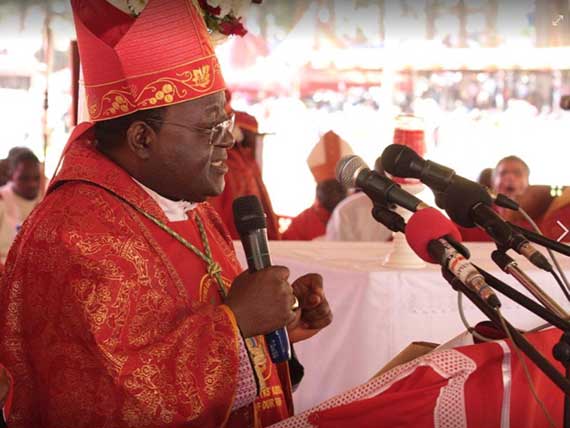
Chaldean Catholic Patriarch Louis Sako, responding to a U.S. drone attack in Baghdad that killed Iran’s top general, said “wisdom is required to avoid the ‘volcanic eruption’ we are about to face.”

Speaking during the Epiphany Mass in Baghdad on Jan. 6, he said the current crisis resulted from the “upsetting escalation, as well as the emotional and impulsive decisions taken which lacked wisdom and the sense of responsibility.”

Speaking at St Joseph Cathedral in the Iraqi capital, the cardinal addressed his words to world leaders to avoid a further escalation in violence, because, he said, “innocent people will be the fuel for such fire.”

He also invited Christians and Muslims to pray for the decision-makers to act wisely and consider the consequences of their strategies.

Nigerian diocesan spokesman: Bridal party beheaded en route to wedding

Father Francis Arinse, communications director of the Catholic Diocese of Maiduguri, confirmed that a bride-to-be, Martha Bulus, and her bridal party were beheaded on Dec. 26 at Gwoza, in northeastern Nigeria’s Borno State.

Arinse told Catholic News Service that Bulus and her companions were traveling from Maiduguri to her on Dec. 31 wedding when they were killed.

“They were beheaded by suspected Boko Haram insurgents at Gwoza on their way to her country home,” he told CNS. He added that Bulus used to be his parishioner at St Augustine Catholic Church, Maiduguri, after he was first ordained.

Arinse said there had been a series of abductions in the area recently. He said government agencies must beef up security in northeast Nigeria to prevent a recurrence. Several international media outlets reported on Dec. 26 that the Islamic State group released a video showing it had beheaded 10 Christians and shot an 11th Dec. 26. The news agencies said they were unable to confirm the contents of the video but described the victims as men. IS said the beheadings were payback for the late-October killing of its leader, Abu Bakr al-Baghadi.

Top court’s education order upsets Indian Church officials

India’s Supreme Court has allowed the government to control the appointment of teachers in educational institutions run by religious minorities, a ruling Church leaders say violates their right to manage such institutions.

The country’s top court on Jan. 6 upheld a West Bengal State law that allowed a government commission to screen candidates to be appointed as teachers in government-funded madrasas, Muslim religious schools.

“The order definitely will have a bearing in the administration of Church-run education institutions too,” says Salesian Father Joseph Manipadam, secretary to the Indian Catholic bishops office for education and culture.

The verdict came while deciding on an appeal challenging a provision in the West Bengal Madrasa Service Commission Act 2008, which said the government panel could screen teachers to be appointed to state-aided Madrasas.

Madrasas were declared minority education institutions in West Bengal State, just as thousands of Christian schools in the country. The Indian Constitution allows religious and linguistic minorities to establish and manage educational institutions of their choice to help with the social advancement of their people.

The Catholic Church runs some 54,000 educational institutions in the country and at least half of them get financial aid from the state. With this order, “our right to administer our institution is curtailed. Freedom to appoint teachers is also part of the administration,” Father Manipadam told UCA News on Jan. 9, three days after the top court pronounced.

The provisions were challenged in 2013 before the West Bengal State’s Calcutta High Court on the grounds that they violated the rights of minority institutions. The single-judge bench of the High Court allowed the challenge and found the provisions to be unconstitutional.

Hindu group opposes Christian president of Marathi literature festival

Veteran poet N.D. Mahanor on January 9 opened All India Marathi Literature Festival amid tight security in view of threats from right-wing Hindu organizations.

The groups had warned Mahanor, a Padma Shri and Sahitya Academy awardee—not to inaugurate the festival as a Christian priest, Father Francis D’Britto, presided over the festival. The priest is a Marathi writer.

The literature festival was held on January 10-12 in Osmanabad in Maharashtra, some 410 km southeast of Mumbai, the state capital. “I have been getting calls since January 1 asking me not to attend the festival as a Christian man is the president. Akhil Bharatiya Brahman Mahasabha had sent a letter asking me not to inaugurate the event, as they would be protesting at the venue. But there was no question for me not to inaugurate the festival.” Mahanor told News Click.

Anand Dave, secretary of All India Brahman Mahasabha (grand council of Brahman), said his organization did not threaten the 78-year-old litterateur. “We requested him not to inaugurate the festival that is presided by a Christian priest. We did not want him to witness our protests at the venue,” he said.

However, Mahanor’s close aides have said that repeated calls and “requests” in harsh words constitute a threat to a septuagenarian. Mahasabha and other right-wing organizations have been opposing selection of Father D’Britto as the president, even as he has been selected following a democratic process. Members of the Marathi Sahitya Parishad, which holds the festival every year, vote for contestant writers to select the president. Father D’Britto, a recipient of Sahitya Academy Award in 2014, was born and brought up in Vasai near Mumbai.

CAA: India’s Church leaders warn against dividing country

India’s leading cardinal has called the country’s controversial Citizen Amendment Act “a cause of great anxiety for all citizens.”

Cardinal Oswald Gracias, the Archbishop of Bombay and president of the Catholic Bishops’ Conference of India (CBCI), made his comments on Jan. 8 at a ceremony in Benaulim, Goa, inaugurating a new extension of the secretariat of the Conference of Catholic Bishops of India (CCBI). The CBCI is for all bishops in India – Latin and Eastern Rite – while the CCBI is for the country’s Latin Rite bishops. The Citizenship Amendment Act was passed on Dec. 12 by India’s parliament, and establishes a mechanism for undocumented migrants from Pakistan, Bangladesh and Afghanistan to gain Indian citizenship. How-ever, the law only applies to Hindu, Sikhs, Buddhists, Jains, Parsis and Christians, meaning Muslims are excluded.

Anti-citizenship law protests spread across India

Demonstrators clashed with police for a third day in Delhi on Dec. 17 as protests against a divisive citizenship law spread to universities across the country, raising fears of widespread unrest.

Rights activists and Christian leaders say the protests began to spread after the federal government led by the pro-Hindu Bharatiya Janata Party (BJP) attempted to crush peaceful opposition to the discriminatory law.

“The protests by students in many universities indicate the great worries among the people. Students are the antenna and the conscience of the people, and future decision-makers,” said the Evangelical Fellowship of India (EFI), a Protestant Church Group, in a Dec. 16 statement.

India’s Eastern rite Church seeks clarification on controversial law

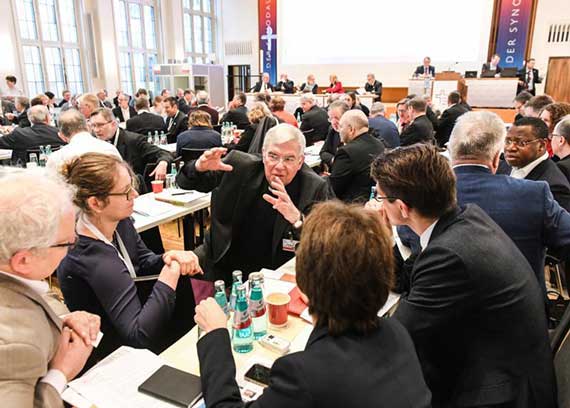
Bishops of India’s eastern rite Syro-Malabar Church have urged the federal government to clarify amendments made to the country’s citizenship law on Jan. 11, a day after the new law came into force. The prelates’ call came during their ongoing Bishops’ Synod, the Church’s top decision-making gathering, at their headquarters in Kochi city in southern Kerala State.

Of the 64 bishops, 57 are attending the Jan. 7-15 Synod.

India’s federal government led by the pro-Hindu Bharatiya Janata Party amended the Citizenship Act of 1955 on Dec. 11, 2019.

The Citizenship Amendment Act (CAA) aims to grant citizenship to illegal migrants from Afghanistan, Bangladesh, and Pakistan if they are not Muslims. The new law also relaxes the requirement of residence in India from 11 years to five years for such migrants.

Since the amendment, the country has witnessed wide-spread violent protests seeking to scrap it on the grounds that it violates the secular fabric of the country as it was biased against Muslims.

“The secular character of our constitution shall not be under any doubt,” he said, explaining the reason for bishops seeking clarification. The bishop also urged the government to grant citizenship to refugees in the country with-out any religious discrimination.

Bishops ask Alencherry to clarify stand to laity

Kochi, Jan 14, 2020: The issue of land deals has come up for discussion during the Synod session of the Syro-Malabar Church now under-way at the Church headquarters in Kochi.

Nine bishops of the Ernakulam-Angamaly Archdiocese raised the issue on January 13 when a suggestion came up that the Synod could admit to the losses incurred because of the land deals.

Cardinal George Alencherry, head of the Church who is entangled the land deal controversy, informed the members that the losses could not be recovered without selling the land.

The bishops wanted a clear declaration of the ways of restitution, instead of admission of lapses. To this, the cardinal said he had not made any monetary gains out of these deals. The bishops, however, suggested that the cardinal could explain his stand in the matter before the priests and laity and convince them.

The Synod is yet to release an official statement regarding the discussions and decisions taken in the meeting.

“There came some suggestions from the Synod regarding the ways in which the losses can be rectified but no official statement has been released by the Synod. Earlier, the Synod had accepted that severe lapses occurred from the cardinal’s part,” said a source in the Ernakulam-Angamaly Archdiocese.

A source said the coming days of the Synod meeting are crucial. “As Synod concludes on Wednesday (January 15), some major decisions will be taken,” he said. The Synod began on January 7.

China continues ‘war on the soul’ by jailing pastor

China’s ruling Communist Party has fired a warning shot to the fast-growing underground Protestant Churches in the country by jailing Wang Yi, founder of Sichuan province’s Early Rain Covenant Church, for nine years after a secret trial where he had no legal representation. The US State Department has demanded his immediate release.

The sentence for “inciting subversion of state power” and “illegal business activities” became public on Dec. 29 when the court that convicted the preacher issued its judgment. He was found guilty during a closed-doors trial on Dec. 26 on what the State Department described as “trumped-up charges.” Pastor Yi and his wife Jiang Rong were arrested with dozens of other congregants on Dec. 9, 2018, during a crackdown on Cheng-du’s largest unregistered church.

Wang has been deprived of his political rights for three years and 50,000 yuan (US$7,160) of his personal property was confiscated as part of his sentencing. Jiang’s whereabouts remain unknown, although a congregant posted on the internet that she was being held under residential surveillance.

Official Website

Exit mobile version