Locked down in my daughter’s home in Mumbai, I get to know what people are thinking and talking about when I speak to them on the telephone or by e-mail. And what they say is not pleasing to an old man’s ears! My friends, both Hindu and Muslim, admit that no one’s God has been able to protect his (or her) flock from the jaws of the coronavirus. But, they say, that worse than the corona is the communal virus that the Hindutva forces have injected into the body politic, rejecting a God-sent opportunity to get all communities on one common platform. To fight the corona and conquer it, Modiji appealed to all Indians to unite. His own friends are using the corona to divide!
‘Day Of Prayer’ Unites Humanity Against Covid-19
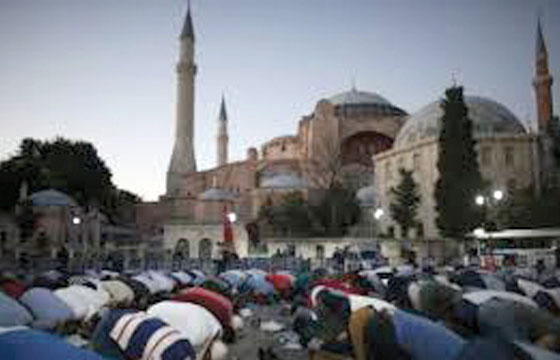
A vast chorus of diverse voices across the world on May 14 joined the global Day of Prayer for Humanity against the coronavirus epidemic. Buddhists, Christians, Hindus, Jains, Jews, Muslims, Sikhs and other religions participated in the unique prayer program as more than 4.3 million people across the globe have now been infected with Covid-19 since an outbreak was first reported in China’s Hubei province at the end of 2019. More than 296,600 people have officially died from the infection, and experts have issued dramatic forecasts regarding the aftermath of the pandemic that has devastated economies and left millions without a job.
Two Bishops Retire, One Elevated In India
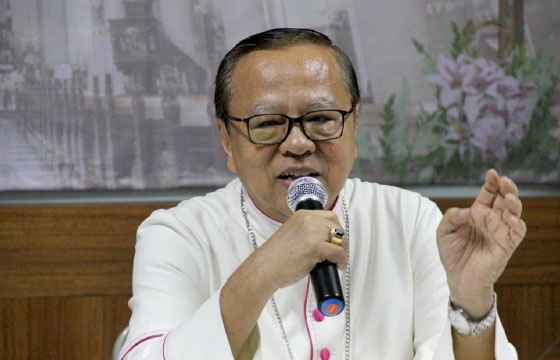
Pope Francis on April 4 accepted the resignation of Bishops Cyprian Monis of Asansol and Salvadore Lobo of Baruipur, both dioceses in West Bengal State, the Conference of Catholic Bishops of India announced.
Both the prelates have crossed the mandatory retirement age of 75.
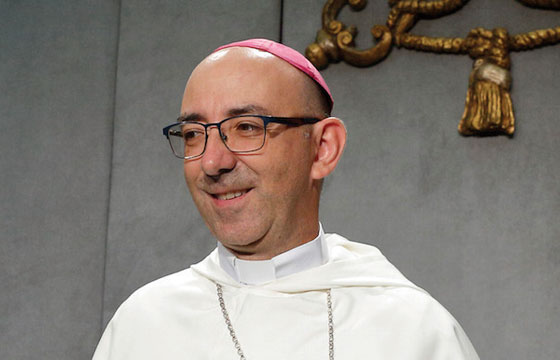
Bishop Lobo has been succeeded by Bishop Shyamal Bose, currently the coadjutor of Baruipur. Meanwhile the Pope has appointed Bishop Emeritus Lobo as the apostolic administrator of Asansol. Bishop Monis was born on April 11, 1945, at Dorna Halli in Mysore diocese, Karnataka.
Debate over Covid-19 vaccine derived from foetus
There is “no absolute duty” to boycott any Covid-19 vaccine produced with the help of cells derived from aborted foetuses, said a researcher from a Catholic bioethics institute. Scientists from the University of Oxford, England, are conducting human trials of a possible vaccine against the coronavirus in the hope that it could be made ready for use by September.
But because researchers had used cell lines from a foetus aborted in 1972, the vaccine could present an ethical dilemma for Catholics and others opposed to abortion, said Helen Watt, a senior research fellow with the Anscombe Bioethics Centre, Oxford.
In a briefing paper, she said although it was morally wrong to experiment on foetal tissue obtained from abortion clinics, it was not always wrong to use vaccines produced from such research.
“Boycotting a Covid-19 vaccine in the absence of an alternative is a serious action that should be carefully considered because of its potentially grave risks both for the person and for others,” she said in the paper published on the website of the centre, which serves the Catholic Church in the United Kingdom and Ireland.
She said its use was a matter of individual conscience for Catholics, although they should strive to obtain alternative vaccines, made without foetal cells, once such vaccines arrive on the market.
“The moral onus is certainly on the person to do this as a witness to the value of human life and life-respecting research,” she said.
“Boycotts are often rightly regarded simply as a means of achieving change by highlighting abuses,” she added, though “some will feel, whether rightly or wrongly, called to a boycott even if no alternative vaccine is available to them.”
Creation is sacred gift deserving respect, care, pope says on Earth Day
Humanity has failed to take care of the earth and its inhabitants, sinning against God and his gift of creation, Pope Francis said. Celebrating Earth Day, which fell during the “Easter season of renewal, let us pledge to love and esteem the beautiful gift of the earth, our common home, and to care for all members of our human family,” he said during his live streamed weekly general audience from the Vatican.
The Pope dedicated his catechesis April 22 to a reflection on the human and Christian responsibility to care for the earth, humanity’s common home. The day marked the 50th Earth Day, which was established in 1970 to raise public awareness and concern for the environment and its impact on people’s health and all life. This year also marks the fifth anniversary of the pope’s encyclical, “Laudato Si’, on Care for Our Common Home.”
In his catechesis, the Pope said Earth Day was “an occasion for renewing our commitment to love and care for our common home and for the weaker members of our human family.”
“As the tragic coronavirus pandemic has taught us, we can overcome global challenges only by showing solidarity with one another and embracing the most vulnerable in our midst,” he said.
God is good and always forgives, the pope said, however, “The earth never forgives: if we have despoiled the earth, the response will be very bad.”
Dutch cardinal says euthanasia ruling will not bring clarity
A Dutch cardinal said that a recent Supreme Court ruling permitting the euthanizing of dementia patients creates confusion and raises questions about consent, especially for the most vulnerable at the end of life.
Speaking on behalf of the Dutch bishops’ conference, Cardinal Willem Jacobus Eijk, the archbishop of Utrecht, high-lighted renewed concerns about the growing practice in the Netherlands in a statement provided to CNA April 23.
The cardinal referred to the supreme court decision, deliver-ed Wednesday, which found that doctors could forcibly euthanize dementia patients if they had previously signed a document approving the procedure.
“In 2016, a physician of a nursing home performed euthanasia in a woman who had a written euthanasia declaration, firmed four years before. This itself does raise the question of whether such a written declaration, firmed years ago, still expresses the actual will of the patient,” said the cardinal.
The woman, who was unable to communicate due to her condition, had stated four years earlier that she wished to decide when the time was right for her death. The woman resisted the attempt to place the needle in her arm, and was given a sedative in a cup of coffee. She was reportedly held down by family members, and was euthanized.
TRUMP SAYS HE’S ‘BEST PRESIDENT IN HISTORY OF THE CHURCH’ IN CALL WITH CATHOLIC LEADERS
President Donald Trump identified himself as the “best [president] in the history of the Catholic Church” in a conference call for Catholic leaders and educators April 25, where he warned that issues at stake in the upcoming presidential election, particularly on abortion and religious liberty, “have never been more important for the Church.”
Trump also pledged support for Catholic schools in light of the global coronavirus pandemic.
In an audio recording of the meeting obtained by The Tablet, the president repeatedly emphasized his support for the pro-life movement and school choice, attempting to paint a stark contrast between his administration and what a Democratic presidency could mean for Catholics.
The Tablet was told by two participants that over 600 people were on the call, including Cardinal Timothy Dolan of New York, Cardinal Sean O’Malley of Boston, Archbishop Jose Gomez of Los Angeles and president of the United States Conference of Catholic Bishops (USCCB), Bishop Michael C. Barber of Oakland, chair of the USCCB committee of Catholic Education, as well as the superintendents of Catholic schools for Los Angeles and Denver, among others.
In his opening remarks, the president noted that he was joined on the call by Secretary of Education Betsy DeVos and Secretary of Housing and Education Ben Carson.
Saturday’s call comes just one week after the president held a call with faith leaders on April 17, which also included the participation of Cardinal Dolan and Archbishop Gomez, meant to discuss the re-opening of houses of worship, but where the president also sought reelection support.
In his opening remarks, the president thanked Catholic educators for their efforts in distance learning during the pandemic, as well as the spiritual support they are providing to families. Citing his own childhood of growing up next to a Catholic parish and school in Queens, New York, the president characterized Catholic schools as “a source of strength, hope, opportunity for communities across the country.”
Cardinal Dolan was the first to speak, whom the president hailed as a “great gentleman” and a “great friend of mine,” adding that he respects what the cardinal “asks for.”
Cardinal fears coronavirus could be end of European Union
In a provocative reflection on the coronavirus and Europe, Luxembourg Cardinal Jean-Claude Hollerich said aloud what many at this moment are likely thinking: With the European Union in disarray over the migration crisis and weakened by the withdrawal of the United Kingdom, could the global COVID-19 coronavirus pandemic be the tipping point signalling the end is near?
Speaking of the global impact the coronavirus is having and the need for solidarity with those who will and are suffering in the economic fallout, Hollerich, who was given a red hat by Pope Francis in 2019, said “The largest solidarity network we can imagine is the European Union. Yet the EU seems paralyzed.”
President of the Commission of the Bishops’ Conferences of the European Union (COMECE), Hollerich spoke in an article to be published in Saturday’s print edition of the Jesuit-run journal La CiviltaCattolica, but which is already available on their Italian-language website.
In Europe, “the return to national interests seems obvious to most member countries,” he said; then, turning to the current back and forth over aid packages for EU member states most heavily impacted by COVID-19, he said that so far, “The crisis seems to favour the individualism of nations.”
Noting how past epidemics have left lasting impressions on European life and culture, Hollerich mused aloud as to what will be “the traces of the coronavirus pandemic in the collective memory of the European peoples.”
“Europe cannot be built without an idea of Europe, without ideals,” he said, and pointed to increasingly strict migration policies in many European nations, as well as prominent images of overcrowded refugee camps and capsized boats in the Mediterranean. These incidents, he said, “have inflicted deep wounds on the European ideal.” When it comes to the coronavirus, he said a lack of solidarity with heavily hit countries “can become the fatal wound,” he said. “We see in evidence the difficulty of European solidarity … I fear that for many this will be the disenchantment with the European project.”
Hollerich’s concerns, and those of the pope, were echoed by Italian economist Stefano Zamagni, who in an April 14 roundtable with journalists challenged the current EU model in moments of crisis.
As unemployment grows, Sao Paulo Franciscans serve up to 4,000 meals daily
In the early morning, even before ovens were turned on, people started to form the line. By the time the Franciscans brothers from Santo Antonio do Pari Parish were ready to distribute the food containers, there were thousands waiting for a meal.
“Hunger came before the fever (a main COVID-19 symptom),” Franciscan Brother Jose Francisco de Cassia dos Santos told Catholic News Service.
Santos, who heads the Franciscan Solidarity Service, has been distributing meals to the homeless in the centre of Sao Paulo for more than 13 years. The traditional solidarity service, dubbed the Priest’s Tea, usually drew a few hundred homeless people, who congregated the St Francis rectory. Now, said Santos, the majority of people in line waiting for the Priest’s Tea are those who lost their jobs due to the COVID-19 pandemic.
Santos said since March 24, when the city installed stay-at-home measures to combat the new coronavirus, the number of people seeking food more than quadrupled, forcing his team to set up another distribution center to feed the population: The Franciscan Tent.
“We used to distribute about 350-400 meals per day at the Priest’s Tea, now the line has maybe 3,500 to 4,000 people on a daily basis, and it continues to grow,” he said.
Doctor-priest: Elderly die in U.K. nursing homes while hospital beds empty
Elderly people are being left to die in Britain’s nursing homes instead of being offered care in hospitals, said a priest and former surgeon.Fr Patrick Pullicino volunteered to return to the U.K. National Health Service to work as a consultant at Nightingale Hospital in London. The hospital was one of seven to be built in just 10 days, providing 4,000 of 11,000 new beds for patients requiring emergency treatment for COVID-19.
But just 51 patients have been treated there in three weeks, with thousands of surplus beds in many other NHS hospitals even as the coronavirus passes its peak.
Pullicino, who served as chairman of the Department of Neurology and Neurosciences at the New Jersey Medical School in 2001 before returning to the U.K. in 2005, told Catholic News Service April 25 that the excess beds can be explained by a policy of returning elderly patients from hospitals to care homes even if they have COVID-19.
“If somebody in a nursing home gets COVID, you don’t leave them there. You have to monitor them, and if they get to a certain point you bring them into hospital. You don’t leave them to die with hypoxia and pneumonia and put them on palliative care in a nursing home,” he said. “That’s not the way to deal with it, but that is what they are doing.”