
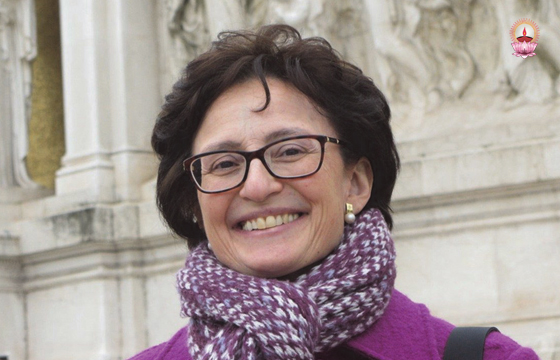
On March 9, Pope Francis appointed Spanish biblical scholar, Sister Nuria Calduch-Benages, as secretary of the Pontifical Biblical Commission. She expressed her surprise and gratitude in this interview with Vatican News.
Sister Nuria has dedicated her life passionately to the study of the Bible. She teaches Old Testament at the Pontifical Gregorian University and is a renowned ex-pert on Sacred Scripture. Hailing from Barcelona, Spain, Sr Nuria is a member of the Congregation of Missionary Daughters of the Holy Family of Nazareth. She has also taken part in the work of the Study Commission on the Diaconate of Women (2016-2019). She has been a member of the Pontifical Biblical Commission since 2014. Her new term will last until 2025.
Among other positions, she is a guest professor at the Pontifical Biblical Institute in Rome, an assiduous collaborator of the Catholic Biblical Federation, a prominent member of specialized journals, serving on the scientific committee of the journal History of Women (University of Flo-rence) and collaborating on the series “Tesis y Monografías” pu-blished by Verbo Divino (Estella). In 2008 she participated as an expert in the General Assembly of the Synod of Bishops focusing on “The Word of God in the Life and Mission of the Church.”
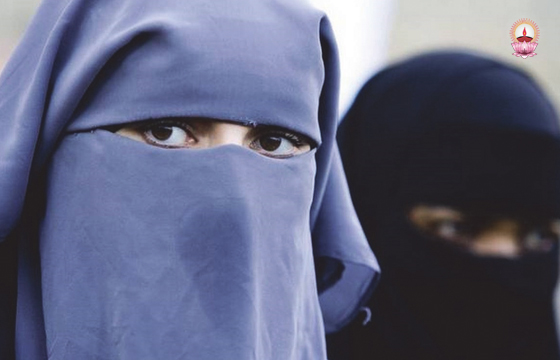
Sri Lanka announces burqa ban, to shut 1,000 madrasas
Sri Lanka will soon ban the burqa or face veil, a Cabinet Minister said on Saturday, as he announced the Rajapaksa administra-tion’s latest policy decision impacting the minority Muslim community.
Public Security Minister Sarath Weerasekara said authorities would henceforth use the controversial Prevention of Terrorism (PTA) law — that human rights defenders have termed ‘draconian’— to deal with religious extremism, with wide-ranging powers to detain suspects for up to two years, to ‘deradicalise’ them.
At a media conference, Mr. Weerasekara said: “The burqa is something that directly affects our national security…this [dress] came into Sri Lanka only recently. It is a symbol of their religious extremism.”

One in 8 Russians plan to observe Lent this year
Almost one in eight Russians intend to observe Lent this year, and the proportion among Orthodox Christians reaches 17%, according to the findings of a VCIOM poll obtained by Interfax.
Asked whether they had heard about Lent, 51% of respondents said they had heard something, but did not know exactly on which dates it falls this year. Among those who are religious, such respondents accounted for 45%. Sixteen percent said Lent starts after pancake week, and 14%, or one in seven, said March 15. Nearly one-fifth of Orthodox Russians, or 19%, know the correct start date this year. Meanwhile, 22% are undecided as to whether to observe Lent. Among religious Russians, the proportion is 30%, the pollster said.

Pakistani courts reconsider blasphemy penalty cases
Christian human rights groups in Pakistan are urging local courts to reject Sharia punishments for the blasphemy accused in the Muslim majority country.
Last week, a Peshawar High Court bench issued notices to the attorney general for Pakistan and provincial advocate general over a petition seeking orders for the government to remove the option of punishment other than the death penalty for blasphemy from the Pakistan Penal Code.
The petitioner claimed the issue of an alternative punishment of life imprisonment had already been decided by the Federal Shariat Court, but it had not been implemented by federal and provincial governments. The option of life imprisonment was made defunct after a Federal Shariat Court judgement in 1991.
The Centre for Legal Aid Assistance and Settlement (CLAAS) UK, a Christian charity dedicated to helping persecuted Christians in Pakistan, rejected the death penalty for blasphemy in a March 25 press release.
“It’s time to stop the misuse of the blasphemy law. We see every day how this law is being misused by individuals and religious groups to achieve their goals and settle their personal grudges, especially against religious minorities,” said Nasir Saeed, director of CLAAS.
“Several governments have pledged to stop its misuse, and even recommended 10 years imprisonment for a false accusation, but nothing has changed. Instead, voices against the misuse of the blasphemy law have been forced into silence.”
Kashif Aslam, Deputy Director of the Advocacy and Program National Commission for Justice and Peace (NCJP), the Church’s human rights body, in Pakistan agreed.
“Clearly the judges are prejudiced. We are experiencing such attitudes from the beginning,” he said. “Instead of being driven by emotions, they should go by the book. We demand overall reforms in judicial system,” he told.
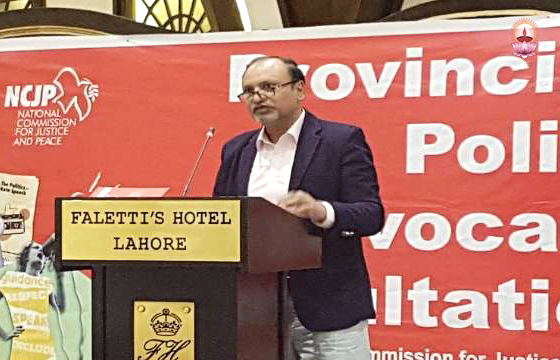
Hate speech the norm in Pakistan, church study claims
A new study published by a bishops’ commission highlights the psychological impact of hate speech on religious and sectarian minorities in Pakistan’s Punjab province.
“Hate speech in Pakistan is accepted as a norm. One of its immediate effects is that people experience a loss of self-esteem. There is a constant fear among minority community members regarding their security and survival. A Hindu student reported losing her interest in studies, claims the study titled “The cost of hate speech.”
It was based on 12 focus group discussions, held between February 2020 and February 2021, with about 200 individuals including Christians, Hindus, Sikhs, Shia and Ahmadi in both educational institutes and public places around Punjab. Similar sessions will be conducted in urban and rural areas of the three other provinces.
The National Commission for Justice and Peace (NCJP), the Church’s human rights body in Pakistan, launched its policy brief for Punjab in Lahore on March 17.
The commission made several recommendations including monitoring and regulating religious sermons and seminary curriculum, reforming the education system, a government policy on non-discrimination, a media campaign to pro-mote equality as well as federal and provincial committees to monitor hate speech.
According to Aila Gill, program coordinator of NCJP, this is the first time such data has been collected in the country.
“We have identified more than 50 hateful terms. A lexicon has been prepared with suggestive terminologies preferred by the different minority communities,” she told.
“Religious minorities generally don’t know derogatory hate speech experienced in daily life and have become immune to this common phenomenon. Most of them hide their religious identities and never report such incidents for fear of retaliation. They demand support from the majority community to register complaints against hate speech.”
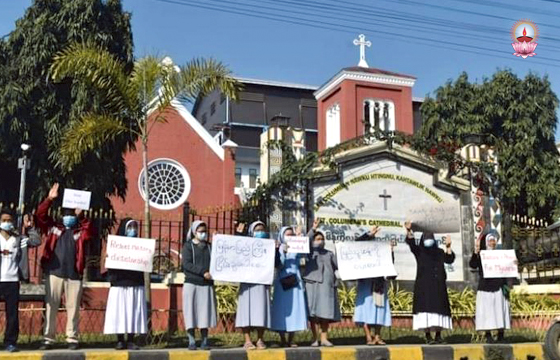
Asia’s cardinals in choral appeal for peace in Myanmar
A new call for peace and an end to violence in Myanmar was launched together by 12 cardinals from different regions of Asia, through the Federation of Asian Bishops’ Conferences (Fabc), the body led by the Archbishop of Yangon, Cardinal Charles Maung Bo as president.
The initiative echoes a similar message of solidarity that had already been sent in recent days by the Archbishop of Seoul, Cardinal Andrew Yeom Soo-jung. In the text – which we publish in full below – the 12 cardinals appeal to dialogue to find a way out, expressing particular closeness to Cardinal Bo: “The people of Myanmar we know are peace loving and only seeking an opportunity for progress. They have been law abiding and cooperating with all authorities. At the moment they only seek harmony and end to violence Asia is a continent of peace and of hope, of warm family bonds. We are one family. Peace is possible! ”
It is with deep sadness and great distress that we have been following the events in Myanmar. There is too much anger, too much violence, too much blood shed, too much suffering and pain inflicted on a peace-loving populace which only seeks unity, harmony, and an opportunity for progress in freedom. There have been repeated appeals for calm from the highest quarters. The United Nations Security Council unanimously appealed for a de escalation of violence. Pope Francis has made repeated appeals for peace, harmony, and justice. The Association of South East Asian Nations (ASEAN) has called for “Dialogue, Reconciliation and Return to Normalcy.”
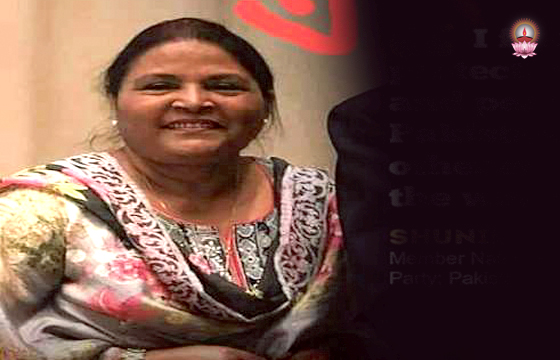
Pakistani lawmaker faces wrath for negating minorities’ persecution
A Christian lawmaker in Pakistan’s ruling party has drawn flak for rejecting a report on religious persecution in the country.
Shunila Ruth, parliamentary secretary for the ministry of religious affairs and interfaith harmony, faced criticism after she rejected an international re-port that said religious minorities suffered discrimination in the Islamic nation.
Last year, a 168-page report by the UK-based All-Party Parliamentary Group for Ahmadis narrated discrimination faced by their community in Pakistan.
Ruth rejected the report and announced to issue its rebuttal in a meeting last week in Islamabad.
“I feel more protected, safe, and peaceful in Pakistan than any other country of the world,” she stated.
The report, titled ‘Suffocation of the faithful – the persecution of Ahmadi Muslims in Pakistan and the rise of International Extremism,’ said “state-sponsor-ed” persecution against Ahmadis intensified following the formation of Pakistan.
It also noted how the denial of freedom of religion for Ahmadis has also led to the denial of freedom of religion for other communities including Chri-stians.
“Security improvements in churches include raised-up perimeter walls, complete with razor wire, surveillance cameras, bomb-proof gates, guards and patrols,” it stated.
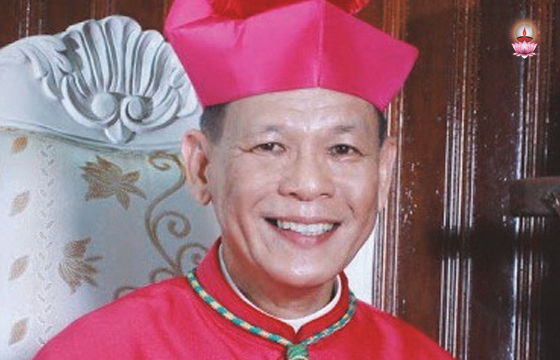
Pope appoints new Archbishop in Manila
Pope Francis on March 25 appointed a new archbishop in Manila Archdiocese, in the Philippine capital. He transferred Cardinal Jose Fuerte Advincula of Capiz to succeed Cardinal Luis Antonio Tagle, who the Pope had appointed Prefect of the Congregation for the Evangelization of Peoples in the Vatican on December 8, 2019. The See of Manila has been vacant for more than 15 months during which Auxiliary Bishop Broderick Pabillo has been serving as Apostolic Administrator.

Nuns accused of conversion, forced to get off train in Jhansi
Two nuns and two trainees travelling along with them on a train were forced to deboard in Uttar Pradesh’s Jhansi railway station and detained briefly for questioning, after ABVP members accused them of illegal conversions.
The four were allowed to resume their journey after an enquiry by railway officials found there was no conversion involved.
The incident happened on March 19. On Wednesday, amid an outrage over the incident, Kerala Chief Minister Pinarayi Vijayan wrote to Union Home Minister Amit Shah that the harassment of the two nuns and two postulants was “shocking.”
Mr. Vijayan demanded that Mr. Shah instruct the authorities concerned to take strict action against “all groups and indi-viduals who disrupt and impair the freedom of individual rights.”
Naeem Khan Mansuri, SP Railway Jhansi, said that the ABVP members were travelling back from a training camp in Rishikesh. The four Christian women were travelling from Nizamuddin in Delhi to Rourkela in Odisha.
Government Railway Police (GRP) Jhansi said that their control room received infor-mation on March 19 that some women were being taken on the Utkal Express train for religious conversion. On the basis of this information, the RPF asked them to deboard, and upon investigation by the GRP it turned out that the allegations were false, GRP Jhansi said on Twitter.
Videos from the day showed police and other unidentified persons questioning the nuns and scanning through their Aadhaar cards while they were seated on their berths. The four then get off the train and could be seen heading towards what appeared to be a police station.
The GRP found that the two girls from Odisha were undergoing training in Delhi. The police found baptism certificates of 2003 in their possession.
“This proved that they were Christian by birth. They were not going to be converted,” said Mr. Mansuri.

Indian bishops’ study reveals grim life of tribal migrant workers
A new study sponsored by Catholic bishops in India has revealed the grim reality for most tribal migrant workers in the capital New Delhi where they suffer from endemic poverty and low wages amid an absence of workplace safety and socio-economic security.
The study, ‘Tribal Migrants in Delhi City: A Pre Covid and Post Covid Analysis,’ a joint venture by the Conference of Catholic Bishops’ of India (CCBI) Commission for Migrants and Workers India Federation, was released earlier this month.
Led by noted researcher Lata Jayaraj, the survey covers the migrants who belong to the tribal communities from neighboring states to Delhi. It analyzes the push and pull factors and the socio-economic compulsions of the migrants in pre-Covid and post-Covid situations.
“The study was an attempt to look into various factors behind migration, the various problems these tribal migrant workers face, and to analyze support system government agencies and NGOs have for them,” said Father Jaison Vadassery, secretary of the CCBI’s Commission for Migrants.
The priest noted that the study recommends a multi-pronged strategy from the government and non-government agencies to assist poor, vulnerable migrant workers effectively to overcome their miserable conditions.
The study used an in-depth analysis covering tribal migrant workers in the construction sector of Delhi. It reached out to 45 respondents, male and female, as samples who provided necessary information through case studies, focus group discussions and participant observations.
About 91% of tribal migrant workers in the construction sector are below 50 years, while only 8.8% are above 50. The sector is largely male-dominant, men accounting for 93.3%. The majority of them are Hindus.
Some 51% of workers migrated from Rajasthan, 16% from West Bengal, and 9% each from Assam, Jharkhand and Madhya Pradesh.
The study found a direct link between their low level of education, poverty, migration and low-paid employment.