
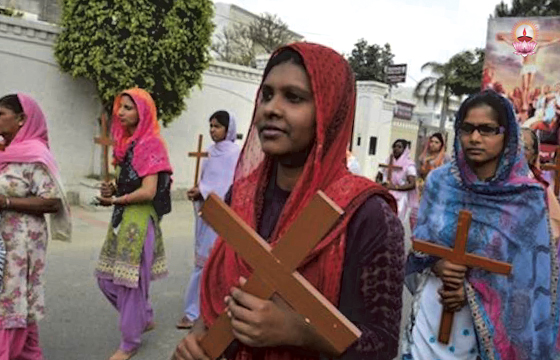
Catholic Church leaders have welcomed India’s top court dis-missing a petition that sought a federal law to check religious conversion and black magic.
The Supreme Court of India on April 9 said persons above 18 years of age are free to choose their religion and dismissed a plea seeking directions to the federal government to enact a nationwide law against religious conversion.
The petition in the form of public interest litigation was filed by Ashwini Upadhyay, a Supreme Court lawyer and a member of the ruling pro-Hindu Bharatiya Janata Party (BJP).
A bench of Justices R.F. Nariman, B.R. Gavai and Hrishikesh Roy disagreed with the demand, directed the petitioner to withdraw it and threatened to impose heavy costs if he persisted with it.
The court directions are “in the right spirit” of the constitution, which guarantees every citizen the right to profess, practice and propagate a religion of choice, said Father Babu Joseph, former spokesperson of the Catholic Bishops’ Conference of India.
“Several states have enacted laws curbing the religious freedom guaranteed by the constitution and it has had an adverse impact on several communities, especially Christians,” he told.
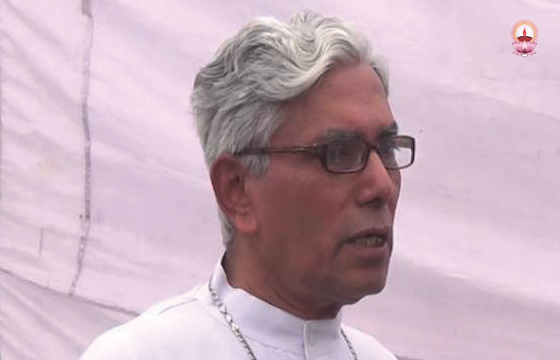
Indian archbishop fasts to spell out Covid-19 danger
A Catholic archbishop joined an Indian state’s chief minister on a special one-day fast to create awareness among people about the need to protect themselves from Covid-19.
“It is our duty and respon-sibility to protect ourselves and others from the danger of Covid-19,” said Archbishop Leo Cornelio of Bhopal.
Madhya Pradesh’s Chief Minister Shivraj Singh Chouhan started a 24-hour fast in state capital Bhopal on April 6 in a specially erected tent.
He said it is time that “we all should take a firm resolution that we will wear masks and en-courage others” to do so to ensure the safety of everyone.
Archbishop Cornelio was among many religious leaders who joined Chouhan on his fast.
“It is high time that we all take the pandemic seriously and prepare to protect ourselves from its impending attack that could be fatal for many and precarious for others,” the prelate told on April 7.
“We need to ensure our safety by following government pro-tocols when we move in public as it is essential to ensure that we do not become a carrier.
“We need to cover our faces and wash our hands regularly as prevention is better than cure.”
Archbishop Cornelio praised Chouhan for his special initiative to reach out to people about Covid-19.
Father Maria Stephen, public relations officer of the Catholic Church in Madhya Pradesh, told that “we are now in a war with Covid-19” and urged everyone to be more serious about their health.
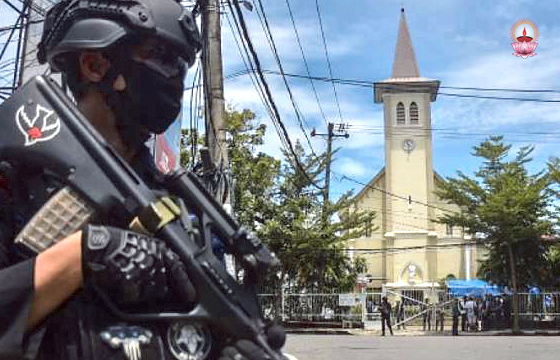
Palm Sunday bombing at cathedral in Indonesia injures Catholics leaving Mass
A suspected suicide bomb attack targeted Catholics leaving a cathedral after Palm Sunday Mass on the Indonesian island of Sulawesi.
The explosion occurred March 28 out-side Sacred Heart of Jesus Cathedral in Makassar, capital of South Sulawesi pro-vince, as church-goers were exiting the cathedral at the start of Holy Week.
Initial reports said that at least 10 worshipers were injured by the blast at the cathedral of the Archdiocese of Makassar.
Fr. Wilhelmus Tulak, who celebrated the Mass, said that the explosion occurred at around 10:30 a.m. local time.
The priest explained that a suspected bomber, who arrived on a motorbike, tried to enter the cathedral but was turned away by security guards. Other reports suggested that there were two perpetrators.
The Associated Press reported that it had obtained a cellular video showing body parts near a burning motorbike at the cathedral gates.
The BBC said that the bombing happened at the cathedral’s side entrance.
It quoted Makassar Mayor Danny Pomanto as saying that there would have been many more casualties if the attacker had struck at the main entrance.
Makassar is the fifth-largest urban center in Indonesia, the world’s most populous Muslim-majority nation.
A family of suicide bombers attacked three churches, including the Church of St. Mary Immaculate, in Surabaya, Indonesia’s second-largest city, in May 2018.
Vatican statistics show continued growth in number of Catholics worldwide
The number of Catholics and permanent deacons in the world has shown steady growth, while the number of religious men and women continued to decrease, according to Vatican statistics.
At the end of 2019, the worldwide Catholic population exceeded 1.34 billion, which continued to be about 17.7% of the world’s population, said an article published March 26 in the Vatican newspaper, L’Osservatore Romano.
It marked an increase of 16 million Catholics — a 1.12% increase compared to 2018 while the world’s population grew by 1.08%.
The article contained a handful of the statistics in the Statistical Yearbook of the Church, which reported worldwide church figures as of Dec. 31, 2019. It also announced the publication of the 2021 Annuario Pontificio, a volume containing information about every Vatican office, as well as every diocese and religious order in the world.
According to the statistical yearbook, the number of Catholics increased in every continent except Europe.
At the end of 2019, 48.1% of the world’s Catholics were living in the Americas, followed by Europe with 21.2%, Africa with 18.7%, about 11 percent in Asia (all figures for Asia exclude China) and 0.8% in Oceania.
The yearbook showed the number of bishops in the world — 5,364 — dipped slightly with 13 fewer bishops than in 2018.
The total number of priests — diocesan and religious order — around the world slightly increased from 414,065 in 2018 to 414,336 in 2019.
The largest increases were seen in Africa and Asia, with a growth of 3.45% and 2.91 percent, respectively, followed by Europe with a 1.5% increase and the Americas with about 0.5% more.
At the end of 2019, 40.6% of the world’s priests were serving in Europe, while 28 percent of priests were in Africa and Asia.
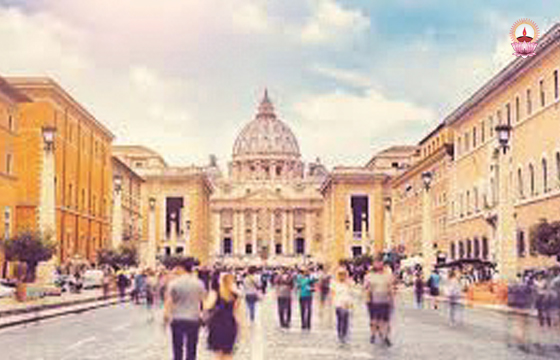
Vatican bars gay union blessing, says God ‘can’t bless sin’
The Vatican decreed March 15 that the Catholic Church won’t bless same-sex unions since God cannot bless sin.
The Vatican’s orthodoxy office, the Congregation for the Doctrine of the Faith, issued a formal response March 15 to a question about whether Catholic clergy have the authority to bless gay unions. The answer, contained in a two-page explanation published in seven languages and approved by Pope Francis, was negative”.
The note distinguished between the church’s welcoming and blessing of gay people, which it upheld, but not their unions. It argued that such unions are not part of God’s plan and that any such sacramental recognition could be confused with marriage.
The note immediately disheartened advocates for LGBT Catholics and threw a wrench in the debate within the German church, which has been at the forefront of opening discussion on hot-button issues such the church’s teaching on homosexuality.
Francis DeBernardo, executive director of New Ways Ministry, which advocates for greater acceptance of gays in the church, predicted the Vatican position will be ignored, including by some Catholic clergy.
Catholic people recognise the holiness of the love between committed same-sex couples and recognize this love as divinely inspired and divinely supported and thus meets the standard to be blessed, he said in a statement.
The Vatican holds that gay people must be treated with dignity and respect, but that gay sex is intrinsically disordered. Catholic teaching holds that marriage, a lifelong union between a man and woman, is part of God’s plan and is intended for the sake of creating new life. Since gay unions aren’t intended to be part of that plan, they can’t be blessed by the church, the document said.
The presence in such relationships of positive elements, which are in themselves to be valued and appreciated, cannot justify these relationships and render them legitimate objects of an ecclesial blessing, since the positive elements exist within the context of a union not ordered to the Creator’s plan, the response said.
God does not and cannot bless sin: He blesses sinful man, so that he may recognize that he is part of his plan of love and allow himself to be changed by him, it said.

Vatican Now in Crisis Management Mode with German Bishops
In January, two Vatican cardinals wanted to summon the president of the German bishops’ conference to Rome and correct him about a media interview in which he expressed his dissent from Church teaching in a number of areas. Such a meeting, which some believe should have been used to give the Vatican’s formal opposition to the Synodal Path, never happened and now the German bishops are blazing ahead unfettered, drawing grave concerns of possible schism.
Jesuit Cardinal Luis Ladaria, prefect of the Congregation for the Doctrine of the Faith, and Cardinal Kurt Koch, the Swiss president of the Pontifical Council for Promoting Christian Unity, were concerned about comments Bishop Georg Bätzing made in a lengthy interview with the German publication Herder Korrespondenz published at the end of December.
In the largely overlooked interview, headlined “I Want Change” and published over the New Year, Bishop Bätzing of Limburg began by describing himself as a “good conservative because I love this Church and gladly give my life and energy to it. But I want it to change.” He then went on to directly challenge the Church’s teaching and tradition regarding women’s ordination to the priesthood, the blessing of same-sex unions, priestly celibacy and Holy Communion for Protestants. Limiting ordination to men seemed to him “less and less convincing,” he said, adding that “there are well-developed theological arguments in favor of opening the sacramental ministry to women as well.”
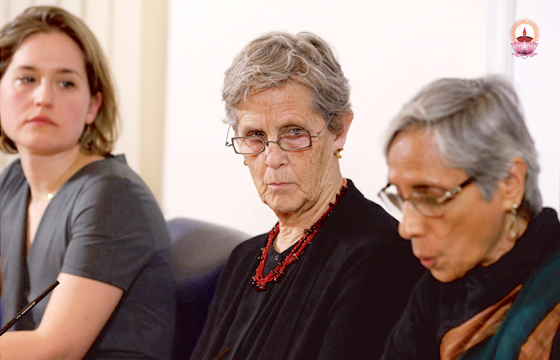
Catholic Church ‘has no future’ without women
Women of faith celebrated International Women’s day with discussions on women’s future in the Catholic Church and by exploring if women have been written out of scripture.
“We are talking about the survival of the Church,” said Joanna Moorhead, The Tablet’s Arts editor, who has written widely on the subject of women in the Church for publications including The Guardian, The Observer and The Times.
She told more than 200 participants in The Tablet’s webinar, Do Women have a future in the Catholic Church? that the issue was no longer a women’s issue but an issue for everyone. The question is – does the Church have a future without women?
“Of course it doesn’t. The church has no future without us,” she stated. She also noted the implications of younger catholic women falling away as the Church needs a membership to survive.
During The Tablet’s webinar, Zuzanna Flisowska-Caridi of Voices of Faith recounted her experience of the German Church’s synodal path of reform.
The process has brought together lay people, religious and bishops to discuss four major topics: the way power is exercised in the Church; sexual morality; the priesthood; and the role of women in ministries and offices in the Church.
Zuzanna Flisowska-Caridi, who is part of the commission working on women’s issues, described her experience in Germany as “quite extra-ordinary.”
She said: “Obviously, the process has its limits. But for me, it’s been a really wonderful experience in which lay people, theologians, male and, and female, religious sisters, are all sitting together at the one table, and they’re really trying not to have this hierarchical view. Everyone has his or her voice.
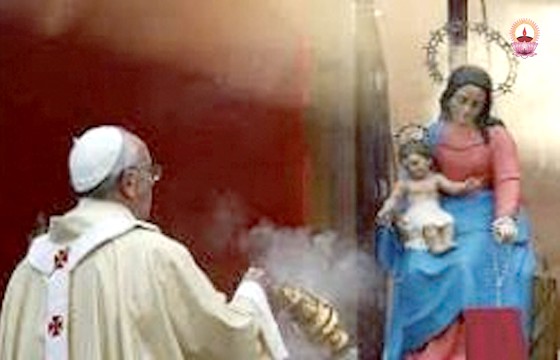
MARY IS NOT A CO-REDEMPTRIX SAYS POPE FRANCIS
“You are truly blessed! The Lord is with you,” Gabriel the Archangel tells Mary, in a greeting traditionally called the Annunciation, which is remembered today, March 25, in many churches that follow a church calendar.
This week Pope Francis has reminded Catholics that Mary is honoured as the mother of Jesus but “not as co-redeemer”.
“Speaking at his general audience on March 24, the Pope said that while Christians had always given Mary beautiful titles, it was important to remember that Christ is the only redeemer,” the Catholic News Agency reported.
“He was addressing a theological debate about whether the Church should issue a dogmatic definition declaring Mary ‘Co-Redemptrix,’ in honour of her role in humanity’s salvation.”
Pope Francis has previously called that idea ”foolishness.”
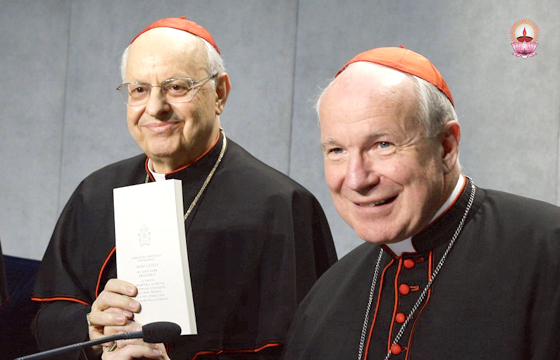
Cardinal Schönborn: Same-sex blessings “will not be denied”
A senior Churchman in Vienna and member of the Vatican’s doctrinal watchdog, Cardinal Christoph Schönborn, says he is “not happy with this statement from the Congregation of the Doctrine of the Faith” – the watchdog’s official name – regarding the Church’s power to bless same-sex unions.
The Church has no such power, the CDF said on Monday of last week – and explained why in a detailed letter that secular media outlets and Catholic punditry have frequently either cherry-picked or largely ignored.
Cardinal Schönborn, Abp of Vienna, distinguished blessings given to persons from those given to couples or their unions, saying that the Church – like a mother – can and should bless persons who seek her blessing whenever possible.
“The Church, as is traditionally said, is Mater et Magistra, mother and teacher,” Cardinal Schönborn offered. “She has to teach, but she is a mother first,” he added, “and many people living and feeling same-sex [attraction] are particularly sensitive to this question: ‘Is the Church a mother to us?’ And they remain children of God,” he went on to say. “They, too, want to see the Church as a mother – and that is why this declaration hit many so parti-cularly painfully: because they feel that they are being rejected by the Church.”
The distinction of individual blessings from those given to unions, however, was one the CDF letter explanatory was also at some pains to make.

Iranian Convert Couple Face Prison Summons
An Iranian Christian convert couple faces summons for their prison sentences any day. Homayoun Zhaveh, age 62, and his wife Sara Ahmadi, age 42, were sentenced in November 2020 as members of a house church on national security charges.
Homayoun, who also suffers from advanced stages of Parkinson’s disease, was sentenced to two years, while Sara was originally given 11 years. In December 2020, their appeals reduced Sara’s prison sentence to eight years. All other aspects of their sentencing were upheld including bans on foreign travel and membership of social or political groups.
Intelligence agents originally arrested the couple along in June 2019 while they were on vacation with a few friends. Agents questioned everyone, but only Homayoun and Sara were detained. They released Homayoun after one month, while Sara spent 67 days in prison, 33 of those in solitary confinement, and faced intense psychological torture.
On March 14, the couple was notified that the enforcing agents would soon summon them to serve their prison time. With their appeal process completed, the couple waits anxiously and nervously for their summons.