
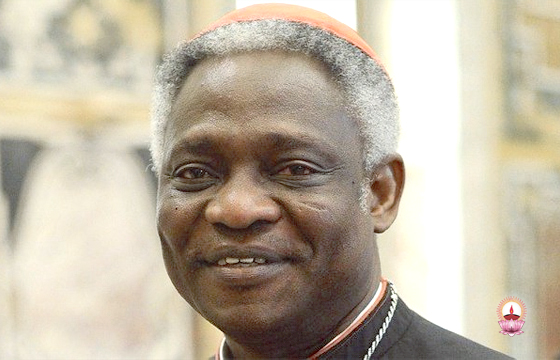
Several food rights activists in India have applauded a Vatican official’s call to rebuild the world’s food systems to make it more resilient, inclusive and sustainable.
“We have the potential to embark on this journey together, taking this unique Covid crisis as a unique opportunity,” asserted Cardinal Peter Turkson, prefect of the Dicastery for Promoting Integral Human Development.
The Ghanian cardinal spoke at the second of a three-part webinar the Vatican organized by the Vatican on May 26 ahead of a high level UN Food Systems Pre-Summit gathering in Rome in July.
The webinar held under the title, “Food Justice: Jobs, innovation, and finance at the service of food justice.”
“Thanks to Cardinal Turkson for re-iterating Jesus’s vision for an equalitarian society,” says Jesuit Father Irudhaya Jothi, a food rights activist in India’s West Bengal state.
Biraj Patnaik, the former principal advisor to the Supreme Court in the right to food case, welcomed the cardinal asserting the right to food as an inalienable right.
“Indeed, Cardinal Turkson is very interested in these issues and is the points person of the Pope on the right to food,” Patnaik told Matters India.
According to him, the UN is running a major food systems summit and the Vatican does comment on the right to food on such occasions.
“The UN food systems summit is at an opportune moment as the world needs a fundamental reset post-pandemic. Covid 19 has shown us that the world cannot sustain itself at the current levels of inequality,” he added.
Cardinal Turkson had stressed the urgent need to re-imagine and re-build food systems, so they “may become more resilient, inclusive and sustainable.” This is not an “impossible enterprise,” he added.
According to him, “the lack of food is inextricably linked with other social struggles, aggravated by the pandemic.”

Ecumenical center launches Hindu-Christian dialogue series
A weekly program on Hindu-Christian dialogue started by the Bengaluru-based Ecumenical Christian Centre (ECC) has been drawing scores people from across India.
The 25-episode lecture series is titled “Hindu Christian Dialogue for Fellowship: Sages and Saints for Self-Realization and Social Transformation.”
It is meant to understand the saints and sages who laboured for social transfor-mation and advancement of the downtrodden, says ECC director Father Mathew Chandrankunnel. It also aims to help people appreciate the common elements in Hinduism and Christianity and the great masters in both traditions who worked for harmony, peace and progress, the Carmelites of Mary Immaculate priest explained.
Other organizers are the Ramakrishna Mission, Office of the Dialogue of the Catholic Bishops’ Conference of India and Focolare Movement.
The program that began on May 7 will be conducted 6 pm to 7:30 pm on Thursdays. Almost 100 people have attend-ed the program so far. Around 60 of them are registered members as the program is a certificate course on interfaith dialogue.
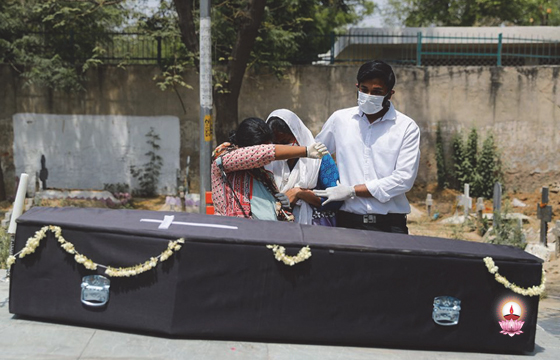
‘Everywhere, there is pain’: Indian sisters on life in the COVID-19 hotspot
Global Sisters Report invited its sister columnists in India to share their experiences of how the terrible outbreak of COVID-19 has affected their country in the last few months. Six sisters wrote special columns, compiled below, describing their experiences and what it is like on the ground as health workers, as tribal citizens, as compassionate caregivers and as victims of the virus themselves.
Almost all calls and messages shock us with news of death, calls of requests and help, with crying and sobbing. We are tired of responding, “Rest in peace,” and exhorting friends to stay home, stay safe, take care, prayers assured! Everywhere, there is breathlessness, helplessness, mourning, sinking hopes and prevailing despair.
People are being treated by the roadsides, in parks and makeshift hospitals with saline bottles hanging on the trunks and branches of trees. The scarcity of medical facilities is scandalous to us; in this tug of war between life and death, death seems to be stronger, swallowing lives. I was stunned to see on the TV news a woman giving oxygen to her infected husband, mouth to mouth. Ultimately, he died in a car outside the hospital from lack of a ventilator and hospital bed.
. Five priests died in the state of Gujarat in 15 hours. Two sisters of the same congregation, both on the leadership team, died of COVID-19 in two days in the same hospital. I was broken because I had worked with both of them.
One of our kitchen staff lost her husband and daughter on the same day. A parishioner died the day before her daughter. A wife died, but the husband in the ICU does not know it.
As a tribal woman religious, I am saddened that we have lost many young tribal scholars and intellectuals in the pandemic, mainly from Jharkhand, Madhya Pradesh, Chhattisgarh, Gujarat and Odisha.
I managed to talk to the members of a family affected by COVID-19 in my village in Jharkhand. They said: “Sister, we can’t afford to go to hospital as we are poor. We will die of this virus at our home itself. For us, no medicines are available at an affordable price. We don’t have single rooms in our homes to be quarantined.”
It is in this context that I, as a Catholic and religious, am pondering how to revive hope in people who trust in the divine power and existence of God and how to help people to deepen their faith in the Lord.
How and where to get courage and strength? Sometimes, like Jesus’ apostles, I ask: “Where are you, Lord? Why have you forsaken the world and me? Lord, come to save our world and family. ‘Lord, save us. We are perishing’ “ (Matthew 8:25).
But maybe those are the wrong questions. Now, I am asking, “Lord, how are you present to us amid this pandemic reality?” In my spiritual attempt to protect my world from COVID-19, I find that Psalm 91 is helpful in giving me faith.
I have seen people helping enemies; oxygen cylinders being distributed thanks to generous help from several different countries; those who are well praying for the sick. Many families who did not pray are now on their knees, praying with great trust and faith; many are finding solace in online Masses, the divine mercy rosary, and adoration. I composed a Hindi hymn for the intercession of Mother Mary Bernadette, our founder, who served during the cholera epidemic of 1895.
Let us “be positive but test negative.”
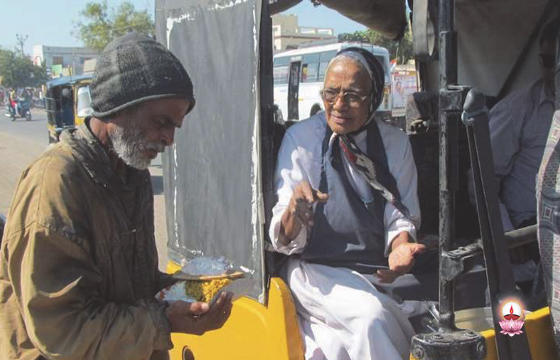
Elderly Indian nun defies pandemic to feed street poor
At the age of 83, Sister Elsie Vadakkekara never miss-es her appointment with the poor on the streets, not even during a pandemic lockdown.
Summer, winter or in pouring monsoon rains, the Catholic nun is on the streets at midday every day to dis-tribute food to mentally ill people living rough in her neighborhood in western India’s Gujarat state.
Sister Elsie is a member of the Sisters of St Ann of Providence congregation based in Mithapur in Rajkot Diocese. She has defied the pandemic’s threat to her life to feed these abandoned people, a passion she has continued for a decade.
“I cannot sit in the comfort of my convent when my people are left fending for themselves, especially during this pandemic lockdown,” Sister Elsie told UCA News.
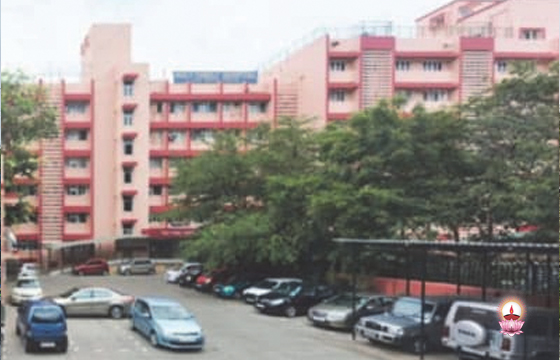
Father Swamy admitted in Catholic hospital on court orders
Jesuit tribal activist Father Stan Swamy was on May 28 admitted to a Catholic hospital in Mumbai following the Bombay High Court intervention.
Father Swamy arrived at Holy Family Hospital in Bandra, a Mumbai suburb, at 9:45 pm, according to Jesuit Father Arockiasamy Santhanam, spokesperson for the National Lawyers Forum of Religious and Priests, who is monitoring his senior confrere’s case.
“We are happy that the court has understood rightly the health condition, health emergency and the dire need for urgent medical treatments for Stan and granted the relief,” Father Santhanam told Matters India.
According to him, initial investigations at hospital showed Covid symptoms. “Stan is shifted to Covid ICU. He is on oxygen,” he added.
According to him, Father Frazer Mascar-enhas, the former principal of Mumbai’s St Xavier’s college and the visitor permitted by the court, met Father Swamy in the hospital.
In earlier video conference with judges, Father Swamy refused hospitalization and pleaded for interim bail to go to Ranchi, in eastern India, to be with his people.
However, as his health condition deteriorated Father Swamy obliged to the suggestion of hospitalization after his lawyer, with the court permission, interacted with him through the counsel call facility. “He is unable to stand, walk and eat without helpers,” Father Santhanam said.
Earlier in the day, the court directed Maharashtra government to transfer the 84-year-old priest, accused in the Bhima Koregaon caste violence case, to the Holy Family Hospital from Taloja Central Jail and treat him.
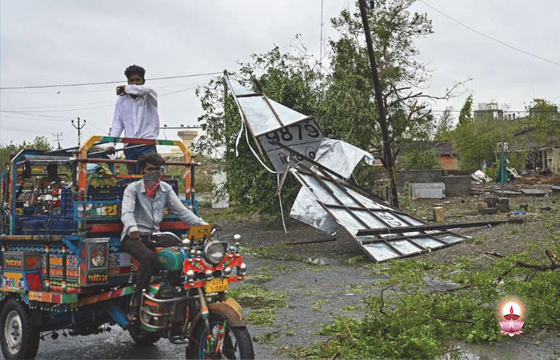
Church workers rally to help victims of Indian cyclone
Church workers are struggling to organize food and drinking water for thousands of people a week after Cyclone Tauktae ravaged the coast of western India. What we need urgently is food and water,” said Father Thomas Mathew, director of social work in Rajkot Diocese.
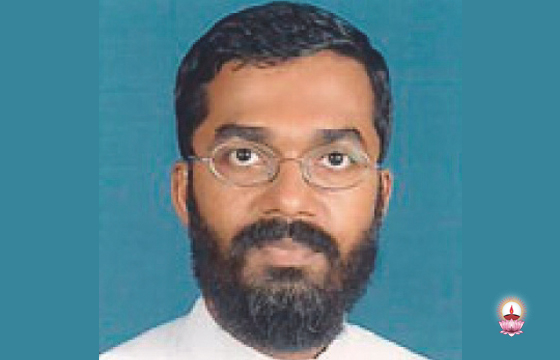
Indian appointed bishop in Papua New Guinea
Pope Francis on May 13 appointed a missionary priest from India as the bishop of Aitape, a diocese in Papua New Guinea, a country in Oceania.
Bishop-elect Siby Mathew Peedikayil is a member of the Heralds of Good News, an India-based congregation. The 50-year-old priest is the current vicar general of the diocese of Vanimo. He was born on December 6, 1970, to Mathew Varkey and Annakutty Peedikayil, a Catholic family in Meloram near Peruvanthanam in the Idukki district of Kerala. He was ordained priest on February 1, 1995.
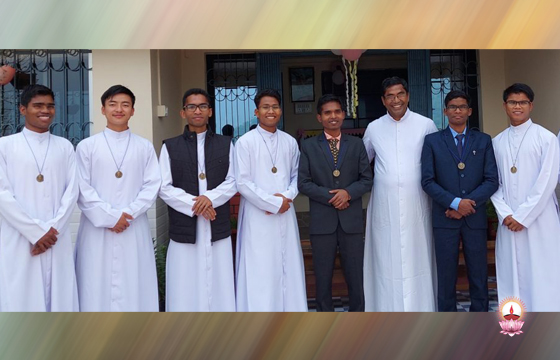
120 young men take vows to be Salesians in South Asia
In spite of the pandemic times disrupting regular novitiate schedules, in the nine novitiates of South Asia region, this year has more novices making their first profession than last year. Starting from traditional 24th May date for the first professions, this year there are 120 young men making their first profession on varied dates of 24th May, 31st May, 30th June, 15th August and 8th September.
Last year in South Asia region only 93 novices made their first profession as Salesians of Don Bosco.
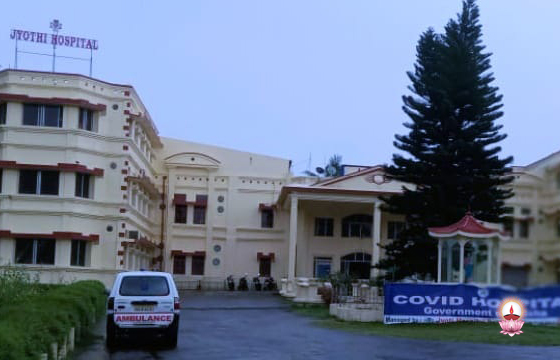
Church converts hospital into Covid-care centre
The diocese of Balasore in Odisha has converted its 100-bed hospital into a centre for Covid care. The Church gesture was in response to a request from the District Magistrate, says Fr Paul Koonamparampath, the director of Jyoti Hospital in Balasore. Accord-ing to the priest, Odisha has seen a rapid increase in Covid-19 cases and the infection rate in Balasore was 27%.
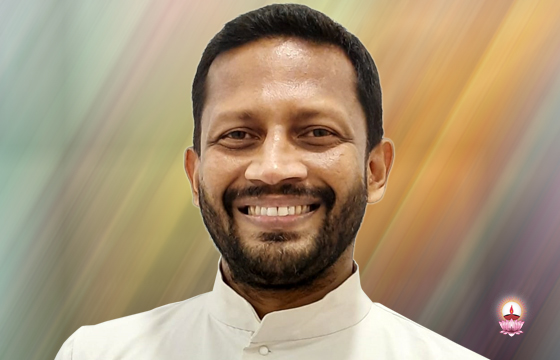
Catholic press body mourns death of priest-editor
The Indian Catholic Press Association (ICPA) on May 27 mourned the passing away of Father Cheriyan Nereveetil, former chief editor of Sathyadeepam (Light of Truth), an Institutional member of the organization. The 49-year-old priest died on May 27 from head injuries sustained in a road accident two weeks ago.
A condolence message from ICPA president Ignatius Gonsalves saluted Father Nereveetil for setting high standards in media while giving an edifying witness as a media person and a pastor.