
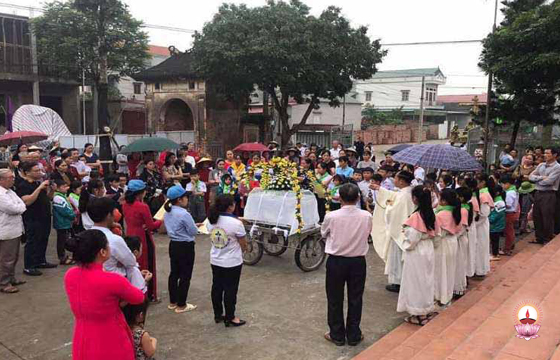
A group of Vietnamese women whose husbands died or work far from home devote themselves to burying the fetuses of babies resulting from abortions or miscarriages.
The women, from Nam Vien Parish in Tien Du district neighbouring the northern city of Bac Ninh, provide a service that other married women who are busy looking after their husbands and children could not be involved in.
At night they have to work at full stretch. They will immediately travel 100 kilometrs from home to visit pregnant women in spite of chilly or rainy weather when they receive calls from people in need. They do not miss any call even when they are tired from their own work.
In the dead of night, a female doctor from a local hospital phoned Mary Pham Thi Hoai, one of the members, asking her group to help a young mother who gave premature birth to a baby who died after being placed in an incubator for 10 days. The baby’s father, with a low weak voice, also appealed to the group to bury his newborn baby.
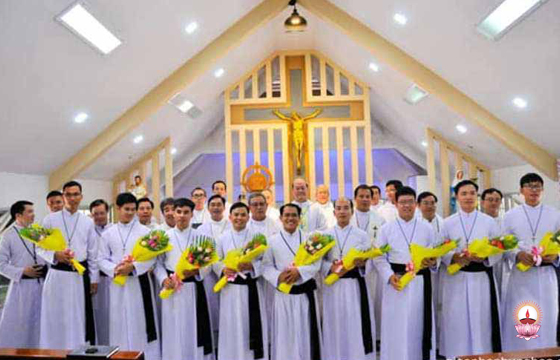
Hmong village boy takes first vows as Oblate religious
At the chapel of Mai Thien Loc Theologate of the Oblates of Mary of Immaculate Conception (OMI), the superior of the Vietnam Mission received the vows of eight novices, including Brother Joseph Tinh A Senh, a son of Dien Bien Parish in Hung Hoa Diocese.
He belongs to the Hmong ethnic group. This is good news not only for the newly professed brother, his family and the OMI congregation but is also an indescribable joy for members of the Hmong community.
Brother Senh was born on June 10, 1996, in Dien Bien, the seventh child of 10 children. His family are poor like many other families in the area. Poverty is rife, from one corn season to another. Nothing has changed. The local people have a joke: just the piglet and buffalo grow up, but we grow old and then die.
After graduating from the village school, he intended to go to the fields like many other boys. But Father Peter Pham Thanh Binh, parish priest of Sapa, saw that this boy was smart and virtuous, so he invited him to live and study at Sapa boarding house. He agreed to live there with his friends to study. There are very few who hear the voice of God and respond.
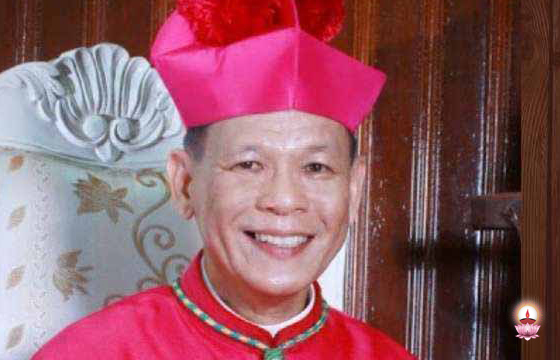
Philippine Church issues warning over fake social media
Manila Archdiocese has issued a notice warning Catholics not to be fooled by fake social media accounts purportedly owned by the Philippine capital’s recently appointed archbishop, saying he has no social media account on any platform.
People have reported several accounts on Facebook using the name and photos of Cardinal Jose Advincula. One Facebook page has gathered hundreds of thou-sands of likes from Catholics in the Philippines and abroad. It also posts the cardinal’s homilies and speeches as well as providing information on his public engagements.
The Archdiocese of Manila and the Archdiocese of Capiz have not yet created a Facebook page or social media account under Cardinal Advincula’s name, the archdiocese’s chancellor Father Reginald Malicdem said in the May 24 notice.
The cardinal was archbishop of Capiz in the central Philippines before being appointed Manila’s archbishop.
In April, Cardinal Advincula himself warned against fake solicitation letters being circulated online using his name to ask for donations for his installation.
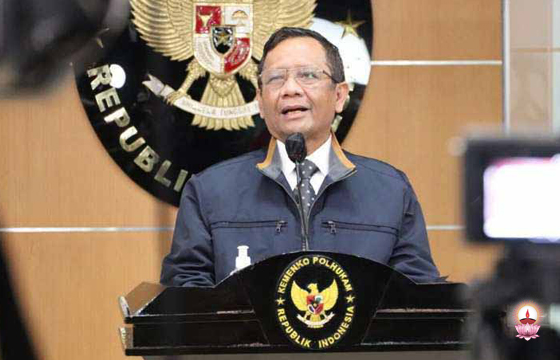
Christian leaders offer to mediate Papua peace talks
Churches in Papua have offered to mediate talks between the Indonesian government and separatist groups in a bid to ease tensions in the restive region.
The offer comes amid an escalation in violence in Papua that has seen hundreds of troops deployed and many people dis-placed in a crackdown following the government’s decision on April 29 to declare pro-separatists as terrorists. This followed the death a week earlier of an Indonesian intelligence chief in a shootout with members of the rebel West Papua National Liberation Army.
Church leaders conveyed their concern over the deteriorating situation during a meeting with Coordinating Political, Legal and Security Affairs Mini-ster Mahfud MD in Jakarta on May 25.
The leaders included Sacred Heart Abp Petrus Mandagi of Merauke in Papua, Indonesian bishops’ conference president Cardinal Ignatius Suharyo of Jakarta, and Reverend Ronny Mandang, chairman of the Fellowship of Indonesian Evangelical Churches and Institutions.
During the meeting, they offered to act as a mediator in peace talks.
“Many church and ordinary people in Papua are praying the government will hold talks to end the violence immediately,” Reverend Mandang said.
Dialogue must involve all elements to end the conflict
Mahfud responded by saying he was open to Christian leaders acting as mediators.
“If there are parties wanting to become mediators and they are welcomed by various groups in Papua, then we will facilitate that,” he said.
“We ask for dialogue and will exchange ideas with anyone including church leaders who can help forge peace and security for the Papuan people.”
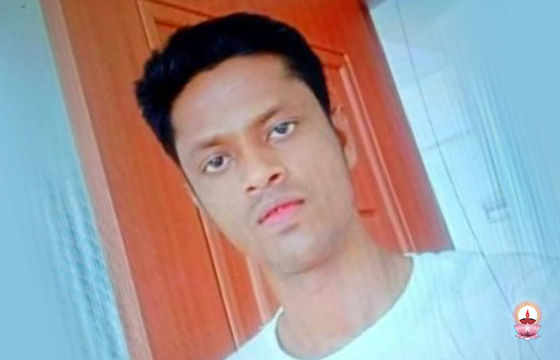
Myanmar’s Junta soldiers are ‘terrorists’
More and more people on social media are describing the military junta responsible for the coup d’état and its soldiers as “terrorists.” The label is not only used to counter the military regime’s use of the “terrorist” label against its opposition, but reflects a broadly held view in the population that the military is reverting back to its cruel old methods, typical of the dictatorship that ruled before the recent short-lived period of democratic government. Increasingly, soldiers walk through markets taking food without paying, stealing valuables from the homes of suspected activists they search, beating defenceless civilians to a pulp, not to mention abducting people of all ages who go missing without leaving a trace.

Indian court favours nun’s petition to ban offensive movie
Delhi High Court has directed the federal Information and Broadcasting Ministry to expeditiously consider a Catholic nun’s demand to ban a movie accused of portraying priests and nuns as “sex maniacs”.
The direction from the state court of the national capital came on May 17 while it was hearing a petition from Sister Jessy Mani, a member of the indigenous Sacred Heart Congregation.
The nun petitioned the court seeking to ban Aquarium, a movie made in the Malayalam language of southern India’s Kerala state.
The movie was due to be released on May 14 through online platforms. However, Kerala High Court stayed its release on May 12 for two weeks, accepting a petition by two nuns to ban it permanently because of highly offensive content.
Sister Mani expects the Central Board of Film Certification, which functions under the Information and Broadcasting Ministry, “will understand our concerns and take appropriate action.”
The nun’s petition said the movie depicted nuns and priests having same-sex and heterosexual relationships besides having sex with animals. “It painted a very vulgar picture about Catholic priests and nuns,” she told.
Lawyer Jose Abraham, who represented Sister Mani in court, said the nun “can go back to the High Court again in case the federal government fails to address the concerns raised about the movie.”
The Kerala Church has been fighting the movie’s release since 2013, said Father Jacob Palackappilly, deputy secretary general of the regional bishops’ council.
In 2013, the certification board blocked the movie’s release because of its vulgar and blasphemous content, he said.
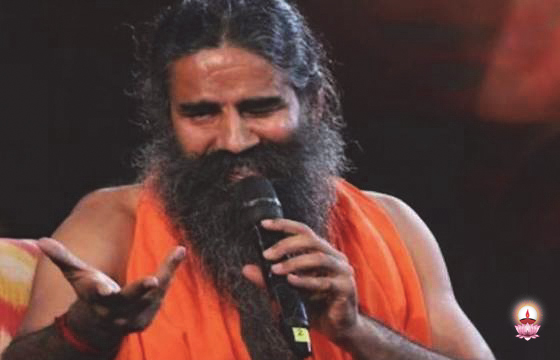
Indian guru’s aide accuses medical chief of Christian conspiracy
A day after the Indian Medical Association (IMA) took yoga guru Baba Ramdev to task for remarks criticizing allopathy, his aide Acharya Balkrishna claimed that IMA president Johnrose Jayalal was conspiring to convert the country to Christianity.
Last week Ramdev in a video clip had said that allopathy — the treatment of disease by drugs or surgery — is a “stupid science” and over 10,000 doctors have died even after taking both doses of Covid-19 vaccine.
“As part of the conspiracy to convert the entire country to Christianity, yoga and Ayurveda [alternative medicine] are being maligned by targeting Ramdev,” Balkrishna tweeted on May 25.
“Countrymen, wake up now from the deep slumber, otherwise the generations to come will not forgive you.”
However, Father Julius Arackal, secretary of the Indian Catholic Bishops’ Conference’s office of health, told that the “Indian government vaccine is a scientifically proven fact.”
He added: “The country is going through very difficult times and struggling to cope with the second wave of Covid-19, so we should promote unity and appreciate all good gestures.” IMA president Jayalal is a Christian and comes from the southern state of Tamil Nadu.
“How can Balkrishna claim that the IMA is trying to convert people in the name of vaccination just because the IMA’s president is from one particular group and from one particular state?” Father Arackal asked.
“Our priorities should be to save lives instead of creating differences between caste and creed.”
Father Arackal ponited out that even last July, long before vaccines reached final trials, Ramdev’s Patanjali Ayurved drug company claimed Coronil could provide strong protection against the coronavirus.

India’s top court demands help for migrant workers
India’s Supreme Court has intervened for the third time in a year after it learned of the plight of migrant workers during the second wave of the Covid-19 pandemic.
The apex court said on May 24 that its main concern is that benefits and schemes meant for migrant workers must reach them.
The court also said it was concerned about the slow process of registration and asked the federal and state governments to expedite it for migrants and those working in unorganized sectors.
“The intervention from the Supreme Court was much needed because the federal and state governments have failed miserably to handle the case of migrants who are left to cope with hunger, diseases and struggling to go back home to their respective states,” Father Jaison Vadassery, secretary to the Catholic Bishops’ Conference of India’s Commission for Migrants, told UCA News.
The federal government had not learned from its mistakes last year when migrant workers were left in the lurch, resulting in hundreds of casualties, he said.
India should take the lead from other countries who have declared pandemic deaths as accidents so that insurance companies can provide compensation, he added According to the 2011 census, internal migrants account for 37 percent of India’s population
Land dispute hits Christian cemetery in northern India
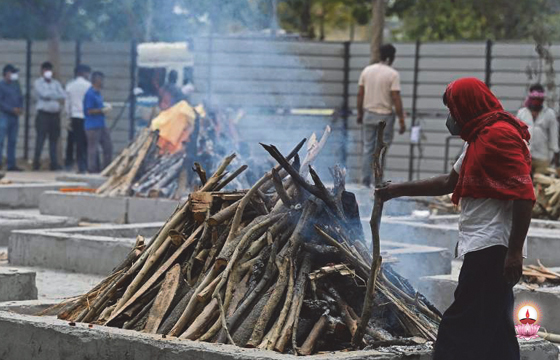
A land dispute in Ghaziabad district of India’s Uttar Pradesh state is preventing the Christian community from using a cemetery as the country reels from the Covid-19 pandemic.
“Even today, two of our members died of Covid-19 and we are running from pillar to post of the administration office to perform the last rites. If we cannot use the cemetery, we will take them to the neighbouring state of Delhi,” Maneswar Das, a pastor of the Eternal Life Fellowship Society, told UCA News on May 17.
“We have been using the cemetery from 1988 and there was no such problem before, but two persons claimed their share of this land in 2014. Once the case came to our knowledge, we informed the local municipal corporation who asked us to approach the court. The municipal corporation passed a pro-posal in 2018 to give land for the construction of a cemetery for the Christian community.”
However, the contract letter was not given on behalf of the municipal corporation.
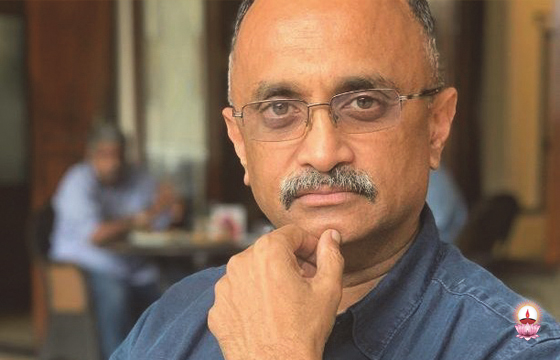
St John’s guides Odisha diocese on Covid-19
St John’s National Academy of Health Sciences, a prestigious Church institution in Bengaluru, has begun guiding a diocese in Odisha in Covid protocol behaviour.
“My diocese is grateful to St John’s Medical College helping us to deal with the present crisis due to the coronavirus pandemic,” Bishop Niranjan Sualsingh of Sambalpur told Matters India May 25.
As part of the project, the academy on May 24 organized a two-hour webinar for priests, nuns, Brothers, and lay people on how to follow daily pandemic protocol behaviors.
Around 45 people attended the first virtual conference on professional medical guidance on Covid-19 conducted by Doctor Bobby Joseph, head of the Department of Community Health at St John’s Medical College, Bengaluru.
Doctor Joseph explained how the virus spread and suggested ways to identify its symptoms. He also dealt with steps needed for maintaining mental health among the affected and their families and how to care and protect children from the virus. He also stressed precautionary measures to avoid infection and home isolation for the infected, the urgency of treatment and post vaccination care.
Doctor Joseph said he would guide the Church people in Sambalpur through WhatsApp, telephone and email. “Those with symptoms of Covid virus can seek my advice,” he added.