
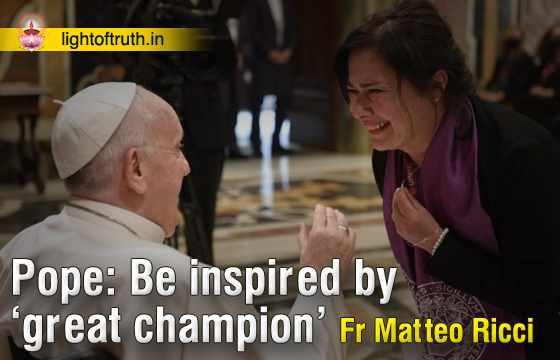
All academic institutions should feel inspired to follow in the footsteps of Father Matteo Ricci, S.J., who was always ready to engage and educate.
Pope Francis gave this encouragement to University of Macerata students and faculty on May 8 in the Vatican.
The public university located in Italy’s Marche region on the Adriatic Coast was founded in 1290, making it one of the oldest European universities still operating.
The Holy Father recalled that the great Jesuit missionary, Father Matteo Ricci, who brought Catholicism to China, was born in Macerata in 1552 and died in Peking in 1610. After the initial efforts of St. Francis Xavier, S.J., thirty years later, Ricci and others succeeded in advancing the missions of the Jesuits in China. The Jesuit Pope encouraged those before him to recall Ricci as an example, and learn from his ability to dialogue with and educate others.
Macerata, the Pope said, gave birth to Father Matteo Ricci a great “champion” of the “culture of dialogue.”
Ricci, the Pope said, “is great,” not only for that which he has done or written but, that in being “a man of encounters, who went beyond being a foreigner and became a citizen of the world.”
“Certainly the university is a privileged place for this encounter. Macerata was the birthplace of this great champion.”
“I congratulate you for not only preserving his memory and promoting studies on him, but also trying to update his example of intercultural dialogue. What a need there is today, at all levels, to resolutely pursue this path, the path of dialogue!”
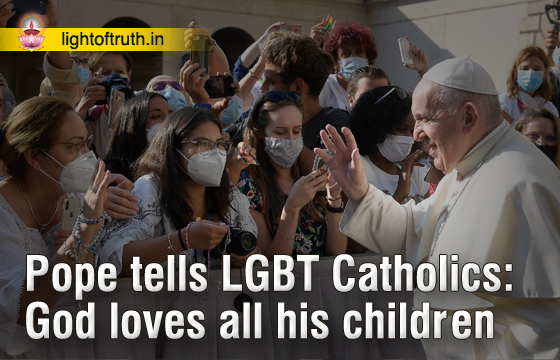
Pope tells LGBT Catholics: God loves all his children
Westminster LGBT+ Catholics have welcomed comments by Pope Francis, published this week by Fr James Martin SJ on his website Outreach. Fr James’ pastoral ministry includes the LGBT community, and he recently sent three questions to the Holy Father, which he said are most commonly asked by LGBT Catholics and their families.
Fr James asked firstly: “What would you say is the most important thing for LGBT people to know about God?”
The Pope answered: “God is Father and he does not disown any of his children. And the ‘style’ of God is ‘closeness, mercy and tenderness.’ Along this path you will find God.”
The next question was: “What would you like LGBT people to know about the Church?
Pope Francis said: “I would like for them to read the book of the Acts of the Apostles. There they will find the image of the living Church.”
Finally Fr James asked: “What do you say to an LGBT Catholic who has experienced rejection from the Church?”
Pope Francis responded: “I would have them recognize it not as “the rejection of the church,” but instead of “people in the church.” The church is a mother and calls together all her children. Take for example the parable of those invited to the feast: “the just, the sinners, the rich and the poor, etc.” (Mathew 22:1-15; Luke 14:15-24). A “selective” church, one of “pure blood,” is not Holy Mother Church, but rather a sect.”
Ruby Almeida, Chair of the Westminster LGBT+ Catholics told ICN: “We, the Westminster LGBT+ Catholics group, are always delighted when Pope Francis speaks about our community with such compassion and understanding about the many sins of rejection and hurt that have been committed against us.
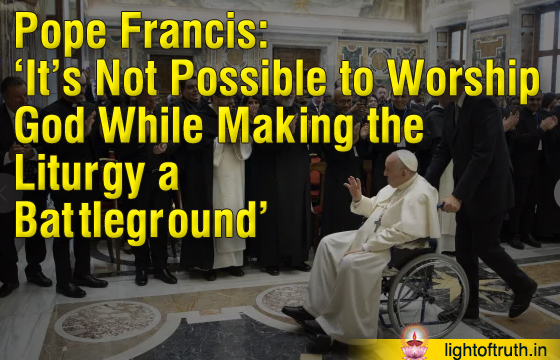
Pope Francis: ‘It’s Not Possible to Worship God While Making the Liturgy a Battleground’
‘I emphasize again that the liturgical life, and the study of it, should lead to greater Church unity, not division. When the liturgical life is a bit like a banner of division, there is the stench of the devil in there, the deceiver,’ the Holy Father said April 7.
Pope Francis said Saturday that the liturgy should not be “a battleground” for “outdated issues.”
“I emphasize again that the liturgical life, and the study of it, should lead to greater Church unity, not division. When the liturgical life is a bit like a banner of division, there is the stench of the devil in there, the deceiver,” Pope Francis said at the Vatican on April 7.
“It’s not possible to worship God while making the liturgy a battleground for issues that are not essential, indeed, outdated issues, and to take sides, starting with the liturgy, with ideologies that divide the Church.”
Speaking at an audience with the Pontifical Liturgical Institute in the apostolic palace, the Pope said that he believes that “every reform creates resistance.”
Pope Francis recalled reforms made when he was a child by Pope Pius XII, particularly when Pius XII reduced the fasting require-ment before receiving Holy Communion and reintroduced the Easter vigil.
“All of these things scandalized closed-minded people. It happens also today,” he said.
“Indeed, such closed-minded people use liturgical frameworks to defend their views. Using the liturgy: This is the drama we are experiencing in ecclesial groups that are distancing themselves from the Church, questioning the Council, the authority of the bishops … in order to preserve tradition. And the liturgy is used for that.”
Pope Francis spoke to the Pontifical Liturgical Institute, an institute in Rome whose school of liturgy has had increasing influence in liturgical norms coming from the Vatican.
The secretary and undersecretary of the Vatican’s Congregation for Divine Worship were both formed by the institute, which was established in 1961 by Pope St. John XXIII as part of the Pontificio Ateneo Sant’Anselmo.
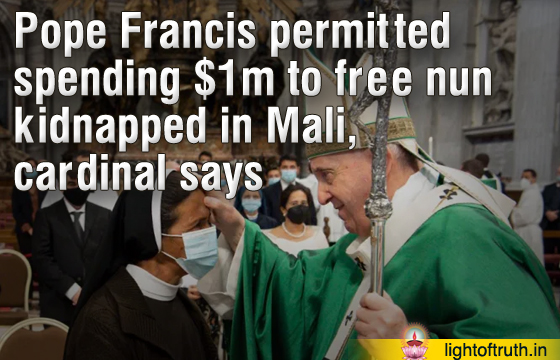
Pope Francis permitted spending $1m to free nun kidnapped in Mali, cardinal says
At the Vatican’s finance trial on May 5, Cardinal Angelo Becciu said that Pope Francis had allowed spending up to 1 million euros ($1.05 million) toward the liberation of a missionary abducted in Mali.
Sister Gloria Cecilia Narváez Argoti was kidnapped in Feb. 2017 and held until her Oct. 9, 2021 release.
Cardinal Becciu, who was the second-raking official in the Secretariat of State from 2011 to 2018, was questioned May 5 about investments during a hearing in the Vatican trial. The cardinal has been charged with embezzlement, abuse of office, and witness tampering.
In his testimony he discussed his dealings with Cecilia Marogna, a self-described “security consultant” accused of misappropriating Secretariat of State funds.
The 40-year-old from Sardinia is also a defendant in the trial. She has been charged with embezzlement for allegedly receiving hundreds of thousands of euros from the Secretariat in connection with Becciu, and then reportedly spending the money earmarked for charity on luxury goods and vacations — which she denies.
Cardinal Becciu said that he sought Marogna’s help to secure Sister Gloria’s release.
The AP’s Nicole Winfield wrote that the cardinal said Marogna “advised him that she could work with a British intelligence firm, The Inkerman Group, to secure the nun’s release.”
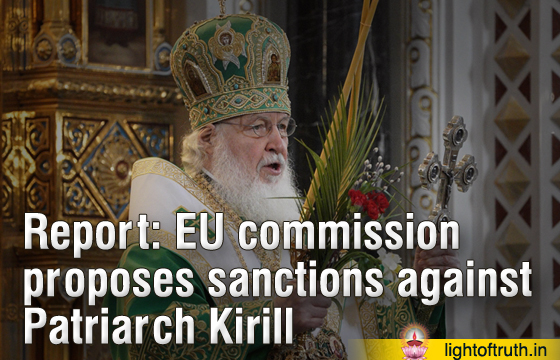
Report: EU commission proposes sanctions against Patriarch Kirill
The European Commission has reportedly proposed sanctions against the head of the Russian Orthodox Church.
Patriarch Kirill of Moscow and All Russia is among 58 figures earmarked for sanctions related to the Russia-Ukraine war, Agence France-Presse reported on May 4.
The news agency said it had seen a document describing the patriarch as “a long-time ally of President Vladimir Putin, who has become one of the main supporters of the Russian military aggression against Ukraine.”
The European Commission is the executive branch of the European Union, a political and economic union of 27 member states. The EU has imposed sanctions against more than 1,000 individuals in connection with the Ukraine war, consisting of asset freezes and travel restrictions. Sanctions against the 58 new figures would require EU member states’ approval.
A spokesman for the Russian Orthodox Church dismissed reports last month that Patriarch Kirill could face sanctions.
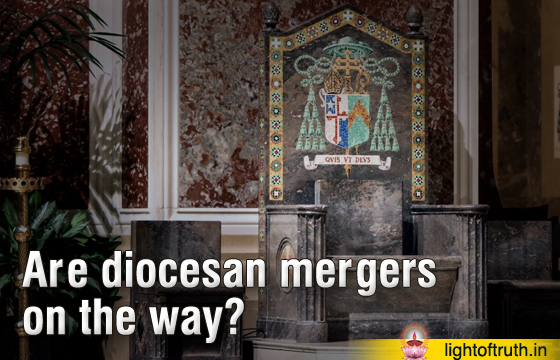
Are diocesan mergers on the way?
The Holy See announced on April 27 that Pope Francis has accepted the resignation of Archbishop George Stack of Cardiff, Wales, appointing Bishop Mark O’Toole of the Diocese of Plymouth, England, to succeed him. At the same time, O’Toole has also been named the Bp of Menevia, the neighbouring Welsh diocese, which has had no bishop since 2019. The pope united the sees in persona episcopi, unifying them in the person of the bishop who oversees them both, even while they remain juridically separate. While the move is historically unusual, it has become increasingly common under Pope Francis, and could signal the eventual merger of dioceses in countries across the West, including the United States, in the face of declining numbers of clergy and Mass-going Catholics.
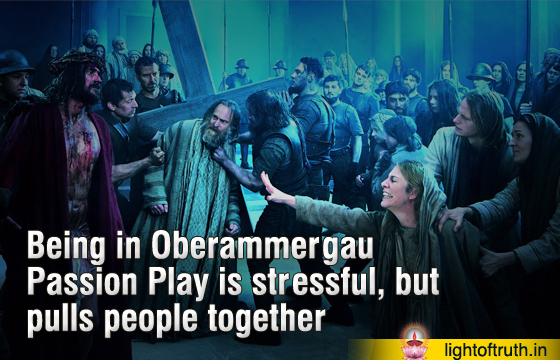
Being in Oberammergau Passion Play is stressful, but pulls people together
Next time, Jesus would like to be a villain. That is a role one of the two actors portraying Christ in the Oberammergau Passion Play in Germany would be interested in playing.
Frederik Mayet will play Jesus for a second time when the world-famous Passion Play begins its 2022 season May 14. The play will run five days every week until Oct. 2, during which Mayet will alternate in the role of Jesus with 25-year-old Rochus Rückel.
Mayet, who was born in Oberammergau, will be taking part for the third time. In 2010, he played Jesus for the first time; in 2000, he portrayed St. John.
Interviewed in German by video from Oberammergau, the father of two said the role of Jesus is demanding.
“Physically, the scenes with the scourging and the Way of the Cross, and hanging on the cross for 20 minutes, are quite exhausting,” he said. It is necessary to find distance from the role offstage, he noted. “It’s import-ant at the end of the evening to leave that role behind, and chat with friends about football or whatever over a beer. In the context of acting in the play, one shouldn’t over identify with Jesus, but see it as a role which one tries to interpret as well as possible.”
Mayet said a person grows into that role. “You try to just play your part well and do it justice, because you know there are people coming from all over the world to see the play. So that gives you a ‘positive stress,’ which carries you. I concentrate on playing my role well and on speaking clearly.”
To get the role of Jesus, “you must have some acting talent, and a good voice. There’s also the physical appearance — to play Jesus, you must have a certain look, and be of the right age, between your mid-20s and early 40s. I’m now 41,” Mayet said.
Since almost all cast members are amateur actors, it might have helped that Mayet has a professional theatre background — he is an art director and media officer at the Münchner Volkstheater in Munich. “But we also per-form stage plays in years in Oberammergau when there are no Passion Plays, so people get to know one another, and the director gets a sense of who is capable of what.”
Every role is cast with two actors, who perform on alternate days. Initially, there may be some disappointments with the casting decisions, Mayet said.
Yet soon there is unity in purpose. “When it comes to the time when we prepare for the play and perform it, everybody sticks together. It’s the Passion year, and everybody puts their differences to one side in order to concentrate on the common goal: to stage a great Passion Play,” Mayet said.
Many friendships are built in that process, also across generations, he noted.
“The youngest of our actors is 8 years old, and the oldest is 80. People across the generations are sitting together, get to know one another, and share in a mutual experi-ence. That is precious.”
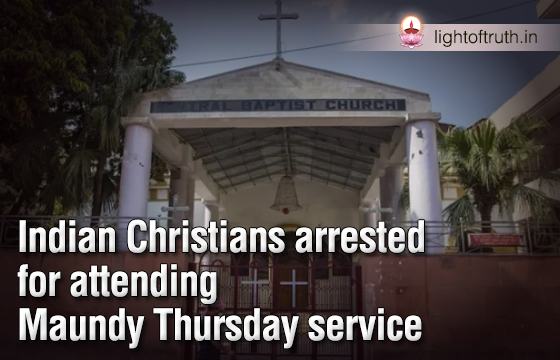
Indian Christians arrested for attending Maundy Thursday service
Police in northern India’s Uttar Pradesh state charged 55 Christians who took part in a Maundy Thursday service with violating a law that criminalizes religious conversion following complaints by right-wing Hindu groups.
Among them, 26 people were arrested and later released on bail, but police say they are searching for others included in the first information report (FIR).
Christian leaders denied the allegations and said the Maundy Thursday service on April 14 was “portrayed as a religious conversion activity and those who attended it were harassed for no fault of their own.”
Some 70 believers of the Evangelical Church of India gathered at their church in Fatehpur in Harihar Ganj district for the service to commemorate the Last Supper of Jesus with his disciples before he was crucified.
One Christian said right-wing Hindu activists who gathered outside the church locked its two main gates. “They then began to shout slogans like ‘Stop conversion’ among other things,” he said.
When police arrived at the scene after being alerted about the incident, they questioned the Christians about their details and kept them inside the church for close to three hours.
“We were told that we were kept in the police station for our own safety, but when we were taken for a medical examination we realized that we were being charged”
Hindu leaders also entered the church and demanded the personal details of the Christians.
Officers then took the Christians, including women and children, to the police station on the assumption that they were being taken to their homes.
Later that night, the women and children were allowed to go home while 26 males were kept in custody.
“We were told that we were kept in the police station for our own safety, but when we were taken for a medical examination we realized that we were being charged,” said one of the Christians.

Church opens Indian state’s first palliative care centre
The Catholic Church has set up the first-ever palliative care centre in Nagaland, a Christian-majority state in northeast India.
The St. Joseph Pain and Palliative Care Centre at Chumukedima, near the state’s commercial hub of Dimapur, was inaugurated by Chief Minister Neiphiu Rio, a Baptist Christian, on April 24.
The centre is an initiative of the Diocese of Kohima and will be run by the Medical Sisters of St Joseph, Nirmala Province from Kerala, known for their dedicated service to the sick, the poor and the least of the brethren irrespective of caste and creed.
“This first fully fledged palliative care centre in Nagaland intends to provide service free of cost. The state government will extend all possible help to carry out this gratuitous service to the people,” announced Rio.
Nagaland, a predominantly Baptist Christian stronghold, along with the southern state of Tamil Nadu has the highest percentage of elderly people living alone without a spouse, children or any other support, according to the first Longitudinal Ageing Study in India released in 2021.
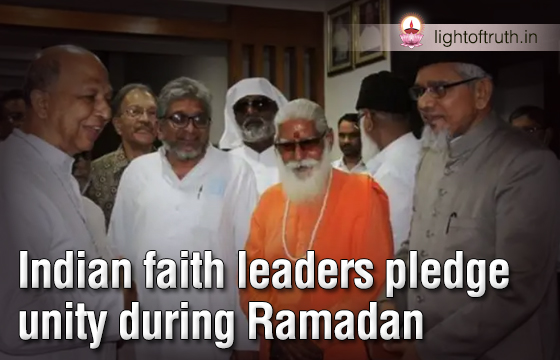
Indian faith leaders pledge unity during Ramadan
Leaders of different faiths at the first-ever iftar organized by the Archdiocese of Delhi pledged to remain united amid sectarian violence and growing unrest in India.
The iftar or evening meal with which Muslims end their daily Ramadan fast at sunset was a symbolic gesture to show solidarity with members of the national capital’s Islamic community who are fasting during the holy month.
“Through this program we wanted to spread love and peace among all people,” Archbishop Anil Joseph Thomas Couto of Delhi said at the interreligious event held by the archdiocese’s Commission for Ecumenism and Interfaith Dialogue on April 22.
The prelate said there was nothing to gain from what was happening in the country, where one community was pitted against the other in the name of religion, caste and creed.
“Let not the communal forces divide us,” said Archbishop Couto while urging all faith communities to come together and address the challenges before the country.