
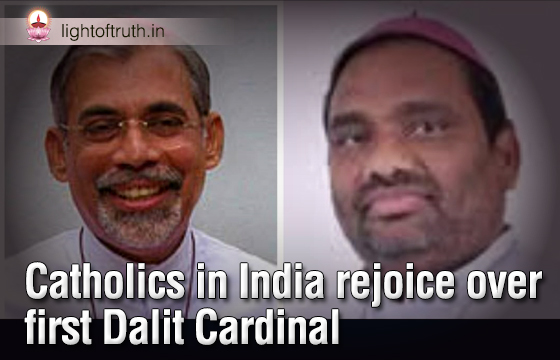
Catholics in India seem euphoric after Pope Francis named a Dalit from the country among the 21 new cardinals.
Pope Francis will create 21 new cardinals in the next consistory on Aug. 27, including five archbishops and one bishop from Asia. Sixteen of the new cardinals are under the age of 80, who are eligible to vote in a conclave to elect the successor of Pope Francis, and for five others the title is mostly honorary. Five Asian prelates are – Archbishop Felipe Nerri Ferrao of Goa and Daman (India), Archbishop Anthony Poola of Hyderabad (India), Archbishop William Goh of Singapore, Archbishop Virgilio Do Carmo Da Silva, SDB of Dili (East Timor), Arch-bishop Lazarus You Heung-sik, prefect of the Congregation for Clergy (South Korea), Archbishop Anthony Poola of Hyderabad, who was born in a Dalit Catholic family in the southern Indian state of Andhra Pradesh, is among the two new cardinals from India. The other Indian is Archbishop Filipe Neri Ferrao of Goa and Daman. The Pope will create the cardinals at a consistory on Aug. 27.
Archbishop Poola’s elevation comes amid talks about an Indian Dalit Rite in the Catholic Church and protests by Dalit groups for bishops from their community.
A Dalit cardinal was also their demand for decades and they stepped it up after Pope John Paul II on October 21, 2003, made Cardinal Telesphore Placidus Toppo, the then archbishop of Ranchi, a prince of the Church. Cardinal Toppo claimed that the new title recognized India’s tribal Church.
Such recognition for the Dalits took 19 years more years, but it has made Jesuit Father Irudhaya Jothi, “extremely happy.” The grassroots activist now working in northeastern India says it is “a proud moment for the Dalit community in the world.”
Father Jothi and Ravi Kumar, a Dalit leader from Vijayawada diocese in Andhra Pradesh, say Archbishop Poola’s appoint-ment shows that Pope Francis continues to give recognition and representation to the Churches at the periphery and the marginalized communities.
Father Jothi said he prays that the Church gives “an emphatic hearing” to the standing demands of the Dalits, “the most exploited community.”
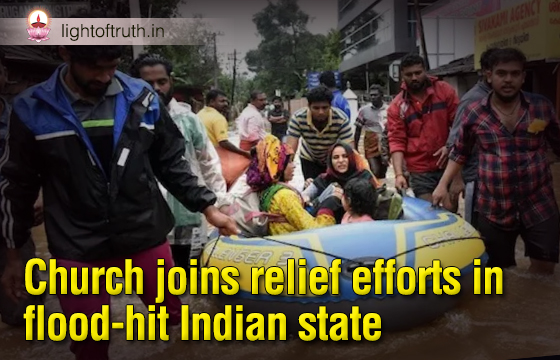
Church joins relief efforts in flood-hit Indian state
Indian Catholics have joined relief and rescue efforts organized by NGOs and government agencies as the death toll from flooding in Assam has reached 24 in the north-eastern state.
According to the Assam State Disaster Management Authority, the situation re-mains critical as nearly 720,000 people in 22 districts are reeling under the deluge, with Nagaon, Hojai, Cachar, Darrang, Morigaon and Karimganj districts badly affected.
“The flood situation in the state is very serious as several people have lost their lives. We pray for the bereaved families but in the meantime our immediate priority is to provide food, water, dry rations and medicine to affected people as the government is engaged in rescue and relocating people to safe places,” Archbishop John Moolachira of Guwahati told.
“Our social service wing along with its team are distributing food such as biscuits, bread, water and dry rations like rice, lentils, vegetables and salt as well as medicine and tarpaulins.”
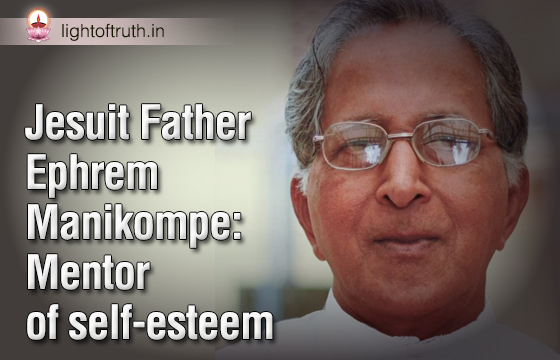
Jesuit Father Ephrem Manikompe: Mentor of self-esteem
Jesuit Fr Ephrem Manikompe, a renowned school teacher, died May 22, leaving a deep grief in the hearts of hundreds. After a cardiac arrest on May 19, he had a brief hospitalization. He was 80.
The member of the Kerala Jesuit province will always be remembered for his kindness and simplicity. He served as a teacher and headmaster of St. Joseph’s Higher Secondary School, Thiruvananthapuram, one of the premiere schools in Kerala, for a quarter century starting in the 1970s.

Christians resent surveillance of Church-run schools in Indian state
Christian leaders in the central Indian Madhya Pradesh have objected to the state government’s move to put Church-run schools under the microscope.
State home minister Narottam Mishra announced on May 16 that police will monitor Church-run schools to curb religious conversions.
A day earlier, police arrest-ed six people, including two pastors, after Bajrang Dal, a militant Hindu organization, complained of suspected illegal conversions at the Christ Memorial School in the state capital Bhopal.
The six were booked for hurting religious sentiments under the Indian Penal Code and released the same day.
School director Manis Mathew told on May 17 that a Sunday prayer service in the school hall “was wrongly portrayed as a religious conversion activity to target our institution.”
Church leaders across denominations view the police action and the decision to monitor all Christian schools as a deliberate attempt to target and defame Christians through a false narrative.

Film on Blessed Rani Maria released on TV
A feature film on Blessed Rani Maria Vattalil was premiered May 27 on Atmadarshan TV, a popular religious channel of the diocese of Indore, central India. Bishop Chacko Thottumarickal of Indore, who addressed the function in Indore, recalled Blessed Rani Maria’s struggle to organize poor tribals against the exploitation of moneylenders. She was among the first in Madhya Pradesh to successfully implement the concept of Self Help Groups, the Divine Word prelate added.
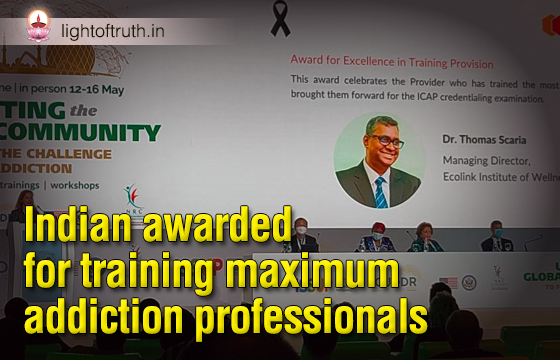
Indian awarded for training maximum addiction professionals
Thomas Scaria, a renowned expert in addiction management, training and consultancy, has become the first Indian to receive “International Awa-rd for Excellence in Training Provision.”
Scaria, who heads the Mangaluru-based Ecolink Institu-te of Well-being, received the award May 14 at a function in Abu Dhabi.
The award is instituted by the International Society for Substance Use Professionals (ISSUP) based in the United Kingdom and constituted by international organizations such as Colombo Plan, World Health Organization, the US Department of State and UNODC (United Nations Office on Drugs and Crime).
The award was handed over at the closing ceremony of ISSUP’s three-day annual conference attended by more than 1,000 delegates from 100 countries. Announcing the award and presenting the felicitation, ISSUP deputy director Livia Eddegger said the Indian institute was selected by the award committee for its excellence in training maximum number of addiction professionals from around the globe and creating several credentialed professionals during the year.
“Ecolink Institute headed by Dr. Thomas Scaria has trained and professionalized the highest number of addiction professionals in an excellent way,” Eddegger said.
Four other persons from various parts of the world were also awarded for their services to Drug Demand Reduction services under various heads.

Father Subhash Anand’s sudden death mourned
Father Subhash Anand, a renowned philosophy professor who challenged Catholics in India to become Christ’s authentic disciples, died of a massive heart attack May 23 in Udaipur, Rajasthan. He was 78.
Bishop Devprasad Ganawa of Udaipur has informed that the funeral begins at 10 am on May 24.
Father Anand, a priest of the diocese of Udaipur, was born Benedict Alvarez on Nov. 15, 1943. He was ordained a priest on Oct. 28, 1967.
He was a resident of St Paul’s School in Udaipur’s Bhupalpura area.
Father Anand was part of Pune’s Jnana Deepa Vidyapeeth (JDV) semi-nary as a student and professor of Indian Philosophy and Religion for more than 30 years.
Father Subhash Anand “deeply loved the Church and his path took unusual twists and turns. He wouldn’t tolerate hypocrisy, be it among scholars or the Church’s officials,” says Jesuit Father Stanislaus Alla, a theology professor in Delhi’s Vidyajyoti College of Theology.
According to him, Father Anand “loved to go to the root of the Gospel that invites and challenges the faithful to be authentic disciples rather than get struck in the infantilizing traditionalism.”
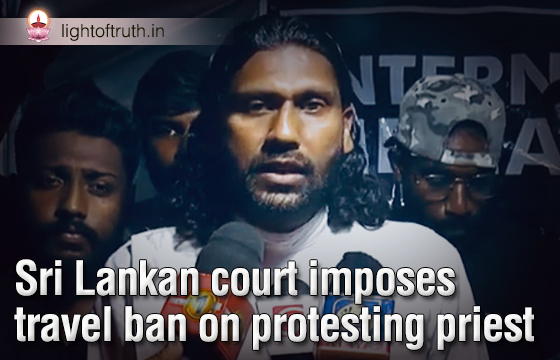
Sri Lankan court imposes travel ban on protesting priest
A Sri Lankan court has ordered a travel ban on a Catholic priest for being part of the “GotaGoGama” protests demanding President Gotabaya Rajpaksha’s resignation over the nation’s worsening economic situation.
Officials from the Criminal Investigation Department in-formed Father Amila Jeewantha Pieris about the travel ban on May 23.
The activist priest has been involved with the month-long protests in the open space opposite the presidential secretariat in Colombo.
“The government is sending another message that they will make the victims more vulnerable,” said Fr Pieris while asserting that the struggle can-not be stopped by such intimidation. He said the protests will end only when the president and Prime Minister Ranil Wickramasinghe resign.
The court order was reportedly passed to allow further investigations into the com-plaint lodged by Father Pieris and others regarding attacks by pro-government supporters on peaceful protesters at the Galle Face on May 9.
“The successor president and the new prime minister should not be part of the Rajapaksa family regime. They should also not be accused of financial corruption or crime.”
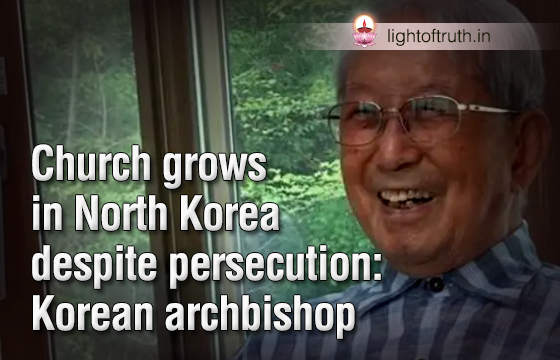
Church grows in North Korea despite persecution: Korean archbishop
One of South Korea’s most senior clergymen says he believes Catholic Church in communist North Korea is growing although Catholics live in hiding and endure persecution. Archbishop Victorinus Yoon Kong-hi, the former head of the Archdiocese of Gwangju in South Korea, has made the remarks in a recently published book on the history of the North Korean Church.
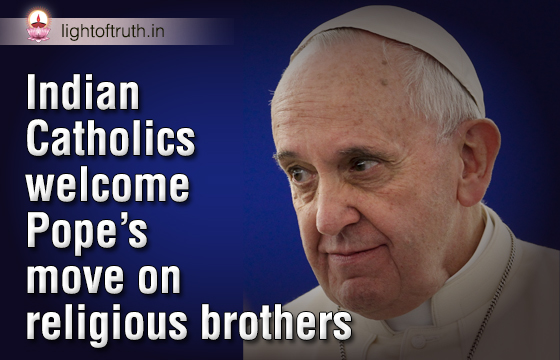
Indian Catholics welcome Pope’s move on religious brothers
Indian Catholics, both lay people and religious, have welcomed Pope Francis ushering in equality and fraternity in religious congregations that have priests and brothers as members. “It is not a small technical or legal change but a profound shift with enormous theological and spiritual implications,” Delhi-based Jesuit moral theologian Father Stanislaus Alla told on May 19, a day after the Pope promulgated a rescript that offers dispensation from a Church law that stipulates that only priests could head such religious congregations.
The Pope’s move, the Jesuit theologian adds, “distinguishes the power of ordination and the ability to lead and govern and recognizes them as different spiritual gifts. Put simply, it overcomes discrimination in religious life and serves as a great equalizer,” explains the priest who teaches in Delhi’s Vidyajyoti College of Theo-logy.
For Capuchin Father Suresh Mathew, the rescript is “a much awaited reform” and “a sign of equality and true fraternity” that his congregation has been requesting the Vatican for long.
Father Mathew’s congregation has both priests and brothers and the new change gives lay brothers “equal responsibility in religious congregations. It will also put an end to clerical domination. Fraternity now will go beyond words to action. Synodality speaks of walking together. Until now, brothers have been left behind.”
Chhotebhai, convener of Indian Christian Forum, a laity group, sees “a natural progression that non-clerics (Brothers) be accepted as major superiors of men’s religious orders.”
The lay leader recalls the Montfort Brothers getting per-mission from the Vatican in 1990s to ordain some of their members as priests to minister to their community. In another development, the Conference of Religious India elected Christian Brother Philip Pinto as its president, a post until reserved for priests. “Now an Apostolic Carmel sister is the CRI President,” he points out.
Salesian Brother P.A. Jose welcomes the papal gesture as “an overdue change.” The historic decision “will help us Salesians live and work together really as brothers sharing Salesian life as equals,” he told.