
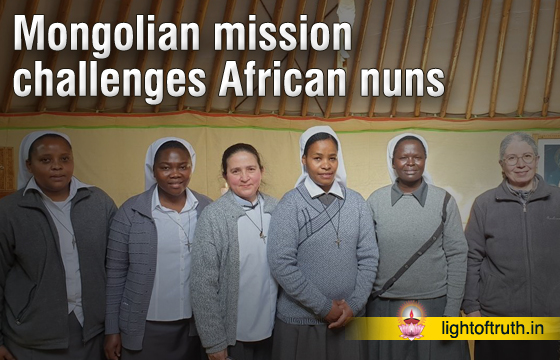
For Sister Tireza Gabriel Usamo, a 38-year-old Catholic nun from Ethiopia in Africa, the climate and customs of Mongolia have been a constant challenge ever since she went there as a missionary. She is part of a three-member team of nuns from Consolata Missionaries working in Arvaikheer town in central Mongolia. The Church in Mongolia was re-established when three Immaculate Heart of Mary missionaries arrived there in 1992, a year after democracy was restored after the fall of communism. The Catholic Church was active in Mongolia in the 13th century but its role was ended by the Yuan Dynasty in 1368. Christianity was then for-bidden in a country sandwiched between China and Russia.
As the Church marks 30 years of its reincarnation in 2022, it has two Mongol priests, 22 foreign missionaries and about 35 missionary nuns including Sister Usamo. They work for some 1,400 Catholics under the Ulaanbaatar Apostolic Prefecture, which covers the entire country of some 3.3 million people. Ulaanbaatar’s Italian Bishop Giorgio Marengo is among 21 bishops that Pope Francis will make cardinals in a consistory in August. Bishop Marengo, also a Consolata missionary, met the pope in May with a team of Buddhists in an effort to promote interfaith collaboration in Mon-golia.

Japanese Catholic toils 40 years on world’s tallest Marian statue
An elderly Catholic sculptor in Nagasaki, Japan, is all set to complete and install the world’s tallest wooden statue of the Virgin Mary after four decades of time, energy and money.
Eiji Oyamatsu, 88, a Catholic from Fujisawa, Kanagawa prefecture, will unveil the 10-meter wooden statue of Mary with the child Jesus at the end of June, reported Japanese newspaper Asahi Shimbun.
The statue pays tribute to thousands of Christian martyrs of Nagasaki in the 17th century.
The single-handed effort by Oyamatsu encouraged a group of volunteers to form the Citizens’ Association for Minami-Shimabara World Heritage in 2018. The group from Nagasaki prefecture has bought land to install the statue to honour the martyrs of the Shimabara-Amakusa Rebellion, aiming to turn the site into a popular shrine.
The revolt, mostly by local Catholic peasants, stemmed from grievances over excessive taxation and abuses by officials of the Shimabara peninsula and the Amakusaretto islands. It was brutally crushed by the 120,000-strong army of the military government of the Tokugawa Shogunate. The suppression between 1637 and 1638 left about 37,000 Christians dead and effectively ended Christianity in Japan until its revival in the 19th century.
The purge forced all remaining Christians to renounce their faith publicly. However, many Christians continued to practice their faith secretly and came to be known in modern times as kakure kirishitan (hidden Christians).
“It seems fateful that I set about this work without being commissioned by anybody, and the statue will now be hosted in a place that deserves it the most.”
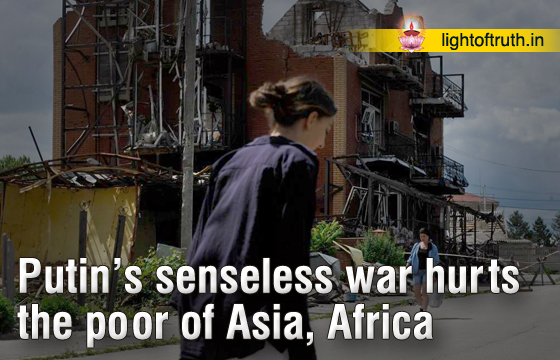
Putin’s senseless war hurts the poor of Asia, Africa
Russia’s invasion is causing inflation and threatening millions of people who depend on Ukrainian produce
The savage war of Vladimir Putin against the peaceful people of Ukraine is the work of a man with ambitions bent on trying to secure his place in Russian history as the leader who restored the false “glory” of the Russian Soviet Union that disintegrated in 1989. There was no glory there but oppression, occupation of half of Europe and a Cold War that threatened nuclear annihilation of the world.
Putin’s massively destructive war, with continuous atrocities and war crimes, is now threatening another form of annihilation — that of millions of people in Asia and Africa who depend on Ukrainian wheat, maize and cooking oil as do other poor nations of the world.
The Russian president has blocked the export of millions of tons of Ukrainian cereals and cooking oil from Odessa on the Black Sea. He wants sanctions lifted before he will lift the blockade. In the meantime, evidence has emerged that Russia is stealing Ukrainian grain and shipping it to Crimea and then to Syria. It is a war tactic to starve the world and force Western nations to lift sanctions while millions go hungry and many die.
Ukraine was exporting 4.5 million tons of agricultural produce per month through its ports on the Black Sea. There are around 20 million tons of grain stockpiled in silos and there will be no storage facilities available for this year’s harvest of wheat, barley and grapeseed. Despite the war and the departure of up to 5 million Ukrainians, the farmers have continued to plant crops but have nowhere to store them. The sales are needed for national survival.
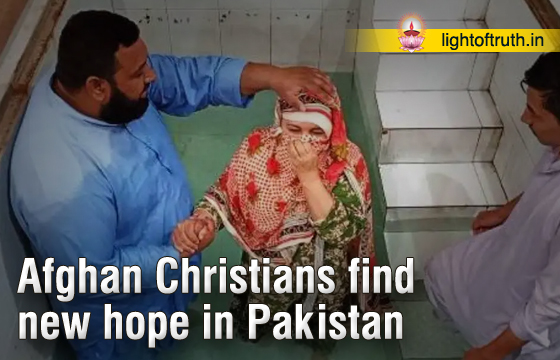
Afghan Christians find new hope in Pakistan
Three days before the Taliban seized control of Kabul, Arifa Rahimi received a threatening phone call. “You have been traced. We know that you are a Shia kafir [infidel] and a journalist reporting against us,” said the unknown caller.
In September 2021, Rahimi hired a car to reach the Chaman-Spin Boldak border with her younger brother and four nephews, aged 8-14. Wearing a light blue chadori (the head-to-toe burqa), she entered Quetta in Pakistan’s restive Balochistan province without a visa.
“Each passenger cost 6,310 afghani (US$71). However, the driver charged half-payment for children,” said 24-year-old Rahimi, who used to report for Kabul-based Farhang Press. Luckily for them, the border security wasn’t tight in the early days of the Taliban takeover. And waiting for legal documentation could have meant risking arrest and possible execution “My elderly parents couldn’t join us,” says Rahimi, who now shares one of the four rooms in a rented house with other Afghan families in Quetta. She deleted Taliban call logs to avoid scrutiny by Pakistani border and security personnel and now uses a local SIM card.But as an unregistered refugee, Rahimi doesn’t have any income. Her brother, a tailor, supports the family.
“I accepted Christ as I read in the Bible John 3:16. On one side our own people were trying to kill us while a pastor was helping us with rations and money. I found Christ as my savior” In November, she was baptized by Pastor Irfan James in a small church in Quetta.”I accepted Christ as I read in the Bible John 3:16. On one side our own people were trying to kill us while a pastor was helping us with rations and money. I found Christ as my savior,” she told UCA News.She is among the 100 believers who have received a copy of the Bible from Pastor James, who is running an underground ministry from Jalalabad in eastern Afghanistan. He has to grow a beard and leave church documents behind before crossing the border using local contacts. They also help him in relocating underground Christians.
“Changing physical gestures is crucial for survival,” Pastor James told UCA News via WhatsApp. “Many have changed their phone numbers to avoid persecution. The Afghani converts along with defense personnel and spokespersons of the former government are on the Taliban’s hit list.”
Some 450 Afghan families, living in an Islamabad park, have been holding protests for months demanding legal status, with many seeking onward passage to European nations.
The protesting families, including children, carry mock coffins and wear white shirts emblazoned with messages in red paint saying “Kill us or rescue us.”
Instead of initiating a police crackdown on the protesting Afghans, the government of Pakistan should shelter the refugees on a humanitarian basis, said Pastor James.”Women have vanished and families are forced to sell their children due to crippling hunger and economic crisis. Church groups should invest in small business enterprises and medical camps for the converted Afghans,” he added.
“The Taliban have access and followers in Quetta. My nephews depend on me. Everything is so expensive but I do not want to return. We need help”Since the Taliban takeover, the persecution watchdog Christian Solidarity International and two local churches have been helping 400 Afghan refugees in Quetta and Chaman, another border town of Pakistan.
They are among 250,000 Afghans who have crossed into Pakistan after the Taliban seized full control of the country next door.
The United Nations High Commissioner for Refugees (UNHCR) has estimated that 1.3 million Afghan refugees are registered in Pakistan. In Afghanistan, the estimated 10,000 to 12,000 Christians are all converts from Islam and forced to worship secretly in homes or other small venues.

Half of Americans Rule Out Pentecostal Churches
Most Americans are open to a variety of denominations of Christian churches, including many people of other faiths or no faith at all.
Americans have a wide range of opinions and impressions about Christian denominations, but most won’t rule out a church based on its denomination, according to a new study from Lifeway Research. From a list of nine denominational terms — Assemblies of God, Baptist, Catholic, Lutheran, Methodist, Pentecostal, Presbyterian, Southern Baptist, and nondenominational —more Americans rule out Pentecostal than any other denomination. Just over half of Americans (51%) say a church with Pentecostal in the name is not for them. But for each of the other denominations in the study, most Americans say a specific religious label in the name of a church is not an automatic deterrent for them. Americans are most open to nondenominational and Baptist churches.

French Bishop Strips Seminarians of CassocK
The bishop of Toulouse has banned seminarians and deacons in his diocese from wearing cassocks because he does not want men in formation to “appear too clerical.” Bishop Guy de Kerimel wrote a letter to seminarians on Thursday noting that he had seen some of them wearing cassocks and surplices at a recent confirmation service in the diocesan basilica of Notre-Dame de la Daurade.
The bishop said he found that “the image presented to the basilica of these future clerics installed in stalls, away from the faithful (without being in service), gave a very clerical image not adjusted to the situation of seminarians who remain lay faithful.”
Bishop Kerimel lashed out at the seminarians for disregarding his previous instructions regarding the wearing of clerical garb and ordered that “the wearing of the cassock is not permitted in the seminary; it is the law in force.” “I, therefore, ask that this law be applied outside the seminary in the diocese of Toulouse, including for deacons,” he added.
Seminarians should prioritize their “relationship with Christ, in humility and truth, without trying to enter into a role so that He is accessible to all, particularly the poorest and most marginalized, before worrying about displaying a distinctive persona,” Kerimel stressed.
“The future priest must be identified and recognized by his holiness, his spirit of service and the quality of his pastoral relationship, above all,” the bishop wrote, pointing out that deacons may wear a Roman collar or single cross while priests may wear a habit.
“At one time, some thought that it was an obstacle to their apostolate. Today, many young priests believe the cassock is their best ally in a de-Christianized society,” reasons Fr. Marc-Olivier de Vaugiraud from Mantes-la-Jolie.

For Conservative Christians, the End of Roe Was a Spiritual Victory
For nearly 50 years, conservative Christians marched, strategized and prayed. And then, on an ordinary Friday morning in June, the day they had dreamed of finally came.
Ending the constitutional right to abortion by overturning Roe v. Wade took a decades-long campaign, the culmination of potlucks in church gymnasiums and prayers in the Oval Office. It was the moment they long imagined, an outcome many refused to believe was impossible, the sign of a new America.
For many conservative believers and anti-abortion groups grounded in Catholic or evangelical principles, the Supreme Court’s decision was not just a political victory but a spiritual one.
“It is more than celebration,” said Archbishop William E. Lori, chairman of the United States Conference of Catholic Bishops Committee on Pro-Life Activities. “It is a moment of gratitude to the Lord, and gratitude to so many people, in the church and beyond the church, who have worked and prayed so hard for this day to come.”
Even the timing of the decision had a spiritual overtone, coming on the day Catholics celebrate the Feast of the Sacred Heart of Jesus, honouring the love of Jesus for the world. It gave people “the opportunity to expand our hearts in love” for people at all stages of life, from before birth through death, Archbishop Lori said.
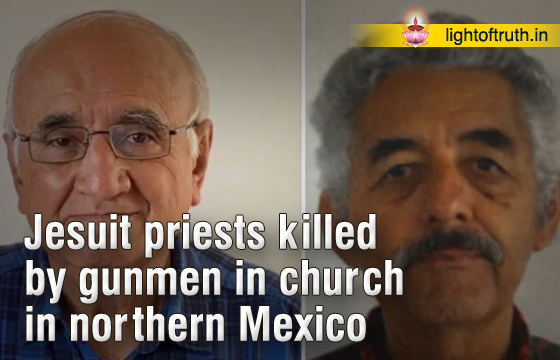
Jesuit priests killed by gunmen in church in northern Mexico
The Jesuits in Mexico have said two of their priests were murdered while trying to defend a man who was seeking refuge in a church while being being pursued by an armed person.
A statement from Jesuit provincial of Mexico Father Luis Gerardo Moro Madrid June 21 informed “with deep sorrow and a sense of anguish” about the murder of Fathers Fathers Javier Campos and Joaquín Mora in the afternoon of June 20 in Cerocahui, Tarahumara, a remote mountainous area of northern Mexico.
The murders took place in the context of the violence that Mexico has been experiencing for years, the message further explained.
The provincial said they are working with the federal and state authorities to ensure the safety of their other members – Esteban Cornejo, Jesús Reyes, and Jesús Zaglul along with the parish’s pastoral team.
“We publicly condemn this tragedy and demand a prompt investigation and safety for the community,” he further said. We will keep you informed about the next actions that we, as the Mexican Jesuit Province, will be taking.
Jesuit superior general Father Arturo Sosa said he was “shocked and saddened by this news” and that his thoughts and prayers are with the Jesuits in Mexico and the families of the men.
“We have to stop violence in our world and so much unnecessary suffering,” asserted the leader of the largest religious congregation for men in the Catholic Church.
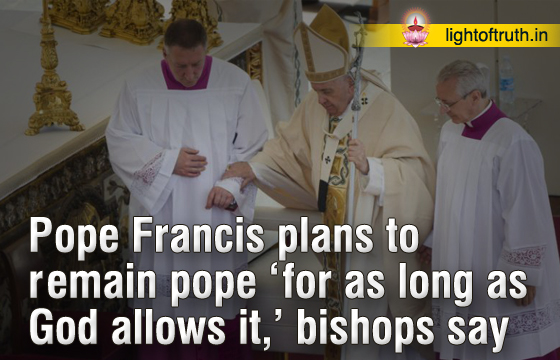
Pope Francis plans to remain pope ‘for as long as God allows it,’ bishops say
While concerns regarding Pope Francis’ health have fuelled rumours he might soon resign, Brazilian bishops told Vatican media outlets on monday 20th June that the pope intends to continue in his role as head of the Catholic Church “for as long as God allows it.”
Archbishop Roque Paloschi of Porto Velho said the pope reassured him during a visit at the Vatican on Monday that despite the many challenges the pope faces, resigning “does not cross his mind,” according to an article published by Vatican News.
Seventeen bishops from Brazil will meet with the pope this month for traditional “ad limina” visits, obligatory consultations that bishops from around the world make on a rotating five-year schedule.
“I want to live my mission as long as God allows me and that’s it,” Francis said when asked about his health by the bishops, according to Roque.
In the same Vatican article, Monsignor Lúcio Nicoletto, the administrator of Brazil’s Diocese of Roraima, said he was impressed by the “great strength” displayed by the aging pontiff, who during the meeting reinforced his commitment to protecting the Amazon rainforest and the Indigenous people who inhabit it.
In early June, Cardinal Óscar Andrés Rodríguez Maradiaga, one of the pope’s cardinal advisers, said the resignation rumors amounted to nothing more than “fake news” and compared media reports on the subject to “a cheap soap opera.”
Pope Francis greets the faithful as he leaves St. Mary Major Basilica after participating in a rosary prayer for peace, in Rome, May 31, 2022. Pope Francis canceled a planned July trip to Africa on doctors’ orders because of ongoing knee problems, the Vatican said June 10, 2022, raising further questions about the health and mobility problems of the 85-year-old pontiff.
Rumors of Pope Francis’ resignation have increased after the Vatican announced the cancellation of his planned July papal visit to Congo and South Sudan, citing knee pain. It’s unclear whether the pope will make his expected journey to Canada later next month.
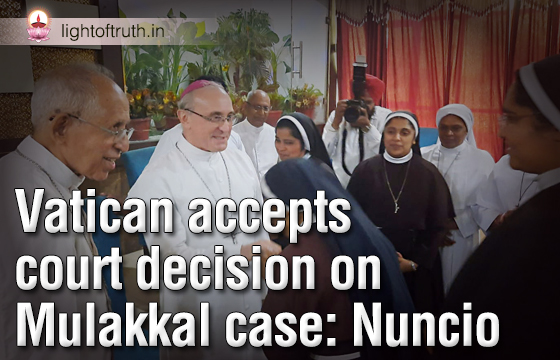
Vatican accepts court decision on Mulakkal case: Nuncio
Archbishop Leopoldo Girelli, apostolic nuncio to India and Nepal, on June 11 said the Vatican has accepted the Indian court decision about Bishop Franco Mulakkal of Jalandhar.
The nuncio, who was on a two-day pastoral visit to Jalandhar, said this June 11 while addressing the priests of the diocese of Jalandhar.
The nuncio said Bishop Mulakkal is an Indian citizen and the Vatican goes by the decision of the local court.
“Accordingly, Bishop Franco [Mulakkal] is innocent and free of all charges. With regards to the future, it is not in my hands but with Rome. Let us wait for it patiently,” Archbishop Girelli told the priests.
The Vatican on September 20, 2018, accepted Bishop Mulakkal’s request to relieve him from his duties until the case was over. It then appointed Bishop Agnelo Gracias as the diocesan administrator. Meanwhile a report in the Indian Express said the nuncio was told that all was not well in Jalandhar diocese. A delegation of the Catholic Union, senior citizens and members of the Diocesan Pastoral Council reportedly met the nuncio June 11 at the Bishop’s House and submitted a memorandum stating their grievances against local officials of the diocese.