
Catholic Sisters Help Children Living with HIV Build a Better Future
Faith Brings New Hope to Assam Village Once Known for Alcoholism
Cardinal Tagle: Friendship reveals the face of Jesus and the Church
Israel prepares ‘extensive’ West Bank operation after deadly shooting near Tal
Pope: Visit to Türkiye and Lebanon teaches that peace is possible
Thousands protest corruption in Philippines as Church leaders call for accountability
Pope: Nicaea invites Christians to unity in face of violence, conflict
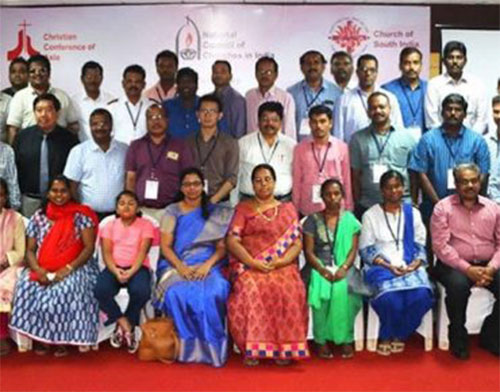
Manuel scavenging is the worst surviving symbol of caste-based discrimination and a sin against God and God’s people, asserts a joint meeting of top Christian bodies in Asia.
The participants of April 24-26 meeting urged Churches to take the lead to ensure the effective implementation of a law passed by the Indian parliament in 2013 to end manual scavenging practices in the country.
The “Abolition of Manual Scavenging in India: An Ecumenical Accompaniment and Advocacy Consultation” was organized by the Christian Conference of Asia (CCA), National Council of Churches in India (NCCI) and the Church of South India (CSI).
The meet wants Churches in the country to acknowledge manual scavenging as a sin and to work for its abolishment in all forms at all levels.
The consultation opened jointly by NCCI general secretary Reverend Roger Gaikwad and CSI General Secretary Reverend Ratnakar Sadanand.
The keynote was delivered by Bezwada Wilson, Magsaysay Award Winner of 2016 and founder of the Safai Karmachari Aandolon, a movement to eradicate manual scavenging.
Although the Church’s mission is to find the lost, it has refocus its attention from the center to the margins with relevant strategies, he told the gathering. “The bottom line of the mission mandate is to defend and advocate for human rights, and affirm the life of every human with respect and dignity,” he explained.
The Church, he noted, has infrastructure and human and financial resources that should be used to help abolish inhuman and un-Christian ideologies such as casteism and practices like manual scavenging.





Leave a Comment