JESUIT PRIEST (IRUDAYA JOTHI) BAGS ‘SOCIAL ACTIVIST AWARD’

Jesuit Father Irudya Jothi, director of Udayani (awakening), bagged the “Social Activist Award” at a function in Mumbai, western India. “I am extremely happy to receive an award called Modi Making Of Developed India from the Economic Times Now group along with World Corporate Social Responsibility groups at Taj Land Mumbai,” Father Jothi told Matters India after receiving the award on February 17. “The award was in the Individual category as social activist,” he added.

CHURCH ASSETS NOT PUBLIC PROPERTY, ASSERTS CARDINAL ALENCHERRY

Cardinal George Alencherry, head of the Syro-Malabar Church, says the Church assets cannot be considered as public property. The cardinal made this assertion on February 19 in the Kerala High Court. The court has sought the prelate’s explanation on a petition filed by a layman seeking a police probe into the controversial land deal in Ernakulam-Angamaly arch- diocese. In his statement, Cardinal Alencherry pointed out that the Church is not a trust. A third person cannot intervene even if there is loss in the land deal, the cardinal clarified.

HINDU ATTACKS ON CHRISTIANS DOUBLE IN INDIA

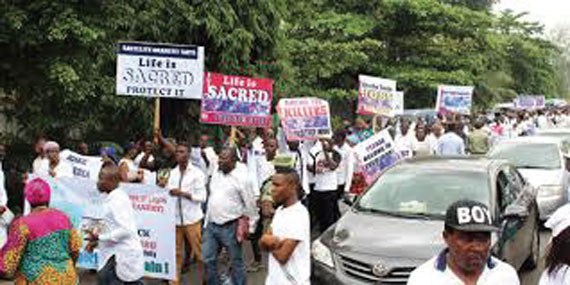
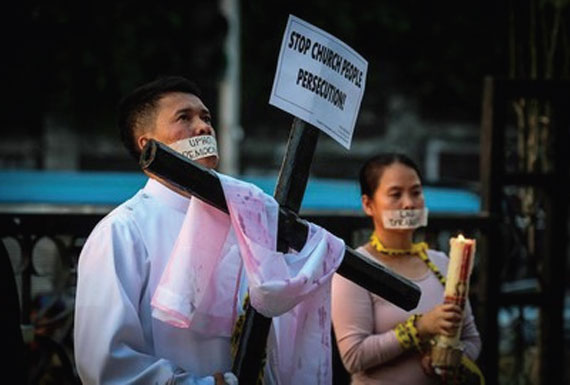
Hindu attacks on Christians in India have doubled in the past year as part of an unprecedented trend to portray Christians as acting against the state, its religious tolerance and national ethos, according to a newly released report. The country recorded 736 incidents of attacks against Christians in 2017 against 348 in 2016, according to data from Persecution Relief, an ecumenical forum that records Christian persecution in India and helps victims.

Most police complaints filed against victims accused them of crimes such as sedition, working against religious tolerance, discriminating against people, acting against national integration, defiling places of worship and insulting religions, the report revealed.

“It is a new trend to accuse Christians of serious crimes,” said Shibu Thomas, founder of Persecution Relief. If sedition charges are proved, the accused can get life terms in prison, he told ucanews.com.

Filing such complaints “is a clear indication that those opposed to Christians want to portray them as serious threats to the nation’s safety and security,” Thomas said.

Christian leaders say violence against their people increased after the pro-Hindu Bharatiya Janata Party (BJP) came to power in 2014 with the support of Hindu groups who want to make India alone a Hindu state. These groups attempt to present religious minorities like Christians and Muslims as unpatriotic.

Christians suffered violence throughout India in the past year as violence was reported from 24 of its 29 states.

Most incidents were “daring physical attacks” on church leaders and members, the report said.

The four states of Uttar Pradesh, Madhya Pradesh, Tamil Nadu and Chhattisgarh accounted for 57 percent of incidents.

Uttar Pradesh in northern India, where the BJP came to power in 2017, recorded 69 attacks, up from 39 incidents in 2016 when the socialist Samajwadi Party was in power.

Madhya Pradesh, where the BJP has governed for 15 years, recorded 52 incidents, an increase of 54 percent from 2016, while Tamil Nadu recorded 48 incidents, up 60%.

HINDU HARDLINERS ATTACK INDIAN CHRISTIAN SCHOOLS

Hindu hardliners have stepped up intimidation of Christian educational institutions in India, not least Catholic colleges. In one recent case, sheer numbers were used to break through a security cordon with the aim of performing a nationa- listic ritual.

Braving wintry early January winds, armed police guarded St Mary’s College in Vidisha of Madhya Pradesh State in central India. Some 800 young Hindu men entered the campus, some by scaling walls, but police managed to stop them performing a purportedly patriotic ritual in front of students.

The Bharat Mata Aarti ritual can entail a personification of Mother India represented by the Hindu goddess Durga.

However, Archbishop Leo Cornelio, head of the Catholic

Church in the troubled state, said the attempt really had nothing to do with patriotism. Attempts to discredit church insti- tutions were aimed at gaining control over them, he warned.

The archbishop noted that Catholic schools and colleges run on secular lines are allowed under the nation’s constitution. “No one can take that right from us,” Archbishop Cornelio said.

CATHOLIC RELIGIOUS PLEDGE TO PROTECT SECULARISM

Catholic priests and nuns from 31 religious congregations have pledged to protect the secular and democratic ethos of Indian constitution amid calls from rightwing Hindu groups to make India a theocratic nation.

“There is an urgent need for us to wake up to the harsh realities of diluting the secular, socialistic and democratic ethos of our constitution and protect them,” said Father Jacob Peenickaparambil Feb. 19. He was speaking at the end of a three-day biennial convention of Forum of Religious for Justice and Peace in Ranchi, the capital of north- eastern Indian State of Jharkhand.

More than 60 men and women from Religious congregations discussed the theme “challenges to secular democracy in India today” – and felt the need to create awareness among the people to protect the constitution of India.

“Unless we propagate the values of our constitution, its secular, socialistic and democratic values, and the rights of minorities will not be safe in the country,” said Father Peenika- parambil, national convenor of the group and a member of Carmelite Mary Immaculate (CMI) congregation.

Several speakers at the meeting said pro-Hindu groups continue to clamor to make India a Hindus- alone state, with the government supporting them with discriminative policies that sideline Muslims, Christians, dalits, tribals and other social and ethnic minorities. “The discriminatory policies in force in the country have widened the gap between the rich and the poor,” said Sister Manju Kulapuram, national executive secretary of the forum. She cited the increasing cases of attacks against Christians and Muslims, including several cases of lynching in the past two years in the name of protection of cows taking place in the country.

PHILIPPINE BISHOP SHEDS LIGHT ON ASH WEDNESDAY BURNS

An investigation has ruled out sabotage as the cause of skin rashes from ashes used during an Ash Wednesday ritual in a Manila diocese.

Bishop Pablo Virgilio David of Kalookan said the “mystery burns” people had on their foreheads after the ashes were administered were caused by acid.

Bishop David said several Mass-goers reported feeling a burning sensation on their foreheads immediately after being marked. When the people washed the ashes off, rashes and blisters appeared on their skin.

The ashes in question were not used after reports were received. Doctors who examined the rashes said a chemical substance caused the skin burns. The ashes are still being tested in a laboratory. He has already ordered a review of close-circuit television footage to look for possible “sabotage.” A laboratory test found high level of acidity in the ashes due to “over burning.”

“They call it overcooked charcoal that turned into caustic ashes that produced high acidity when mixed with water,” said the prelate.
He said a similar incident was reported in

Ireland several years ago.
Bishop David said the burning of a huge pile of palm fronds resulted in the “over burning” of ones on the bottom that produced greyish ashes instead of black charcoal.

“Not everybody was affected. Only those who received the acidic ashes had blisters,” said the prelate.

After reviewing close-circuit television footage the possibility of sabotage was ruled out.

He said the parishioners who suffered blisters received proper medication.

Mass-goers reported feeling a burning sensation on their foreheads immediately after being marked with ashes.

NEARLY 50,000 BAPTISMS REGISTERED IN CHINA IN 2017, SAYS VATICAN AGENCY

The Catholic Church in China registered 48,556 baptisms in 2017, reflecting the vitality and missionary strength of the Catho- lic communities there, according to a report by Fides, the news agency of the Congregation for the Evangelization of Peoples.

The figures likely are in- complete, however, given the difficulty of procuring data from Catholic communities in the rural parts of China, the report said.

But the numbers still “reflect the vitality and the missionary dynamism of a community that fully lives faith,” said the organization conducting the annual survey: the Faith Institute for Cultural Studies, a church-run organization based in Shijiazh- uang. Fides republished the organization’s findings Feb. 15.

The province of Hebei which consistently has the highest number of baptisms each year of all the Chinese provinces – topped the list again with 11,899 bapti- sms, the report said. The Arch- diocese of Beijing registered 1,099 baptisms, while the Dio- cese of Ningxia had 128 new Catholics baptized. China’s north west autonomous region of Xinjiang, where the majority of the population is Muslim, registered 66 baptisms. The Qinghai province had 54 baptisms, and isolated communities such as Hainan Island in southern China and Tibet had 38 and 11 baptisms, respectively.

PEACE DEAL AFTER PAKISTANI CHRISTIANS FLEE BLASPHEMY MOB

Christian and Muslim clerics signed a peace accord to restore calm in the Pakistani city of Lahore, a day after hundreds of minority families fled their homes fearing attacks from hard-line groups over alleged blasphemy.

More than 1,000 Christian families left the Shahdara neigh- bourhood after locals protested against Patras Masih, 18, who allegedly shared a photo of a Hindu wearing shoes in Roza-e- Rasool, the burial place of the Prophet Muhammad in Medina, Saudi Arabia.

Non-Muslims are prohibited from entering Mecca and Medina, Islam’s holy cities.

Masih was arrested on Feb. 19. His family is in hiding. “He was a member of a Facebook page titled “paglo ki basti” (the slum of lunatics). The existence of this photo challenges the religious sentiments of Muslims. This may result in an unpleasant incident,” said complainant Hafiz Muhammad Awais.

A mob carrying wooden sticks and placards gathered on a main road, burned tires and chanted religious slogans on Feb. 21 while demanding the public execution of the Christian sanitary worker. They also gathered outside the teenager’s house and threatened to burn all Christian houses in the area.

UNDERGROUND CATHOLIC: WE ARE EXCLUDED FROM DIALOGUE BETWEEN CHINA AND THE HOLY SEE

The news of an “imminent” agreement between China and the Holy See on how to appoint bishops is arousing tensions, debates and the taking of positions among the official and unofficial Chinese Catholics (under- ground). Above all, the campaign in favour of signing the agreement that some media have undertaken to convince the world the benefits of a deal and perhaps even to convince China, which so far has not expressed itself, is being targeted. Several speeches criticize the fact that this campaign has silenced the voice of the unofficial Church. The following article, received from AsiaNews, is from an underground Catholic of China, known to us, who signs with the pseudonym “John.”

“Beware of false prophets, who come to you in sheep’s clothing, but underneath are ravenous wolves. By their fruits you will know them. Do people pick grapes from thorn bushes, or figs from thistles? Just so, every good tree bears good fruit and a rotten tree bears bad fruit. A good tree cannot bear bad fruit nor can a rotten tree bear good fruit. Every tree that does not bear good fruit will be cut down and thrown into the fire. So by their fruits you will know them” (Mt. 7:15- 19). Before starting, I wanted to mention this biblical passage to remember what is happening or is about to happen.

Reading the article “China, the “under-ground” bishop: we will follow the Pope, because we trust the Lord,” I would like to thank the author because he put quotation marks on “underground” to describe this Chinese bishop of Qiqihar [this is Msgr Giuseppe Wei Jingyi, interviewed by Vatican Insider, on February 16th last]. All this is really ridiculous: this so-called underground bishop is actually an official bishop who wants to represent the underground Church and claims to be an authoritative voice. The bishop asks his friends in Hong Kong, Macao, Taiwan to “set aside the pretence” to speak in his place. If this is true, I would like to ask: who should represent the voice of the underground Church? Whose voice should that be? Based on what? What is the core of our Catholic faith? Who can represent the interest of the Chinese faithful?

MIRACLES MULTIPLY AT BANGLADESH’S TOP CATHOLIC SHRINE

Jolekha Begum is eight months pregnant but the Muslim primary school teacher still travelled more than 150 kilometres across Bangladesh on a wintry morning in late January to worship at a miracle-bestowing shrine that has gained fame nationwide. This year, about 50,000 devotees flocked there to attend the feast on Feb. 2, which was presided over by Cardinal Patrick D’Rozario. Traditionally, it is celebrated ahead of Lent, which begins on Feb. 14 this year, rather than on June 13, St Anthony’s feast day in the church’s liturgical calendar. Most devotees are Catholics from Dhaka Archdiocese’s Bhawal region, one of country’s oldest and largest Catholic strongholds covering seven parishes.

Official Website

Exit mobile version