
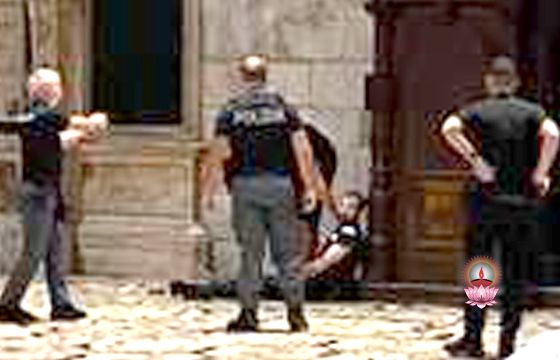
Police overpowered an Egy-ptian migrant after the 30-year-old broke through security and, rushing up to the high altar at Milan Cathedral, held a guard hostage at knifepoint. Brandishing a 20-centimeter switchblade, the assailant who possesses a long-term residence permit for family reunification reasons, forced his uniformed captor to kneel for over eight minutes.
Italy’s General Investigations and Special Operations Division (DIGOS), which interrogated the suspect, revealed that the man, currently living in the Lombardy region, was stopped by a police patrol while he was sitting on the cathedral steps.
Asked by officials from the Centro Commi-ssariat for his residence documents, the migrant attempted to stall police inquires. Suddenly, he broke free and ran towards the cathedral entrance reserved for worshippers and pushed aside a security officer who was guarding the door. Inside the cathedral, a second security guard accosted him after he had reached the high altar. However, the assailant pulled a knife on the guard and forced him to kneel and later sit on the floor.
Senior police officials, including Commissioner Mauro Frare and Deputy Commissioner Luca Gazzili, rushed to the scene and began negotiating with the hostage-taker. A policewoman from the Flying Squad tried to calm the assailant and with hands raised told him: “Do you want me to take off the belt? I’ll take it off. I want to help you, look, I’ll put it on the ground.”
At one point when the migrant was distracted, armed police took him by surprise and disarmed him. Milan has over 50,000 mostly Muslim illegal migrants. Italian newspaper Il Giornale noted that it has become a “symbol of decay and disarray from the point of view of public order, with stabbings and rapes every day and open-air drug dealing.”
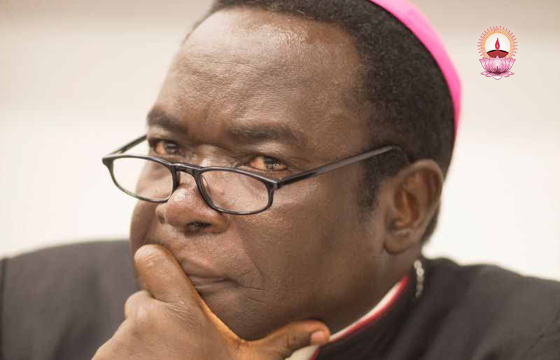
‘Genocide’ unfolding in Nigeria, says Bishop
Following the execution of five aid workers by Islamic extremists, a leading Catholic Bishop in Nigeria has argued that systemic violence against Nigerian Christians constitutes genocide.
The Bishop, Mathew Hassan Kukah of Sokoto, told Catholic charity Aid to the Church in Need (ACN) that, in his view, the recent violence was genocidal in character. He stressed, however, that Christians were not the only victims of recent unrest, as the killings “have been far worse in the predominantly Muslim north in such states as Katsina, Sokoto and Zamfara.” Islamic State West African Province (ISWAP) justi-fied their murder of five aid workers as a warning to “all those being used by infidels to convert Muslims to Christianity” – some-thing that indicated, the Bishop said, that extremists are not only targeting Christians.
A video of the killings, the victims of which were employees of international NGOs, was released by the Islamist group. Although the group has avoided executing Muslim civilians in the past, this appears to be changing as the conflict continues.
Implying that the Nigerian government is complicit in the unrest, Bishop Kukah also criti-cised western countries for not doing more. He said: “We hear promises from the United States and Europe and they all come to nothing.”
Nigeria is ranked number twelve on the persecution charity Open Doors’ 2020 World Watch List of countries where Christians are the most in danger for practising their faith.
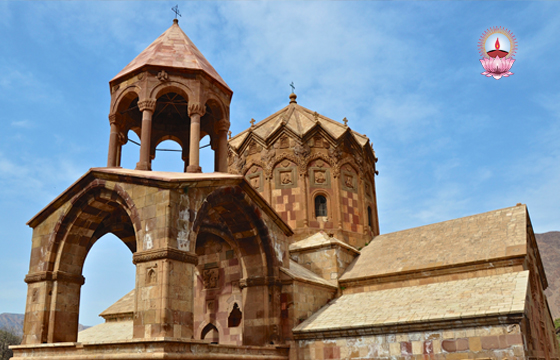
America Must Focus on Religious Persecution against Iranian Christian Converts
The Trump administration commendably made Christian persecution in the Middle East a priority. Vice President Mike Pence is a chief advocate in the administration, and Assistant Secretary of State for Democracy, Human Rights, and Labour Robert Destro has spent a large bulk of his career defending international religious freedom. Now the administration and Congress should emphasize persecution of Christians in Iran because Iran is the new battleground for Christians’ religious rights. When one thinks of persecution of Christians in the Middle East, the Islamic State’s killing of Syrian and Iraqi Christians comes to mind. But Iran, not Syria, has the largest Christian population enduring government persecution.
Speaking of faith and Iran, most people think of Islam. Yet Islam is the fastest shrinking religion there, while Christianity is growing the fastest. According to a report by the Department of State from 2018, up to half a million Iranians are Christian converts from Muslim families, and most of these Christians are evangelicals. Recent estimates claim that the number might have climbed up to somewhere between one million and three million. This is up from 100,000 in 1994, and a majority of these converts are reportedly women. A recent documentary, Sheep among Wolves, documents the lives of these converts and shows how Iran is the “fastest-growing church” in the world.
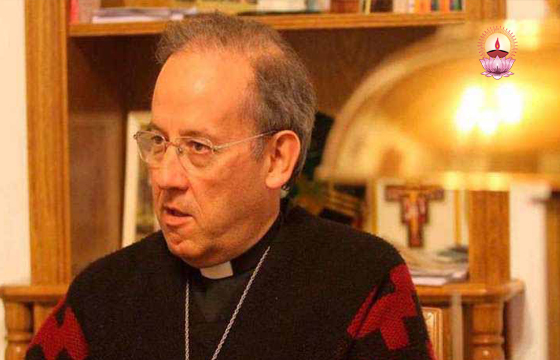
Argentine bishop says Vatican ordered seminary closed
An Argentine bishop said the seminary in his diocese was ordered closed on July by a decision of the Vatican’s Congre-gation for Clergy, after a contro-versy surrounding the reception of the Eucharist during the coronavirus pandemic.
Bishop Eduardo Maria Taussig of San Rafael said on Aug. 7 that the Santa Maria Ma-dre de Dios Seminary in Mendo-za, Argentina was ordered to close in December, at the conclu-sion of the academic year, by the Congregation for Clergy, and not the Diocese of San Rafael.
“The decision took me by surprise, but it is a directive that comes directly from the Holy See,” Taussig said.
The bishop said the decision to close the seminary was deeply upsetting, and he has since been discussing with the Vatican where the former students of the school will be sent to in order to continue their studies.
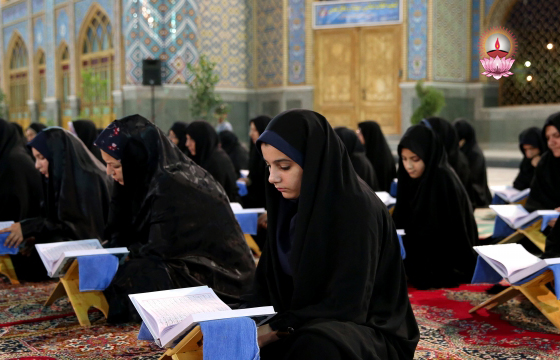
When Muslims Leave the Faith
Conversions involving Islam sometimes look like a one-way street in the West. Famed new believers like Kareem Abdul-Jabbar and Keith Ellison seem to get all the attention—along with flamboyant flirts like Lindsay Lohan. But those who leave Islam may ultimately influence the faith more than converts do.
There are about 3.5 million Muslims in the U.S., according to a 2017 Pew Research Centre survey. The data suggests that about 100,000 of them abandon Islam each year, while roughly the same number convert to Islam. Altogether nearly a quarter of those raised in the faith have left, with Iranians disproportiona-tely represented. Similar trends prevail in Western Europe, where conversions in and out of Islam appear roughly to balance out.
In the U.S., ex-Muslims’ motives for leaving vary. Asked what their “main reason” was for no longer identifying as Muslim, Pew found 25% had general issues with religion and 19% with Islam in particular. Some 16% said they prefer another religion, and 14% cited “personal growth.” More than half of them abandon religion entirely, and 22% now identify as Christian.
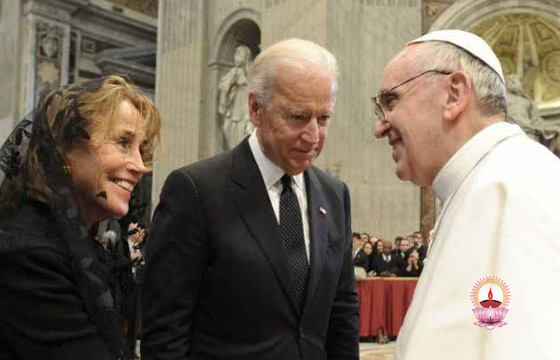
Biden Plays the Catholic Card
In a speech in Ohio, President Trump remarked that presum-ptive Democratic nominee Joe Biden aims to “take away your guns, destroy your Second Amendment,” adding: “No religion, no anything. Hurt the Bible, hurt God. He’s against God, he’s against guns.”
Biden took umbrage at this rather incoherent assertion, issuing a statement that called his faith “the bedrock founda-tion” of his life – though nowhere in his lengthy response did he mention Catholicism, the specific faith he professes. Some of Biden’s supporters used Trump’s comments as an occasion to tout Biden’s faith, such as this ina-ccurate tweet from The Lincoln Project: Joe Biden is a devout catholic and regularly attends Sunday service.
Once Trump went to church, he gassed peaceful Americans.
The theme of Biden as a devout Catholic has received plenty of media attention over his decades in public life, most often because he tends to point to his faith background to justify certain parts of his policy platform, such as his support for a vast welfare state and unlimited immigration. Just last summer, he began opposing capital punishment.
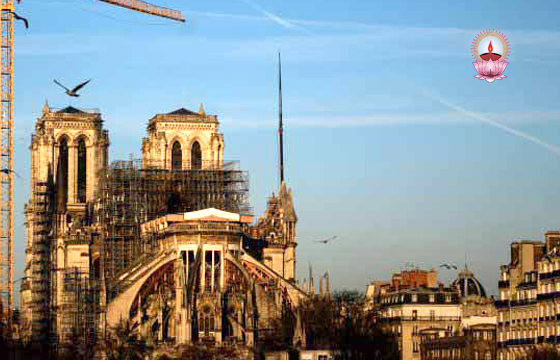
Notre-Dame’s rebuilding: The battle over the future of the cathedral
After fifteen months of suspense during which designers from around the world have come up with the most audacious if not totally bizarre designs for Notre-Dame’s new spire and roof, we finally have a verdict. President Macron and the panel of experts presiding over the fate of the 850-year-old Gothic Cathedral, which narrowly survived last year’s terrible fire, have unanimously approved almost every single recommendation made by the architect-in-chief Philippe Villeneuve.
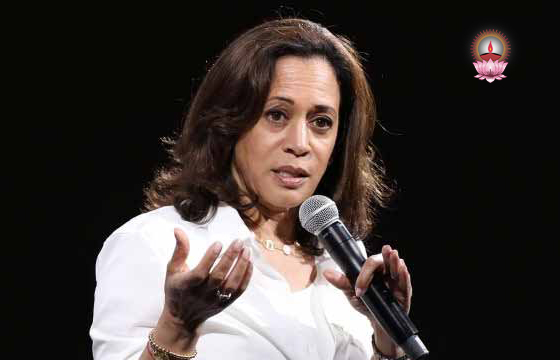
Kamala Harris’s Anti-Catholic Bigotry
Someone might want to remind Joe Biden, who’s just picked progressive California senator Kamala Harris as his running mate, that his vice-president-to-be believes Catholics are unfit to serve in our nation’s courts.
In late 2018, while evaluating the nomination of Brian Buescher to serve as a district judge in Nebraska, Harris posed a series of questions insinuating that his involvement in the Knights of Columbus – a charitable Catholic fraternal organization – disqualified him from serving on the bench. Here’s one of her written questions: Since 1993, you have been a member of the Knights of Columbus, an all-male society comprised primarily of Catholic men. In 2016, Carl Anderson, leader of the Knights of Columbus, described abortion as “a legal regime that has resulted in more than 40 million deaths.” Mr Anderson went on to say that “abortion is the killing of the innocent on a massive scale.”
She went on to ask Buescher whether he was “aware that the Knights of Columbus opposed marriage equality when [he] joined the organization” and whether he had “ever, in any way, assisted with or contributed to advocacy against women’s reproductive rights.”
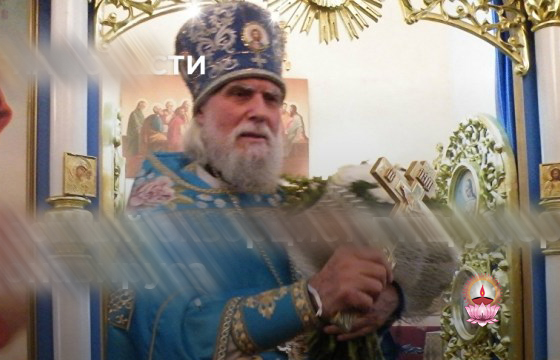
‘Main exorcist’ of Russian Orthodox Church dies of coronavirus
Moscow, on August 10, Interfax – Archimandrite German (Chesnokov), who was a monk at the Holy Trinity Lavra for many years, died after a long illness caused by coronavirus, the Lavra said on its website. Father German was the most prominent exorcist of the Russian Church. For many years, he was father superior of the Church of Sts Peter and Paul, the metochion of the Holy Trinity Lavra of St Sergius in Sergiyev Posad, where he performed a special exorcism ritual every Friday, Saturday, and Sunday. Father German was 78.

Pope extends Eastern Catholic Patriarchs
Pope Francis, with a Rescriptum published by the Vatican Press Office, has extended the jurisdiction of the Eastern Catholic Patriarchs over the entire Arabian Peninsula, which includes the Apostolic Vicariates of Northern and Southern Arabia. The latest announcement – fruit of careful evaluation by the Pope and the appropriate Dicasteries of the Roman Curia – is in response to requests made by the Patriarchs and Apostolic Vicars of Northern and Southern Arabia, in view of the greater spiritual good of the faithful, as well as the historical prerogatives of their jurisdiction over the territory.