Jharkhand’s move to weaken land rights meets opposition

The amendment allows the state government to alter a five-year-old federal law that aims to protect the rights of farmers and indigenous people when acquiring their land for state development purposes. Protests and sit-in-demonstrations have been held in several locations around the state following media reports that President Ram Nath Kovind had agreed to the amendments. “The approach of the current government is more pro-rich rather than strengthening the poor,” said Auxiliary Bishop Telespore Bilung of Ranchi, who like other Christian leaders, believes the move dilutes a stricter federal law. The amendment allows the state government to alter a five-year-old federal law that aims to protect the rights of farmers and indigenous people when acquiring their land for state development purposes.

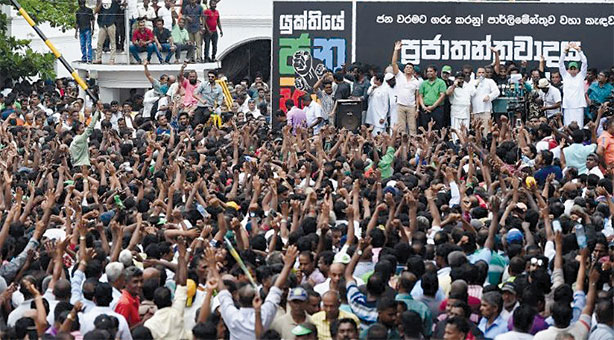
Nearly 20 opposition parties, including Congress and Jharkhand Mukti Morcha (Jharkhand Liberation Front), have demanded the state scrap the amendments and conducted a sit-in protest in front of the Ranchi residence of state governor Draupadi Murmu, the representative of the Indian president on June 25. Protesters also gathered outside district headquarters across the state. If the government fails to scrap the move, the opposition plans to hold a state-wide shutdown on July 5. Meanwhile the ruling pro-Hindu Bharatiya Janata Party has been conducting its own campaigns and demonstrations to garner support for the changed federal law.

Church hails big fall in India’s childbirth deaths

Church leaders have welcomed a big reduction in India’s maternal mortality rate, with nearly 12,000 fewer women dying during childbirth in 2016.

They said the improvement was the result of a joint effort by government and private health workers.  India’s maternal mortality rate (MMR) registered a 22% reduction in three years. The rate declined to 130 deaths per 100,000 births in 2014-16 from 167 deaths in 2011-13, according to data released by the Registrar General of India on June 6. This meant India saved the lives of nearly 12,000 pregnant women in 2016, UNICEF said in a statement analyzing the data.

“India has shown impressive progress in reducing maternal deaths, with nearly 1,000 fewer women now dying of pregnancy related complications each month in India as compared to 2013,” UNICEF’s India representative Yasmin Ali Haque said.

The result is “very encouraging for us all because the church is at the forefront of the health sector in the country,” said Father Mathew Peru-mpil, secretary of the health office of the Indian Catholic Bishops’ Conference.

He said one reason for the achievement was that people were made aware about facilities by the government and privately run health centres.

The government has introduced several schemes to provide free medicine and health checks for pregnant women in state facilities. Federal schemes are also available to ensure healthy food for pregnant women and newly born babies and their mothers. The World Health Organization (WHO) said the government’s efforts to improve access to high-quality maternal services and increased emphasis on women’s education are some of the reasons behind India’s ground-breaking progress.

Muslim students protest Catholic College banning hijab

A Catholic college’s decision to ban Muslim girl students from wearing hijab sparked protest outside the college campus on June 25.

St Agnes College, Mangalore, has ordered the Muslim students not to wear hijab in the classroom saying the headdress does not conform to the college’s dress code.

In a press statement Principal Sister Jeswina said St Agnes is a “minority institution” catering to women’s education and it respects every student. But the college rules do not permit “headscarves in the classroom.”

Join hands to solve issues in Church: Alencherry 

The faithful should work together to solve the issues being faced by the archdiocese, Syro-Malabar Church Archbishop Cardinal Mar George Alencherry has said.
“We should reach unity through faith and try to become matured,” he said while delivering introductory message at the installation ceremony of Bishop Mr Jacob Manathodath as the Apostolic Administrator of Ernakulam-Angamaly Archdiocese at the St Mary’s Cathedral Basilica.

Pope elevates 14 new cardinals, warns against ‘jealousy, envy, intrigue’

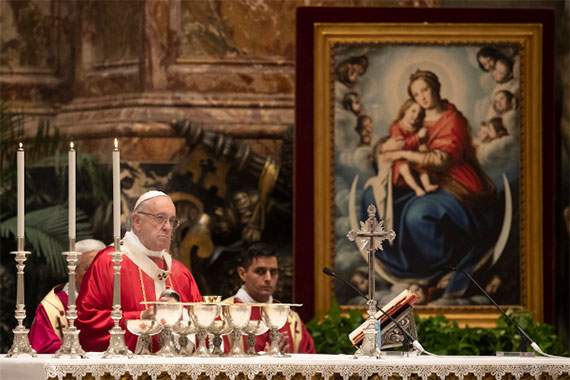
Pope Francis raised fourteen prelates to the College of Cardinals on June 28, at an evening consistory during which he cautioned against “the quest for honours, jealousy, envy, intrigue, accommodation, and compromise.”

In his remarks to the new cardinals, the Holy Father reminded them of Jesus’ words, “whoever would be great among you must be your servant.” He said that all Church leaders must use their influence for the benefit of others, not “in the pursuit of our own interests and securities.”

“What does it profit us,” the Pontiff said, “to gain the whole world if we are living in a stifling atmosphere of intrigues that dry up our hearts and impede our mission?” Among the new cardinals, eleven are active in ministry, under the age of 80, and therefore eligible to vote in a papal conclave.

Three other new cardinals are retired from active ministry and over 80; they will not vote in papal elections. Their elevation to the College of Cardinals is in recognition for their service to the Church.

Pan-Amazon Synod: Church looking at role of women

The Church is being urged to find ways for women to be granted an “official ministry” in the Amazon region, a part of the world suffering from a shortage of priests and where Catholics are unable to attend Mass for long periods. A preparatory document ahead of the Synod of Bishops gathering on the Pan-Amazon region in 2019 says it is “necessary to identify the type of official ministry that can be conferred on women, taking into account the central role which women play today in the Amazonian church.”

Due to the scarcity of clergy, lay women have long been involved in coal face parish ministry in the region including conducting baptisms, weddings and bringing pre-consecrated communion to communities.

While the Vatican’s doctrine prefect, Archbishop Luis Ladaria, recently ruled that the Church’s teaching on an all-male priest-hood is “definitive,” a papal commission has been established to examine the question of female deacons.

The new consultation document, known as the “lineamenta” and released by the Vatican’s Synod Office, says there is an “urgent need to evaluate and rethink” ministries that respond to the needs of the Amazon.

“One priority is to specify the contents, methods, and attitudes necessary for an inculturated pastoral ministry capable of responding to the territory’s vast challenges,” says the text, titled “Amazon: new paths for the Church and an integral ecology.”

One bishop in the region, Erwin Kräutler, has argued this could include ordaining married men in the region, a topic he has raised with Pope Francis. In his province Xingu there are just 27 priests serving 800 local communities and 700,000 Catholics spread across a vast region. Pope Francis has indicated he is open to the idea.

Madagascar’s ‘Mother Teresa in pants’ built a city for the poor

“God’s Mason,” “Mother Teresa with pants,” “God’s soldier,” “the apostle of garbage” and “the insurgent of Madagascar” are but a handful of the nick-names given to Father Pedro Opeka, nominated multiple times for the Nobel Peace Prize, who’s also a recipient of France’s Legion of Honour and several papal awards.

Born in Argentina in 1948 to Slovenian parents who fled Europe after World War II, Opeka is a missionary priest who’s been serving in Madagascar, the world’s ninth poorest country, for almost 50 years.

He’s in Rome because three countries Argentina, Slovenia and Monaco are throwing a dinner to raise funds for his foundation, “Akamasoa,” which means “good friends” in Malagasy.

On May 28, Opeka was received by Pope Francis.

“When we arrived, the doors opened and the Pope came to encounter us,” Opeka said. “He tells me ‘Pedro, how are you?’ Like a friend, a father, as if we’ve known each other for years.”

War, hunger, ‘cultural colonization’ are forms of persecution, pope says

Persecution is the work of the devil, and while anti-Christian persecution is evident in many parts of the world, the devil also is attacking the image and likeness of God present in many other people as well, Pope Francis said.

“In the world today, Christians are not the only ones being persecuted; human beings, man and woman, are because the father of every persecution cannot tolerate that they are the image and likeness of God. So he attacks and destroys that image,” Francis said on June 1 during Mass in the Domus Sanctae Marthae.

“Cultural colonization,” or the pressure some nations place on others to accept practices that go against their own culture, is another form of persecution, the Pope said. Francis often has denounced the practice by which wealthy donor nations try to impose acceptance of abortion, contraception or liberal attitudes toward homosexuality and gay marriage on poorer countries as a condition for aid.

Analysis: rise in young Catholics attending Mass, survey suggests

With the youth Synod only a few months away, a major new survey of young Catholics in Britain has some startling findings. On the plus side, Complex Catholicism: The Lives and Faith of Young Catholics in England and Wales Today shows a strong increase in regular Mass attendance (at least monthly) from 25% of all respondents in 2009 to 36% in 2017. Irregular Mass attendance (less than monthly) has increased from 59% in 2009 to 75%.

But the survey also includes some unsettling findings about what young Catholics actually believe: well over half do not hold traditional Catholic beliefs on God, many believe that Jesus was only human and not the Son of God, and a large number are willing to ignore the Church’s moral teachings.

The study was conducted by Catholic research group Camino House and Cymfed, the Catholic Youth Ministry Federation, in September and October last year. A total of 1,005 Catholics in England and Wales, aged 15-25, were surveyed online. Just over half were 15-19, and 48% were 20-25; 68% were female and 32% male. Two-thirds of the respondents self-identified as Catholic; the remaining third did not, but came from a Catholic family or had attended a Catholic school. Unsurprisingly, many of these “non-identifiers” still held some Catholic beliefs and attitudes, but were less likely to hold strongly to the Church’s teachings.

The finding that should cause most concern to the Church is that half of the respondents who self-identify as Catholics don’t believe in a personal God. Only 38% hold to the Church’s teaching that God created the world and is involved in what happens to the world now. A further 12% believe. He created the world but is not involved in the world today.

One in five said they believed in a higher spiritual power but not a personal god, one in four said they weren’t sure whether they believed in God or a higher spiritual power and five percent of self-identifying Catholics said they didn’t believe in God or any higher spiritual power.

Philippine church leaders oppose pistol packing priests

Church leaders in the Philippines have criticized proposal to arms priests as a protection measure in the wake of recent attacks on members of the clergy.

Calls have come from several quarters for priests to take advantage of a 2014 law allowing journalists, priests, lawyers, doctors, nurses, accountants, and engineers to carry firearms outside their homes.

The calls come after three recent shooting incidents involving priests.

On June 6, Father Rey Urmeneta, a 64-year-old Catholic priest in Laguna province, survived a gun attack by two assailants.

He was the third priest to have been shot in the past six months.

In April, Father Mark Ventura from Gattaran town in the northern Philippines died after being shot by a lone gunman shortly after celebrating Sunday Mass.

On Dec. 4, 2017, Father Marcelito Paez was also shot dead in the town of Jaen, Nueva Ecija province. The Catholic Bishops’ Conference of the Philippines, however, expressed strong opposition to the idea of arming priests.

“Arming priests is not a solution to crimes against them,” said Father Jerome Secillano, executive secretary of the Public Affairs Committee of the bishops’ conference.

He said there is no need for priests to arm themselves because, like any ordinary citizen, they are also entitled to protection from the government. “If [priests] antagonize other people, killing them is unnecessarily excessive and brutal,” said Father Secillano, adding that priests should never be considered as “enemies.”

Bishop Arturo Bastes of Sorsogon said priests get their protection from “angels, not weapons.”

“I am for a gun-less society. We priests are not afraid of dangers. If the public, especially the poor, are exposed to dangers, we cannot be less,” said Archbishop Ramon Arguelles of Lipa.

Official Website

Exit mobile version