The New (and free) John Paul II House Museum Opens in Rome

In the heart of Rome, within the historic walls of the Pontifical Polish College, a new chapter in the remembrance of Pope John Paul II has begun. The John Paul II House Museum officially opened its doors to the public, offering free access in a gesture that aligns with the ongoing Jubilee initiatives and reflects a commitment to preserving both spiritual and cultural heritage. The project was made possible in part thanks to the support of Italy’s Presidency of the Council of Ministers.

The timing of the museum’s inauguration was marked by the visit of Italian Prime Minister Giorgia Meloni on 22 December. The Prime Minister toured the College’s historic rooms, spaces intimately linked to Karol Wojtyła’s time in Rome as Archbishop of Krakow and particularly the eve of the 1978 conclave that would see his election as Pope. It was from this very residence that Wojtyła embarked on the journey to the Vatican, unaware that his life—and the course of modern Catholicism—would change forever.

The museum preserves the tangible traces of John Paul II’s daily life and spiritual practices during his Roman sojourns. Visitors encounter his private study, filled with the tools of his work, and his bedroom, carefully maintained with original furnishings. Autographed documents, relics of his thoughts and plans, add layers of intimacy and historical resonance, allowing visitors to step into the personal rhythm of the man who would become a global spiritual figure.

Pope Leo XIV Named Treccani’s Person of the Year: A Pontificate of Subtle Strength and Measured Influence

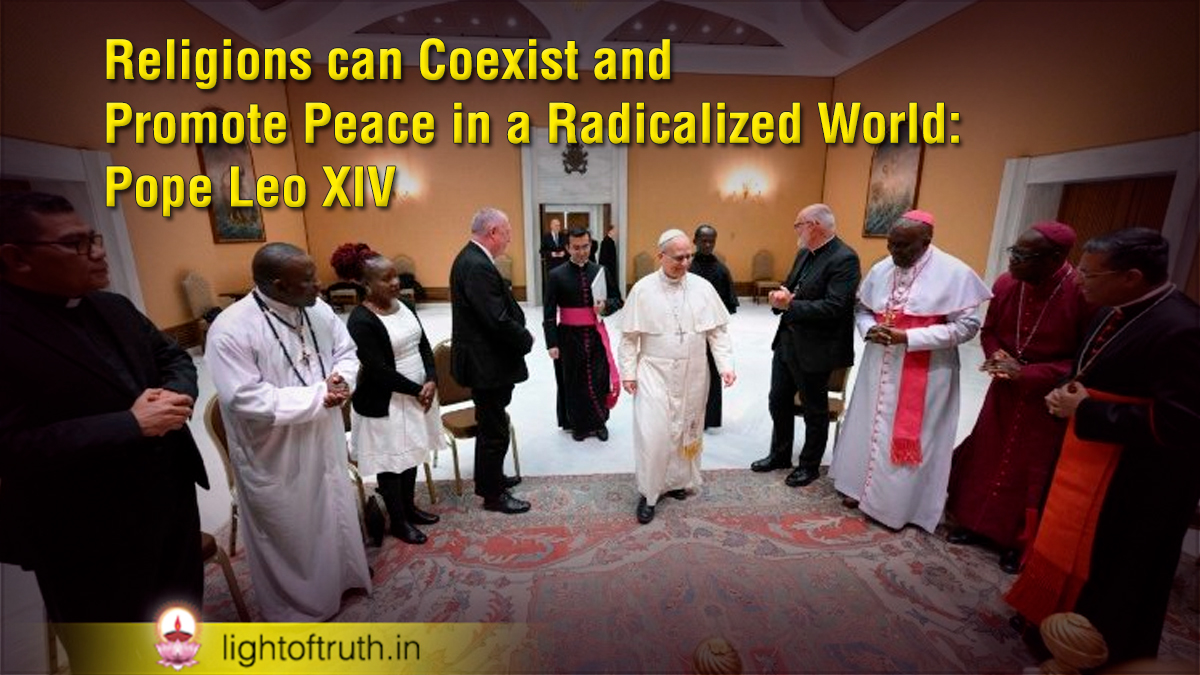
In a year marked by geopolitical tensions, economic volatility, and social unrest, the Italian Encyclopedia Institute Treccani has recognized Pope Leo XIV as its 2025 Person of the Year. The decision underscores the impact of a pontificate that, while understated in public spectacle, embodies foundational Christian values such as sobriety, discernment, and attentive listening—qualities the Institute lauds as emblematic of “a Church for the poor.”

The Treccani Yearbook 2025 emphasizes the Pope’s deliberate choice to temper his visibility and rhetoric. “Parsimonious in presence and words,” Leo XIV has navigated the pressures of global attention by avoiding polarizing categorizations, both politically and theologically. This measured approach contrasts sharply with the high-octane rhetoric of contemporary world leaders, positioning the pontiff as a stabilizing presence in an era of fragmented narratives and competing ambitions.

Leo XIV’s recognition by Treccani reflects not only his influence within ecclesiastical circles but also his capacity to project a moral and diplomatic presence in world affairs. By exercising quiet leadership, prioritizing pastoral care, and resisting the pressures to adopt extremes, he has positioned the Catholic Church as a thoughtful actor in global discussions on justice, peace, and human dignity.

Vatican expert: Co-Redemptrix title of Mary not absolutely prohibited

Monsignor Maurizio Gronchi, an expert consultant for the Dicastery for the Doctrine of the Faith at the Vatican, clarified that the measure established last month regarding the use of the titles “Co-Redemptrix” and “Mediatrix” for the Virgin Mary is “not an absolute prohibition” and that these titles can still be used in popular piety, provided their meaning is understood.

“It’s not an absolute prohibition, but it will no longer be used in official documents or in the liturgy. But if used in popular devotion, understanding its meaning, no one will be reprimanded for it,” the expert said in an interview with “EWTN Noticias,” the Spanish-language broadcast edition of EWTN News.

The interview took place after the Nov. 4 publication of the doctrinal note “ Mother of the Faithful People” in which the Dicastery for the Doctrine of the Faith, led by Cardinal Víctor Fernández, stated that the use of the title “Co-Redemptrix” is “always inappropriate” and encourages “special prudence” regarding the title “Mediatrix of All Graces.” The text has sparked controversy among the faithful, especially among those who use these terms within the Catholic Church.

Gronchi explained that “the issue is an old one. This problem has been discussed for 99 years, since 1926. We have studied it on several occasions, and the dicastery has received numerous requests for clarification regarding these terms. These titles present a problem. There is a risk of obscuring, of not clearly explaining that the centrality of the paschal mystery of salvation lies in Jesus Christ.”

“For this reason,” the expert indicated, “now is the time to clarify these titles, so that when it is said that they have been used in the past, it will mean that it was done inappropriately. It doesn’t mean that it was wrong, but rather that a definition of these titles was not yet mature and clear.”

The consultant emphasized that the pontifical document is a doctrinal note that “deepens, clarifies, and states that these terms are not appropriate, they are not opportune, simply because Mary participates in the redemption, she collaborates in the redemption, but not in the same way as Jesus.” After noting that the Virgin Mary is like the moon reflecting the light of the sun, a symbol of Jesus, Gronchi said that “Mary gives birth to Jesus, but on the cross, Jesus dies, not Mary. Mary participates with her heart, with her affection, with all that she is, but it is a participation that the document calls dispositive, meaning that Mary disposes us to receive the grace of Christ, but she is not the source of grace, nor the mediatrix of all graces.”

Bethlehem celebrates 1st Christmas in two years

Cardinal Pierbattista Pizzaballa, recently returned from a visit to the Church of the Holy Family in Gaza—the enclave’s only Catholic parish, where he conveyed the closeness and solidarity of the Catholic Church—opened the Christmas celebrations in Jesus’ birthplace by making the traditional procession from Jerusalem to Bethlehem.

Upon his arrival in Manger Square, the Latin Patriarch of Jerusalem said he brought greetings from Gaza’s small Christian community, which, he noted, is animated by a strong desire to rebuild. He also expressed the hope for a Christmas marked by light.

The resumption of Christmas celebrations in Bethlehem carries significance on several levels. On the one hand, there is hope that the U.S.-backed peace initiative that led to the ceasefire may offer Palestinians the opportunity to move forward with reconstruction plans. On the other hand, it revives expectations that Bethlehem’s residents may gradually return to work, as 85 per cent of local families depend directly or indirectly on tourism, which came to a halt during the war.

Hotel owners and staff, shopkeepers selling religious articles, taxi drivers, restaurant owners, and tour guides have seen their livelihoods largely disappear over the past two years. Bethlehem has been among the hardest-hit cities in the West Bank, lacking a strong industrial base, significant commercial activity, agricultural capacity, or a large public-sector workforce.

These difficulties are compounded by challenges affecting the wider West Bank, including Israel’s revocation of entry permits for most seasonal Palestinian workers to its territory and settlements, as well as the partial payment of salaries to Palestinian Authority employees.

Despite these hardships, the population continues to demonstrate resilience and hope. Speaking to Vatican Radio’s Jean-Charles Putzolu, Bethlehem’s Mayor, Maher Nicola Canawati, said that the renewed celebrations are meant to restore hope after a prolonged period of hardship. “After two years of silence,” the Mayor said, “we believe we have reignited the spirit of Christmas, because the people of Bethlehem needed hope—hope for a better tomorrow. And that is exactly what we have done.”

Pope at Urbi et Orbi: Peace is a shared responsibility

As war continues to scar the world, Pope Leo XIV used his Christmas Urbi et Orbi message to renew his appeal for peace, dialogue, and responsibility, turning to those regions where violence and instability continue to claim innocent lives.

The Pope prayed for “justice, peace, and stability for Lebanon, Palestine, Israel, and Syria,” and urged that the promise of peace rooted in righteousness be renewed. He appealed in a particular way for Ukraine, asking that “the clamour of weapons cease,” and that all those involved, with the support of the international community, find the courage to engage in “sincere, direct, and respectful dialogue.”

Remembering conflicts that risk being forgotten, Pope Leo XIV expressed closeness to the victims of war and violence in Sudan, South Sudan, Mali, Burkina Faso, and the Democratic Republic of Congo, as well as to all those who suffer as a result of injustice, political instability, religious persecution, and terrorism.

The Pope also prayed for Haiti, calling for an end to violence and progress along the path of peace and reconciliation. He also invoked peace for Myanmar, asking that the country be guided towards reconciliation and hope, especially for its younger generations. Turning to Latin America, he encouraged those with political responsibilities to give space to dialogue for the common good, rather than to ideological and partisan divisions.

The Pope also prayed for the restoration of the “ancient friendship” between Thailand and Cambodia, and entrusted to God the peoples of South Asia and Oceania, who have been severely affected by recent natural disasters, calling for renewed commitment to assisting those who suffer. Against this backdrop of conflict, Pope Leo XIV recalled the meaning of Christmas, proclaiming that “today, true peace has come down to us from heaven.” Quoting Saint Leo the Great, he affirmed that “the Lord’s birth is the birth of peace.”

Reflecting on the Nativity, the Pope recalled that Jesus “was born in a stable because there was no room for Him in the inn,” and that the Son of God, “through whom all things were created,” was not welcomed. “Out of love,” the Pope said, Christ “accepted poverty and rejection, identifying Himself with those who are discarded and excluded.”

Already in the birth of Jesus, the Pope noted, “we glimpse the fundamental decision that would guide the entire life of the Son of God… the decision not to leave us under the burden of sin, but to bear it Himself for us.” At the same time, he reminded the faithful that peace also requires human responsibility. Quoting Saint Augustine, he said that “God, who created us without us, will not save us without us,” adding that “responsibility is the sure way to peace.”

Christians seek security in Indian state ahead of Christmas

Christian leaders in Chhattisgarh have appealed to authorities for police protection during Christmas and New Year celebrations, citing a sharp rise in violence and intimidation against the minority community. The state has emerged as a major hotspot of anti-Christian hostility, recording 165 attacks in 2024 — the second-highest in India, according to the United Christian Forum. Christian leaders say the situation has worsened since the Bharatiya Janata Party (BJP) returned to power in 2023, with many attacks allegedly carried out by Hindu nationalist groups targeting tribal Christians. “We met the district magistrate of Jashpur on Dec. 8 and requested security for churches and Christian families,” said Kamal Kujur, president of the Rashtriya Christian Morcha. He said delegations will approach officials in all districts to ensure peaceful Christmas celebrations.

Christian pastors report that house churches are frequently attacked, with mobs disrupting prayer meetings, abusing worshippers, and physically assaulting them. Many allege that police often refuse to register complaints from Christians while readily accepting accusations from Hindu groups claiming “forced conversions. “Instances of police pressure have increased, leaders say. In August, hundreds of Pentecostal congregations suspended Sunday services after police instructed them to seek prior permission for worship. In Raipur, nearly 100 pastors were reportedly asked to halt gatherings to “maintain law and order.” Concerns grew in November when the Chhattisgarh High Court upheld village hoardings restricting the entry of “converted Christians,” ruling that they protected tribal culture — a decision Christians say has deepened their sense of vulnerability. With Christians forming less than 2% of the state’s 30 million people, community leaders urge authorities to safeguard their right to celebrate peacefully amid escalating fears.

Kerala Latin Catholic Community Celebrates Latin Catholic Day with Statewide Observance

Latin Catholic Day was observed with enthusiasm across parishes of the Latin Church in Kerala, as the community united under the leadership of the Kerala Region Latin Catholic Council (KRLCC) to reaffirm their shared identity and solidarity. The coordinated observance featured parish-level programmes, public gatherings, and community reflections highlighting the contributions and aspirations of Latin Catholics in the state. The central celebration took place at the Varapuzha Archdiocesan Bishop’s House, where Archbishop Joseph Kalathiparambil inaugurated the day by hoisting the KRLCC flag. Across the state, parishes marked the occasion with prayers, cultural programmes, and gatherings that celebrated the community’s heritage and collective strength. Latin Catholic Day served as a moment for renewed commitment to social justice, equal opportunities, and community welfare, while reinforcing the message that unity remains essential for addressing contemporary challenges.

Priest honoured for prison reforms with compassion

Salesian College Sonada alumnus Fr N.T. Scaria Nedumattathil  has been honoured with the Lifetime Achievement Award for Prison Reforms with Compassion at the 15th International Human Rights Summit & Awards, held on International Human Rights Day at the India Islamic Cultural Centre, New Delhi. The event was organised by the All India Council of Human Rights, Liberties and Social Justice. The Global Jury celebrated Fr Scaria’s three decades of transformative service among prisoners across West Bengal, Jharkhand, and Bihar. His mission began in 1995 with a simple visit to the Berhampore Central Correctional Home, which ignited a lifelong ministry rooted in dignity and hope. Over the years, he established vocational training, legal aid, counselling, family support, and notably, the world’s first certified motor driving school inside a prison, enabling life convicts to earn licences and secure employment.

Under his leadership, the Don Bosco Prison Ministry evolved into a powerful movement of rehabilitation and reintegration, touching thousands of inmates and their families. Music, sports, theatre, and cultural programmes further helped inmates rediscover confidence and camaraderie. Fr Scaria has previously been recognised by the National Legal Services Authority (2006) and received the Pascual Chávez Award (2012) for innovative pastoral leadership. A documentary titled Joy Behind Bars (2022) captured his impact and shifted public attitudes toward prisoners. Now in his eighties, Fr Scaria attributes the recognition to collective effort, saying, “This is God’s work, carried out by many hands.” Calling prison ministry essential to the Salesian mission, he continues to inspire clergy, volunteers, and reformers to embrace justice with compassion.

Thousands of Christians Rally in Delhi Against Rising Violence

Around 2,000 Christians from across India gathered in New Delhi on 29 November 2025 to protest what organisers described as a rise in sustained and systematic violence against the Christian community, calling for justice, unity and constitutional protections amid rising incidents of attacks. The demonstration was held under the banner of the National Christian Convention, bringing together representatives from over 200 denominations, civil society groups and legal advocates to highlight concerns over increasing violence and impunity. Speakers at the rally pointed to data showing reported incidents of anti-Christian violence rising sharply over the past decade, with cases documented nationally by organisations such as the United Christian Forum. 

According to figures referenced by participants, reported incidents of violence against Christians rose from 139 in 2014 to 834 in 2024, with nearly 5,000 incidents documented over the past decade. Organisers called attention to what they described as a pattern of assaults, threats and discrimination that they say often goes unpunished. Protesters resolved to draft a national manifesto outlining demands for stronger protection of religious freedoms and justice for persecuted believers. The manifesto is intended to be submitted to key constitutional authorities including the President of India, the Prime Minister, the Chief Justice of India and relevant ministers. 

Participants shared accounts of violence that included killings, assaults and denials of burial rights. In one reported case from Chhattisgarh in May 2024, a Christian man was killed and his case was recorded as a land dispute, while in Odisha a mob blocked the burial of a young Christian man, forcing his family to exhume his body despite a formal complaint. Organisers said a key concern remains impunity, with reports indicating that a high proportion of violent incidents do not result in formal legal action, and urged the government and law enforcement to uphold constitutional guarantees of religious freedom and equal protection under the law.

Indian Church welcomes court allocating seats for women on legal bodies

Church leaders across India have welcomed a Supreme Court directive reserving 30 percent of seats on state bar councils for women, calling the ruling a major stride toward gender equality in the legal profession.

The order, issued on Dec. 8 by a bench led by Chief Justice Surya Kant, mandates that where elected representatives fail to meet the 30 percent quota, councils must fill at least 20 percent through voting and the remaining 10 percent by co-opting qualified women lawyers. The court said the measure aims to correct the severe underrepresentation of women in bar council bodies.

Petitioners informed the court that only 9 of the 441 elected members across 18 state bar councils — barely 2 percent — were women, and that 11 councils had no women at all. The bench held that such composition violates constitutional guarantees of equality and fails to reflect the steady increase in women entering the legal field.

Father Robinson Rodrigues, spokesperson for the Catholic Bishops’ Conference of India (CBCI), called the ruling “a wonderful order” that would help reduce gender discrimination and strengthen women’s participation in shaping legal institutions.

Supreme Court lawyer Sister Mary Scaria of the Sisters of Charity of Jesus and Mary said the move would introduce “unique perspectives” to legal governance and improve public trust. She added that women’s representation should eventually rise to 50 percent.

Holy Spirit Sister Julie George, who heads a national forum of Catholic priests and religious lawyers, described the directive as progressive but noted that men would still hold 70 percent of seats. Jesuit lawyer Father A. Santhanam from Tamil Nadu called the ruling “historic” and a vital step toward dismantling patriarchy within the legal system.

Official Website

Exit mobile version