

The registration of Christian marriages in Mumbai has come to a halt after the retirement of the marriage officer in July.
Amid the Covid-19 pandemic, newlywed couples are forced to travel to Pune to get their marri-age certificates stamped by state government authorities. Activists Godfrey Pimenta and Nicholas Almeida of the Watchdog Foundation have urged the state government to appoint a new officer in Mumbai at the earliest. Advocate Vivian D’Souza, Rita D’Souza as well as Tulip Miranda, president of the Bombay East Indian Association, have signed the request.
Pimenta said, “Mumbai has a Catholic popu-lation of 10 lakhs (1 million), and every year, thousands of couples get married in the 100-plus Catholic Churches that are located in Mumbai alone. The post of marriage officer remains vacant ever since the previous incumbent Ashish Lopez retired a few months ago.”
Pimenta explained the procedure saying, “Couples are required to procure their marriage certificate from the local church where the nuptials were solemnized. The certificate is then attested by the chancellor attached to Archbishop House in Colaba, and subsequently by a notary public. Later, it is to be stamped by the state home department and finally by the marriage officer whose office is in Mantralaya.”
In the absence of the Mumbai appointee, couples are required to travel to Pune to get attestation done through the Commissioner of Social Welfare. Almeida said, “This is a matter of concern since Pune has a high number of Covid-19 cases. More-over, the journey is tedious. The state government should immediately fill the vacancy in Mumbai.” The archdiocese of Bombay expressed concern as well. Spokesman Fr Nigel Barrett said, “The situa-tion of having no registrar of Christian marriages is indeed true. It has been communicated to the government about the urgency to appoint a registrar and we are hopeful it will be addressed soon.”
Category Archives: National
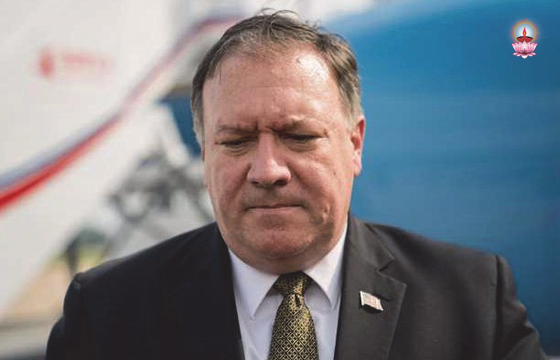
India escapes US watch list, Pak sanctions on religious freedom issues
US Secretary of State Mike Pompeo’s intervention led to Pakistan escaping sanctions for lack of religious freedom and India stopped from being listed on a Special Watch List, said US Ambassador-at-Large for Inter-national Religious Freedom, Samuel Brownback.
“There were several reco-mmendations that the Secretary [Pomoeo] did not follow, and this was one of them,” he said about keeping India away from the Countries of Particular Concern (CPC) list. The US Commission for International Religious Free-dom (USCIRF) had recommend-ed that India be put in the CPC list because of the Citizenship Amendment Act (CAA).
Brownback said the US had privately discussed these issues with the Indian government at a high level, and will continue to get raised. Pompeo is “well aware” of the statute (CAA) and the issues associated with the Modi government. And as I said, he’s raised it at the highest levels, but just decided at this point in time not to place them on a CPC or a Special Watch List,” he said during a briefing on rollout of US action against religious freedom violators. Though Brownback was critical of India, he did not get baited by a question posed by a Pakistani-origin journalist who wanted to know why Pakistan was on CPC and India was not.
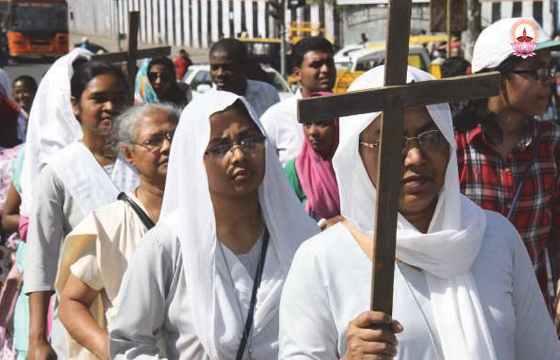
BJP leads reconversion of Christian families in India
The Bharatiya Janata Party (BJP) in the southern Indian State of Karnataka has reconverted 23 people from five Christian families to Hindu-ism. A reconversion ceremony on Nov. 29 was organized by Anant Kumar Hegde, a BJP leader and MP for Uttara Kannada district. “Hegde was handpicked by the Hindutva hierarchy to create communal divisions and tension in the coastal belt of Karnataka,” Sajan K. George, president of the Global Council of Indian Christians, told UCA News.
“After BJP victories in the 2014 and 2019 general elections, the Sangh Parivar [fanatic group] moved with the speed and cunning of a barracuda to attack and weaken the constitutional institutions needed to transform Indian society into a more equal and just one.”
George said the BJP has used the twin weapons of a brute majority and communal polarization to implement laws and policies that have impacted most adversely those who are denied all rights and can make no claims to equality: women, Dalits, backward castes and tribal people.
“This advance towards a Hindu Rashtra [Hindu nation] is viewed with concern and alarm by many, but as far as the majority are concerned, they feel that only members of minority communities will be threatened while they themselves will be guaranteed some kind of a privileged status,” he added.

Assam wants couples to disclose religion
Assam is planning a law that will require the bride and groom to declare their religion and income in official documents a month before the wedding. Against the backdrop of many other BJP-ruled states bringing in laws to check “love jihad,” the Assam government says its aim is to “empower our sisters.”
The ruling BJP’s move comes ahead of polls in Assam next year, which the party is confident of winning. State Minister Himanta Biswa Sarma said his govern-ment’s law was not entirely like the ones in Uttar Pradesh and Madhya Pradesh, but would be similar.
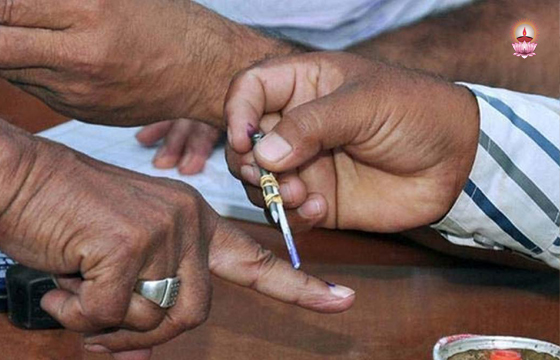
BJP fields 500 Christian, 112 Muslim candidates in Kerala
The Bharatiya Janata Party has fielded 500 Christian and 112 Muslim candidates for the local body elections in Kerala.
If the BJP manages to win at least municipal corporations in these elections, it would brighten the party’s chances in the Kerala assembly elections scheduled to be held in 2021.
Kerala will elect its local bodies on December 8, 10 and 14 and the results are expected on December 16.
The state has total 27,656,579 voters: 13,172,629 male, 14, 483,668 female and 282 trans-gender. More than 75,000 candidates are in the fray for the polls after November 24, the last day for withdrawing nominations.
The voters will choose from 54,494 candidates for 941 grama panchayats. The candidates contesting in 152 block panchayats number 6,877 while 1,317 will fight it out for 14 district panchayats.
The 87 municipalities in the state will see 10,339 candidates and the six corporations have 1,986 candidates
At 8,497, Malappuram tops the list candidates in the fray, followed by Ernakulam 7,256, Thrissur 7,020 and Palakkad 6,532.
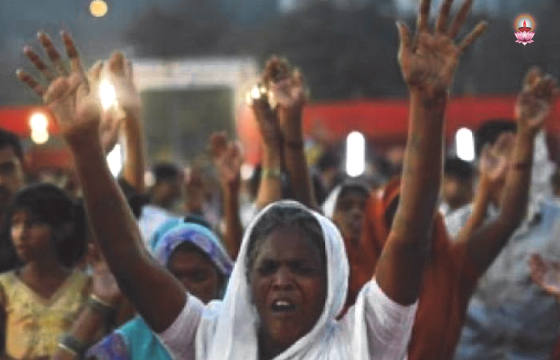
Bloody attack on Chhattisgarh Christians preparing to celebrate Christmas
Hundreds of people have been injured at a gathering of Christians preparing to celebrate Christmas. There are even some unconfirmed reports of deaths.
The area is isolated, perhaps not allow witnesses and the police refuse to respond to calls. The violence took place in the village of Sindhwaram, in Chhattisgarh: from 2.00 AM night until the morning, a crowd of drunk and armed people attacked a tent where groups of Christians who had been celebrating the beginning of the Advent season in preparation for Christmas had gone to sleep the previous day. The gathering was also attended by faithful from other villages around. The village members have sealed off the area and are not allowing anyone to enter or take photos or videos.
Activist Arun Pannalal, president of the Chhattisgarh Christian Forum, managed to get in touch with the Gajral police station only morning at 6 am. The police denied all violence. The victims are being housed in the police station. Members of the Chhattisgarh Christian Forum say that as soon as they heard of the attack, they immediately phoned the police, but the phone lines were cut off from 2am until this morning.
For the past two years Arun Pannalal has been appealing to the Chief Minister of the State and the Minister of the Interior, “but my requests – he tells AsiaNews – have not been taken seriously. The entire Bastar region suffers from premeditated attacks targeting Christains. They are attacks related to a planned conspiracy. The government should act immediately ordering an in-depth investigation into this violence.”
–ASIANNEWS

Guide to interfaith marriages to be drawn up in India
Cardinal George Alencherry has formed a commission to frame guidelines for interfaith marriages following a controversy over a retired bishop solemnizing such a marriage between a Christian bride and a Muslim groom in a church in India’s Kerala State.
Cardinal Alencherry, the head of the Eastern-rite Syro-Malabar Church based in southern India, “wants to clear the confusion among the faithful over interreligious marriages and constituted a commission of canon law experts to prepare the guidelines to be followed in interreligious marriages in churches,” said Father Alax Onampally, secretary of the church’s media commission. Card. Alencherry, the president of the Kerala Catholic Bishops’ Council, also sought a separate report from Archbishop Antony Kariyil of Ernakulam-Angamali Arch-diocese, where the controversial marriage was solemnized.
On Nov. 9, Bishop Mathew Vaniyakizhakkel of Satna in the central State of Madhya Pradesh, blessed the marriage between the Catholic bride and Muslim groom at Kadavanthra St Joseph Church in Ernakulam-Angamali Archdiocese. Archbishop Kariyil’s probe will investigate if the parish priest obtained permission from the local bishop to solemnize the marriage in church.
Elderly Jesuit priest describes ‘joy’ of Indian prison life
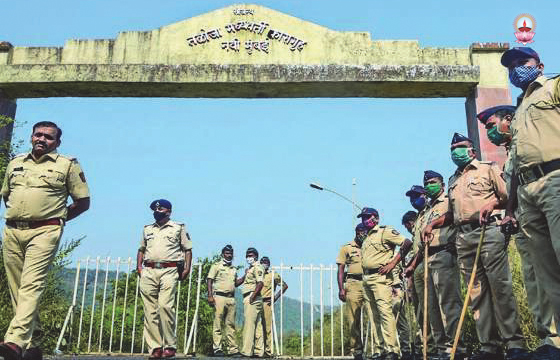
An elderly Jesuit priest struggling in an Indian jail with ill health says he still finds happiness in listening to the stories of other inmates and credits his congregation for the training that helped him cope with such a difficult situation. Father Stan Swamy, 84, has been in Taloja Central Jail in Mumbai, capital of Maharashtra in western India, since Oct. 9 following his arrest on charges of sedition and links with outlawed Maoist rebels.
The priest is suffering from Parkinson’s disease, a hernia and age-related ailments and is unable to eat and drink without help from other prisoners.
Inmates help him to bathe, wash his clothes and do other daily chores on account of his age and ill health. “Listening to the life narratives of the poor prisoners is my joy in Taloja prison. I see God in their pains and smiles,” Father Swamy told one of his priest colleagues in a telephone call. “Now, I am using a baby-sipper mug, which I purchased through the prison hospital. I have communicated this need to our lawyers. I am still awaiting to receive the sipper-tumbler,” Father Swamy said.
The priest maintains an attitude of contentment even in his struggle and gives credit to his Jesuit training and close to 50 years of working with under privileged indigenous and Dalit former untouchable people.
“My needs are limited. The adivasis [indigenous people] and the Society of Jesus have taught me to lead a simple life,” he said.
Driven out Indian Christians return, threat lingers
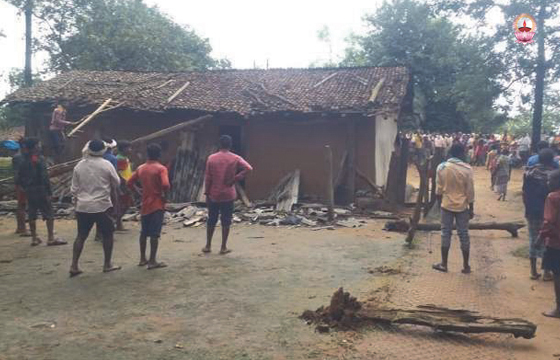
Some 100 Christians have returned to their villages in India’s Chhattisgarh State following a court order, almost two months after they were attacked and driven out of their homes.
The state High Court in Bilaspur ordered the Kondagaon district administration to facilitate the safe return of the displaced Christians from three villages and to ensure their protection.
“We have returned to our villages as the court has ordered our protection,” Shiv Ram, one of the petitioners to the court, told UCA News on Nov. 17.
Ram said all 66 Christians from 10 families driven out of his Kakrabeda village have returned to the village. Some 30 Christians from six families, who fled from two other villages, also have returned, he said.
A mob of suspected Hindu right-wing activists attacked 16 houses in three villages in the state’s Bastar region on Sept. 22 and 23. The attack came after Christians refused a demand to abandon their faith in Jesus Christ.
They also attacked Christians, including women and children, in front of the police, forcing them to escape to a nearby forest to save their lives.
Following the Nov. 8 court order, the administration has set up a police check post and posted 12 police officers to ensure the Christians’ safety.
New television serial on Jesus set to begin next month
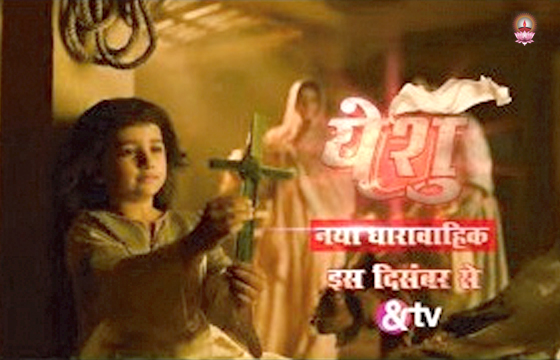
A new television serial on Jesus in Hindi is set to begin next month on TV. The story for the serial entitled “Yeshu” that deals with Jesus’ life story, is done by Utkarsh Naithani, an actor, flute player, and writer based on Divine Word missionary Father John Paul Herman’s research. “First of all, let me tell you that I the research scholar and resource person for this serial in Hindi “Yeshu,” Fr Herman, a media professional, told Matters India. He has been working on it since March 4 as the producer and director called him to Mumbai for the first meeting. “Lockdown was a great opportunity for me to sit down and work on it. Since then I am on it all the time,” said Father Herman, director of media commission, Catholic Diocese of Jaipur, Rajasthan (Western India). TV presents for the first time in Hindi General Entertainment Channels, the untold, unheard story of “Yeshu,” produced by Arvind Babbal Productions Pvt Ltd.