
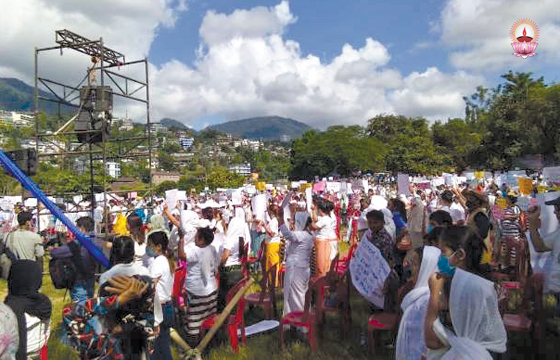
More than 10,000 Christians demonstrated in India’s Arunachal Pradesh State on Nov. 2, accusing the government of violating their right to worship by refusing permission to renovate a church.
Christians have been protesting since Oct. 6 when police in Tawang on the India-China border arrested Joseph Singhi, a pastor of Tawang Christian Revival Church, a neo-Christian sect. He was arrested on charges of maintaining a church on government land without permission.
“Right to freedom of religion is our constitutional right. But the state government does not allow us to construct churches. Where can we gather and worship our God?” asked Taw Tebin, who participated in the protest in state capital Itanagar organized by the ecumenical Arunachal Christian Forum (ACF).
He said Christians from all denominations joined the peaceful protest to attract the state’s attention to their grievances. “No other religious community faces restrictions on constructing their religious worship places,” Tebin told on Nov. 3.
Christian leaders like Tebin say the state government, run by the pro-Hindu Bharatiya Janata Party (BJP), discriminates against Christians, who form the largest single religion in the state.
Christians comprised some 30 percent of the state’s 1.3 million people in 2011. In 2001, they accounted for only 18 percent of the population, official census records show.
Category Archives: National
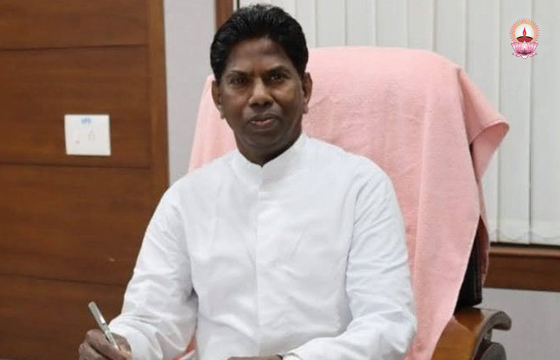
Jesuit college waives fees for poor students amid pandemic
Loyola College of Arts and Science, one of the Jesuit institutions in Tamil Nadu, has come forward to sponsor the academic fees of poor students amid the ongoing coronavirus pandemic.
The college is located in Mettala near Salem but in Namakkal district in Tamil Nadu. It was started in 2015, affiliated to the Periyar University, Salem.
It is one of the nine colleges the Jesuits manage in Tamil Nadu. The college has 1,075 students, including 442 girls, coming mostly from Namakkal and Salem districts. Matters India interviewed College principal Jesuit Father Maria Joseph Mahalingam about the work of Jesuit educational institutions in Tamil Nadu “The Periyar University extended the deadline for admission until October 30. Our Jesuit community analyzed local people’s financial situation and made a comparative study of admissions in the previous academic years. We also studied the college’s fee structure. Each semester, a student needs to pay 9,500 rupees for Arts and 10,000 rupees for the Science course. The college’s fee structure covers the expenses of special training for the Union Public Service Commission exams, English coaching and Computer Education. The financial crisis due to the continuing lockdown and the inability of bright students to pay the necessary college fees prompted us to offer the maximum scholarship to the needy.” said the college principal “Loyola College, Mettala, charges only 5,000 rupees from the first year students for the first semester while the semester fee is 10,000 rupees. For the orphan, semi-orphan, differently-abled students, some have paid only 5,000 rupees for the entire year while they need to pay 47,000 rupees including the college, hostel and examination fee for two semesters.”

Jesuits to start St Xavier’s University, Meghalaya
The draft bill was brought by the education department and the same was approved by the cabinet.
The bill will be placed in the autumn session of the State Assembly on November 5.
Speaking to media persons, Deputy Chief Minister Prestone Tynsong said, “St Xavier’s is one of the most successful uni-versities in the country. The Calcutta Jesuits have established St Xavier’s University, Kolkata at New Town in Kolkata in 2017.”
The St Xavier’s University Meghalaya will be run by the Jesuits of Kohima Region work-ing in the North East. Before submitting the Letter of intent to the Government, a team of Jesuits visited other Jesuit universities in the country. This is the third Jesuit University in the country after Xavier University Bhuba-neswar (XUB), Odisha and St Xavier’s University Kolkota (SXUK) West Bengal.
The Meghalaya government has set up a regulatory board under the Meghalaya Private Universities (Regulation of Esta-blishment and Maintenance of Standards) Act, 2012.
The regulatory board will ensure that private universities maintain the standards of infra-structure, teaching, research, examination, and extension of services, fee structure, and safeguard the interest of the state.
Hindu groups want to deny benefits to Indian tribal Christians
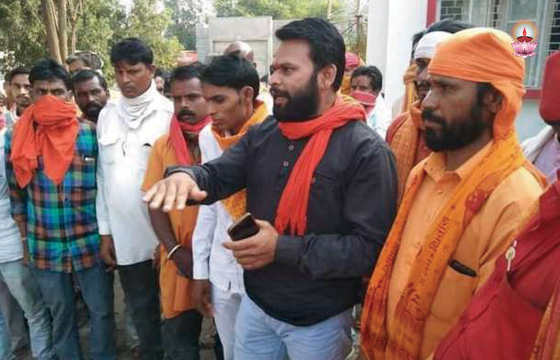
Right-wing Hindu groups in India have stepped up a campaign seeking to strip tribal Christians of government concessions with the aim of stopping more indigenous people converting to Christianity.
A group of right-wing Hindu activists marched through Jhabua town in the central State of Madhya Pradesh on Nov. 4. They shouted slogans asking the government to remove tribal people who have converted to Christianity from the list of beneficiaries.
“The benefits of reservation meant for tribal people should strictly be given to only those who have not converted to any other religion,” protest leader Azad Prem Singh told media.
India’s constitution guarantees social benefits such as re-served seats in government jobs and educational institutions along with educational fee concessions and financial support for socially poor Dalit and tribal people to help them move to the social mainstream.
Family accused of witchcraft murdered in India
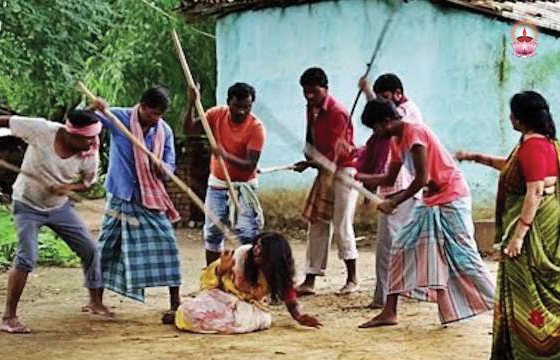
Police in the eastern Indian State of Jharkhand have arrested three people for killing three members of one family for alleged witchcraft in a crime described as an “inhuman act” by a Catholic official.
The bodies of Birsa Munda, 48, his wife Sukru Purty, 43, and daughter Somwari Purty, 20, of Kuda village in Khunti district, were found by police on October 28 after they went missing on October 7.
“It is an inhuman act and we condemn it because we have no right to take away anybody’s life. It is a matter of concern and civil society has to take it very seriously as it can’t be acceptable in modern times. The Church is always pro-life and these kinds of incidents sadden us,” said Father Vincent Ekka, who heads the department of tribal studies at the Jesuit-run Indian Social Institute in New Delhi.
“When the whole country is talking about development and progress, killing in the name of witchcraft is certainly a setback to all of us. We have to address it collectively be-cause it needs the involvement of government machinery, non-government organizations, civil society and missionaries.”
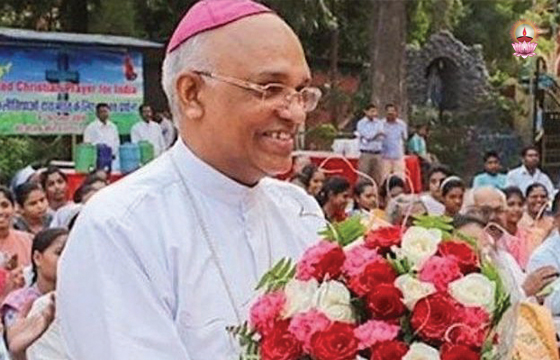
Agra gets new archbishop
Pope Francis on November 12 promoted and transferred Bishop Raphy Manjaly of Allahabad as the archbishop of Agra, the mother diocese of the Church in northern India.
He succeeds Archbishop Albert D’Souza, who has headed the Agra Archdiocese since 2007. Archbishop D’Souza last year turned 75, the canonical retirement age for bishops.
Bishop Manjaly was born on February 7, 1958, in Vendore, in southern India’s Kerala State. After school in Kerala, he joined St Lawrence Minor Seminary, Agra, in 1973. He then studied philosophy and theology at St Joseph’s Regional Seminary, Allahabad. He was ordained a priest on May 11, 1983.
He has studied master’s degree from Agra University and obtained a doctoral degree from Angelicum University of Rome, Italy.

Rome appoints apostolic visitor for Kerala congregation
The Vatican Congregation for the Oriental Churches has appointed an apostolic visitor for the Kerala-based Missionary Congregation of the Blessed Sacrament (MCBS).
An October 13 letter from the Apostolic Nunciature in Delhi to MCBS superior general Father Joseph Maleparampil said Rome has appointed Carmelites of Mary Immaculate Father Paul Achandy as the apostolic visiror to the 87-year-old congregation.
The appointment, done with Pope Francis’ knowledge, is “Ad Nutum Sanctae Sedis,” a Latin term meaning “at the disposition of the Holy See.” It refers to any circumstance involving a conflict of ecclesiastical jurisdiction, where Rome decides to take the matter under its own jurisdiction and reserves to itself the right to make a final judgment on the matter.
Father Achandy is currently the chancellor of the Bengaluru-Based Christ University. He is also the rector of the Dharmaram College, a major seminary managed by his congregation adjacent to the university.
The 57-year-old priest took over as the vice chancellor on September 21.
He is an alumnus of Dharmaram College and former staff of the university when it was a college. The congregation was raised to the pontifical status on December 2, 1989. The congregation has two provinces– Kottayam and Kozhikode – in Kerala and region, Satara in the western Indian State of Maharashtra.
The two places the congregation works outside the Kerala are Shimoga district in Karnataka and Satara and Solapur districts in Maharashtra. It has missions also in Rajasthan and Tamil Nadu, a residences in Italy and Germany. Its priests work in Australia, North America and the Philippines.
This is the second time this year that Rome intervenes in the administration of religious congregations in India. On May 16, the Claretian congregation replaced its Bangalore provincial with a Vatican official as the delegate of the superior general.
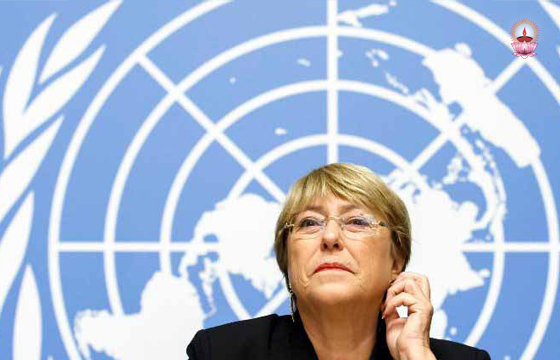
UN rights chief urges India to safeguard human rights
UN High Commissioner for Human Rights Michelle Bachelet on October 20 appealed to the Indian government to safeguard the rights of human rights defenders and NGOs, and their ability to carry out their crucial work on behalf of the many groups they represent.
Bachelet expressed regret at the tightening of space for human rights NGOs in particular, including by the application of vaguely worded laws that constrain NGOs’ activities and restrict foreign funding.
“India has long had a strong civil society, which has been at the forefront of groundbreaking human rights advocacy within the country and globally,” the High Commissioner said. “But I am concerned that vaguely defined laws are increasingly being used to stifle these voices.”
Bachelet, a former president of Chile, cited as worrying the use of the Foreign Contribution Regulation Act (FCRA), which a number of UN human rights bodies have also expressed concern is vaguely worded and overbroad in its objective. The Act prohibits the receipt of foreign funds “for any activities prejudicial to the public interest.”
The Act, which was adopted in 2010 and was amended in September this year, has had a detrimental impact on the right to freedom of association and expression of human rights NGOs, and as a result on their ability to serve as effective advocates to protect and promote human rights in India.
It is expected that the new amendments will create even more administrative and practical hurdles for such advocacy-based NGOs. Most recently, Amnesty International was compelled to close its offices in India after its bank accounts were frozen over alleged violation of the FCRA.
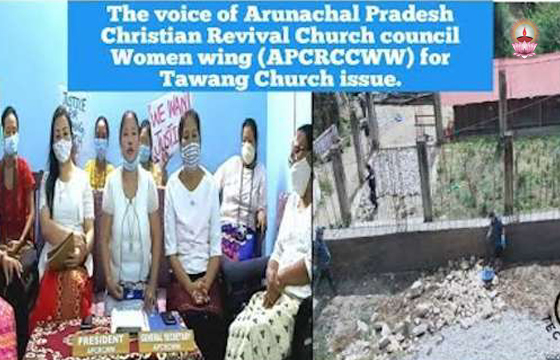
Christians angry over blocking of church construction in India
A Christian group in the Indian state of Arunachal Pradesh is mulling a protest after the state government prevented construct-ion of a church because it says it was illegal.
Arunachal Christian Forum (ACF) has asked the state govern-ment run by the pro-Hindu Bha-ratiya Janata Party (BJP) to qui-ckly resolve the issue in Buddhist-majority Tawang town.
“The present government says that the church is illegal as it is on public land, referring to the Supreme Court order that bars construction of religious structures in public places, but that is not the case here,” Father Felix Anthony, spokesman for the Catholic Church in north-eastern India, told.
“People here who are for or against the construction of the church are not for disturbing the peace of the community that has been prevailing for years. People want the issues sorted out ami-cably. There is no question of disobeying the law written in the constitution.”
Bishops in Kerala on hunger strike for Catholic education
Several bishops in Kerala held a day-long hunger strike October 20 to protest the state govern-ment’s withholding of funds from Catholic schools.
The hunger strike was held October 20 in front of the Kerala state secretariat. The prelates participating were Bishops Jo-shuah Kizhakkeveettil of the Syro-Malankara Eparchy of Mavelikara, chair of the Kerala bishops’ education commission; Paul Mullassery of Quilon, the vice chair; and Thomas Tharayil, an auxiliary of the Syro-Malabar Archeparchy of Changana-cherry.
Archbishop Maria Callist Soosa Pakiam of Trivandrum said the state government “curtails our rights as a religious minority to run education institutions through arbitrary orders and amendments to the existing laws,” UCA News reported.
Christians run about 5,000 of Kerala’s 13,000 schools. The government is required to provide financial aid to over half of these schools to support teachers’ salaries.
Father Charles Leon, secretary of the Kerala bishops’ education commission, told UCA News that “it is an indefinite protest.” Protests were held in each of Kerala’s 14 districts.
He also said the state government tried “to meddle in the appointment of teachers in the state-aided schools.”