

Nine Christians charged under a newly enacted anti-conversion law in central India’s Madhya Pradesh state plan to seek bail from the state’s High Court after a trial court denied them bail.
The court in Indore city turned down the bail application on Jan. 27, a day after the Protestant Christians were arrested from a Catholic media centre where they had gathered for a routine prayer service.
Judge Yatindra Kumar Guru denied them bail, saying that “it does not seem appropriate to grant bail to the accused, looking into the facts and circumstances.”
Pastor Patras Savil, who is providing legal help to the detained Christians, said they are now “left with no other option than moving the High Court” for bail.
Police charged 11 Christians with violating Madhya Pradesh’s stringent anti-conversion law after right-wing Hindu activists stormed into a prayer service at Satprakashan Sanchar Kendra, a Catholic media center. They accused the Christians of conducting mass religious conversion.
The media center run by the Society of the Divine Word offer-ed the Protestant group space to conduct prayer services.
The center contacted police when the Hindu activists barged into the center. But the activists demanded police take action against the Christians for violating a new anti-conversion law enacted on Jan. 9.
Category Archives: National
Catholic theologians rally behind protesting farmers
A national association of Catholic theologians in India has expressed solidarity with farmers protesting against three new farm laws on the borders of the national capital for the past 70 days.
“We the members of Indian Theological Association firmly support the cause of the farmers and all those who strive relentlessly for peace founded on justice. We demand that the government listens to the voice of the poor and repeals the controversial laws,” the theologians assert in a statement issued on February 3.
The association points out that the farmers started the Delhi protests on November 26, 2020, demanding the repeal of the new farm laws and legal guarantee for minimum support price for their agricultural produce.
The Indian agriculture acts of 2020, often referred to as the Farm Bills, are three acts initiated by the Parliament of India in September 2020. They are: the Farmers (Empowerment and Protection) Agreement of Price Assurance and Farm Services Bill, The Essential Commodities Act (Amendment) Bill and the Farmers’ Produce Trade and Commerce (Promotion and Facilitation) Bill.
The Lok Sabha, the lower house of the parliament, approved the bills on September 17, 2020, and the upper house Rajya Sabha passed them three days later. Indian President Ram Nath Kovind gave his assent on September 27, 2020. “The laws have made Indian farmers, most of them own less than one acre, even more vulnerable by giving the levers of power to the big agri-business companies,” the Indian Theological Association (ITA) said in.
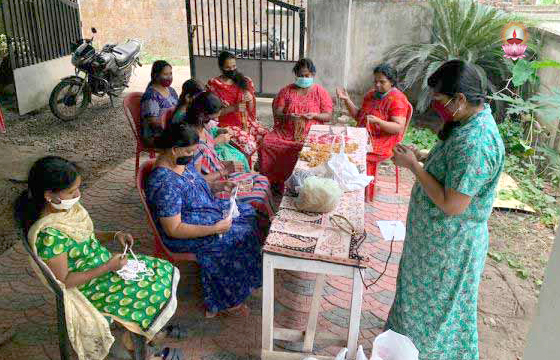
Kochi women bead rosaries for 200 years
Turning beads into elegant rosaries isn’t merely Vilma Antony’s sustenance. It’s her spiritual calling. She counts the prayers of thanksgiving, devotion, and confession as she strings her silver beads, interspersing this activity with gospel readings at her village home a few miles from the South Indian port city of Kochi. She’s joined by 10 other women who sing and narrate folk stories as they string the sacred prayer beads through the afternoon. Antony’s home is among 2,000 others in Koonammavu — a northern suburb of Kochi city— that has nurtured rosary making for over two centuries. The villagers call it their “little Rome” from which they ship rosaries to different parts of India and beyond, including the United States, Europe, Africa, and Middle East.
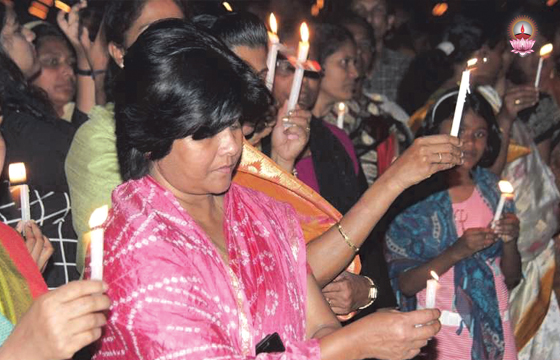
Hindu fanatics raze Protestant church in southern India
An under-construction Protestant church in the southern Indian state of Telangana was demolished by a mob of radical Hindus on January 20. Gethsemane Prardana Mandiram (church) in Mahabubabad was attacked by a group of Hindu fanatics headed by a leader named Bura Venakanna, said Pastor Muhammad Afzal Paul.
“Local Christians believe that the main reason for the attack is that there are around 80 churches of different denominations in a radius of 10 kilometres, which the Bajrang Dal [a radical Hindu group] could not accept,” Pastor Levi of the Power of Jesus Fellowship, a Protestant church, told.
“The local administration has stationed some police officers at the church attack site and it is under investigation. The church is very small with about 100 members.
“A Muslim named Muhammad Afzal, who converted to Christianity and who is now known as Pastor Muhammad Afzal Paul, takes care of the attacked church. Christians are terrified but believe that the investigation will have no impact as most probably the officials will ask both parties to compromise.
“The majority of people in Mahabubabad are Hindus. There is a chance that the issue will go in their favour but we have full faith in the system and believe the truth will come out.”
However, Pastor Samuel of Maranatha Prarthana Mandiram, another Protestant church, said these incidents are occasionally reported in the media and attacks on the church are suspected land disputes. “Some vested interest people want to sort out a land dispute and take the law into their hands,” he added.
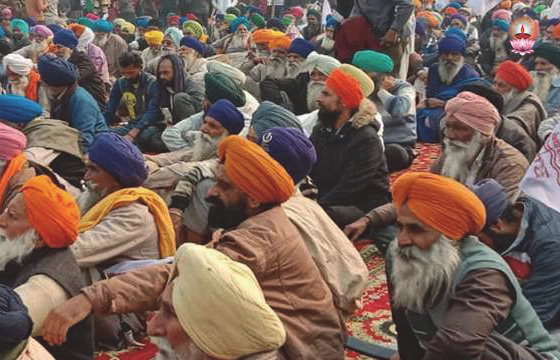
Church leaders slam violence at Indian farmers’ rally
Church and political leaders in India have condemned a clash between police and farmers that resulted in the death of one farmer and injuries to more than 80 others.
The farmers’ rally in New Delhi on India’s 72nd Republic Day on Jan. 26 became out of control after the protesting farmers clashed with police near the Income Tax Office and Red Fort as police used baton charges and tear gas to disperse them.
“Our solidarity is with the protesting farmers and with the family of the man who lost his life during the protest march due to an accident. We support their demand for a repeal of farm land laws and stand with them,” Father Eugene Perera, secretary of the Indian bishops’ Office for Labour, told UCA News.
“It is very unfortunate that one farmer lost his life and many were injured, including police personnel, and we condemn the avoidable incident. Had the authorities been more alert, things would not have gone out of control.” Farmers have been protesting against bills passed last September, claiming that the laws are anti-farmer and will harm the agricultural sector.
Farmers who have been protesting on the outskirts of the national capital for the last two months say the new laws will deprive them of the minimum support prices that the government assured them for their produce.

India’s Bethany congregation gets first four Tanzanian members
Sisters of the Little Flower of Bethany, an Indian catholic religious congregation, on Jan. 23 added four Tanzanians to its fold.
Novices Clara Mariamu, Anitha Fadhila, Bernadeta Nonkondo and Veronica Mamue pronounced the first vows at a function in Divine Mercy Church in Mwanga, a town in northern Tanzania at the foot of the north Pare Mountains.
Sister Rose Celine, superior general of the Mangalore-based congregation, also known as the Bethany Sisters, received the vows from their first Tanzanian members during a Mass officiated by Bishop Rogath Kimaryo of Same.
Local priests joined those from India’s Mangalore diocese who have been working in the diocese of Same for decades concelebrated the Mass.
The ceremony coincided with the 146th birth Anniversary of the congregation’s founder, Servant of God Raymond Francis Camillus Mascarenhas. The gathering of about 300 people danced to the rhythm of Bethany Anthem during the entrance procession according to the custom of the Tanzanian culture.
Also present were Sister Lillita, a general councillor of the congregation, and many other religious sisters.
After the profession, the congregation sang the Magni-ficat, the song Mary from the Bible, thanking God for their gift to Bethany and to the Church.
Sister Celine said the new members are the fruit of the labour of their sisters in Tanzania Mission, which was started in 2013.
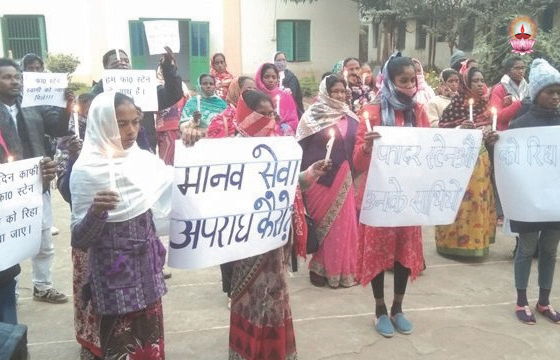
Dumka Christians mark Father Stan’s 100 day in prison
Christians in Jharkhand state’s Dumka town on January 15 took out a candle light procession to pray for Jesuit Father Stan Swamy, who has completed 100 days in a Mumbai prison.
They prayed and walked with posters demanding the release of the member of the Jamshedpur Jesuit province.
“We demand his release as he is innocent,” said Daniel Hembrum, a lay leader who joined the procession. We believe he was falsely accused by the vested interested people as he worked for the welfare of the tribals in Jharkhand,”he added.

Hindu radicals storm Catholic media centre in Indore
A group of Hindu hardliners on January 26 stormed a Catholic media centre in the central Indian city of Indore for allegedly conducting religious conversion program.
“By 6 pm, the premises were completely free of the trouble makers and it’s peaceful now,” says a message from Divine Word Father Babu Joseph, director of Satprakashan Sanchar Kendra (Centre for the Light of Truth).
Father Joseph, who was a former public relations officer of the Catholic Bishops’ Conference of India, says things were brought under control with the presence of the police.
Satprakashan Sanchar Kendra, a regional media center, is managed by the Indore province of the Divine Word Society. It broadcast on YouTube channel Radio Veritas Hindi programs, besides training in media and media related masters.
Narrating the day’s incidents, Father Joseph said a group of people were holding their prayer service at the center.
Bishops welcome India’s top court suspending controversial farm laws
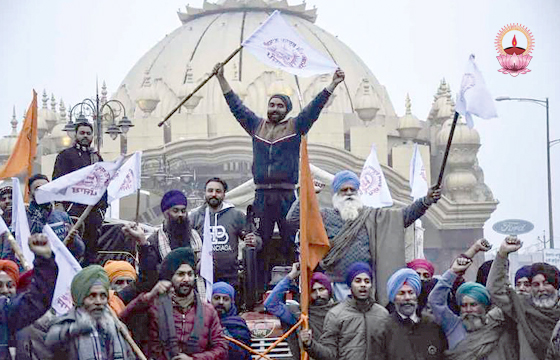
The Supreme Court of India has ordered Prime Minister Narendra Modi’s government to suspend three controversial farm laws that stirred up nationwide protests by farmers.
The top court on Jan. 12 ordered the formation of a committee of experts to hold talks with the federal government and farmers to end the stalemate as the main protest on New Delhi’s outskirts entered its 48th day.
“The Supreme Court order gives some hope to the farmers who are protesting in very adverse conditions,” said Bishop Alex Vadakumthala, chairman of the Indian bishops’ office of labour.
“The government should find an amicable solution and end the protest as it is not good for any country to let their farmers struggle in the open for their genuine demands,” the prelate told.
Thousands of farmers from Punjab and Haryana states marched to New Delhi on Nov. 29 demanding the government repeal laws that they say work against their interests. When authorities blocked their entry to the capital, they sat on the highways to block major entry and exit points to New Delhi.
They want the Modi government to withdraw three laws passed last September — the Farmers’ Produce Trade and Commerce (Promotion and Facilitation) Act, 2020, the Farmers (Empowerment and Protection) Agreement of Price Assurance and Farm Services Act, 2020, and the Essential Commodities (Amendment) Act, 2020. The government, led by the pro-Hindu Bharatiya Janata Party (BJP), disregarded opposition to pass the bills, saying they are necessary to reform the farm sector and help farmers have the freedom to sell their products in an open competitive market and gain maximum profit.
Farmers’ unions say the laws take away the minimum support price (MSP) or the government guarantee for their products besides giving private businesses unrestricted opportunities to purchase and store produce.
Critics say the laws were designed to help multinational companies and would lead to the collapse of government-controlled markets and leave farmers at the mercy of big business houses. Government lawyers told the court that the new laws were drafted and implemented based on two decades of studies and disagreed with the farmers’ demand for their repeal.
Jesuits get first priest from Rongmei tribe
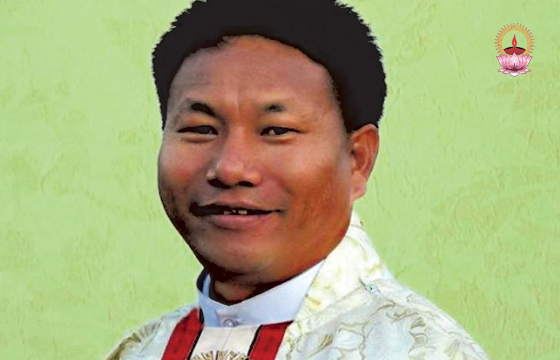
When Archbishop Dominic Lumon of Imphal ordains Father Gangmei Pheigathuaipou Daniel on December 30, the Jesuits will get their first priest from Rongmei, a major Naga tribe in the northeastern India. Archbishop Lumon will ordain Father Daniel in St Ignatius Church Bishnupur, a Jesuit parish in Manipur State. Father Daniel is the first priest from the Bishnupur parish that was established by the Jesuits 35 years ago.