
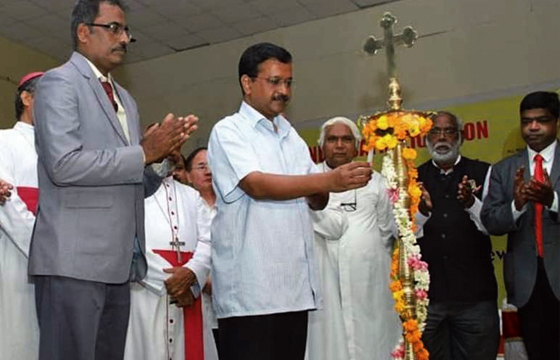
The Election Commission of India has turned down a request to change the election date in West Bengal and Assam from Maundy Thursday. The All India Catholic Union (AICU), the largest laity movement in Asia, submitted a petition asking the commission to reconsider holding polls on April 1, the day before Good Friday, in the eastern and northeastern states. Chandra Bhushan Kumar, deputy election commissioner, rejected the petition on March 1.
Category Archives: National
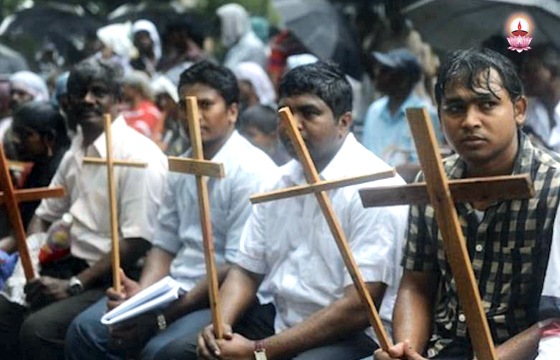
India asserts Dalit converts have no right to contest polls
Indian Prime Minister Narendra Modi’s government has reiterated that Dalit people who converted to Christianity or Islam will not be allowed to contest elections, shattering the hopes of this socially poor group once again.
Church leaders say the adamant stance of the government run by the pro-Hindu Bharatiya Janata Party (BJP) will only add to the social and economic backwardness of Dalit people, the former untouchables.
“It is unfortunate that the government has reiterated this position,” Bishop Sarat Chandra Nayak, chairman of the Indian bishops’ Office for Scheduled Caste and Backward Classes, told.
Of the 543 seats in India’s parliament, 84 are reserved for 200 million Dalit people, officially known as scheduled castes, and 47 are reserved for 104 million scheduled tribes.
Election rules allow only Dalit or tribal people to contest seats reserved for them. A 1950 constitutional order denied social and political benefits meant for Dalit people to non-Hindus.
The order was later amended twice to include Buddhists and Sikhs in the benefits, but Christians and Muslims are denied these benefits on grounds that their religions do not follow the caste system.
Dalit Christian leaders were expecting a positive response from the government to their complaint pending in the Supreme Court since 2004. Federal Law Minister Ravi Shankar Prasad told parliament on Feb. 11 that Dalit converts to Islam and Christianity cannot claim reservation benefits to contest parliamentary or state elections in seats reserved for scheduled castes.
Bishop Nayak told on Feb. 16 that Christian leaders have been fighting the 1950 order since it was enacted but successive governments ignored the demand because Christians are politically insignificant as they form only 2.3 percent of the nation’s 1.3 billion people.
Dalit Christian leaders claim 80 percent of about 30 million Indian Christians are of Dalit origin, but official government estimates say 33 percent of Indian Christians are socially poor Dalits, with disadvantaged tribal Christians forming another 33 percent.
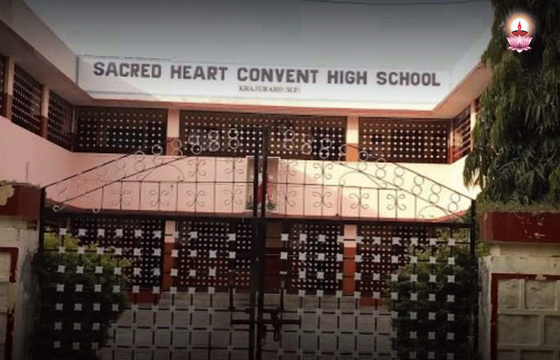
Indian nun charged with trying to convert Hindu teacher
Police in India’s Madhya Pradesh state have charged a Catholic nun with violating the state’s stringent anti-conversion law after she was accused of trying to allure a Hindu teacher to Christianity.
Police registered charges against Sisters of Destitute Sister Bhagya, principal of Sacred Heart Convent High School in Khajuraho of Chhatarpur dist-rict, on Feb. 22, according to local church officials. “It is absolutely a false charge,” said Fr Paul Varghese, public relations officer of Satna Diocese, which covers the area of the nun’s school.
He said the case was the latest in a series of such cases filed against Christians after the state’s pro-Hindu Bharatiya Janata Party (BJP) government implemented a new anti-conversion law in January.
The case against the nun is based on the complaint of Ruby Singh, a Hindu woman who joined the school as a teacher in 2016. The school management terminated her services last year during the Covid-19 lockdown after complaints about her teaching from parents and students.
Singh complained to police that she was terminated because she refused the nun’s pressure to abandon her Hindu faith and become a Christian.
The 45-year-old woman’s complaint accused the nun of violating the law enacted in January. It criminalizes any force, allurement or fraudulent means to change a person’s religion for another religion.
“Sister Bhagya is innocent and she is falsely accused by [someone] taking advantage of the loopholes in the new anti-conversion law,” Father Vargh-ese told on Feb. 24.
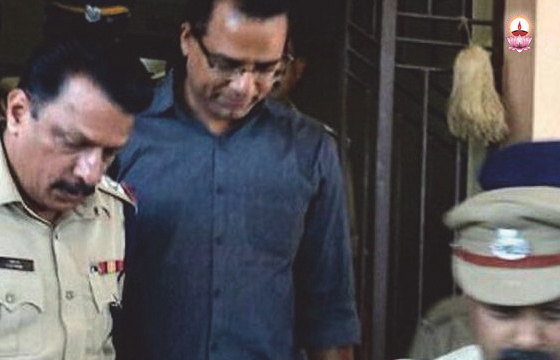
High Court dismisses rapist priest’s plea to marry survivor
The Kerala High Court has dismissed the plea of Robin Vadakkumchery, a former Ca-tholic priest convicted of raping a minor, to grant him bail so that he could “marry the survivor.”
The court said it could find no merit the petition.
Dismissing the plea, Justice Sunil Thomas stated that granting the plea would be like giving judicial approval for the marriage.
A POCSO (Protection of Children from Sexual Offences Act) court convicted Robin and sentenced him to 20 years in prison for raping and impregnating the minor girl.
The High Court also said it cannot allow a compromise or take a lenient view in matters related to sexual offences. The court reportedly cited the trial court’s finding that the survivor was a minor during the time of the assault, stating that it still remains and that granting bail to Robin and allowing them to get married would be like giving it legal sanctity.
In 2016, the survivor, a 16-year-old girl was studying in the eleventh grade in a church-backed school in Kannur district where Robin was the manager. He sexually assaulted her, who gave birth to a child in February 2017. Initially, the accused and the church had immensely pressurized the family of the survivor and had even forced her father to confess that he was the one who raped and impregnated his daughter. But later, the survivor’s family alleged that were pressurized and threatened by the Church.

Uttar Pradesh assembly passes religious conversion bill amid din
Amid protests by the Opposition, the Uttar Pradesh Legisla-tive Assembly on February 24 passed by voice vote a Bill aimed at curbing religious conversions by fraudulent or any other undue means, including through marriage.
The Uttar Pradesh Prohibition of Unlawful Conversion of Religion Bill, 2021 seeks to replace the ordinance promulgated in November 2020 that provides for imprisonment up to 10 years and a maximum fine of 50,000 rupees for violators.
The Bill was passed in the House even as Aradhana Misra, the Congress Legislative Party leader, and Lalji Verma, the leader of BSP in the Assembly, protested.
Under the Bill, a marriage will be declared “null and void” if the conversion is solely for that purpose, and those wishing to change their religion after marriage need to apply to the district magistrate.
The Bill mainly envisages that no person shall convert, either directly or indirectly from one religion to another by use or practice of misrepresentation, force, undue influence, coercion, allurement or by any fraudulent means or by marriage nor shall any person abet, convince or conspire such conversion.
The onus to prove that the conversion has not been done forcibly will lie on the person accused of the act and the convert, it said.
An aggrieved person, his/her parents, brother, sister, or any other person who is related to him/her by blood, marriage or adoption may lodge an FIR about such conversion, according to the Bill.
BJP leaders had said the legislation intends to counter alleged attempts to convert Hindu women to Islam in the guise of marriage, which right-wing Hindu activists refer to as ‘love jihad’.
Withdraw all steps taken on deep sea fishing: Kerala bishops
The Kerala Catholic Bishops’ Council has asked the state government to withdraw all steps it had taken on deep sea fishing off the coast. The act of the Kerala government to sign a Memorandum of Understanding with a foreign firm without consulting the fishermen community or heeding the coastal people’s concerns is objectionable, says a statement the bishops’ council issued on February 23.
The bishops, however, welcomed the government move to retract the agreement that brought great relief to the coastal community.
Although the government has withdrawn the agreement amid public protests, all the steps it had taken since 2018 to implement the project remain in force, the bishops point out.
Bishops’spokesperson Father Jacob G Palackapilly, who signed the press release, says fishermen community fears that the company would implement the project in some other way.
Pope Francis prays for stability in Myanmar
Pope Francis prayed Feb 7 for justice and national stability in Burma as tens of thousands protest the Feb. 1 military coup.
“These days I am following with great concern the developments of the situation that has arisen in Myanmar,” the pope said Feb. 7, using the country’s official name. Burma is “a country that, since the time of my apostolic visit in 2017, I carry in my heart with much affection.”
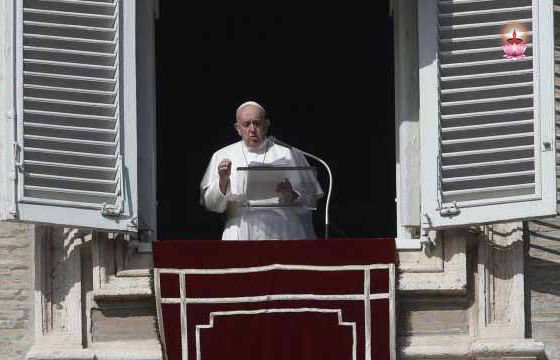
Francis held a moment of silent prayer for Burma during his Sunday Angelus address. He expressed “my spiritual closeness, my prayers, and my solidarity” with the people of that country.
For seven weeks the Angelus was held via livestream only from inside the Vatican’s Apostolic Palace due to pandemic restrictions. But Sunday the pope returned to leading the traditional Marian prayer from a window overlooking St Peter’s Square.
“I pray that those who have responsibility in the country will place themselves with sincere willingness at the service of the common good, promoting social justice and national stability, for a harmonious coexistence,” Pope Francis said.
Tens of thousands of people in Burma have taken to the streets this week to protest for the rel-ease of Aung San Suu Kyi, the country’s elected civilian leader.
Indian tribal families caned for embracing Christianity
A village court in the eastern Indian state of Jharkhand has ordered families who converted to Christianity to be caned, fined and excommunicated from the community.
Three Korwa tribal families from Khala village of Dhurki in Garhwa district embraced Christianity on Jan. 22, according to media reports.
“There are reports of religious conversion in the area but they are of different denominations as a few small sects are active there. It is a matter of investigation and it should be thoroughly checked as it may give wrong messages among different faiths,” Father Augustin Xess, parish priest of St Paul’s Church in Garhwa, told.
“As far as the Catholic Church is concerned, we don’t promote religious conversion.”
The tribal priest said Hindus, followers of the Sarna tribal religion and a small number of Muslims and Christians have been living in the area peacefully with great respect for all faiths.
“After the news of religious conversion came out, we have alerted our people in the area and asked them to give us an actual report,” he added.
Father Fabianus Sinduria, who coordinates pastoral work in Daltonganj Diocese, told that “we came to know of the incident only through the local Hindi newspaper and are waiting for the final say by the local administration.”
Bhima Koregaon case: Jailed activist’s computer compromised
A key accused in the Bhima Koregaon case has moved the Bombay High Court after a US firm revealed that a hacker had planted incriminating evidence on his computer. A report by Arsenal Consulting, a digital forensic analyst from Chelsea, US, has debunked the electronic evidence gathered by India’s National Investigation Agency to arrest Rona Wilson and 15 others in the Bhima Koregaon violence case. Among the arrested is 83-year-old Jesuit Father Stan Swamy, who has been working among tribal communities in the eastern Indian state of Jharkhand.
They were arrest for their alleged ties with Maoist and for inciting riots during a celebratory gathering organized to mark the 200 years of the Koregaon-Bhima battle. On January 1, 2018, the violence at Bhima Koregaon village in Pune district left one dead and injured several others, inclu-ding 10 policemen. Violence erupted after some people, reportedly with saffron flags, pelted stones at cars heading towards the village for the commemoration of the 200 years of Bhima-Koregaon war on New Year’s Day.
The US digital forensics firm, which analyzed an electronic copy of the Wilson’s laptop, concluded that an attacker used malware to infiltrate the laptop and planted documents on it.
According to a report by the Washington Post, Arsenal Consulting found that the letter — along with at least nine others — had been planted in a hidden folder on Wilson’s computer by an unidentified attacker who used NetWire, a malware, to control and spy on the laptop.
According to Arsenal Consulting’s findings, Wilson received emails that appeared to be from a fellow activist, urging him to click on a link to download an innocuous statement from a civil liberties group. But this link actually deployed NetWire, a malicious software that allowed a hacker to access Wilson’s computer.
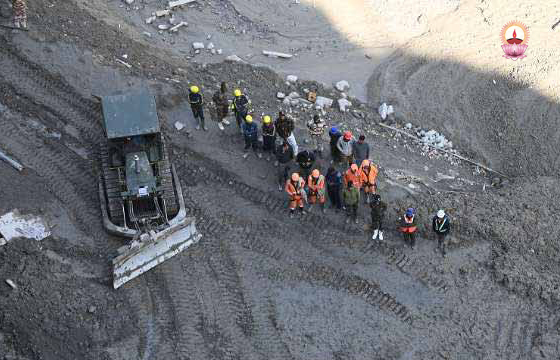
Pope, bishops express grief over Indian glacier disaster
Pope Francis and Indian bishops have expressed grief over a massive glacier burst that killed at least 32 people in northern India.
The tragedy in Uttarakhand’s Chamoli district on Feb. 7 also left more than 170 missing as the rescue operation carried on until late on Feb. 10, media reports said.
“I express my closeness to the victims of the calamity that happened in India where part of a glacier separated itself, provoking violent flooding that devastated two power plants,” Pope Francis said in a tweet on Feb. 10.
“I pray for the workers who died, for their families and for all those who were wounded.”
Cardinal Oswald Gracias of Bombay, president of the Catholic Bishops’ Conference of India (CBCI), said on Feb. 9 that the CBCI expresses its grief and offers its condolences to the family members of all those who have died or are missing as a result of the Uttarakhand glacier calamity.