
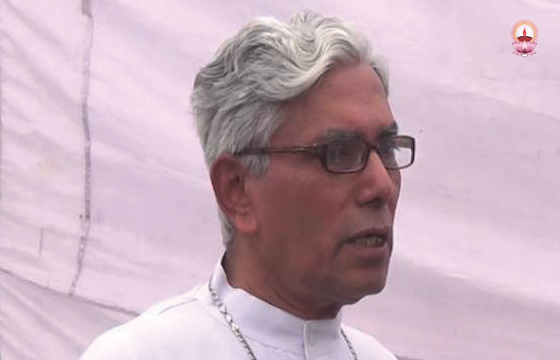
A Catholic archbishop joined an Indian state’s chief minister on a special one-day fast to create awareness among people about the need to protect themselves from Covid-19.
“It is our duty and respon-sibility to protect ourselves and others from the danger of Covid-19,” said Archbishop Leo Cornelio of Bhopal.
Madhya Pradesh’s Chief Minister Shivraj Singh Chouhan started a 24-hour fast in state capital Bhopal on April 6 in a specially erected tent.
He said it is time that “we all should take a firm resolution that we will wear masks and en-courage others” to do so to ensure the safety of everyone.
Archbishop Cornelio was among many religious leaders who joined Chouhan on his fast.
“It is high time that we all take the pandemic seriously and prepare to protect ourselves from its impending attack that could be fatal for many and precarious for others,” the prelate told on April 7.
“We need to ensure our safety by following government pro-tocols when we move in public as it is essential to ensure that we do not become a carrier.
“We need to cover our faces and wash our hands regularly as prevention is better than cure.”
Archbishop Cornelio praised Chouhan for his special initiative to reach out to people about Covid-19.
Father Maria Stephen, public relations officer of the Catholic Church in Madhya Pradesh, told that “we are now in a war with Covid-19” and urged everyone to be more serious about their health.
Category Archives: National

Nuns accused of conversion, forced to get off train in Jhansi
Two nuns and two trainees travelling along with them on a train were forced to deboard in Uttar Pradesh’s Jhansi railway station and detained briefly for questioning, after ABVP members accused them of illegal conversions.
The four were allowed to resume their journey after an enquiry by railway officials found there was no conversion involved.
The incident happened on March 19. On Wednesday, amid an outrage over the incident, Kerala Chief Minister Pinarayi Vijayan wrote to Union Home Minister Amit Shah that the harassment of the two nuns and two postulants was “shocking.”
Mr. Vijayan demanded that Mr. Shah instruct the authorities concerned to take strict action against “all groups and indi-viduals who disrupt and impair the freedom of individual rights.”
Naeem Khan Mansuri, SP Railway Jhansi, said that the ABVP members were travelling back from a training camp in Rishikesh. The four Christian women were travelling from Nizamuddin in Delhi to Rourkela in Odisha.
Government Railway Police (GRP) Jhansi said that their control room received infor-mation on March 19 that some women were being taken on the Utkal Express train for religious conversion. On the basis of this information, the RPF asked them to deboard, and upon investigation by the GRP it turned out that the allegations were false, GRP Jhansi said on Twitter.
Videos from the day showed police and other unidentified persons questioning the nuns and scanning through their Aadhaar cards while they were seated on their berths. The four then get off the train and could be seen heading towards what appeared to be a police station.
The GRP found that the two girls from Odisha were undergoing training in Delhi. The police found baptism certificates of 2003 in their possession.
“This proved that they were Christian by birth. They were not going to be converted,” said Mr. Mansuri.

Indian bishops’ study reveals grim life of tribal migrant workers
A new study sponsored by Catholic bishops in India has revealed the grim reality for most tribal migrant workers in the capital New Delhi where they suffer from endemic poverty and low wages amid an absence of workplace safety and socio-economic security.
The study, ‘Tribal Migrants in Delhi City: A Pre Covid and Post Covid Analysis,’ a joint venture by the Conference of Catholic Bishops’ of India (CCBI) Commission for Migrants and Workers India Federation, was released earlier this month.
Led by noted researcher Lata Jayaraj, the survey covers the migrants who belong to the tribal communities from neighboring states to Delhi. It analyzes the push and pull factors and the socio-economic compulsions of the migrants in pre-Covid and post-Covid situations.
“The study was an attempt to look into various factors behind migration, the various problems these tribal migrant workers face, and to analyze support system government agencies and NGOs have for them,” said Father Jaison Vadassery, secretary of the CCBI’s Commission for Migrants.
The priest noted that the study recommends a multi-pronged strategy from the government and non-government agencies to assist poor, vulnerable migrant workers effectively to overcome their miserable conditions.
The study used an in-depth analysis covering tribal migrant workers in the construction sector of Delhi. It reached out to 45 respondents, male and female, as samples who provided necessary information through case studies, focus group discussions and participant observations.
About 91% of tribal migrant workers in the construction sector are below 50 years, while only 8.8% are above 50. The sector is largely male-dominant, men accounting for 93.3%. The majority of them are Hindus.
Some 51% of workers migrated from Rajasthan, 16% from West Bengal, and 9% each from Assam, Jharkhand and Madhya Pradesh.
The study found a direct link between their low level of education, poverty, migration and low-paid employment.
Nine arrested over mob lynching in eastern India
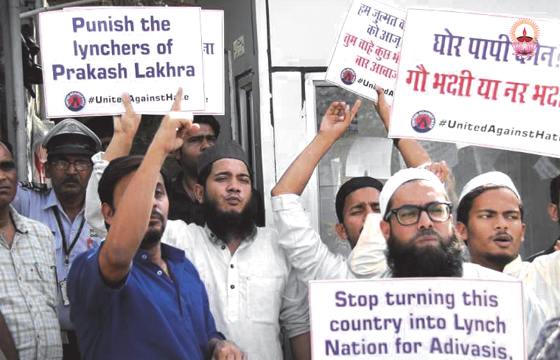
Police in the eastern Indian state of Jharkhand have arrested nine people in connection with the mob lynching of a 26-year-old Muslim man on the outskirts of Ranchi. According to media reports, this was the second such incident in the state capital in one week. Earlier, a 22-year-old man was beaten in the Upper Bazar area on suspicion of theft and later died.
“No religion or society in this world can accept such a heinous crime. We appeal to the government to make a law to check these inhuman acts,” Ratan Tirkey, a member of the tribal advisory committee of the Jharkhand government, told.
“For the past two to three years, we have been hearing the barbaric news of mob lynchings in the state. It is condemnable and unacceptable because for centuries people here have been living in harmony and brotherhood.
“The state is mostly comprised of tribal people who are by nature a peace-loving people and who have a good rapport with other faiths. We had no such problem in the past, so it is a matter of great concern and it has to be dealt with quickly.”
Faithful will question pastoral letter’s sanctity: Vijayan
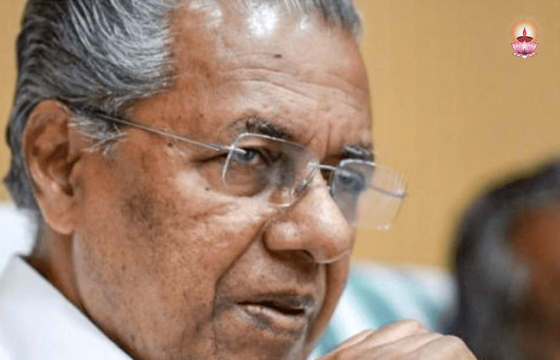
Kerala Chief Minister Pinarayi Vijayan has flayed a pastoral letter read in some churches of the Quilon diocese against the southern Indian state’s Left Democratic Front government.
The sanctity of the pastoral letters will be questioned by devotees, the chief minister said March 26. They (a section of church leadership) are attacking the government just like the opposition, he said. The allegations raised by them are not their own, Pinarayi said.
The Latin diocese on March 21 targeted the Kerala and the federal governments, claiming there was an “organized effort” to destroy the fishing sector and sell it to corporates.
State Fisheries Minister J Mercykutty Amma accused the Church of speaking for the opposition Congress-led United Democratic Front.
Kerala will go to polls on April 6 to elect its 140-member legislative assembly and the major contenders are LDF and UDF. The pastoral letter, targe-ting the LDF government, said “the controversial agreement with a foreign company, EMCC, was withdrawn following wide-spread opposition.”
The fishing community should also be aware of “Blue Economy” project, a move by the central government giving permission for mining for resources from the sea, it said.
Bajrang Dal denies role in Kerala nuns’ harassment
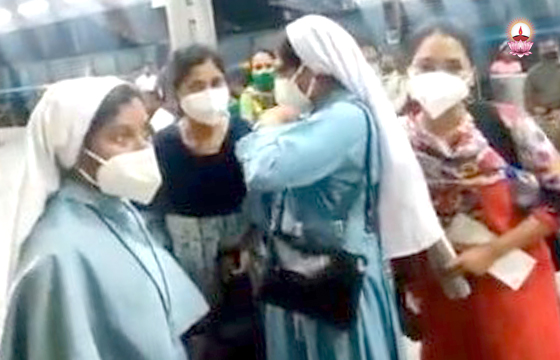
The Bajrang Dal has denied involvement in a controversial March 19 incident where two nuns and two students were forced alight from a train in Jhansi over an alleged forced conversion complaint and questioned by railway police.
According to reports, Bajrang Dal activists and police questioned the nuns, who are members of the Sacred Heart congregation under the Kerala-based Syro-Malabar Church.
The alleged Hindu radicals accused the nuns of taking the two women for forcible conversion.
Railway police later said the complaint against the nuns was found to be without basis, and the women were allowed to board another train to their destination in Odisha.
The Bajrang Dal statement came March 24 hours after Kerala Chief Minister Pinarayi Vijayan alleged in a letter to federal Home Minister Amit Shah that the four nuns were “harassed” by Bajrang Dal members during their train journey.
“Bajrang Dal has nothing to do with this incident. Due to the anti-Hindu mindset the Church lobby sees Bajrang Dal in every incident,” said Bajrang Dal national convener Sohan Singh.
“It is the church lobby that is behind this. If you look at the FIR or the complaint, there is no mention of Bajrang Dal. It is an eight-day-old case but soon after we got to know about it, we en-quired from our Jhansi team and they denied any involvement,” he added.
Dalit Christians demand separate Catholic rite
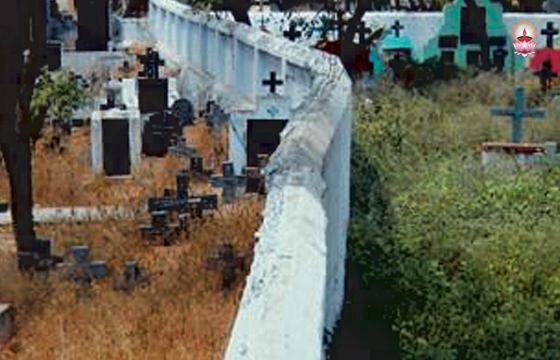
The demand for a separate Rite for Dalit Catholics is gaining momentum with many supporting it as a solution to caste-based discrimination in the Indian Church.
“If this can bring about much needed respect for the Dalit Catholics and wipe out that invisible line of casteism, I am for it. In fact, I will join the movement wholeheartedly and help in attaining the status being demanded,” says AC Michael, a former member of the Delhi Minorities Commission.
Michael shared his thoughts with Matters India March 11, a day after the National Council of Dalit Christians (NCDC) urged Pope Francis to create a Catholic Rite like the Kerala-based Syro-Malabar and Syro-Malankara Churches.
A press release from NCDC coordinator Franklin Caesar Thomas says, “We urge the Pope to recognize the Dalit Catholic Rite like Syro-Malabar and Syro-Malankara Rites with all divine rights and property. According to Thomas, who is also a Supreme Court lawyer, the Rites in the Catholic Church are based on orientation and rituals.
Thomas also points out that Christianity does not have one cultural expression. “It also reflects different faces of the cultures and peoples that received the faith and allowed to take roots “with unwavering fidelity to the Gospel and the Church’s tradition.” If the Pope approves a new separate Dalit Catholic rite, he says it would show to the world that each group of people can pray to the God of Jesus Christ from their cultural riches and expressions without altering the unity of the Catholic faith.”
The new rite will adopt the character and traditions of various Dalit Catholic communities, the NCDC leader asserted.
Dalit Catholics in India are currently spread over Latin, Syro-Malabar and Syro-Malankara Churches in the Catholic fold.
The Catholic Church is comprised of six different liturgical rites, and within them exist 24 particular Churches. These sui iuris (autonomous or self-governing) Churches are all in communion with one another in the Catholic Church and recognize the primacy of the pope.
Indian Government Regulation Squeezes Christian Charities
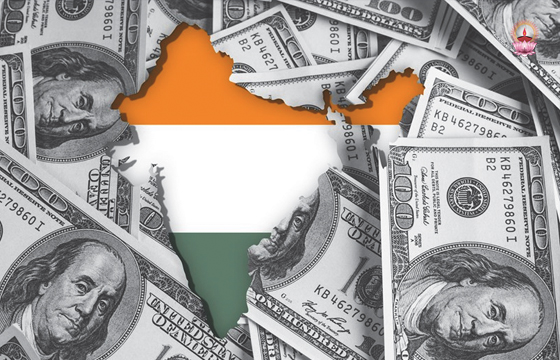
For Christians trying to care for the poor in India, there is always a need for more prayer, more hands, and more money. Much of that money comes from donors in other countries. Recently, though, Prime Minister Narendra Modi’s government has tightened regulations on foreign funding to nonprofits, including Christian groups that feed or-phans, run hospitals, and educate children.
Since Modi took office in 2014, the Indian government has revoked permission for more than 16,000 nongovernmental organizations to receive foreign funding, using the Foreign Contribution Regulation Act (FCRA).
“It is deliberately an assault against the nonprofit sector,” said Vijayesh Lal, the general secretary of the Evangelical Fellow-ship of India, “and that includes the churches.”
In one recent round of revocations, six nonprofits lost the license allowing them to receive money from abroad. Four of those were Christ-ian organizations. A search of the FCRA website reveals more than 450 revocations from 2011-2019 of groups with the word church in their name alone.
While the FCRA is not designed specifically to target Christian groups, experts say its cumbersome regulations have been used by the ruling parties in India to stifle political and religious dissidents since the law’s adoption in 1976.
“It has always been used as a tool,” Lal said. “The thought behind it is very clear. They don’t want to encourage dissent. They don’t want to encourage empowerment.”
The law was first passed in a period of Indian history called “the Emergency.”
“It’s going to be very difficult,” said David Babu, the founder of Sunshine Ministries in Hyderabad. “What can you do with 20 percent?”
Sunshine provides schooling and housing to about 240 students. Eighty percent go on to receive more education after graduating, many of them becoming teachers, police officers, and health care workers.
“These are the kids that are the leaders of tomorrow,” Babu said, “and we believe that when they plant the seed of equality and oneness, things will change.”
Sunshine has 20 staff members, and its main expenditures are salaries and the costs of maintaining buildings and property. The ministry has not yet deter-mined how it can cut administrative costs to maintain its FCRA license.

Kolkata priest joins BJP, Bengal Christians shocked
Father Rodney Borneo, a popular priest of Calcutta arch-diocese, on March 9 joined the Bharatiya Janata Party that heads the federal coalition government, according to a video clip circula-ting in social media platforms.
The video shows Father Borneo coming to a stage where he is given the BJP flag and asked to chant, “Bharat Mata ki jai” (victory to mother India).
The news of a Catholic priest joining the BJP, the political arm of the Hindu nationalists, has sent shock waves among Catholics in West Bengal. The eastern Indian state is all set to elect its legislative assembly through an eight-phased poll starting March 27.
Given below is the reflection of Father Francis Sunil Rosario, a senior priest of the archdiocese of Calcutta, on Father Borneo’s decision.
A competent priest is lost to Calcutta archdiocese
Who should be blamed for the loss of a very competent and promising priest, for whom thirty pieces of silver was more preferable, than to stick to priesthood.
Rodney trained in psychology and counseling, who was a gold medalist in 2016 from Guwahati University, was unable to cope with the pressures and some of the inconveniences created for him to function as the principal of Loyola School, Kidderpore. This is certainly not an isolated case in the ministerial priesthood. There could be others who try hard to survive despite many hardships, inaction and such administrative ‘silence’ and pressures. It could be taken as a case study to understand the issue at a deeper level and thus helping the younger clergy through supervision, counseling and guidance.
Five Christians get bail a month after arrest for conversion in India
Madhya Pradesh High Court in central India has granted bail to five of nine Christians arrest-ed a month ago on charges of violating a law that criminalizes religious conversions.
The court on Feb. 4 granted bail after state police failed to substantiate the charges filed against the five.
“The other four in jail are also expected to get bail this week as they have moved the High Court against a trial court that denied them bail,” said Pastor Patras Savil, who is helping those arrested to secure their legal rights.
Police in Indore city on Jan. 26 charged 11 Christians with violating Madhya Pradesh’s stringent anti-conversion law following complaints from right-wing Hindu activists. They could arrest only nine as two were reported to have absconded.
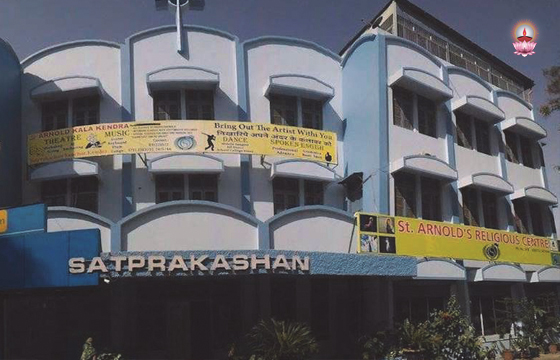
The Hindu activists forced their way into a Protestant prayer service inside Satprakashan Sanchar Kendra, a Catholic media center owned and managed by the Society of Divine Word.
When police arrived, the Hindu activists complained that the Christians were involved in mass religious conversion in violation of the law implemented in January that criminalizes religious conversion through allurement, force, coercion and marriage.
“We are very happy that five got bail. They were falsely implicated in the case and put behind bars for more than a month,” Father Babu Joseph, director of the media center, told.