

Media reports claim that Israel-made spyware Pegasus was believed to have been used to track more than 300 Indian phone numbers including those of journalists, politicians, government officials and rights activists.
The Israeli cyber weapon company NSO Group was also fined in 2019 for hacking phones of around 1,400 users around the world, including 121 Indians.
“It is completely unethical as we have the fundamental right to privacy given by the constitution of India and spying on someone’s private life is a threat to the citizens of a democratic country,” Bishop Salvadore Lobo of Baruipur, chairman of the Catholic Bishops’ Conference of India’s office of social communications, told. “We can understand when the government sometimes spies on some social elements when it thinks that they pose a threat to national security, but targeting only some particular group or person is unacceptable and the government should investigate the latest issue.
Category Archives: National

Delhi archdiocese gets new auxiliary bishop
Pope Francis on July 16 appointed Fr Deepak Valerian Tauro, rector of St Albert’s College in Ranchi, as the auxiliary bishop of the archdiocese of Delhi.
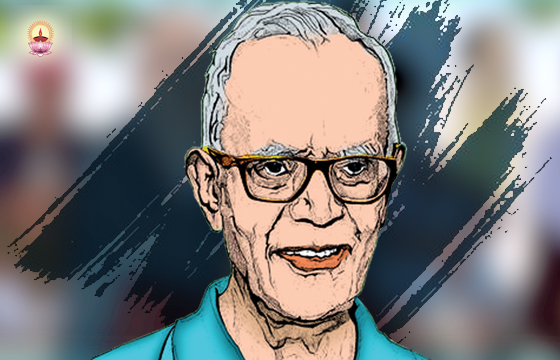
NIA objects: High Court withdraws appreciation for Fr Swamy
The Bombay High Court bench on July 23 withdrew its oral observations praising the late Father Stan Swamy and even appreciating his work for society.
The bench of Justices Sambhaji Shinde and Nijamoo-din Jamadar withdrew their co-mments after the National In-vestigations Agency (NIA) took strong objection to the “personal comments of the bench.”
The bench was hearing the pending plea of Jesuit Father Swamy by which he had sought interim bail on medical grounds before he died.
On July 23, senior counsel Mihir Desai appearing for Swamy told the judges that he seeks four prayers i.e. to allow Father Frazer Mascarenhas to participate in the Magistrate enquiry in Swamy’s custodial death, to direct the Magistrate to submit its report before the judges and to follow the guidelines of the National Human Rights Commission (NHRC) on custodial deaths.
The last request that Desai made was that the enquiry should be done by a Magistrate in Mu-mbai. However, the NIA through additional solicitor general Anil Singh opposed the request. The ASG said that the court shouldn’t give directions particularly to follow the NHRC guidelines and also to submit the enquiry report to the bench.
“Moreover, we think that the appeal should be abated as he (Swamy) is no more,” Singh argued.
Countering the submission, Desai pointed out that even if Swamy isn’t here but the HC does have it’s “supervisory po-wers” and thus the appeal cannot be abated.
Aruna Kamat-Pai, the chief public prosecutor for the state said she agreed with the submi-ssions of the ASG over guide-lines, monitoring the enquiry etc. “As far as enquiry in Mumbai is concerned the state will take care of it,” she submitted.
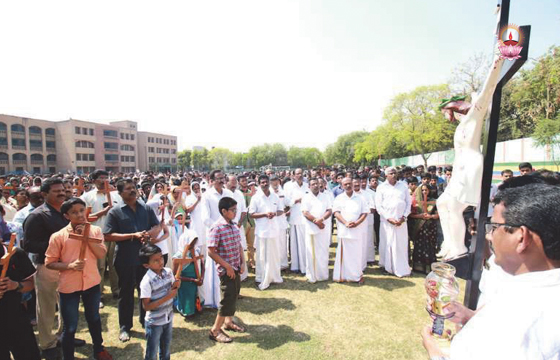
Hindu activists threaten Christian pastors in India
Hindu activists in the central Indian state of Chhattisgarh have disrupted a prayer service and threatened two Christian pastors in the space of three days for alleged religious conversion.
In the first incident on July 4, Pastor Firoz Bagh was conducting a prayer service at his house in Raipur, the state capital, when 30-40 Hindus surrounded the house and started shouting anti-Christian slogans.
Police took the pastor into custody but released him after a few hours after the intervention of church leaders.
On July 7, Pastor Ramesh Manikpur of Sarora Gogaon was resting at his house in the evening when a Hindu group wrote a slogan hailing Hindu gods on his boundary wall.
“They accused me of religious conversion and even slapped my son. They were around 100 and passing through our lane in a religious procession,” Pastor Manikpur told.
Pastor Moses Logan, president of the Chhattisgarh State Christian Welfare Society, told that they had faced similar situations
in the state but things were brought under control after the intervention of the administration.
“It is matter of concern and worry for us as some fanatic group members take us for granted and don’t even hesitate to harass and attack us in the name of religious conversion, which is not true,” he said.
“I spoke with Pastor Bagh and he said he has to visit the police station every other day for the investigation. He is very much worried for his family and his faithful. I hope the investigation is over soon.”
Pastor Logan said Pastor Bagh told him that after police took him to the police station, a mob even surrounded the police station and started shouting anti-Christian slogans and accusing him of forced conversions.
“The mob say they will not allow him to conduct any prayer service in the area in near future,” Pastor Logan said.
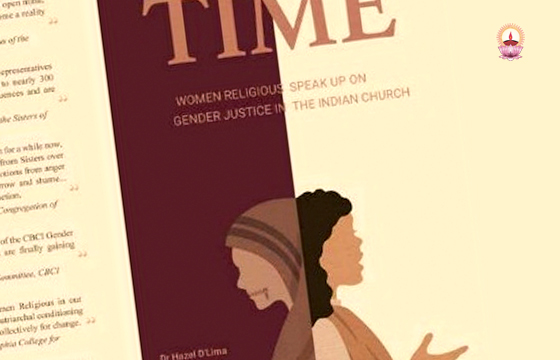
Survey highlights hierarchical exploitation of nuns in India
Sacramental blackmail, clergy sexual abuse, clericalism and property disputes are among challenges facing Catholic women religious in India, an international webinar was told.
The July 10 meeting organized by Voices of Faith, a Rome-based international network, discussed the findings of a Conference of Religious India survey conducted among the leaders of the women religious in the country.
Around 370 nuns, priests and laypeople from many English-speaking countries, Germany and Italy attended the two-hour program.
The survey was commissioned in 2018 by the women’s section of the Conference of Religious India, the national association of religious major superiors in the country, after media reports indicated widespread exploitation of nuns in the Catholic Church.
A four-member team conducted the study in 2019-20 and published the findings as a book in June this year.
“It is a landmark document,” Astrid Lobo Gajiwala, a laywoman theologian who coordinated the webinar, said of the book. “For the first time, we have hard data that cannot be discounted. Women religious from across India have courageously called out the exploitation they experience in the church.”
The book lists these problems faced by the Indian nuns: low wages, disputes over property, harassment from priests, refusal of sacramental celebrations, and verbal abuse in person and from the pulpit.
The issues discussed in the book were earlier discounted, Gajiwala says, lest they invite “the wrath of powerful priests and bishops,” adding the concerns “are finally out in the open.”
The India conferences of both bishops and religious have not responded to the survey or its findings.
The 86-page book titled It’s High Time: Women Religious Speak Up on Gender Justice in the Indian Church, was written by a three-member team led by Sr. Hazel D’Lima, former superior general of the Society of the Daughters of the Heart of Mary.
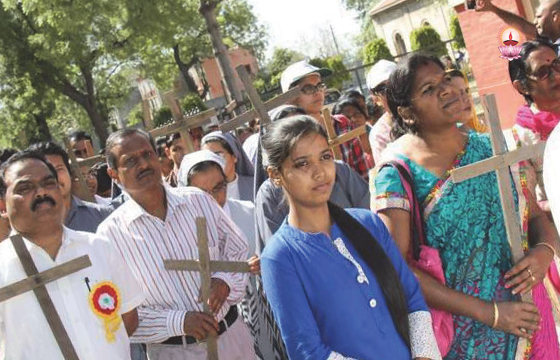
Indian Christians suffer 154 acts of violence this year
A human rights group that monitors atrocities against Christians in India says it has confirmed 154 incidents of violence in 17 states in the first half of the year.
The New Delhi-based United Christian Forum (UCF) said that perhaps a new ministry of cooperation may bring a better understanding of other faiths, especially among those who oppose Christianity.
“This year hasn’t been any different for Indian Christians except that Indian Christians across the globe came together to establish an exclusive day for themselves on July 3 and launched a decade of celebrations (2021-30) to honour the 2,000th anniversary of the earthly ministry of Jesus Christ,” the UCF press note said.
The press statement dated July 10 said 154 incidents of violence were reported on the UCF toll-free helpline number against Christians across India.
The UCF is an inter-deno-minational Christian organization that fights for the rights of members of the Christian minority, mainly through protest.
Other states which witnessed violence against Christians for their faith are Madhya Pradesh (15), Odisha (12), Maharashtra (nine), Tamil Nadu (six), Punjab (six), Bihar (six), Andhra Pradesh (four), Uttarakhand (three), Delhi (three), Haryana (two), Gujarat (two) and one each from Telangana, West Bengal, Assam and Rajasthan.
Some 1,137 calls were received by the UCF helpline and callers were given help through advocacy and assisting in forwarding their grievances to authorities.
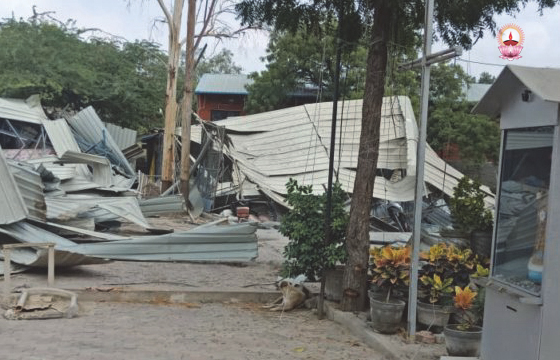
Church demolition upsets Catholics in Delhi
The demolition of a church in south Delhi has upset the Syro-Malabar Catholics living in the national capital.
Fr Jose Kannukuzhi, parish priest of Little Flower Church in Lado Sarai, said that on July 12 morning officials of the South Delhi Municipal Corporation came with three bulldozers and some 150 police personnel.
“They told me they would only demolish a hall adjacent to the church building. So I did not remove the sacred things from the church building,” the priest told.
As the news of the demolition spread through social media, parishioners came to the demo-lished church to protest. People from other parishes also gathered at the church compound and joined a Mass and a candle light protest late in the evening.
Monsignor Joseph Odanat, vicar general of Faridabad Syro-Malabar diocese, said the demoli-tion was a “calculated hidden agenda of the local administration and the land mafia to evacuate us from there.” He claimed the diocese had obtained a stay order in 2015. “We will go ahead with legal actions,” Monsignor Odanat told.

Father Stan Swamy’s tragic death challenges Church’s silence
The tragic death of Father Stan Swamy has triggered an unprecedented outburst of grief and fury against a system that unleashed a reign of cruelty to let an innocent champion of the poor die so miserably. The rallying cry over a victim of the state’s terror from across India and the globe has once again put the spotlight on the dangers of speaking up for the exploited and the neglected.
Father Stan was a Jesuit missionary who stood with India’s tribal people to oppose state policies that they thought went against their constitutional rights as tribal people and Indian citizens.
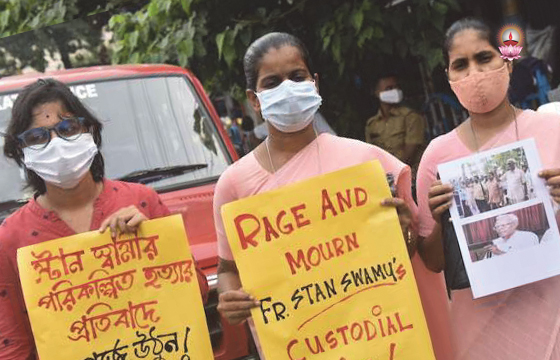
Rights group blames Modi regime for Jesuit’s death in detention
An international alliance of civil rights groups has blamed the administration of Prime Minister Narendra Modi for the death of an 84-year-old Jesuit social activist who died under detention.
Human rights defender Father Stan Swamy’s death on July 5 while awaiting trial has deeply shocked and outraged global civil society alliance CIVICUS.
The priest’s death “is a result of the persecution he has faced by the Modi government after revealing abuses by the state,” the group said in a press state-ment.
Father Swamy worked among tribal groups and other minorities of eastern India’s Jharkhand state for over four decades, creating awareness among communities about their tribal and civil rights.
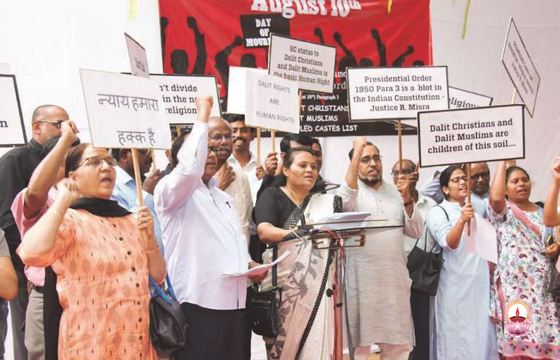
Dalit Christian dies in police custody in India
A Dalit Christian woman in the southern Indian state of Telangana has died in custody after allegedly being tortured by police.
Maid Ambadipudi Mariyamma of Yadadri-Bhongir district was booked along with her minor son Udaykiran on June 17 by Addagudur police after a complaint of theft by her employers, according to media reports.
Her relatives and daughter Swapna alleged that she was tortured by police while in detention.
Mariyamma, 44, was found collapsed early on June 18 at the police station and was rushed to a hospital where doctors declared her dead.
“When people in America protested after a black man was killed and started a campaign — Black Lives Matter — some people here voiced Dalit Lives Matter. The time has come to intensify it,” Father Z. Devasagaya Raj, former secretary of the Indian bishops’ office of Dalits and backward classes, told.
“Dalits and minorities community are always at the receiving end at the hands of people of so-called high society, elite groups, administration and government, hence police brutality upon them is nothing new. Anyone who speaks up for Dalits and the downtrodden is subject to attacks or branded anti-national.”
Pastor Sudarsan Masih of the Apostolic Christian Assembly Church in Khammam told UCA News that members were shocked to learn about the incident.
“Our prayers are with the family of the woman and we pray that there will be a fair and unbiased investigation and the culprit will be booked,” he said.
“The government should do justice to poor and underprivileged people, otherwise it will give them the wrong message and cause insecurity among them.”