

Anong Singpho had never imagined that his singing videos on social media would one day make him the first Bollywood star from Arunachal Pradesh.
The 27-year-old, who performs regularly at functions at Miao’s Government Higher Secondary School, used social media platforms to showcase his singing talents.
One such video caught the attention of Zee Music Company, a popular Indian music company and a subsidiary of Zee Entertainment Enterprises Limited, and it offered him to sing for their label.
“It is dream-come-true moment for me,” said Singhpo, a resident of Miao Singpho village in Changlang district. “Growing up, I always used to have dreams about singing for a Bollywood music company. I never imagined that would actually happen to me through this famous music label.”
Singhpo’s music single, Laut Aao Maa, was released by Zee Music Company as a tribute all mothers on Mother’s Day this year and within a span of one month the video has been viewed by 1.4 million viewers on video sharing platform YouTube alone.
Picturized with the junior reality show cont-estant, Oupseng Namchoom, the single highlights the emotions a child goes through in the absence of his mother in this soothing number.
The single is a song recording of fewer tracks than an LP record or an album. The song has been well received by people across the country. More than 1.4 million people have made positive comments on the video, singling out Singhpo’s voice for special appreciation.
The only son of Innao Ladoi Singpho and Jamai Thu Singpho, the singing sensation says the response from people across the country has been overwhelming. “I never thought I would receive such an overwhelming appreciation. I feel I am lucky to receive so much love,” said the graduate from Delhi University.
Category Archives: National
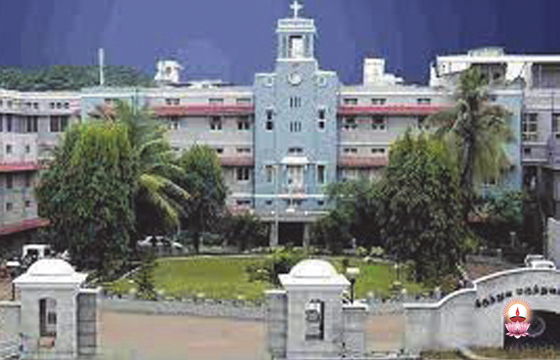
Vellore hospital confirms Covid vaccine efficacy
Vaccines are working well against the Indian (delta) variant of the SARS-CoV-2, the virus that causes Covid-19, according to a study on healthcare staff working at the Christian Medical College in Tamil Nadu’s Vellore town.
By April 30, at the height of the second wave of the pandemic in India, about 84.8 percent of the medical school’s employees received a shot of the Astra Zeneca vaccine with a smaller number getting the Indian-made Covaxin.
The medical school, managed by the Protestant Church of South India, has more than 2,600 beds and 10,600 employees.
Some 679 (9.6%) of the 7,080 employees of the Vellore hospital who received their second dose became infected by the virus within 47 days of the second dose. This is 65% lower than for the unvaccinated.
In addition, those who contracted Covid-19 also required fewer hospitalizations (-77%), less use of oxygen tanks (-92%) and fewer intensive care admissions (-94%).
“The only staff member who died since the beginning of the pandemic had multiple co-morbidities and had not taken the vaccine,” noted the study, autho-red by Doctor Joy J Mammen, professor at the medical school’s Department of Transfusion Medicine.
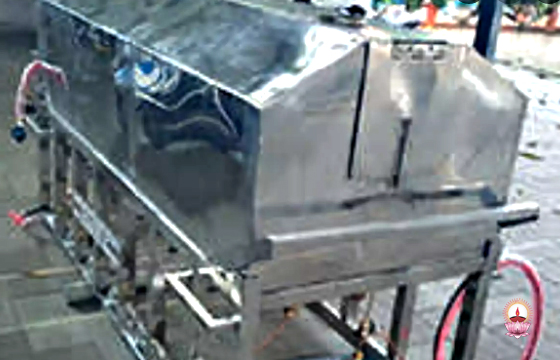
Churches opt for portable crematoriums in Kerala
The pandemic has created a demand for portable crematoriums in Kerala with many churches relying on it as an alternative to burying those who succumbed to Covid-19.
Covid victims’ families and relatives see portable crematoriums as a viable solution as the units can be used either inside the cemetery of churches or even outside.
“It is after we faced difficulties in disposing of bodies of our parishioners who died of Covid-19 that we started to think of making a portable crematorium,” said Fr Francis Areeckal, vicar of St Antony’s Church at Kizhakkambalam in Ernakulam district.
“We worked out the plan in consultation with an engineering contractor who is also a parishioner,” said Father Areeckal, who has claimed that they are willing to offer its services to “anybody cutting across barriers of caste and religion.”
“In case they need assistance for cremation, we have a team. They would volunteer their service,” the priest said. The portable crematorium they have made weighs 650 kg and can be transported in a pick-up van or a mini truck.
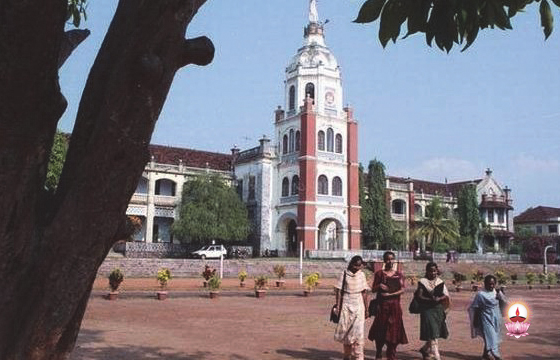
Berchman’s College completes 100 years
The year was 1922 and the occasion a momentous one. V.V. John, former Vice Chancellor of the Jodhpur University, had just enrolled in a junior intermediate class of 125 students that functioned from a multi-story building in the vicinity of the Parayil Church in Changanacherry.
Feeling slightly nervous, he proceeded straight to a class room where a man called Kulandaiswami Pillai was teaching English. “We admit boys till the benches break,” remarked Pillai, welcoming the youngster to his class.
The occasion marked the be-ginning of the iconic St. Berchman’s College, which has lived through a century to emerge as a premier institution of higher education in Central Kerala.
Over the years, it has under-gone several progressive changes to become the first college in the State to secure autonomous status in 2014. It currently hosts about 3,200 students and 170 teachers across 18 departments, besides 80 non-teaching staff.
Meanwhile, the college management intends to roll out a slew of programs in the centenary year, including scholarship for 100 students and adoption of five villages in Changanacherry taluk, besides opening an interdisciplinary research department.
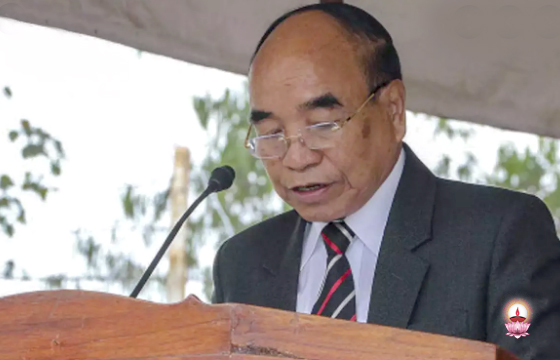
Mizoram Presbyterian Church urges State government to resolve border disputes
Top leaders of Mizoram Presbyterian Church, the largest denomination in the State has urged the State government to take measure to resolve border disputes with neighbouring States, an official statement said.
The church leaders called on Chief Minister Zoramthanga and urged him to resolve the border dispute with neighbouring States and to take measure for the inclusion of the Mizo language in the eighth schedule of the Indian constitution, the statement said on June 14 .
Church help for poor Covid patients in Jharkhand
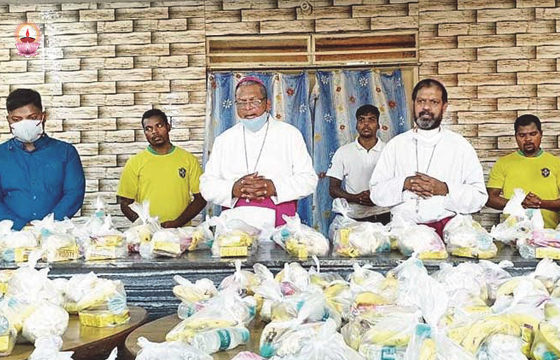
The Catholic Church has started distributing food packets to poor Covid patients admitted in hospital after giving pre-packed lunch packets outside the two largest state-owned healthcare facilities in Ranchi for their attendants and relatives.
“We had started distribution of lunch packets outside both the Rajendra Institute of Medical Sciences (RIMS) Ranchi and Sadar Hospital. We have distributed nearly 500 packets at the RIMS and 400 packets at Sadar Hospital since May 4.
“But it was getting difficult to control the crowd and abide by Covid protocols. This made us start distribution of over 300 food packets to Covid patients admitted in the RIMS. We will start distribution of food packets at Sadar Hospital too,” said auxiliary Bishop of Ranchi Archdiocese, Theodore Mascarenhas. According to sources in the Archdiocese, the poorest of the poor come for treatment at the RIMS and though meals are provided by the government to the patients, they don’t have the resources to avail of other items like fruits, biscuits, fruit juices, mineral water, beaten rice, etc.
Archbishop Felix Toppo and auxiliary Bishop Mascarenhas on June 2 blessed the first 300 packets to be distributed and also prayed for all the benefactors to acquire all the resources.
“The Archdiocese will soon launch a programme to distribute dry ration kits containing rice, dal (pulses), potatoes, cooking oil, salt, spices and onions in portions that would last two weeks for a family.
“We would identify the needy persons and distribute the ration packets at their doorstep adhering to Covid protocols. We are able to serve the poor only because many religious congregations and benefactors belonging to the Catholic Church as well as followers of other religions have been generously donating to the cause,” said auxiliary Bishop Mascarenhas.
With cemeteries full, Bengaluru’s Christians move to outskirts for burial
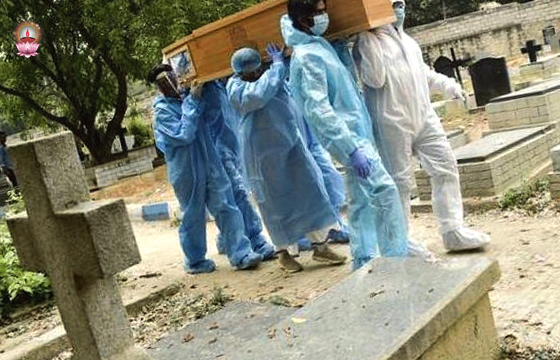
With close to 3,000 deaths reported in the Christian community since April 1, many of which are COVID-19-related, the five big cemeteries in Bengaluru have run out of space and have been closed for burials. Meanwhile the Karnataka government is yet to act on its promise of providing land for burial.
While the Catholic community alone has seen nearly 1,600 deaths since April 1, at least 1,200 deaths have been reported among other denominations, sources in the Archbishop’s office said. In the last few days, burials in new graves have stopped taking place in Kalpalli, Mysuru Road, Hosur Road and Ulsoor, since the cemeteries are full. Only families that have designated graves are conducting funerals in these cemeteries, church sources said.
Archbishop Peter Machado’s appeal to the State Government earlier in April for five acres on the City’s outskirts that all Christian denominations is yet to be addressed. It is learnt that even the Church of South India (CSI) has made a similar appeal to the Government.

Sonia’s photo with Christian conversion book morphed
A photograph of Congress President Sonia Gandhi has gone viral, which purportedly shows a bookshelf behind her with a book titled ‘How to convert India into a Christian Nation’. The image also shows a copy of the Holy Bible and a statue of Jesus Christ on the shelf.
A Twitter user ‘No Con-version’, first shared the image with the caption ‘Who reads all these books?’ It was retweeted by over 1,000 people and garnered more than 2,900 likes. The tweet has since been deleted.
In another tweet, the user with more than 200,000 followers, accused the Congress of “ramp-ant conversion appeasement, nd brainwashing of young gene-ration.” Several other Twitter users also shared the image with similar claims. It was widely shared on Facebook too.
One Twitter user asked if “Sonia Gandhi’s hand” was “behind the conversion in India.”
The viral photograph of Sonia Gandhi with the book on Christian conversion is fake and has been morphed.
Carmelites’ 5-bed clinic in Gujarat expands outside for COVID-19 patients
When some 30 people thronged a church-managed clinic run by three Carmelite sisters in the western Indian state of Gujarat early April 7, Sr. Lisset Vadakkekara saw it as an unusual sign to bear witness to her role as a Catholic nun and a follower of Christ in a predominantly Hindu area.
Vadakkekara, a member of the Congregation of the Mother of Carmel, is the supervisor of the Jyoti (light) clinic in Chachana, a remote village in Gujarat state’s Surendranagar district that falls under the Rajkot Syro-Malabar Eparchy.
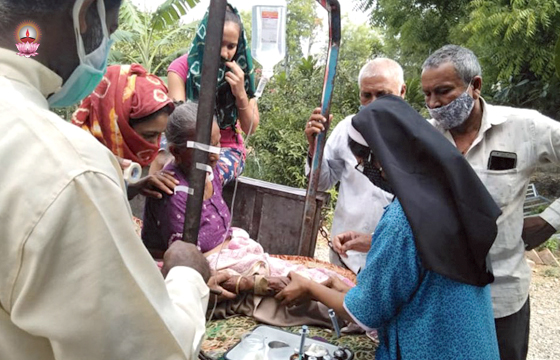
The 58-year-old nun said she had not seen so many people seeking medical help at the same time in her 28 years as a nurse in the five-bed clinic. She and two other sisters, also nurses there, scurried to fashion an open-air clinic with donated cots on Jyoti’s campus to handle the overflow.
In Indian villages, nuns run clinics, called dispensaries, often the only health care available to the local people. Facilities like Jyoti are small with an outpatient section and a few beds. Seriously ill patients are referred to a city hospital.
When Vadakkekara approached the crowd that day, she was surprised to see them looking so pale as they experienced the fever, cough and throat pain symptoms of COVID-19.
“They seemed frightened and utterly helpless. With folded hands, they asked me to check their health and provide medicines,” Vadakkekara told Global Sisters Report.
The three Carmelite nuns checked temperatures, blood pressures and pulse rates.
Study estimates 1.21 million Indians have died from Covid-19
It was three weeks ago when journalists combing obituary pages in Prime Minister Na-rendra Modi’s home state of Gujarat found authorities were concealing Covid-19 deaths that people started asking hard questions about the real number of Indian coronavirus fatalities. Now, epidemiologists and scientists around the world are struggling to solve the question.
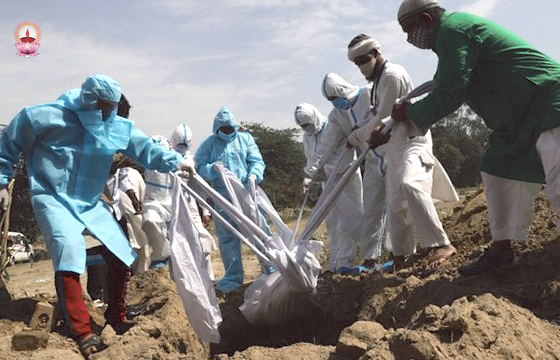
The latest to enter the fray is top epidemiologist Bhramar Mukherjee, who holds the biostatistics chair at the University of Michigan. She calculates that 1.2 million Indians had died and 495 million had been infected by the virus up to mid-May. These fatality and infection totals contained in her preprint study, meaning it still must be peer-reviewed, are vastly higher than the government’s numbers which showed a cumu-lative 25 million Covid cases and 270,000 deaths on May 15.
“I’ve tried to be very con-servative in terms of the assu-mptions we’ve made in the mathematical model.”