Category Archives: National

Church leaders express sorrow over deaths in Delhi car blast

Church leaders in India have expressed deep sorrow over the reported loss of 13 lives in a powerful explosion near Delhi’s historic Red Fort on the evening of Nov. 10. The explosion took place around 6:52 p.m. inside a car near a traffic signal in a crowded area, injuring around 24 people and damaging other vehicles, said Federal Home Minister Amit Shah

Authorities are investigating the cause of the explosion, which is suspected to have been triggered either by a CNG (compressed natural gas) cylinder or a low-intensity improvised explosive device (IED). Officials have yet to formally confirm the cause of the blast or name suspects, but they appear to be treating the explosion as a potential act of terrorism, not just a criminal or accidental blast, according to media reports.

The entire area around the 17th-century Mughal fortress, visited by thousands of tourists every day, and where Indian prime ministers give their Independence Day speeches each year, has been sealed off. India’s national capital and other major cities have been placed on high security alert.

“The Catholic Church in New Delhi joins others to condole the lives lost in the blast and pray for the speedy recovery of the people who are injured,” said Father Savarimuthu Sankar, spokesperson of Delhi archdiocese. He hoped that the federal government would take all the necessary steps to uncover the truth behind the blast and maintain peace. “The Church has always stood for peace and promotes brotherhood among all faiths, and hopes innocent lives are not lost in mindless violence,” Sankar said.

A C Michael, the convenor of the ecumenical United Christian Forum, said civil society needs to work closely with the government of the day to ensure social harmony in the country in difficult times. “It is the responsibility of the incumbent government to maintain harmony in the country,” said the Catholic lay leader, who is a former member of the Delhi Minorities Commission. Michael said that politicians should avoid making statements that “create unnecessary divisive feelings among the citizenry.”

Indian tribal Christian women launch hunger strike over police inaction

Three Christian tribal women, who were intimidated and assaulted by Hindu activists at a railway station in central India’s Chhattisgarh state four months ago — an incident that also led to the arrest of two Catholic nuns — have begun a relay hunger strike demanding justice.

The women, joined by their families and supporters, launched an “indefinite relay fast” on Nov. 10 outside the Narayanpur district headquarters. “The women were forced to take this extreme step as police failed to register a case against their attackers–Hindu activists,” said Phulsingh Kachlam, district secretary of the Communist Party of India (CPI), which is backing their protest.

The Chhattisgarh State Women’s Commission, a statutory body, had on Oct. 8 directed the state’s Director General of Police to file a case based on the women’s complaints. The official was given two weeks to comply and report back. But the order remains unimplemented. “Nothing has been done,” one of the women said, speaking on condition of anonymity. “We will continue our fast until we get justice.” Their demand is straightforward, she said — to register a police case documenting the incident.

The July 25 assault took place at Durg railway station, where the women and two nuns from the Assisi Sisters of Mary Immaculate — Sisters Vandana Francis and Preeti Mary — were stopped by Hindu activists, including some women.

Christian leaders say Hindu groups target Christians in their attempt to turn India into a Hindu-only nation. Last year, the United Christian Forum, a New Delhi-based ecumenical rights group, documented 165 anti-Christian incidents in the state — the second-highest number in India. Christians make up less than 2 percent of Chhattisgarh’s roughly 30 million people.

Don Bosco Gujarat launches 100-day drive to end child marriage

In a bold move to safeguard the rights of children, Don Bosco Gujarat, in collaboration with Just Rights for Children, launched a 100-day campaign to eradicate child marriage across Anand, Vadodara, and Chhotaudepur districts. The campaign was inaugurated on 13 October 2025 by Don Bosco Kawant and Don Bosco Kapadvanj, both of which have long championed the dignity and future of children. This regional initiative aligns with the national movement Bal Vivah Mukt Bharat (Child Marriage-Free India), launched by Union Minister Smt. Annapurna Devi in November 2024 at Vigyan Bhawan, New Delhi.

Under the national umbrella, DISHA Don Bosco, Kawant, and DRISTI Don Bosco, Kapadvanj — partners of the Just Rights for Children Alliance — have played a pivotal role in grassroots awareness and prevention. Nationwide, the campaign has prevented over 1.9 lakh child marriages, offering thousands of children the chance to pursue education and personal growth.

The 100-day intensive awareness drive, running from 1 November 2025 to 26 January 2026, aims to mobilize communities, strengthen local participation, and foster collaboration among stakeholders. Religious leaders — pujaris, maulanas, granthis — along with marriage enablers such as caterers, printers, musicians, and halwais, will be engaged to ensure vigilance and accountability. Village panchayats will play a key role in declaring child marriage-free zones. Between June and September 2025, Don Bosco teams profiled 150 villages, conducted community meetings, painted awareness messages on walls in 25 villages, and collected pledge letters from 150 families. A national workshop titled Voices of Survivors brought together 53 participants who shared stories of resilience and transformation. Don Bosco Gujarat continues its mission to educate, empower, and protect young lives. The campaign stands as a clarion call: every child deserves the right to grow, learn, and dream — free from the burden of early marriage.

Adivasi community’s push for rights and recognition sets the stage for Assam Assembly Elections 2026

After decades of marginalisation, the Adivasi and tea tribes of Assam have demonstrated renewed collective strength through massive rallies in Dibrugarh and Tinsukia in October 2025. These mobilisations, which evoked memories of the tragic Beltola mayhem in 2007, signal the community’s resolve to press for long-standing constitutional and welfare demands ahead of the 2026 Assam Assembly Elections. With an estimate of around 20% of the state’s population—the Adivasi community is poised to play a decisive role in the electoral outcome, making their demands a crucial political issue.

Scheduled Tribe (ST) Status: This is the community’s most significant and long-standing demand. Despite migrating to Assam over a century and a half ago to work as indentured labourers in tea gardens, they have been denied constitutional recognition as an ST, unlike in their states of origin. The All Adivasi Students’ Association of Assam (AASAA) argues that the government has demonstrated a lack of political will to grant this status, a demand promised by the BJP in its 2014 campaign. Granting ST status would provide safeguards and benefits essential for their socio-economic upliftment. Impact on electoral dynamics: With millions of votes at stake, the Adivasi community’s united front can determine electoral outcomes in numerous constituencies. By focusing on shared concerns and exercising their voting power strategically, they can hold parties accountable and make their demands a central issue in the election discourse.
The rallies also bring to the fore a crucial need for the community to maintain vigilance over their leadership. History shows instances where internal and external political forces have exploited the community’s aspirations for personal gain. By actively rejecting and boycotting leaders with questionable integrity, the Adivasis aim to protect their collective voice and rights.

Court questions empty posts in India’s minorities commission

The Delhi High Court, the top court for the national capital region, issued a directive to the federal government to respond to the petition seeking explanations for prolonged vacancies in the federal National Commission for Minorities (NCM). The bench of Chief Justice D.K. Upadhyaya and Justice Tushar Rao Gedela observed on Oct. 15 that vacant posts of the commission chairperson, vice-chairperson and five members have rendered it ineffective and inoperative.

The court responded to a public interest litigation filed by Mujahid Nafees, convenor of the Minority Coordination Committee, an organisation focused on the welfare of minorities. In the petition, Nafees alleged that the government’s negligence in filling the top posts was a violation of constitutional safeguards for the minorities in the country. The National Commission for Minorities Act 1992 mandates the federal government to constitute the commission as a quasi-judicial body to safeguard the rights of minority communities. The commission remained largely defunct after several of its members moved out since November 2024, following completion of their five-year term.

Religious minorities form around 18 percent of India’s 1.4 billion people, more than 80 percent of whom are Hindus. Muslims are the largest minority community, forming 14.2 percent of the population, followed by Christians at 2.3 percent and Sikhs at 1.7 percent. The other religious minorities are Buddhists and Zoroastrians, the latter also known as Parsis. The Commission is mandated to have one member each from the six notified minority communities: Muslims, Christians, Sikhs, Buddhists, Parsis, and Jains.

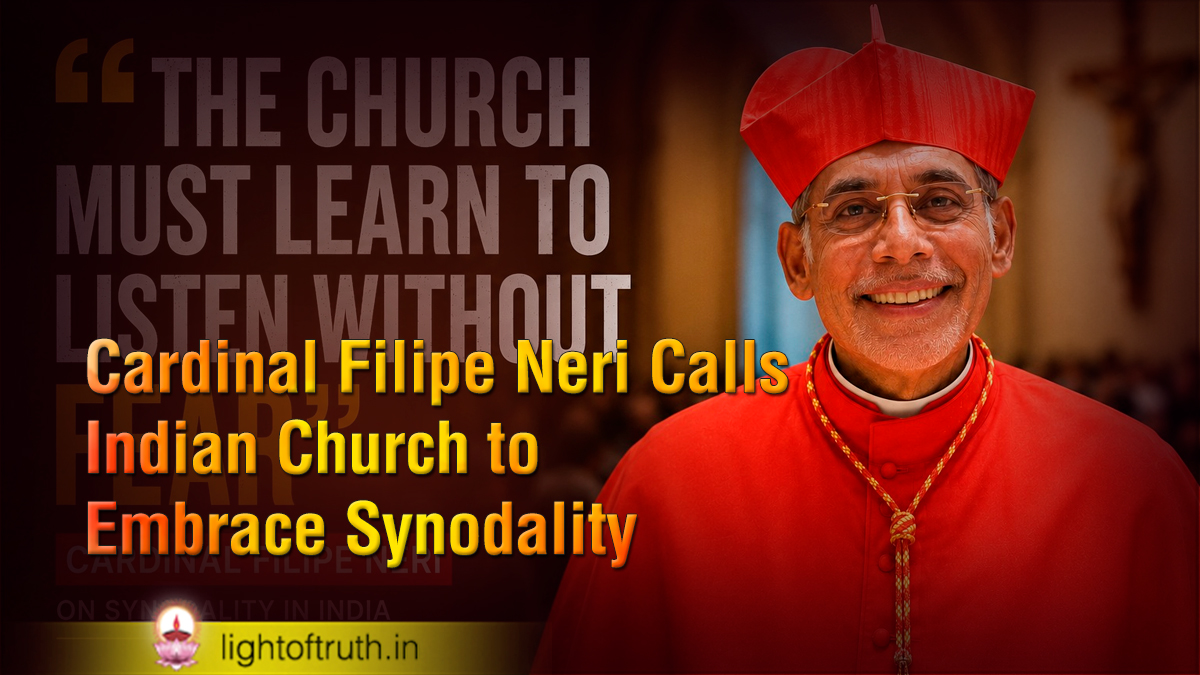
Cardinal Filipe Neri: “Synodality Heals Divisions in a Polarised World”

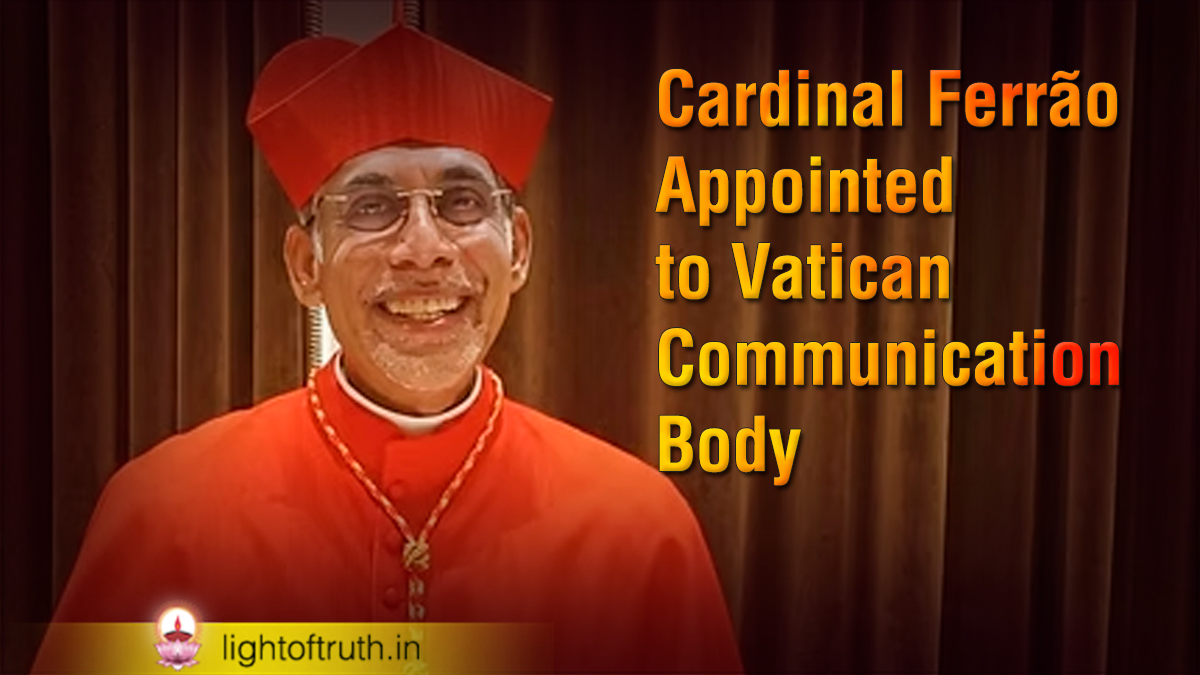
In an interview, Cardinal Filipe Neri Ferrão, President of the Conference of Catholic Bishops of India (CCBI) and the Federation of Asian Bishops’ Conferences (FABC), reflected on the meaning of synodality in today’s fast-changing and polarised world. He shared his hopes for the future Church in Asia, the vital role of the laity and youth, and the blessings he has received throughout his long and distinguished ministry as a priest and bishop. According to him, synodality means walking together, listening deeply, and discerning God’s will as a community. In today’s polarised world, especially with social media and AI sometimes dividing us, synodality offers a way to rediscover unity. It calls us to pause amidst the noise, to create spaces where voices, especially those often unheard, are genuinely listened to. This kind of collective listening and openness can help heal divisions not only within the Universal Church, but also beyond.

Supreme Court slams misuse of anti-conversion laws

The Supreme Court of India on October 17 quashed multiple First Information Reports (FIRs) filed under the Uttar Pradesh Prohibition of Unlawful Conversion of Religion Act, 2021. The FIRs, lodged by third-party complainants affiliated with right-wing Hindu groups, accused Christian educators and clergy of orchestrating mass conversions—charges the Court found to be legally untenable and procedurally flawed.

The apex court’s ruling, authored by Justices J.B. Pardiwala and Manoj Misra, declared that “criminal law cannot be a tool to harass innocent citizens,” and emphasized that only the alleged victim or their immediate family may file a complaint of coercive conversion. The Court noted that none of the FIRs had been filed by actual victims, rendering them “incurably defective.”  Legal experts hailed the judgment as a watershed moment. “This ruling restores the sanctity of personal faith and curbs the weaponization of anti-conversion laws,” said constitutional scholar Anjali Menon. “It sends a clear message that religious choice is a matter of conscience, not criminal suspicion.”

The court’s decision also prompted a relook at pending cases across Uttar Pradesh, where dozens of FIRs had been filed under similar circumstances. “The judgment will encourage greater scrutiny of politically motivated complaints and protect minority communities from targeted harassment,” said advocate Ramesh Thomas, who represented several of the accused. In a poster circulated for public awareness following the judgment, the Court’s stance was summed up in bold clarity: “Faith is a matter of personal choice. No one else can police it.” As India navigates the tensions between religious plurality and political majoritarianism, this judgment stands as a constitutional compass—pointing firmly toward liberty, dignity, and the rule of law.

Catholic educators urged to embody compassion, synodal leadership

The national convention and general body of the All India Association of Catholic Schools (AINACS) opened with a call from Cardinal Filipe Neri Ferrão urging Catholic educators to be “rooted in Christ and be messengers of hope.”

Addressing more than 1,050 delegates gathered at the Park Regis Convention Centre in Arpora, Goa, the archbishop of Goa and Daman drew inspiration from the Gospel and Pope Francis to invite educators to embody compassion, wisdom, and synodal leadership in their ministry.

Reflecting on the healing encounter between Jesus and the leper, Cardinal Ferrão illustrated the transformative power of loving care. He reminded the assembly that Jesus approached the leper, touched him, healed him, and became a witness of hope. In the same spirit, Catholic educational institutions are called to radiate hope through attitudes of mercy and understanding, the cardinal added.

In his keynote address, Cardinal Ferrão expanded this vision through the lens of synodality, describing Catholic educational leadership as a journey of communion, participation, and mission. He called on leaders to cultivate open hearts, to encourage dialogue, and to respect diverse perspectives. Leadership, he said, must move beyond rigid bureaucracies and embrace relationships built on trust and shared responsibility.
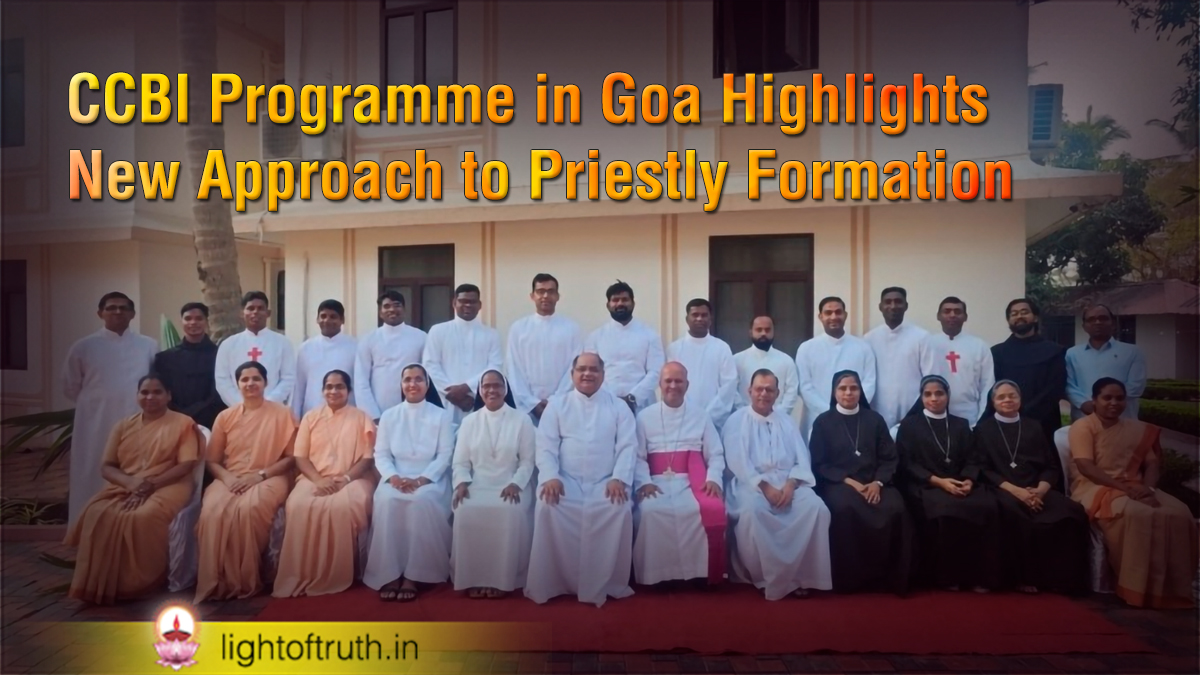
He emphasised that discernment is central to synodal leadership. Drawing from the Gospel, he described it as a patient, prayerful approach, attentive to God’s will rather than personal ambition. True discernment, he noted, allows educators to respond effectively to the evolving needs of their communities, making decisions that nurture growth, understanding, and holistic development.

The cardinal also framed leadership as stewardship, reminding educators that students are gifts entrusted to them, deserving care, guidance, and love. Quoting the Gospel of Luke, he described stewardship as a vocation of service, compassion, and patience, one that prioritises the integral development of each student.

Vatican greets Hindus ahead of Diwali, urges dialogue for peace

The Vatican has extended greetings to Hindus worldwide ahead of their Diwali festival, calling it an occasion to promote peace, dialogue, and reconciliation in a divided world. In an Oct. 10 message, the Dicastery for Interreligious Dialogue said the festival of lights — celebrated on Oct. 20 this year — symbolizes “the victory of truth over falsehood, light over darkness, life over death, and good over evil.” The three-day celebration marks the beginning of a new year, family reunions, and the worship of God, the dicastery noted.

This year’s Diwali message coincides with the 60th anniversary of Nostra Aetate — the Second Vatican Council’s landmark declaration on the Church’s relations with non-Christian religions, promulgated on Oct. 28, 1965. The dicastery’s prefect, Cardinal George J. Koovakad, and secretary, Monsignor Indunil Janakaratne, signed the message on the theme: Hindus and Christians: Building world peace through dialogue and reconciliation in the spirit of Nostra Aetate. The dicastery recalled that Nostra Aetate urged believers to “recognize, preserve, and promote the good things, spiritual and moral, as well as the socio-cultural values” present in other faith traditions for the sake of peace. The Vatican urged Christians, Hindus, and all people of goodwill to strengthen shared efforts for peace “through dialogue and collaboration in the spirit of Nostra Aetate,” emphasizing unity and fraternity across religions and nations. It also reaffirmed the Church’s teaching to reject “nothing that is true and holy” in other religions, and to honour teachings and practices that “reflect a ray of that Truth which enlightens all people.”

Indian theologians elect woman as president second time

The Indian Theological Association (ITA) has elected Sister Evelyn Monteiro, a member of the Sisters of the Cross of Chavanod, as its president, the second woman to head the 49-year-old association. The election took place during the association’s 47th annual meeting at Ishvani Kendra in Pune, western India. Sister Monteiro was the association’s vice president during the past three years. The first woman president of the association was Presentation Sister Shalini Mulackal.

The meeting also elected Jesuit Fathers Thomas Kuriackose as the ITA vice-president and Joseph Victor Edwin, the secretary. The new executive members are Astrid Lobo Gajiwala, a lay woman theologian from Mumbai, Father Jacob Parapally MSFS, Father Jacob Naluparayil MCBS, and  Father Xavier Francis Tharamel SJ.

Sister Monteiro, who has a doctorate in systematic theology from the Centre Sèvres, Facultés jésuites de Paris, France, teaches the same subject in a number of theoretical institutions in India and overseas. She is the co-founder of Ecclesia of Women in Asia (EWA), an association of Catholic women theologians in Asia.

In 2004, she authored the “Church and Culture: Communion in Pluralism,” besides editing several books and publishing a number of articles in national and international theological journals. Her research addresses ecclesiology, particularly in situating the conciliar and post-conciliar understanding of the Church in the pluri-religious and socio-cultural context of Asia and India, and contextual and liberation theologies.

The September 26-28 gathering explored Lumen Gentium and Gaudium et Spes, two key documents from the Second Vatican Council. The meeting reaffirmed the vocation of theologians in India is to be deeply rooted and dialogical. An Indian theologian is called to be grounded in the Catholic tradition while engaging in dialogue with the diverse religious and cultural landscape of India.