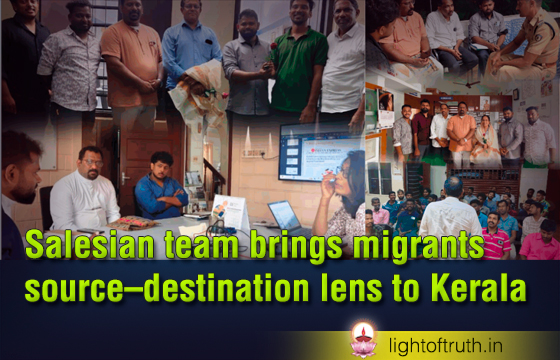
In the crowded lanes of Perumbavoor and the quiet shelter of Palluruthy, migrant workers from Odisha, Bengal, Assam, Tamil Nadu, and Jharkhand opened up about their hardships and resilience to a visiting team from Don Bosco for Migrants (DB4M). Their accounts — from mothers, factory workers, and young men living far from home — brought into focus the human side of India’s vast migrant labour force during a two-day immersion programme in Kerala.
The Source and Destination Visit, held on November 29–30, brought together DB4M representatives from Tiruchy, Bangalore, Hyderabad, and Kolkata. The team met government officials, NGOs, police officers, and church institutions across Vaduthala, Angamaly, Perumbavoor, and Palluruthy. The mission opened with a Eucharistic celebration in Angamaly, where Fr. Francis Bosco stressed that migrant welfare is a shared duty of the Church, civil society, and the state.
Field visits exposed several pressing concerns, including limited healthcare access, workplace injuries, wage disputes, and social risks such as child marriage and drug use. Inspector Samad of Kerala Police highlighted the importance of proper documentation and child protection, while the Rajagiri Suraksha Migrant Project drew attention to the danger of sexually transmitted infections.
A positive example emerged at the Salesian-run Migrant Shelter in Palluruthy, where around 50 workers live with dignity through a self-managed system of housing and food — a model DB4M identified as worth replicating. Visits to Kitex garment factory and St. George Church showcased both the opportunities and restrictions migrant families navigate, including mobility limits and educational challenges for children.
The Centre for Migration and Inclusive Development (CMID) provided broader insights into Kerala’s rising dependence on migrant labour. Their mobile health units, multilingual outreach, and helpline partnerships demonstrated effective strategies for migrant inclusion.
In its final assessment, DB4M called for extended future visits and outlined priorities such as enhanced pastoral support for Odia migrants, stronger Mass offerings in industrial hubs, involvement of seminarians, and collaboration with Odia priests during major festivals. The visit concluded with gratitude to CMID, SEWA, the Salesians, and the Kerala Migrant Commission, reaffirming DB4M’s commitment to accompany migrant workers whose labour sustains Kerala’s economy and whose dignity demands continued attention.